 |
|
Greetings from Los Angeles, and welcome back to In the Room, my private email on the media and media people. We start tonight with some big news on the home front: Next week, I’ll be launching The Grill Room, a twice-weekly media podcast that will bring you inside my conversations with the television personalities, media moguls, political pundits, and industry executives driving the day’s headlines.
The Grill Room, an homage to the exclusive dining room within the Four Seasons where a generation of media executives once consummated deals and traded gossip, is produced by Puck in partnership with Audacy Podcasts. New episodes will drop every Tuesday and Friday starting October 29. Upcoming episodes of the podcast will include interviews with Brian Williams, David Zaslav, Jim VandeHei, Emma Tucker, Don Lemon, and many other top executives and talent. Follow along on Spotify, Apple, Pandora, or wherever you get your podcasts.
In tonight’s email, we go inside Politico, where John Harris and his new EVP Jonathan Greenberger are planning to overhaul the flagship Playbook franchise with the appointment of a new executive producer who can reinvigorate the product, with or without Ryan Lizza, and manage the brand like a morning show.
Also mentioned in this email: Olivia Nuzzi, R.F.K. Jr., Rachael Bade, Mark Thompson, Eugene Daniels, Mike Allen, Mark Leibovich, Jake Sherman, Anna Palmer, and many more…
But first…
- Sign of the times: With days to go till the most consequential election of our lifetime, the cable news audience remains notably lackluster. Historically, these should be high-water mark days for cable news. And yet, the networks are more or less hovering around their standard numbers: last week, Fox News averaged 2.6 million in primetime; MSNBC had half that, at 1.3 million; and CNN had less than half that, at 622,000. The CNN numbers are especially dismal: In addition to being a distant third in all categories for both primetime and total day, its viewership was also down dramatically from the same period a year earlier—particularly in the demo, where it has declined by 36 percent in primetime, to just 117,000 viewers, and 38 percent total day, to just 86,000.
Yes, yes, insert the usual caveat that CNN is pivoting to a new digital strategy under Mark Thompson, that linear ratings are no longer the metric of success, and that these numbers don’t account for streaming viewers on Max (though if that number were significant, they’d probably announce it). The decline has become staggeringly precipitous.
|
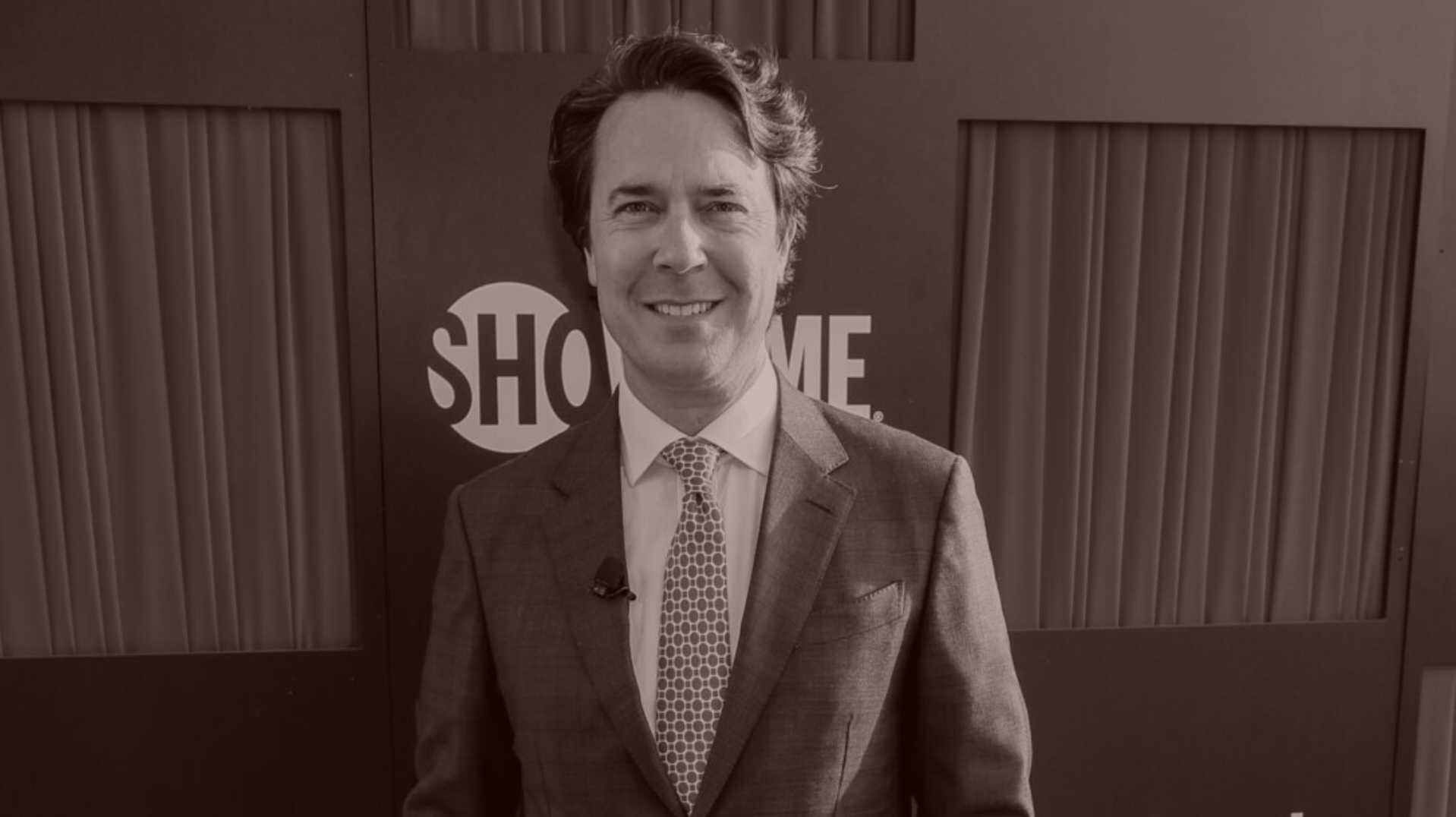 |
| Playbook’s New Playbook |
| As Ryan Lizza remains mired in Nuzzigate, Politico’s leadership has been reassessing its Playbook franchise and accelerating long-standing plans to overhaul it. |
|
|
|
| Earlier this week, as you certainly know by now, New York magazine very tactfully defenestrated its star political journalist Olivia Nuzzi under the cover of an amicable, purportedly mutual, and very self-conscious conscious uncoupling. For more than a month, the magazine and its parentco, Vox Media, had been wrestling with the sordid revelations stemming from Nuzzi’s demure nudes sexting scandal with R.F.K. Jr., her initial prevarications around the nature of that relationship (to put it mildly), and, most pressingly, her lewd and increasingly hostile legal battle with her ex-fiancé, Ryan Lizza, in Washington, D.C.’s Superior Court. So, while a white-shoe law firm found that Nuzzi’s reporting on the presidential campaign contained zero inaccuracies nor evidence of bias, her bosses determined that her future employment was untenable amid this metastasizing clusterfuck.
Indeed, the Nuzzighazi blast radius stretches for miles, with myriad second- and third-order effects. And down in the nation’s political capital, it’s most acutely felt at Politico, where Lizza serves as chief Washington correspondent and, more importantly, the marquee co-author of Playbook. Nearly two decades after its inception, the influential morning tipsheet remains Politico’s flagship editorial product. In its peak years, Playbook is a $15 million-ish business and accounts for a nice chunk of Politico’s commercial revenue.
Earlier this month, Politico placed Lizza on temporary leave after Nuzzi accused him of hacking her devices and threatening to blackmail her (charges that he vehemently denies) and secured a temporary protective order against him. Since then, the former lovers have been engaged in a depressing legal quarrel and public relations battle that has unearthed even more tawdry allegations about the nature of Nuzzi and Kennedy’s affair. Meanwhile, Playbook has been left to the care of Lizza’s two co-authors—Rachael Bade, a dogged D.C. worker bee, and Eugene Daniels, the gregarious MSNBC green room denizen—who, despite their talents, are not seen internally as capable of sustaining or growing the business on their own.
In fact, even before the Nuzzi-Lizza diversion, Politico’s leadership had been reassessing the entire Playbook franchise and accelerating plans to overhaul it—possibly without Lizza, whose contract is up next year. Over the summer, Politico patriarch John Harris and his new executive vice president Jonathan Greenberger hatched a plan to hire a “Playbook executive producer,” a first-of-its-kind position overseeing the creative development and growth of the franchise. Now, I’ve learned that Politico is finalizing an offer, very likely to a television news veteran who will be given a mandate to manage the franchise and its talent much the way an executive producer manages a morning show. |
|
|
| In many ways, the rise of Playbook has become a metaphor for the recent transformation of the media industry, particularly in Washington. The signature vision of Politico co-founders Jim VandeHei and Mike Allen, its creator and longtime author, Playbook was a business-friendly rejection of the sort of long, stuffy, self-important journalism that flowed endlessly from the Washington Post newsroom on K Street and Times bureau on Eye. It defined Politico’s reputation as a high-metabolism, decidedly non-Ivy League media insurgent, at least in the early days.
Playbook, which emanated from Politico’s offices across the Potomac in Arlington, was intentionally intimate and pithy. Its earliest quirks—the birthdays and all-caps sightings interwoven with links to the news driving the day—captured the high-low interests of the town. It was, as Mark Leibovich famously put it in that Times Magazine cover story, “Allen’s morning distillation of the Nation’s Business in the form of a summer-camp newsletter.”
What was lost on the journalistic egghead class at the time was that Allen and VandeHei had happened upon an economic solution to their industry’s secular challenges—particularly in those dark days post-’08 crash. Over time, the premium newsletter business would power Politico’s growth, and eventually lead the duo to stand up Axios in their second act. Indeed, email-based publishing (“newsletter” is such an imprecise word) offers media companies first-party data; a luxurious, brand-safe experience; and a high-touch connection with an elite audience, which is why it has become about the most valuable advertising product in text-based media since Vanity Fair’s back inside cover, circa 1998. (Of course, we know a little bit about this at Puck.)
The story of VandeHei and Allen’s departure is cocktail party lore in Washington and you don’t need me to recite it here—everyone hated everyone but eventually they all got so rich that they got over it—but by that point, Politico executives fully understood the value of Playbook. Indeed, while the entire political-media industrial complex was chasing Trump stories—getting intoxicated by ephemeral traffic figures—Allen’s successors, Jake Sherman and Anna Palmer, focused relentlessly on the news circulating around Capitol Hill.
It wasn’t as sexy or scintillating, obviously, but it was a much better business. In an era when the president could send a Fortune 500 company’s stock price sinking with a single angry tweet, large corporations were compelled to lobby on their own behalf. They realized they needed to get their message in front of lawmakers—or at least the aides who scanned their emails. The golden age of corporate social responsibility marketing was born.
The large pool of corporate affairs advertising dollars had plenty of room to accommodate both Playbook and Axios. Over the years, however, other media companies would enter the fray—notably Punchbowl, which Palmer and Sherman left Politico to create. Indeed, the rapid ascent of Punchbowl, in particular, scared the shit out of Politico executives. The fact that Sherman and Palmer could set up their own shop and instantly challenge their previous employer, both editorially and financially (and without legal challenge), suggested that a growing vulnerability within the business had to be defended, especially as Politico began offering a Playbook-style product for many of the industries it covered. Politico put on a brave face and attempted to start from scratch by hiring Lizza, Daniels, Bade, and Tara Palmeri, who would later leave for Puck.
From my conversations, many people associated with this marketplace believe that Playbook’s revenue probably peaked in the late Trump era, shortly before Jake and Anna’s departure. When Allen and VandeHei left, nearly a decade ago, it cost less than $100,000 per week to advertise. Now the rate card is closer to $400,000, but the business often accepts figures well below that. (A Politico source said it averaged $300,000 a week last year.) Now, the confluence of Lizza’s leave and the election has offered Politico a chance to reframe and reboot the product, which many in the industry have long snickered is woven together by a team of anonymous producers toiling in the background. Certainly, it has lost Allen’s perspicacity and Sherman’s acuity.
One of the funny quirks about the D.C. market, of course, is that while you can’t fake the audience data, the town really operates on buzz and word of mouth. In the earliest days, Allen’s Playbook and subsequent Morning Joe appearances got the nascent publication noticed. And much of that hype dissipated during the era of Lizza, a former New Yorker features writer who never seemed like the right anchor for the product.
Will a television news veteran, likely fleeing that industry’s ghosts, have the connections and creative mojo to restore Playbook’s original ubiquity and hype? The truth is that the next iteration of Playbook, whatever it looks like, will have to represent this era of Politico, itself—a large subsidiary of Axel Springer that now competes in a far more ossified D.C. and disruptive media landscape, one that it helped create. It’s hard to fathom what a refugee from the decaying morning TV format might be able to bestow on Playbook that would reclaim its former glory. But in an era when so many companies are brazenly ignoring their challenges, it’s refreshing to see a management team locate a problem and actually try to address it. |
|
|
|
| FOUR STORIES WE’RE TALKING ABOUT |
 |
|
 |
| Kamala’s Endgame |
| A candid conversation with Harris advisor John Anzalone. |
| TARA PALMERI |
|
 |
| A Paris Art Rebound |
| Scanning the latest auction results for new art market trends. |
| MARION MANEKER |
|
 |
|
|
|

|
 |
|
|
|
Need help? Review our FAQs
page or contact
us for assistance. For brand partnerships, email ads@puck.news.
|
|
You received this email because you signed up to receive emails from Puck, or as part of your Puck account associated with . To stop receiving this newsletter and/or manage all your email preferences, click here.
|
|
Puck is published by Heat Media LLC. 227 W 17th St New York, NY 10011.
|
|
|
|