Welcome back to The Varsity, my twice-weekly private email on
the sports media industrial complex. I hope that you all had a great holiday in Vail or Uruguay or St. Barts or on the Big Island. Rust never sleeps here at Puck. I rang in 2025 watching a livestream of Ryan Seacrest’s show on ABC and kicking around Marchand material for the new year. ( Dammit, Andrew, a nice dry chablis would be perfect right now… but those grapes don’t stomp themselves!)
My stream lagged by about a minute, which meant that my family officially celebrated the new year at precisely 12:01 a.m. eastern. Happy New Year to Varsity nation. Expect some exciting news on our expansion later this month.
🎧 PGAT of Arabia: The Ringer’s golf gurus, Joe House and Nate Hubbard, stopped by the Varsity podcast on Wednesday to talk about how the golf world is ready to turn things around after a couple of lean years.
Nota bene: The pod is starting off the year with a bang, and in the coming weeks, look out for my conversations with WWE’s Nick Khan, just before his Netflix debut, and CFP’s Rich Clark, right in the middle of college football’s first expanded playoffs. (Subscribe here and here.)
Let’s get started…
|
2024’s Player of the Year: Adam
Silver
|
|
No surprises here. The NBA, guided by Adam Silver, was the clear
winner of the biggest sports business deal of the year. Silver and his top media lieutenant, Bill Koenig, blew past even the most optimistic projections for the deal, nearly tripling the average annual payout that the league will get from its media partners. ESPN, NBC, and Amazon are set to pay a combined $6.9 billion per year for the league’s rights over the next 11 years. As it stands, ESPN and TNT Sports pay an average of $2.6 billion per year. Great work, gents. I hope you, especially, enjoyed the waves and slopes last week. For years, there have been questions about what the ongoing meltdown of cable TV means for sports rights fees, and the NBA’s new deal shows that the market for top-tier sports is frothier than ever.
|
2024’s M.V.P. Runner-Up: Ted Sarandos
|
|
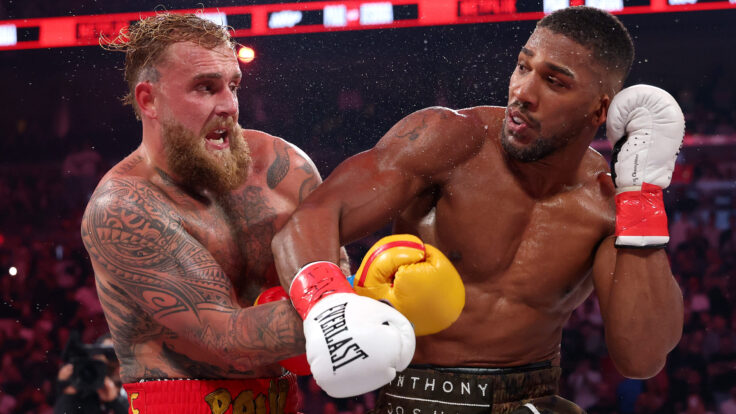
I know the Mike Tyson-Jake Paul fight was a bit of a technical mess. And I’m wary of putting too much stock in a pair of NFL games that Netflix didn’t even produce. But 2024 will go down as the year that Ted Sarandos started opening his pocketbook for sports rights—and the early returns for his dominant streamer are highly encouraging. After spending years beating a path to Netflix HQ, sports rights holders are now intoxicated by the global numbers they are seeing from the company—to say nothing of its ability to squeeze a half hour of live Beyoncé content into a regular season game. Sarandos must be pleased, too. It will be interesting to see how this impacts investment on entertainment, especially given the pivot away from the high-volume movie production cadence of the Scott Stuber era.
|
2024’s Down to the J.V.: David Zaslav
|
|
It’s not just that David Zaslav didn’t cut a deal for the NBA. After all, it’s entirely possible that getting out of the NBA business at these prices will look like a great decision down the road. Where Zaz fumbled was his unique negotiation strategy, or lack thereof—starting with his public declaration that he “didn’t need” the NBA, which obviously irked the hell out of league executives, followed by his decision to play hardball during WBD’s exclusive negotiating window, which lapsed without a deal and held the door open for NBC. His annus horribilis was rounded out by his quixotic quest to get hold of Amazon’s streaming package, and his decision to sue the league over matching rights.
|
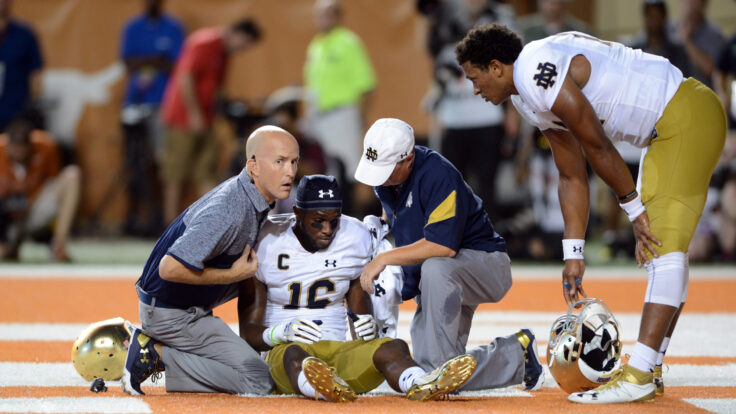
- Sugar Bowl shake-up: Following the New Year’s Eve terrorist attack on Bourbon Street, in New Orleans, CFP officials moved the Sugar Bowl to this afternoon, with Georgia and Notre Dame kicking off at 4 p.m. ET. ESPN decided to keep today’s Gator Bowl game between Duke and Ole Miss in primetime, and actually pushed its kickoff back by a half hour so the games don’t overlap.
Several people texted asking why ESPN decided to carry the CFP
quarterfinal in the middle of the afternoon on a workday. The answer is that it didn’t—it was the CFP’s decision, in consultation with the Sugar Bowl and the teams. The schools, for their part, favored an earlier kickoff time for competitive reasons, as it allows the winner more time to get home and start preparations for next week’s semifinal. The winner plays Penn State, which beat underdog Boise St. in the Fiesta Bowl on Tuesday. ESPN executives were part of the discussions throughout the day, and said their preference was to carry the game in primetime. I’m told that as soon as the Sugar Bowl was postponed, ESPN reached out to Gator Bowl reps to gauge their flexibility in changing their kickoff time. Gator Bowl officials told ESPN that they were willing to move the game to an afternoon window if the Sugar Bowl scheduled its game in primetime. Ultimately, CFP decided on a 4 p.m. ET kickoff based on feedback from the teams, security, and law enforcement. As one source told me, “It was the best solution for a situation where there were no perfect answers.”
- R.S.N. problems: The Altice-MSG Networks dispute is not the typical cable carriage fight we’ve seen over the past quarter-century. As the ball dropped in Times Square, Altice dumped the R.S.N. that carries Knicks, Rangers, and Devils games. In the past, it would usually take a few weeks for the two sides to work things out. At the moment, there’s no resolution in sight.
Altice, for its part, has little impetus to reach a deal. After all, cable operators across the country spent 2024 taking a hard line when negotiating with regional sports networks, which are among the most expensive channels on the dial. And a deal may not be in MSG Network’s best interest, either, even if it would be a blow to their bottom line.
Guggenheim put out a research note this morning suggesting the MSG Networks’ parent, Sphere Entertainment, should take the hit and walk away from the R.S.N. business altogether, which “would be a positive/clean outcome for SPHR shareholders going forward.” (For what it’s worth, Altice is also in perilous shape.) Guggenheim estimates that Altice accounts for about 33 percent of MSG Networks’ distribution revenue. “Failure to renew Altice would wipe out all MSGN’s AOI for FY25 and mean bankruptcy for the RSN business,” the firm said in its note. “The current workout period with lenders was extended until January 10 (the RSN business has $829 million of debt non-recourse to SPHR).” Anyway, a nightmare situation for all—especially aggrieved Knicks fans who haven’t cut the cord and finally have a fun team to watch.
- R.I.P. “Diamond Sports”: Almost two years after it filed for bankruptcy, Diamond Sports has emerged with a deleveraged balance sheet and a new name: Main Street Sports Group. David Preschlack will remain C.E.O., according to an announcement this afternoon, and the company will continue to operate 16 FanDuel-branded R.S.N.s that hold the rights to 13 NBA teams, eight NHL teams, and eight MLB teams.
Diamond’s move out of bankruptcy completes one of the more improbable turnarounds in sports media history. When Diamond filed for bankruptcy in March 2023, the company was faced with the daunting prospect of negotiating separate deals with the country’s biggest distributors, three professional leagues (MLB, NBA, and NHL), and its debt holders. Sports business veterans questioned whether the company would ever right the ship, and several teams opted not to renew. But Diamond—sorry, I mean Main Street Sports Group— is emerging with some momentum. Earlier this week, it picked up rights to carry Milwaukee Brewers games next season. The club had previously announced that MLB Media would handle its rights, but this new pact replaces that deal.
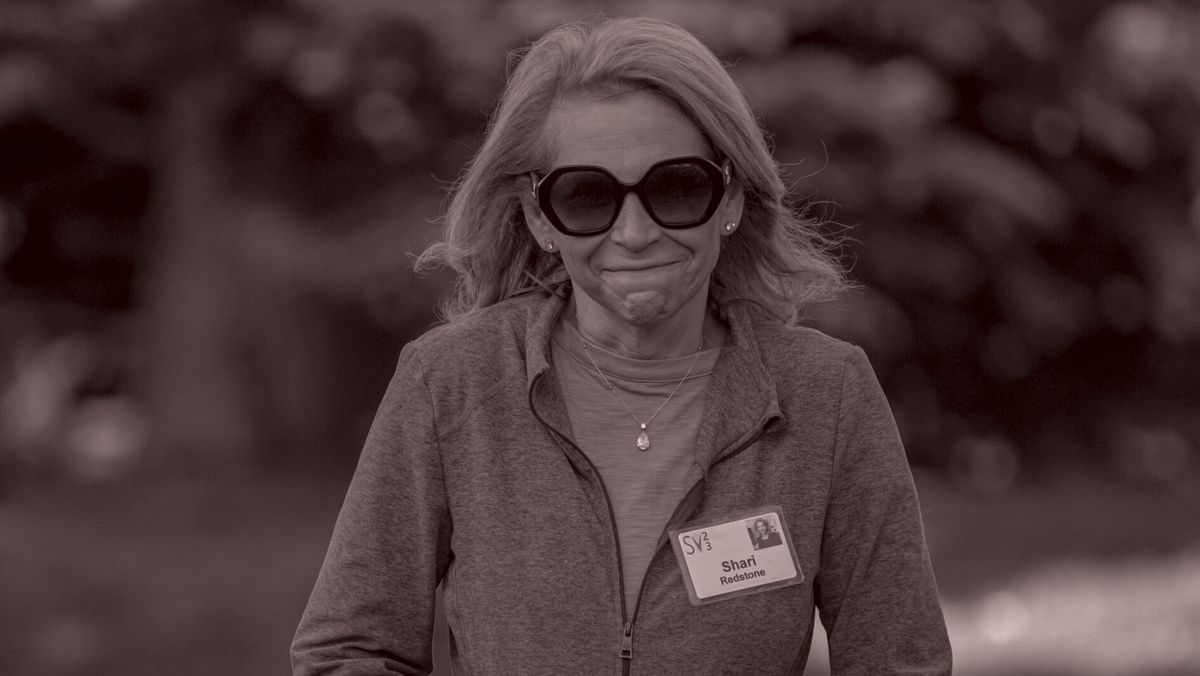
- Belloni’s hero of the year: My partner Matt Belloni named Shari Redstone as his Hero of the Year for engineering (however reluctantly) a deal to sell Paramount Global to David Ellison, which essentially saved the studio and her inheritance. But I was most interested in who will be in charge at the new company below Ellison and his top deputy, Jeff Shell.
Matt writes: “I wouldn’t expect Redstone to be involved much post-closing, despite her consulting arrangement and the fact that Skydance is paying for her Manhattan apartment for two additional years. And her current co-C.E.O trio will be broken up. As Bloomberg and the Journal reported, Brian Robbins will be replaced by Skydance’s Dana Goldberg at the Paramount film studio. And they’re planning to consolidate the TV networks group under George Cheeks, the current head of CBS, who is expected to stay on post-merger if he isn’t lured away by a better offer. Cindy Holland, the former Netflix TV executive, is consulting for Skydance and is already strategizing for Paramount+ and Pluto TV.”
- The Iger succession: On Sunday, my newest partner here at Puck, Kim Masters (who is so new that she doesn’t start for another month), sat down to talk about the state of Hollywood with the inimitable Bill Cohan, who asked her thoughts on the Bob Iger succession saga. This is what Kim, the author of a definitive history of the Michael Eisner era at Disney, had to say…
“I think the C.E.O. at Disney has got to be a company insider,” Kim told him. “The Disney culture is very specific and very deeply ingrained. You saw what happened to Peter Rice, who had been groomed by running TV and film and all kinds of things at Fox. I had said to Peter that he could be a future C.E.O. of Disney. The only question I had was that he is British, and I wasn’t sure whether a company as American as Disney would want a C.E.O. with an English accent. But when Disney bought Fox, the culture rejected him—old-school Disney people, like C.F.O. Christine McCarthy, said, He’s not one of us. …
“Dana Walden, I think, has done a better job of integrating herself into the Disney fabric. Does it hurt her that she is besties with Kamala? Probably. We just saw Disney pay $16 million to Donald Trump to get rid of what seemed like a winnable lawsuit. And then there’s Josh D’Amaro. He’s a very appealing guy. He runs the theme parks, which have some problems, but is that his fault? Can we blame it all on Bob Chapek? Probably not really all of it. So there are these candidates. They’re obviously going to look outside, but I have to believe that they go with an insider… There has been some chatter about Donna Langley. She hasn’t run the theme parks, of course. But she’s had film, and then they added TV, and now she’s queen of all content. She’s very talented. She’s ambitious. But would she want to go to Disney? She’s also British, and does Disney have to have an American C.E.O.? Is Comcast going to give her everything she wants? If I were Disney and I had a shot at Donna, I would take it.” You can read the whole conversation here.
|
|
|
|
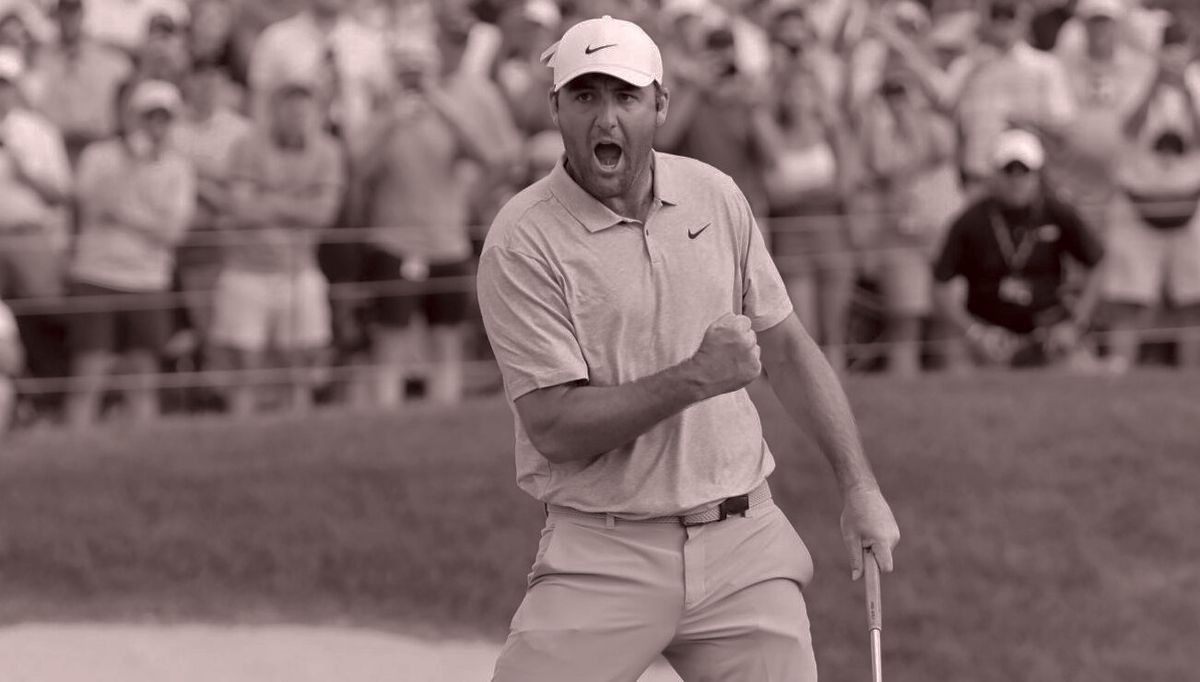
Professional golf is a mess, with competing leagues diluting the talent pool and overstretched PGA Tour tournaments that few are watching. But with a new crop of talent, a pro-merger golf fanatic in the White House, and a new indoor offering, could this year be a turning point?
|
|
|
It’s been a rough four years for professional golf, ever since the Saudi-funded LIV Golf revolt created a civil war in the sport. The two-league reality is a mess: It’s resulted in a diluted talent pool, an overstretched calendar with too many forgettable tournaments, and an expanding income gap. On top of that, no one is really watching outside of the majors. But this may be the year that everything changes, with the Saudis’ proposed investment in the rival PGA Tour, a golf-friendly administration in the White House, and some incredible talent playing at the top of their game.
To get a sense of the current state of play, I spoke to two people who know the game and the business as well as anyone: Nathan Hubbard and Joe House, hosts of the Ringer podcast Fairway Rollin. In this lightly edited and condensed conversation, we talked about LIV, the doldrums of the PGA Tour, and the coming spectacle of indoor golf with the new TGL, Tomorrow’s Golf League. You can listen to our full conversation here.
|
|
John Ourand: Nathan, I want to start with you. The overall state of professional golf right now—buy, sell, hold? Where do you fall on this?
Nathan Hubbard: I’m a “sell” at the moment, but I think it’s a solvable problem. I’m not sure that the leading indicators of some of the decision-makers are particularly promising at the moment. But if you look beyond what’s right in front of your face, we just had arguably a top five statistical season of all time from Scottie Scheffler; we’ve had five of the best 50 seasons ever in the last three years between Xander [Schauffele], [Jon] Rahm, and Scheffler; you’ve got an incoming president who, despite how you feel about his politics, has a great care and concern for golf. And if there were obstacles to the world of golf coming together that were going to be related to antitrust provisions, you have a sense that the Department of Justice may be less inclined to slow those down.
There are also some real stars on the women’s tour. Golf is as democratized a sport as there could possibly be, and it’s what’s wonderful about it and why there’s such interest. So I think, long term, there’s reason for optimism. But in the near term… man, I’ll tell you, I go to more golf events than anybody who’s not in the golf media or playing on the tour, and I can just tell from the ground, it’s a mess.
Joe House: I’m kind of surprised to hear Nathan would sell, because my answer would have definitely been ‘hold’—with a caveat: I would sell the PGA Tour. To me, in general, the state of professional golf is still pretty compelling. The majors that we have coming up are all going to be really interesting. As I see it, the only entity in professional golf that really has a challenge in front of it is the PGA Tour. I think [this year] is a transition year. I would characterize the previous year of the Tour as a dud. The single biggest thing that happened in professional golf in 2024 was that the number one player in the world [Scheffler], who’d won the Masters one month previously, was arrested trying to drive into the golf course because he wasn’t recognized. Nobody knew who the hell he was; that sort of tells you something about the state of the professional golf world.
Nathan, what do you mean when you say you go to these events and it’s a mess?
Hubbard: I saw an argument this week that we can’t really judge how the PGA Tour is doing by the ratings, because lots of sports have had declines in ratings—and as we consume content through a bunch of different places, that there are better measures of the popularity of the sport. But when you actually go to these events, they’re ghost towns. There was nobody there; the sponsors weren’t trying; the fan experience was neglected and forgotten; it was clear that nobody cared. In any business, when you don’t care about the customer, it has cascading impacts all the way through the rest of your business, from your revenue to your cost base—and that’s what we’re seeing.
There’s a lot of interest in the sport, but what’s missing right now is great product-market fit. A ton of interest in golf is one thing, delivering on something for the end consumer is another.
The PGA Tour has made a lot of noise about bigger purses and shrinking the field in an attempt to whip up interest. Do you think that will help?
House: The whipping-up of interest isn’t going to come from increased purse sizes. We’re at this inflection point where the tour has created a two-tiered level of interest. It has eight so-called signature events, and then 34 or so non-signature events. So what are you telling your consumer with respect to those 34 events? What’s the compelling reason for a sports fan to sit down and watch the PGA Tour? There is some golf out there that people will tune in to. But the true conundrum for the Tour is the rebranding required to make folks put it back on their viewing agenda.
Hubbard: It speaks to a larger issue. Phil Mickelson gets a lot of credit and a lot of blame. He gets credit, in my mind, for at least rightly identifying that the balance of revenue flows between the Tour and the players was out of whack—and that there was probably an opportunity for players to have more control and make more money. On the other hand, I think he gets a lot of blame for the way it was executed. Money is the question now, because there’s been an enormous amount of money that’s been invested in both of the major tours. And it’s not clear that the money that’s flowing to the players is justified by the business model. We haven’t yet proven that these guys are worth a $20 million purse every week. We haven’t yet justified that Scottie Scheffler—who, again, just had one of the top five statistical seasons of all time—was worth making $40 million. So when I talk about product-market fit, eventually this is going to catch up with you.
Yes, the Saudis have other reasons for investing in the sport, because it gives them access. The PGA Tour doesn’t have the same situation. And in both cases, I’m not sure that losing money in perpetuity and hoping that you make it up in volume is a winning way to run a business. The PGA Tour made a very conscious decision to take investment from the Strategic Sports Group, who have a lot of people who are very skilled and gifted at business. The question is: Are they going to use them? Will those folks actually have the ability to put their whole palm print on the sport and make the dollars and cents actually work for the long run?
|
|
Are you surprised that LIV hasn’t been more popular than it is?
House: No. I’m continuously surprised by the lack of planning. They chose, as their arrival on the scene, to be an antagonist to the PGA Tour—that was their core identity, not the product itself. It remains hard to follow. It feels contrived. It feels like an exhibition.
Hubbard: I think LIV’s strategy worked in that it became a chaos agent and that it damaged the PGA Tour. The extent to which the idea was, Let’s break away, do our damage, and force them to the negotiating table, that worked. But when you’ve got a diluted field of athletes, there’s no compelling proposition. I just don’t think they were able to build something that anybody’s going to watch and care about in the current state—not to mention the U.S. and European regulatory issues that clearly have been a hindrance to the kind of progress that you might have expected by now.
The Saudi Public Investment Fund’s proposed investment in the PGA Tour is apparently in front of the Department of Justice. With the incoming Trump administration, that’s almost certain to be greenlit. What do you expect from that?
Hubbard: What we’ve heard is on the table is like a 6 percent investment—so in the grand scheme of things, relatively nominal. But what I expect to come out of that are some pathways for the top players on both tours to play together more often—either new events that they put together, or to take a handful of the top events from each tour and make it possible for players to go. I expect them to potentially reorient the schedule so that they’re not going head-to-head all the time, making the viewership consolidated around each of these events. But I don’t expect a full merger today.
One last question. TGL—buy, sell, or hold?
House: I can go first. I’m going to buy, because first and foremost, it is a vehicle by which the greatest golfer—the greatest golfer of my lifetime that I got to watch and enjoy, Tiger Woods—is going to be able to play, and he’s going to be able to compete. He doesn’t have to go out and walk seven miles a day, and he’s still going to be excellent. I’m confessing it, but I do think that it’s going to be innovative. It’s going to be well-presented, because the ESPN overlay means that it’s going to look professional, and it’s going to be something that we haven’t seen before.
Hubbard: I’m selling the TGL at the moment, but I am rooting so hard for it, because I do think it’s the right idea. What are the ways that we can take this massive interest in the game of golf and make it accessible and democratized and turn it into new and interesting products? But I also feel like, if I wanted to play Tiger or watch Tiger Woods play golf, I would pick up the video game on my own screen and play it. So I feel like the guy shorting the housing market during the financial crisis—I’m either going to be really right or really wrong. So even if the TGL doesn’t ultimately go and succeed and have massive ratings, I think it is absolutely the right step in the right direction.
House: Well, since I’m the “buy” guy, a couple quick observations: First of all, this is not going to be anything like green grass golf, where it’s shot, wait around, shot, wait around. There’s going to be constant action. And in that respect, I’m glass-half-fulling the hell out of this. The personalities of the guys are going to be shown through the competition. Because there is going to be a finite amount of time each of them are taking shots and working together as a team, what we’re going to see is them in their craft, not yukking it up and trying to make awkward jokes with Charles Barkley. They’re going to be processing, right? So we get to see how the world’s very best golfers process a new kind of challenge and work in a team concept. I think there’s a way it could work.
|
|
On NBA ratings: “The talk about NBA ratings is a sideshow. Regardless of the spin around Christmas Day, the ratings issue only validates a deeper, more fundamental product problem for the league: Young fans, even those who like the NBA, don’t watch games outside of the playoffs and special events like Christmas Day (provided they’re on broadcast). The NFL continues to thrive, in part, because the product is optimized for the way young fans like to engage: RedZone highlight viewing, fantasy, gambling, etcetera. Unlike the NBA, the NFL is not overly dependent on cable. The difficult truth for the NBA is that brands interested in reaching their fans can do so without buying ads in games but rather through YT highlights and player/league-related social media, podcasts, etcetera. Silver did an awesome job extracting maximum value from the market for the league broadcast rights, so he has time to solve this problem. But make no mistake, it is the termites-in-the-basement issue the league must address in the next few years.” —A media executive
On the biggest sports media story of 2025: “Here is a question for exploration in 2025: Will ESPN Flagship just replace Venu? Venu was theoretically a temporary service, and the lawsuit almost guarantees it will never get started anyway. With ESPN Flagship about to launch, there have been rumblings of it offering perhaps Fox Sports and R.S.N.s as an add-on. If ESPN Flagship were $25 plus $10 for Fox Sports and $15 for all local teams in a region (maybe the price would vary in multi-team cities like New York), wouldn’t that $50 monthly package give sports fans what they really wanted from Venu? It really seems that Fubo may be hastening their own demise by pushing ESPN Flagship to be more aggressive about offering a comprehensive sports package.” —A Varsity subscriber
On NBA ratings: “The NBA’s TV ratings are still down because of TNT, but they back-loaded their schedule with better games.” —A journalist
|
|
Here’s to a great 2025,
John
|
|
|
|
Ace media reporter Dylan Byers lets readers into his notebook as he reports on the biggest stories (and egos) in the industry.
|
|
|
Need help? Review our FAQ page or contact us for assistance. For brand partnerships, email ads@puck.news.
You received this email because you signed up to receive emails from Puck, or as part of your Puck account associated with . To stop receiving this newsletter and/or manage all your email preferences, click
here.
|
|
Puck is published by Heat Media LLC. 107 Greenwich St, New York, NY 10006
|
|
|
|