 |
|
Welcome back to In The Room. I’m Dylan Byers.
|
|
This evening, a look at the cold financial calculations underpinning the recent mass defenestration of name-brand on-air talent at ESPN.
|
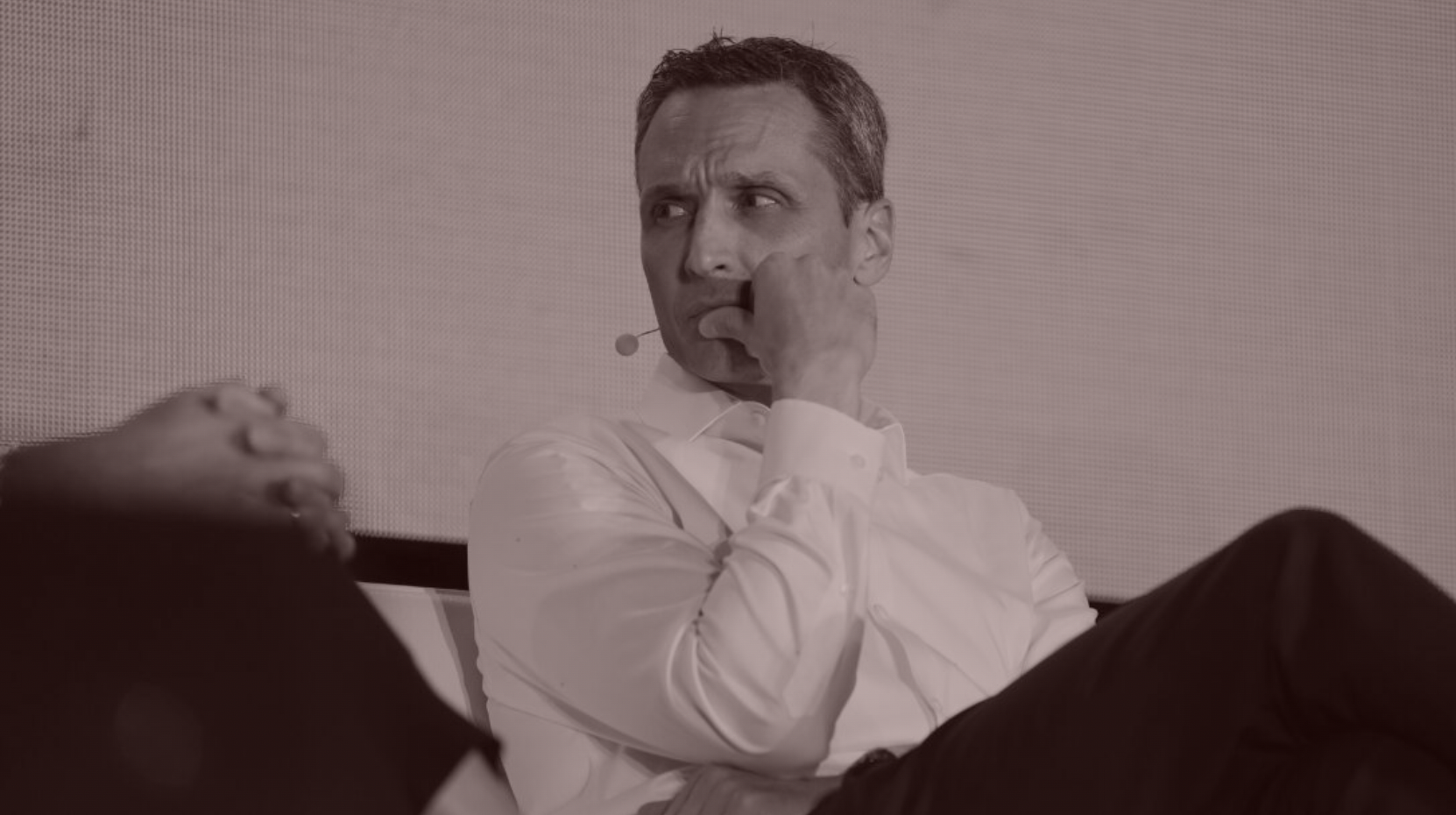 |
| Panic Inside Bristol |
| Yes, everyone knows that ESPN has been quietly downsizing for years, but the recent talent purge highlights the growing anxiety around the business’s transformation. And yet many in the industry fear the worst is yet to come. |
|
|
|
| Late last week, in a genre-defining display of corporate bureaucratese, ESPN announced a “public-facing commentator exercise” that has resulted, so far, in the ouster of at least 20 of the network’s more notable hosts, pundits and other on-air personalities. Vanquished, among others, were NBA commentator and Finals analyst Jeff Van Gundy, ESPN2 boxing O.G.-turned-morning take artist Max Kellerman, Fab Five alumnus and hoops commentator Jalen Rose, the venerable Suzy Kolber, and even NFL great and Monday Night Football regular Steve Young.
Sure, ESPN did an elegant job of laying off former pro coaches and athletes, who could shoulder the economic blow. But their departure also heralded a new era at Bristol—perhaps Jimmy Pitaro’s microcosmic articulation of big boss Bob Iger’s everything is on the table mantra upon retaking the reins of Disney. As Stephen A. Smith, the outspoken NBA analyst and one of ESPN’s most recognizable pundits, noted this week, there are almost certainly more casualties to come. “Yes, ladies and gentleman,” he said, “I could be next.”
ESPN, of course, was once the most indomitable force in media—the recurring revenue machine that helped power the acquisitive years of Iger’s gilded tenure atop Disney. The business was the star of every cable bundle, and it decimated every conceivable competitor, like Sports Illustrated or even CNNSI back in the day. And not only did it reinvest the capital in a growing portfolio of sports rights, but it also became a procurer of elite quality products, from Grantland to 30 for 30, and so much more. It was all built on the back of a linear business that made around $7.5 billion in affiliate fees alone, according to Kagan, as recently as 2020, plus another $2 billion-plus in advertising revenue.
Of course, things changed. And, as I’ve noted in this space before, executives inside Bristol knew years ago that the putative growth of ESPN+ on streaming would not likely outpace its revenue during its peak. In recent years, the network’s retrenchment became subtly more obvious as the decline of linear and future projections both appeared to accelerate. Tangential businesses, like the magazine or an investment in local markets, were sunsetted. Sportscenter, the flagship product, became more of a breaking news production, whose anchors paled in stature to the old Patrick and Olbermann era. Indeed, ESPN laid off 300 staff just two years ago, following similar rounds in 2015 and 2017.
But these all-too-familiar cost-cutting exercises usually target the people off camera: the producers, the show teams, the marketing or communications department, etcetera—the quiet infrastructure that, no matter how integral it may be to a network’s success, is mostly invisible to the consumer. Now the network has shown the door to a series of well-paid personalities, albeit in a more delicate fashion. And indeed, what feels so remarkable and ominous this time around is that the defenestration of so many people who defined and distinguished ESPN in the public imagination was conducted en masse.
“This is an extremely challenging process, involving individuals who have had tremendous impact on our company,” ESPN said in a brief and admirably clear-eyed and unvarnished statement. “These difficult decisions, based more on overall efficiency than merit, will help us meet our financial targets and ensure future growth.”
As one former ESPN executive noted to me, the moves were indicative of the new ESPN, which no longer competes with cable and popular sports brands but rather the biggest tech platforms, all of which are eagerly licking their chops to increase their portfolio of live sports, either through exclusive rights deals or licensing. “The model they backed themselves into is unsustainable and a vicious downward spiral given the cord-cutting landscape,” this person told me. “The pool of competitors is increasing, and they have a lot more cash to spend than ESPN. Meanwhile, the downstream benefit of a new ‘sports’ subscriber for Google, Amazon, YouTube, etcetera, is greater across multiple revenue streams than it is for ESPN.” |
|
|
| The writing has been on the wall, of course. Thanks to the cable bundle, ESPN levied a monumental private tax on every American household, whether they watched sports or not. But as Bob Iger and former ESPN chief John Skipper first discovered when they started their back-of-the-napkin math a decade ago, the potential revenue that ESPN could derive from the audience that is actually willing to pay for the product via D.T.C. couldn’t match those sums—at least not without a visionary reimagining of the entire business model and revenue streams.
After all, that $7.5 billion figure was based on an affiliate audience of about 80 million homes, which were paying an average of $7.65 a month for the channel, whether they watched it obsessively, a bit, or not at all. By comparison, Peacock announced last quarter that it had 22 million total paid subscribers paying slightly less per month.
Meanwhile, the cost for live sports rights is skyrocketing and ESPN is competing with companies that have trillion- and multi-trillion dollar market caps. “There’s a fundamental problem,” one veteran media executive told me in the wake of the layoffs. “The model is broken and the competition doesn’t depend on ad sales or TV subs. They depend on iPhone and toilet paper sales.”
Six weeks ago, I noted that, in the worst case scenario, ESPN would find itself increasingly hard-pressed to keep pace with the skyrocketing cost of live sports rights, which are far and away its primary ratings driver. In order to maintain a claim on the major sports leagues, it would be forced to cut staff, perhaps even some of its more famous hosts. It turns out that what I thought was the “worst-case scenario” was actually the imminent solution.
As one senior Disney veteran told me then, “the truth is, nothing makes a difference that isn’t a live game. Pundits, commentators—they’re all vulnerable.” And, indeed, ESPN’s success or failure will rest not on its Sportscenter hosts or color commentators but on its ability to maintain the rights to Monday Night Football, the College Football Playoffs and NBA Playoffs, and to figure out a profitable and growth-oriented direct-to-consumer business in the process. And, indeed, that’s not an easy business challenge to square since ensuring the rights in this competitive landscape requires handsomely paying top talent, which placates the leagues. That’s one reason why Troy Aikman is working off his five-year $90 million deal to co-host MNF. With a salary like that, sideline talent like Young (his longtime nemesis on the field) become expendable.
Nevertheless, the seven-figure salaries of hosts and pundits become a lot harder to rationalize. Similar calculations are no doubt being made at Disney’s ABC News, where the combined eight-figure salaries of Michael Strahan, Robin Roberts, and George Stephanopoulos are an expense that is becoming increasingly impossible to justify. And it’s not like ABC can one day open up its own standalone streaming product or micro-wagering business. |
|
|
| Still, In retrospect, ESPN’s “public-facing commentator exercise” hardly feels like a meaningful solution. “Nixing some talent seems like you’re shooting at the core problem with a rubber band,” one of the aforementioned media executives said. “Dropping Max Kellerman and Suzy Kolber doesn’t even begin to reverse the existential problem: your rights costs are skyrocketing and your subs are collapsing.”
And so ESPN takes another turn down the linear death spiral. A new ESPN business sustained only by paying sports fans will be smaller than an old ESPN business that was subsidized by every subscriber in the TV ecosystem. “If revenue declines, then the ability to pay for rights declines, which means there’s less to watch, which means the value declines, which means fewer subscribers—and so on into oblivion,” the media executive observed. In the process, more and more notable names will be thrown overboard to prolong the submersion.
On Monday, as Stephen A. bemoaned the fate of his “respected colleagues who have done a phenomenal job and deserved better,” he noted that “it’s not Disney or ESPN that they deserved better from, they deserved better than the times we are living in.” And, he added: “My eyes are wide open now. I’m never comfortable.”
Notably, the solution here may come down to dealmaking. I have reported in the past that a spin-out was discussed inside the Disney boardroom long before many on the outside realized it. (I was glad to have my reporting confirmed a year later in public commentary from Iger.) Will Disney get spun as its own entity, perhaps with ABC? Will it be sold to private equity? Flipped to Comcast in exchange for part of Hulu, as my partner Bill Cohan has discussed in Puck? Or just managed for leaner times? The answer, of course, is that no one knows, but now everyone in the media is thinking about it. At the very least, it seems everything is on the table. |
|
|
|
| FOUR STORIES WE’RE TALKING ABOUT |
|
|
|

|
 |
|
|
|
Need help? Review our FAQs
page or contact
us for assistance. For brand partnerships, email ads@puck.news.
|
|
You received this email because you signed up to receive emails from Puck, or as part of your Puck account associated with . To stop receiving this newsletter and/or manage all your email preferences, click here.
|
|
Puck is published by Heat Media LLC. 227 W 17th St New York, NY 10011.
|
|
|
|