Welcome back to The Varsity, a private email on everything happening off the field and in the boardrooms of the sports business. I’m in Charlotte today, the site of this weekend’s PGA Championship.
Last night, I attended an emotional dinner honoring my longtime SBJ colleague and good friend Michael Smith, a top-notch reporter who retired last year. Smitty, who is battling Parkinson’s, looked and sounded great as he listened to people tell him what a mensch he is all night—people like Teall Capital founder Ben Sutton, longtime Duke A.D. Kevin White, and Wake Forest A.D. John Currie. Thanks to all for keeping it a Marchand-free safe space.
🚨 Pod alert: We’re a little more than a week away from the Indy 500, so I thought it would be a good time to have Fox Sports C.E.O. and executive producer Eric Shanks on The Varsity to tell us what to expect. The episode, which will also touch on Fox One, the upfronts, and much more, posts this weekend. Also, make sure you listen to yesterday’s episode, where Axios media reporter Sara Fischer and I broke down all the news coming out of the upfronts.
Let’s get to it…
|
Player of the Week: Howard Katz
|
|
The guy in charge of creating the NFL’s schedules for the past two decades handed in his last one this week. Howard Katz, the NFL’s senior vice president of broadcasting and media operations, is retiring. What a way to go out. It might be a stretch to say that the NFL dominated the network upfront presentations this week, but league games played a larger role in this year’s ad sales fest than ever before. And the schedule release has become a multiday event—yet another offseason tentpole for the Shield.
|
Down to the J.V.: Jessica Berman
|
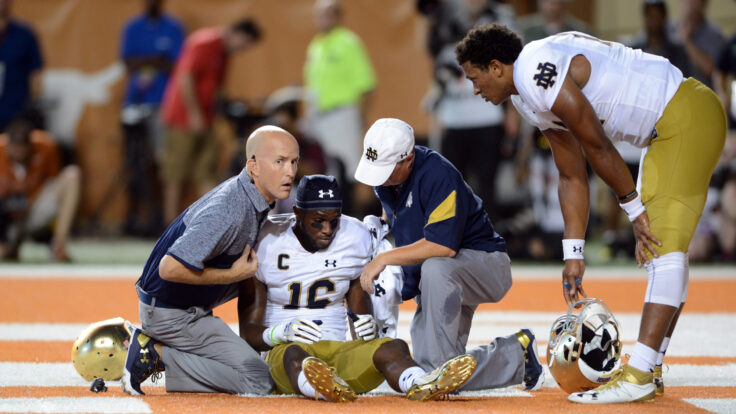
The National Women’s Soccer League Players Association is mad about a decision to allow play to continue in an Angel City FC–Utah Royals game after Savy King collapsed and was stretchered off the field. King was rushed to the hospital and underwent heart surgery. Thankfully, she’s recovering well, but it was a scary situation, which led the players association to call for Commissioner Berman to change league policy. Going forward, the NWSLPA reasonably demands, any injury that requires life-saving measures should automatically end the game. After all, two years ago, the NFL suspended the Bills-Bengals MNF game after Damar Hamlin suffered a cardiac arrest.
|
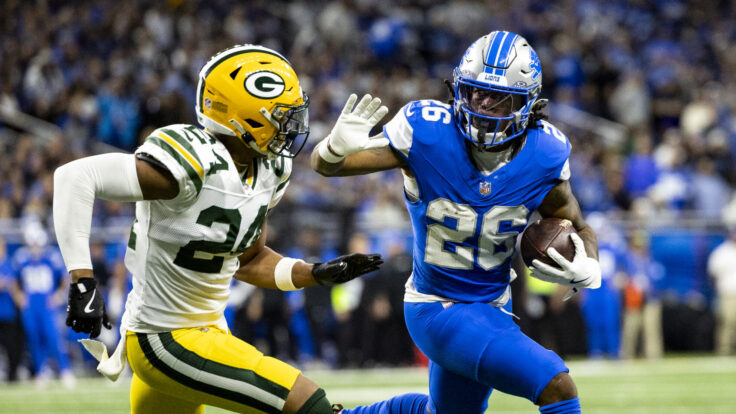
- NFL schedule notes: It’s the height of folly to judge the strength of a network’s NFL schedule in May. For example, right now, Netflix’s Christmas Day Cowboys-Commanders game looks great—a must-see divisional rivalry matchup. But what if both teams have only notched four wins by late December? Different story…Still, the NFL’s just-released schedule does suggest a slight change in strategy by the league. Thanksgiving, for instance, will feature some of the season’s biggest games: Chiefs-Cowboys on CBS, Packers-Lions on Fox, and Bengals-Ravens on NBC. Some of my sources predict record Thanksgiving ratings for each window. The NFL sometimes used to take the Thanksgiving audience for granted, scheduling mediocre games that do great numbers anyway thanks to a sense of tradition and a nationwide dose of tryptophan. This season, however, the NFL is making Thanksgiving must-see football.
The second point worth noting is that the NFL front-loaded the schedule with premier games. One could argue that all of the NFL’s media partners have their biggest games in the first two weeks of the season: In Week 1, NBC has Dallas-Philadelphia and Baltimore-Buffalo; CBS has Lions-Packers; YouTube has Chiefs-Chargers from Brazil; and ESPN has Vikings-Bears. In Week 2, Fox has Eagles-Chiefs. The logic seems obvious: Pack the first two weeks with high-quality games to ensure a positive TV ratings storyline from the jump. NFL executives certainly noticed the NBA’s double-digit viewership decline in the first couple months of the season—a narrative the league had to deal with all season, even as viewership rebounded.
- YouTube’s Brazil game: As far as the NFL is concerned, the streaming playbook for live sports productions has been set for a number of years. When Amazon Prime picked up rights to Thursday Night Football in 2021, the streamer hired NBC Sports to produce the games. Last year, Netflix paid CBS to handle its Christmas games. The streamers may have deep pockets, but they don’t have a deep bench of below-the-line live sports talent or the infrastructure to actually produce these games.So, who’s going to produce YouTube’s first-ever NFL game from Brazil in Week 1? The deal isn’t finalized, but the most likely scenario is that YouTube will hire NBC. After all, NBC produced last year’s game from Brazil for Peacock, which means it understands the logistics of producing a game from that country. As for the announcers, YouTube will have to find its own. NBC’s Mike Tirico and Cris Collinsworth already have two NFL games on their docket that weekend. The announcers who called last year’s Brazil game, Noah Eagle and Todd Blackledge, have Big Ten commitments.
It’s not clear how much YouTube would pay NBC, though I’m told that the cost of producing an international game falls somewhere between $4 million and $7 million. One story line that bears watching: As the streamers increasingly compete with broadcasters for rights, how much longer will the broadcasters be amenable to helping the competition?
- ESPN’s MLB opt-out: In the three months since ESPN told MLB that it planned to opt out of its $550 million-per-year deal after this season, the two sides haven’t talked—at least not about a rights deal. “I’m assuming—I don’t know for sure—that they are out there testing the market, which is their right to do,” ESPN chairman Jimmy Pitaro told a group of reporters earlier this week.For now, the two sides are clearly far apart on the package that includes Sunday Night Baseball, the Home Run Derby, and the wild-card playoff games. But as ESPN prepares to launch its direct-to-consumer app, Pitaro made it clear, again, that he’s interested in a package of local rights. I talked about this earlier this week with Axios media reporter Sara Fischer on The Varsity. Here’s what she told me: “Every league wants to take these local rights that were distributed on regional sports networks that are really struggling right now, and consolidate them to a big streamer. It’s an easier fan experience. We’re at the point now where local rights are distributed in so many different places, it’s confusing.
Sara continued: “The problem is that it’s easy to get league or team owners from smaller franchises, and smaller geographies, to invest in this idea, and get behind it, because they benefit from it. But the team owners in large markets—Chicago, New York—especially ones that own their own regional sports networks, have no interest in joining these sorts of big nationalized local packages.”
- F1 media rights: Sports media’s migration from linear television to streaming is changing the way most rights holders approach the market—but not all. The biggest sports (the NFL, the NBA, and college football) will continue to hit the rights market in the same way, with multiple bidders driving up prices. But others, like F1, may need to take a different approach. That's one of my takeaways from Liberty Media C.E.O. Derek Chang’s appearance at a recent J.P. Morgan conference.Chang said that F1 should lean into its position as a “cultural phenomenon” in the U.S., rather than viewing it as a TV sport, according to The Hollywood Reporter. “We’re obviously looking for a partner that can help us continue to grow the fan base,” Chang said. “It’s sort of, where does the U.S. fit into that landscape, less from a media rights payment standpoint, but more, what are we doing with F1 to build a property in the U.S.?”
- What’s next for Pete Rose?: I was on a conference call on Wednesday with three baseball fans who work in sports when Pete Rose’s reinstatement came up. We took a quick vote on whether we would vote the Hit King into the Hall. Two said yes, one said no, and one abstained—not enough to pass the 75 percent threshold. I posed the same question to one of my Orioles fan group texts (yes, we’re all a bit mopey of late). Again, Rose’s support fell short of 75 percent.This is not exactly a Nate Silver–level data analysis, but I mention this to underscore the notion that Rose’s reinstatement doesn’t mean he’s a shoo-in for the Hall of Fame. The Athletic has a good piece on how Hall of Famers would vote on Charlie Hustle, which exposes the fault lines. Of course, we won’t really know Rose’s chances until the next meeting of the Hall of Fame’s Era Committee, which is made up of 16 former players, executives, and media members. That’s not until December 2027.
|
|
|
|
Once the domain of backslapping good ol’ boys who excelled at shaking alumni down for donations, big-time college A.D. jobs are increasingly being filled by actual business executives.
|
|
|
|
The University of Maryland’s recent search for a new athletic director has illuminated just how professionalized the college sports landscape has become. Maryland, which just announced the hiring of Atlanta Braves senior vice president of business strategy Jim Smith, didn’t simply poach an executive from the world of professional sports. Almost all the finalists were senior business leaders, including senior vice president of NBC Sports digital and emerging businesses Damon Phillips, and senior Roc Nation executive Michael Yormark, the identical twin brother of Big 12 commissioner Brett Yormark. In fact, only one of the final four candidates came from the college ranks—Maryland’s interim athletic director, Colleen Sorem.
As recently as a few years ago, any list of A.D. candidates would have been dominated by college sports administrators. This started to change two years ago, however, when Notre Dame brought in Pete Bevacqua from NBC Sports as its new A.D. Several people in the college sports universe told me that they see Maryland’s talent search as part of the same trend. Given the realities of N.I.L. compensation packages, and the seemingly constant threat of conference realignment, large universities realize they need business builders in those chairs. In January, for example, Clemson hired Michael Drake, senior vice president of global partnerships for the Atlanta Hawks and State Farm Arena, as C.E.O. of Clemson Ventures, the commercial revenue arm of the school’s athletic department. Other big-time schools, including Michigan State, Rutgers, and Stanford, are also considering filling their athletic director vacancies with candidates who have extensive business backgrounds.
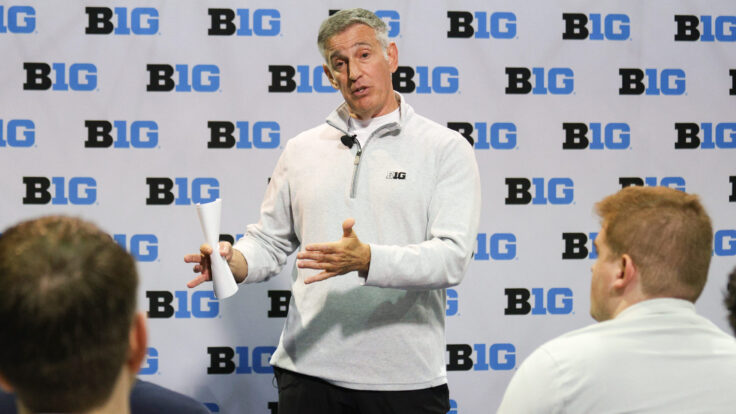
It’s a microcosm of the larger professionalization of college sports, of course. When the Big 12 hired Brett Yormark away from Roc Nation to be its commissioner in 2022, he immediately brought a pro-business mindset to the conference. He has recently been negotiating to get private equity companies to invest in the conference—–something old-guard college administrators would never contemplate. The following year, the Big Ten hired Tony Petitti, an executive who cut his teeth at CBS Sports and MLB. Lately, Petitti has also been in talks with private equity companies, sources said. Not coincidentally, Maryland president Darryll Pines was on the Big Ten committee that hired Petitti.
Indeed, when Maryland started its A.D. search two months ago, the university emphasized the need to consider nontraditional candidates. Increasingly, schools aren’t looking at the A.D. position as a chummy fundraiser whose main talent is prying money out of well-heeled alums. Instead, colleges expect A.D.s to be able to run a commercial operation, which entails securing big sponsorships, and figuring out the best way to price tickets to maximize sales. In other words, colleges want their athletic departments to more closely resemble pro sports franchises—since that’s what they’ve become, essentially.
At the very least, they see value in embedding commercial operations groups inside athletic departments. “We’re seeing a lot of donor fatigue,” one plugged-in sports business source told me. “Colleges now need money every month for N.I.L., and it’s not sustainable. The donors are throwing up their hands, saying, ‘It’s okay to be asked for money for a capital project every couple of years, but I don’t want to be asked every month.’”
|
|
On the streaming future: “During the 2000s and 2010s, when I had several roles within Time Warner Cable and Spectrum, all these annoying cable subscribers were bitching that We want à la carte channels. They are now yelling, But not like this! Sports fans played the F-A role for 20 years, saying they wanted to only pay for sports programming, thinking it would be a better bargain. Well, those fans are now in the F-O phase. Did they really believe channels such as TLC, MTV, A&E, and Hallmark accounted for the majority of the bundle cost?” —A former cable guy
On ESPN’s D.T.C. app: “Just like NBC Sports Gold was foundational in the journey to Peacock, ESPN+ was instrumental in getting to ESPN’s direct-to-consumer app. They were laboratories for ESPN and NBCU to experiment with streaming. The question I have is whether ESPN+ programming is more valuable to the app than ESPN2, ESPNU, ACC Network, SEC Network, and ESPN News.” —A Varsity subscriber
On the NFL’s YouTube game: “Can you answer a question about the YouTube NFL game? Admittedly, I haven’t read the full Sports Broadcasting Act of 1961, but is it possible that the game being distributed on YouTube for free means the NFL doesn’t need to put it on an over-the-air channel in the team’s home markets? After all, it’s technically available on free TV, even if the definition of TV is being stretched a bit there. Would be interesting, particularly with Congress already sniffing around.” —A Varsity subscriber
[Ed. note: The September 5 Chiefs-Chargers will be available on local broadcast channels in the Kansas City and Los Angeles markets. The idea of doing away with the local broadcast deals for this game was never even contemplated at the league office.]
|
|
Have a great weekend,
John
|
|
|
|
Ace media reporter Dylan Byers brings readers into the C-suite as he chronicles the biggest stories in the industry: the future of cable news in the streaming era, the transformation of legacy publishers, the tech giants remaking the market, and all the egos involved.
|
|
|
|
Join Puck’s chief political columnist, John Heilemann, as he roams the corridors of power and influence in America on this twice-weekly interview show, taking you beyond the headlines with the people who shape our culture: icons and up-and-comers, incumbents and insurgents, moguls and machers in the overlapping worlds of politics, entertainment, tech, business, sports, media, and beyond. The conversations are rich and revealing, unrehearsed and unexpected… and reliably impolitic. A Puck-Audacy joint, new episodes drop every Wednesday and Friday.
|
|
|
Need help? Review our FAQ page or contact us for assistance. For brand partnerships, email ads@puck.news.
You received this email because you signed up to receive emails from Puck, or as part of your Puck account associated with . To stop receiving this newsletter and/or manage all your email preferences, click here.
|
|
Puck is published by Heat Media LLC. 107 Greenwich St, New York, NY 10006
|
|
|
|