Welcome back to The Varsity. I’m John Ourand, writing tonight’s private email
from Whidbey Island, north of Seattle. My niece is getting married tomorrow, which means I’m going to miss YouTube’s inaugural NFL stream. Let me know how it goes.
🚨 Pod alert: This weekend’s Varsity podcast will feature ESPN wunderkind turned new-media creator Pablo Torre, who’s out with a report suggesting that the Clippers circumvented the NBA’s salary cap with Kawhi Leonard’s contract. We’ll talk about that and some of the
podcaster’s other investigatory hits—like possible collusion among NFL owners—and his reporting on the Bill Belichick– Jordon Hudson telenovela. Meanwhile, my partner Jon Kelly and I discussed the media companies best positioned to survive the next wave of disruption on this week’s episode, “Any Given Algorithm.”
|
Player of the Week:
Cliff Drysdale
|
For people of a certain age, ESPN’s tennis coverage will always be defined by Fred Stolle
and Cliff Drysdale. The longest-tenured broadcaster at ESPN, Drysdale started calling matches for the network 46 years ago. He’s retiring this week—his last match is tonight’s U.S. Open semifinal between Jessica Pegula and Aryna Sabalenka. Given his impeccable reputation, it’s no surprise that he’s getting an appropriate send-off. This tribute
was great.
|
Down to the J.V.:
Nielsen
|
This week, Nielsen rolled out a new league- and network-friendly counting methodology dubbed Big Data +
Panel. The service will capture information from smart TVs and cable set-top boxes, which should boost overall audience numbers, so don’t be surprised to see significant increases in sports viewing this fall.
But it was a surprise to see the NFL publicly bash the ratings agency. Just a day after the new measuring system debuted, NFL chief data and analytics officer Paul Ballew
told The Wall Street Journal that by not properly accounting for in-home and out-of-home “co-viewing,” Nielsen was systematically undercounting (in his parlance) the league’s audience—among other grievances. It’s never a good sign when the NFL has you in its sights, so look for Nielsen to find ways to placate the
country’s most powerful entertainment force.
|
- End of the ‘Inside the NFL’ era: After more than 1,000 episodes, Inside the NFL’s run on linear television is over. I’m told that the show, which debuted on HBO 48 years ago, is headed to Elon Musk’s X on September 8, with Ryan Clark as host. Each week through the Super Bowl, NFL Films will produce at least 10 shortform episodes featuring the show’s signature moments—mic’d up players and coaches, game recaps, and a roundtable
discussion led by Clark.Inside the NFL was a staple of pay television back in the day, providing highlights with dramatic voiceovers and behind-the-scenes footage at a time before that kind of content was ubiquitous and instantly accessible. The series spent three decades on HBO, then moved to Showtime in 2008 before descending to The CW for the past two seasons. Now, the show is making the do-or-die transition from traditional media to digital. But just as
importantly, the deal marks a deepening of the NFL’s relationship with X: Inside is being billed as the first in-season original series on the platform.
- YouTube’s year of living dangerously: Earlier this year, during its contentious carriage negotiations with YouTube TV, Paramount took a hard line in rejecting the v.M.V.P.D.’s demand to ingest Paramount+ programming. After all, Paramount didn’t want to relinquish control of its first-party user
data in exchange for YouTube’s scale. So they sunk that part of the deal.The ingestion question is going to define this season of renewals as the super-scale streamers look to use their platforms as marketplaces and subscale players must weigh the tradeoffs, and grinfucks, of their growth-hacking tactics. As I noted last week, during its recent
negotiation YouTube persuaded Fox to incorporate its content inside of YouTube TV. Since Fox One consists of channel streams, without any exclusive content, the company was less concerned with holding the line against ingestions. Of course, the ingestion question will remain contentious over YouTube’s next two carriage negotiations. NBC, whose deal is up this month, and Disney/ESPN, whose deal is up next month, are both following Paramount’s lead. Will they have the leverage to
delay this Prime Video Channels–like treatment another negotiating cycle? Stay tuned on this one…
- ESPN app-les and oranges: Is ESPN’s much-ballyhooed, brand-new direct-to-consumer service being hobbled by a legacy media mindset? Andrew Rosen, former Viacom executive and current digital media advisor, gestured at this notion during his recent
appearance on my partner Dylan Byers’s excellent media podcast, The Grill Room.When Dylan asked Rosen if he was bearish on ESPN’s app, he said, “I mean, I think they’re bearish. Analysts are coming out and saying they project 2 million subscribers, maybe 3 million, over the next few years. Jimmy
Pitaro is underselling it. He’s saying We’re afraid of churn, so we’re better off with a portfolio of apps. I think the problem is, when you use ESPN, is it a personalized experience? Does it know who you are? Does it understand your fandom? I don’t think the answer is that they’re passive viewers. Fandom is something that’s very different on the internet than it is on television. I think that sports betting and commerce on a streaming app are hostile to the consumer. It’s lazy
to me.”
- More on ESPN’s legacy mindset: Our buddies over at LightShed Partners proffered a similar analysis, saying that ESPN’s direct-to-consumer service will lead to a fatter bundle. “What has become clear in the past couple of weeks since ESPN launched ESPN Unlimited and Select is that the primary goal is to force MVPDs/vMVPDs to carry ESPN Unlimited as part of their broader ESPN carriage negotiations,” wrote LightShed’s Rich
Greenfield.Ironically, cable distributors were the ones who originally pushed for access to these streaming services as a customer-retention strategy. But Greenfield noted that the exclusive content on the app, like the U.S. Open, has the potential to make this a pricey addition. “We expect ESPN to push more and more content to ESPN Unlimited exclusively,” Greenfield wrote, citing the WWE deal that will put Premium Live Events on the service. “Disney is utilizing its original
ESPN playbook of creating a new network (in this case, as streaming ‘channel’), pushing more and more live content to that new network, and then forcing distributors to carry it and pay for it across the vast majority of their subscriber base. If successful, this approach is a far better business model than direct-to-consumer streaming.”
- America’s team: Back in July, Mike Tirico was walking the field before the Hall of Fame game
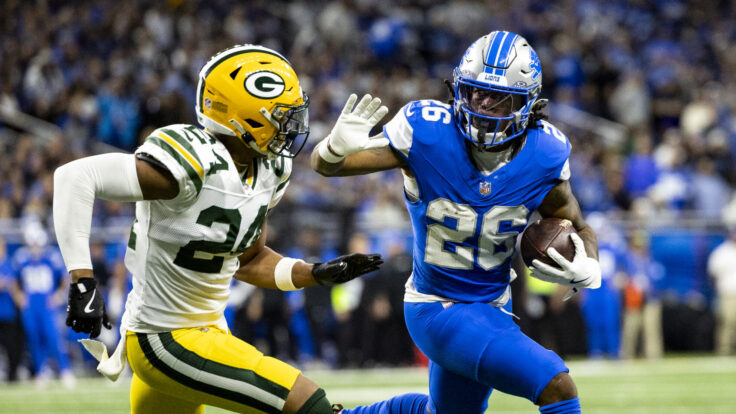
between the Chargers and Lions when Eamonn Reynolds, Detroit’s V.P. of communications, approached the veteran NBC sportscaster with a remarkable stat: Last year, Lions games drew more viewers than Cowboys games in the late Sunday afternoon and primetime windows. That marked a sea change in how media companies approached the NFL schedule. For years, networks clamored to carry Cowboys games because Dallas had a national fan base. It still does, of course, but lately, other teams
have eclipsed Dallas on the network wish list.Tirico picked up the theme when he joined me on the Varsity podcast. “The success, and also the star factor with Taylor Swift and Travis Kelce, have taken the Chiefs from a high level to that level where they could usurp the Cowboys,” he said. “But Dallas is still right there. Last year was a bad year—Dak Prescott was injured, and they had seven wins. But they had three consecutive
12-win seasons before that. Because Jerry Jones is out there more than any executive in sports, it just heightens everything around that franchise and that team. For the foreseeable future, they’re going to be up there. But what’s nice about the NFL is that there’s room at the inn for smaller-market franchises like Kansas City and Detroit. These teams can come up and become must-see TV.”
|
|
|
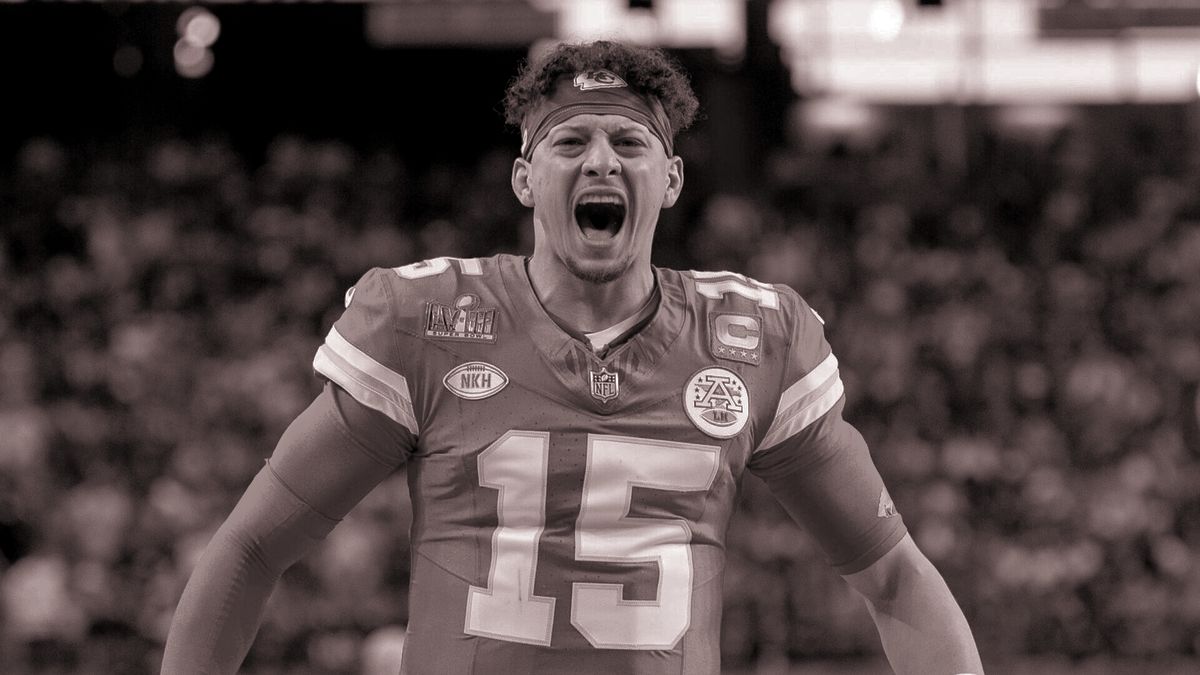
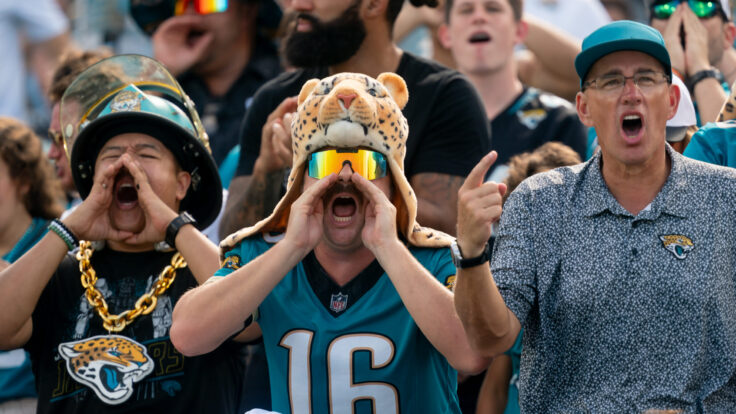
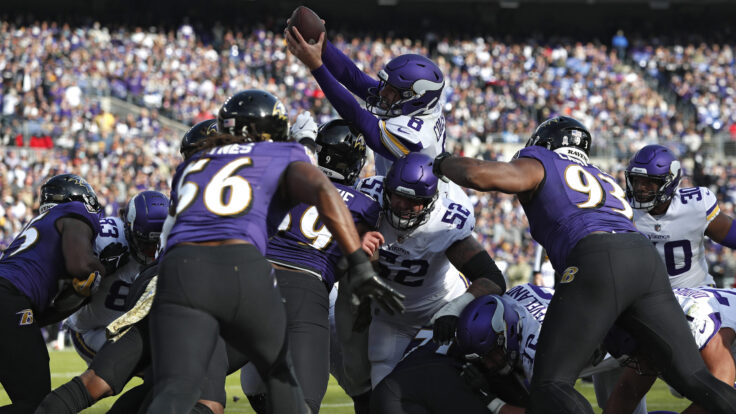
Yes, YouTube is streaming its first NFL game tomorrow from Brazil, and yes the NFL seems to
be conceding to the long-inevitable march toward streaming—even embracing YouTubers like Dude Perfect. But don’t let that fool you. The NFL is still about the TV business, and business is still good.
|
|
|
In many respects, there’s nothing special about tomorrow night’s live YouTube broadcast of the
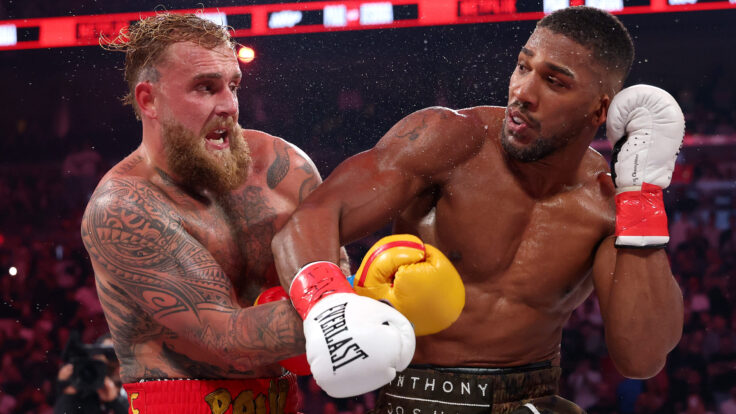
Chiefs-Chargers game from Brazil. After all, the league has been streaming games for the better part of a decade—Yahoo carried a Bills-Jaguars game from London back in 2015, with a Sunday morning feed memorably defined by choppy, pixelated video. In the ensuing decade, of course, technology has vastly improved, and other than the rogue Mike Tyson–Jake Paul fight on Netflix, streaming customers have not generally had to deal with lag. Audiences have managed to find the
streams, too: Amazon’s Thursday Night Football audience is comparable to any game that’s available exclusively on cable.
That’s why my sources are more interested in everything happening around the Chiefs-Chargers game than the game itself, to the point that YouTube’s game production feels almost like an afterthought. Rich Eisen and Kurt Warner will never be mistaken for an A-list broadcast booth, and YouTube’s lineup pales in comparison
to the Netflix booths last Christmas, which were stuffed with Ian Eagle, J.J. Watt, Nate Burleson, Noah Eagle, and Greg Olsen. To be fair, it’s a hard week for a one-off streamer to find football announcers. Both Fox and CBS have full NFL schedules, and college football is in full swing. And even on the best days, networks like Fox and ESPN are loath to share announcers with streaming competitors.
Still,
it seems YouTube has been focused on their alternate feeds designed to draw in younger audiences. The NFL, like every sports league, has made it a priority to court younger fans, which is the main reason why Roger Goodell starred in a commercial this week with a bunch of YouTube influencers your kids know— MrBeast, Dude Perfect, SKabeche,
Haley Kalil, Hannah Stocking, etcetera.
In the past, the NFL has been very particular about who the networks use to call their games—don’t expect Dave Portnoy to show up in the Fox booth on Sundays anytime soon. But the embrace of YouTube influencers suggests that the Shield may be getting comfortable with the unstoppable march away from traditional linear television. And yet my sources have preached caution about amplifying the significance
of one Friday night game in September. The NFL’s coffers will remain lined with linear TV dollars for the foreseeable future, even as it dabbles in new media.
Take this year. YouTube has one NFL game, Peacock has one, Netflix has two, and Amazon carries the Thursday package. Meanwhile, CBS and Fox will produce 101 games each, and NBC’s Sunday Night Football will be the most viewed primetime show for the 15th year in a row. “Let's keep things in perspective here,” one source told
me. “The NFL is still about broadcast TV and massive reach there. They are dabbling elsewhere to make sure that the people who aren't in the linear ecosystem have access to the games. But that’s only a game here or a game there. Don't get so worked up about it.”
This guy was right, sure. The NFL also still mandates that all games are available on local broadcast channels in the home markets. However, the league has long proved that it moves in one direction—the path of its
own self-interest—and telegraphs decisions with political precision, whether that was the 17th (and, one day soon, 18th) regular season game or the extended playoff format. It would be hyperbolic to suggest that the NFL would ever consider abandoning a legacy media platform that has turned it into the mightiest sport in the land, but it would also be naive to assume it isn’t considering its options in its next media rights negotiations. Sure, this is just one random game in São Paulo, but who
might the league entrust with an entirely hypothetical league-wide, internationalized 18th game? YouTube, with its global audience and fortress capitalization, might seem like an obvious choice.
|
On Satya: “I'm listening to your pod with Jon Kelly, and I wanted to submit that Microsoft is the
answer to your question about major corporate turnarounds in the tech space. In the early 2010s, Microsoft was becoming an afterthought, a company still dining out on Windows—and worse, still irrevocably tied to Windows. When Satya Nadella became C.E.O. in 2014, he famously jettisoned the Windows-at-all-costs approach and focused the company on cloud and cloud applications (e.g., by allowing iOS versions of Word, Excel, and PowerPoint). Fast-forward to today, and
Microsoft is as successful and powerful as ever, and Satya is considered one of the most effective C.E.O.s in tech. He even gets the one-name treatment!” —A tech executive
On Reed Hastings: “You’re looking for an example of an offline brand that successfully transitioned to digital? How about Netflix? Remember, it started off sending DVDs in the mail.” — A D.C. lawyer
On the NFL’s stake in ESPN: “You were on point when you wrote that ESPN
has long been financial partners with the NFL. Remember the saga with the show Playmakers?” — A Varsity subscriber
On the Micah Parsons trade: “Could you imagine the best player in baseball being traded to the smallest market for the biggest-ever contract?” — A sports business executive
On beef brisket nachos with Burke Magnus: “I hope Burke paid for lunch. Also, I liked your
Mike Tirico pod. He is living the Disney dream but at NBC.” — A former ESPNer
|
Have a great weekend. See you on Monday,
John
|
|
|
Finally, a media podcast about what’s actually happening in the media—not the oversanitized,
legal-and-standards-approved version you read online. Join Dylan Byers, Puck’s veteran media reporter, as he sits down with TV personalities, moguls, pundits, and industry executives for raw, honest, sometimes salacious conversations about the business of media and its biggest egos. New episodes publish every Tuesday and Friday.
|
|
|
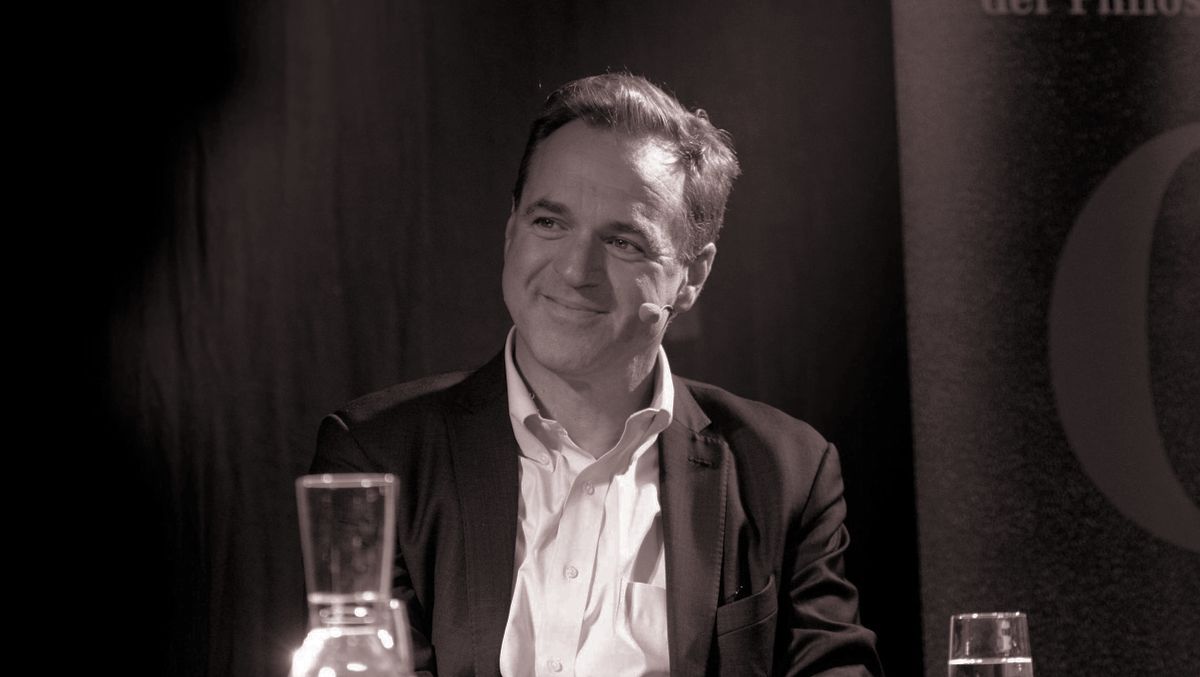
The industry’s go-to source for unflinching reporting on the trillion-dollar business of artificial intelligence - perhaps the
single most important technology of our time. Ian Krietzberg, the powerhouse journalist behind The Deep View, delivers twice-weekly insights into the latest dealmaking and breakthroughs in A.I., and how the intersecting worlds of finance, entertainment, media, and politics are being transformed in its wake.
|
|
|
Need help? Review our FAQ page or contact us for assistance. For brand partnerships, email ads@puck.news.
You received this email because you signed up to receive emails from Puck, or as part of your Puck account associated with {{customer.email}}. To stop receiving this newsletter and/or manage all your email preferences, click here.
|
Puck is published by Heat Media LLC. 107 Greenwich St, New York, NY 10006
|
|
|
|