Welcome back to The Varsity. I’m John Ourand, in New York to attend
Puck’s holiday jollification this evening. Thanks to Marchand for once again agreeing to dress up as an elf while ensuring that the sancerre stays crisp. (Not tart, Andrew! We’re not vulgarians!)
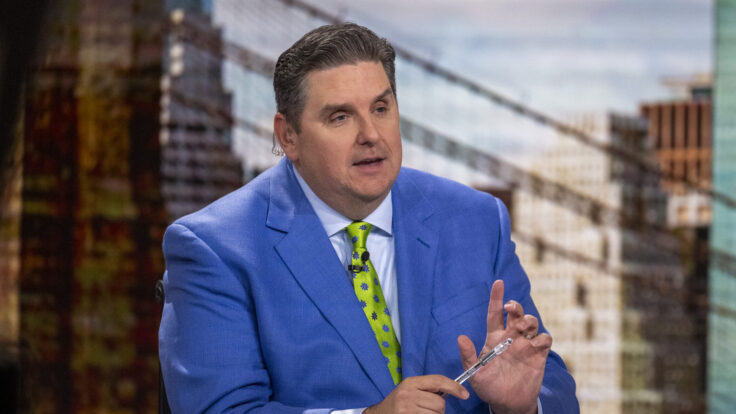
Pod alert: The NBA has had a stronger start to its season than last year, at least when it comes to ratings, so I convinced ESPN’s Brian Windhorst to come on the Varsity pod this week to discuss the business of basketball.
Also, make sure to listen to yesterday’s episode with USA Sports president Matt Hong, who explained why cable can still be a good business. More on that below.
For tonight’s main event, we’re delivering my colleague Bill Cohan’s recent magnum opus on the Netflix-Paramount title fight over Warner Bros. Discovery. Bill has delivered
an essential timeline of the deal, the latest sticking point, and its current state of play. We’re offering it as a special Hanukkah gift for Varsity subscribers. Enjoy!
Mentioned in this issue: Brian Windhorst, Matt Hong, the Patriots, the Jets, Nick Khan, Dana White, R.F.K. Jr., Cheryl Hines, Linda McMahon, Mike Foss, Rick
Cordella, Versant, Jim Lanzone, Polymarket, the Ellisons, RedBird, Strother Martin, Elon Musk, Zaz, Jared Kushner, Pete Bevacqua, and more… |
- NFL local ratings talk: There were no big surprises at the top or bottom of the NFL’s local TV ratings through Week 12: Fourteen teams posted increases year over year, 17 others saw viewership drop, and my Commanders were somehow flat despite a disappointing season. The Patriots’ 10-game winning streak, which ended yesterday, boosted viewership in the Boston market by 34 percent over last year (616,000). And you won’t be shocked to learn that the abhorrent 3–11 Jets were at
the bottom of the list. Their game ratings are down 29 percent in New York (420,000). Interestingly, viewership for the hapless Giants (2–12) was inexplicably up 20 percent over last year (638,000) in New York. Perhaps the Giants faithful, who have already seen their coach get canned, are just that excited to watch the evolution of promising quarterback Jaxson Dart.
In Los Angeles, the Chargers have had more viewers (388,000) than the Rams (377,000)—another
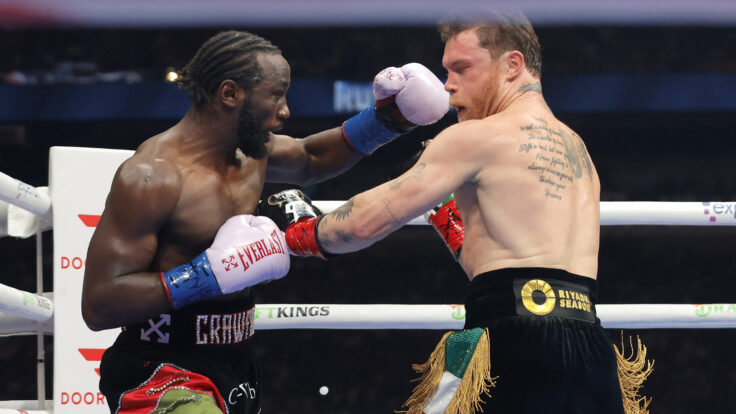
startling fact given that the latter seem like a legit Super Bowl frontrunner. And the Raiders games in Vegas produce the NFL’s smallest number of local viewers, at 82,000—down 2 percent year over year. Could the Raiders have more viewers in L.A. and San Francisco? A few more stats: The Eagles (812,000, +8 percent) and Bears (785,000, +12 percent) have the league’s two largest local audiences. Both the Chiefs (–6 percent) and the Cowboys (–2 percent) are down this season. - TKO gets in the ring: Zuffa Boxing’s media rights deal with PSKY kicks off on January 23 with a live fight in Vegas, broadcast on Paramount+. A couple fellow TKO heavies were on site to support the brand on Saturday night. WWE president Nick Khan and UFC C.E.O. Dana White were in Lubbock, Texas, watching the 2025 USA Boxing Championship fights. Khan left Texas in time to make it to Washington for John Cena’s
final match, which drew a very D.C. crowd that included R.F.K. Jr. and Cheryl Hines, Linda McMahon, and, not to be outdone, ESPN senior vice president Mike Foss. Details on who’s fighting in Zuffa’s Vegas curtain-raiser are expected later this week.
- Hong on the Versant spinoff: We’re just a couple of weeks away from Versant’s spinoff from NBCUniversal, so, of course, I pressed
USA Sports president Matt Hong on the Varsity pod to clarify the new company’s future relationship with its old parentco. “From a league rights and league relationship perspective, we will be separate going forward,” he told me. “It starts from the pledge that we collectively made to fans and to the leagues that wherever programming aired in 2024 and 2025, fans could continue to find that same programming on the same networks, post-spin, in 2026. [For instance], the
Olympics—that relationship stays with NBCU, but Olympic programming will continue to air this winter and from L.A. on USA Network and CNBC. … From a legal perspective, we’re completely separate. The same thing I just described relative to our league partners, we’re doing with our talent as well. … As we look at sports rights, [NBC Sports president] Rick Cordella and I will both be opportunistic. Where it makes sense for us to continue to partner, we will absolutely do so, and
we’d like to do so.”
- More Hong…: I was particularly intrigued to hear Hong’s take on why it’s still a good idea to invest in linear cable channels, hardly a growth business these days. “We continue to be super bullish on the linear model—there’s a healthy component of the linear model, which already involves streaming,” he told me. “If you look across all of Versant over the trailing 12 months, more than 14 billion hours of content were viewed across
our eight networks—a significant portion of that [was] live sports. That number exceeds many, if not most, streamers and media companies in total consumption.”
Crucially, Hong emphasized that much of that viewing already happens in streaming environments. “A lot of those hours were consumed via our own or M.V.P.D. streaming platforms,” he continued. “Those are ubiquitous, extremely user-friendly streaming extensions of our linear networks. That’s our strategy for now, and we’re leaning
into it. When you combine linear delivery with streaming delivery, the total hours viewed across our networks are super healthy.” - Lanzone bullish on prediction markets: Varsity readers know prediction markets have become a true leitmotif here, so my ears perked up when I heard my Puck partners Dylan Byers and Julia Alexander quiz Yahoo C.E.O. Jim Lanzone about his Polymarket deal on The Grill Room, their can’t-miss podcast. “Yahoo Sports is a core property for us,” Lanzone said. “About half of our audience is Millennial or Gen Z, which surprises people, and that’s driven by Yahoo Finance being the standard in its category, and Yahoo Fantasy being deeply embedded—essentially Yahoo and ESPN. On an NFL
Sunday, the average user opens the app 19 times. That’s enormous engagement.”
Lanzone continued: “We’ve been expanding the sports content slate accordingly. We now produce about 60 hours of original programming a week, focused on analysis rather than scoops. We’ve launched FAST channels in sports and finance, and nonfiction video is very much on the table. On monetization, we inherited a legacy sports-betting deal [with MGM] from Verizon that limited our participation, and that deal
expires at the end of Q1. As a result, Yahoo is now the largest sports property without a long-term betting agreement, which has drawn significant interest, given our audience and distribution. The Polymarket partnership operates in markets where BetMGM doesn’t. Prediction markets have expanded how people think about the category. There’s nothing new to announce yet, but we’re right in the middle of those conversations. It’s a meaningful upside vector that simply hasn’t existed for Yahoo over
the past several years.”
|
And now, here’s Bill with the inside story of how the WBD-Paramount negotiations went
sideways… |
|
|
Despite their numerous bids for all of WBD, a rift has opened between the
principals at Paramount Skydance and the board and advisors of their target company—at least for now. Can money heal all wounds? |
|
|
On November 18, nearly a month after Warner Bros. Discovery had put itself up for sale and two days
before the first round of bids was due, Variety reported an interesting new twist. According to the trade, the Ellisons were bringing in the Public Investment Fund of Saudi Arabia, the Qatar Investment Authority, and the Abu Dhabi Investment Authority—with each contributing $7 billion in equity to the Ellisons deal. That same day, notably, Paramount Skydance
denied the Variety report in the strongest possible terms. “The information Variety published is categorically inaccurate,” the company said in a statement.
The source of any equity financing was always going to be a critical factor in the tug-of-war between Paramount Skydance and Netflix for
Warner Bros. Discovery. The involvement of foreign investors, after all, could trigger additional regulatory hurdles, such as an unappealable review by CFIUS (the Committee on Foreign Investment in the United States) or a lengthy F.C.C. evaluation process. And these were not inconsiderable factors for the Ellisons, especially given that a hallmark of the Paramount Skydance bid was always its perceived advantage on the regulatory front—to say nothing of Larry Ellison’s vast
fortune.
On November 20, the day that preliminary bids were due, the Ellisons and RedBird Capital, their equity partner in the original deal for Paramount, submitted what turned out to be their fourth bid for the company: $25.50 a share, or roughly $94 billion, including WBD’s net debt of $30 billion. The letters from PSKY to WBD accompanying their previous failed bids had made clear that the Ellison family would be “backstopping” the equity for their bid. They also said they were willing
to “underwrite the full equity requirements” for the deal, according to the PSKY tender offer documents.
Yet, as we now know from PSKY’s tender offer documents and various press releases, the Variety story was largely accurate. In fact, those three sovereign wealth funds were providing a combined $24 billion—or 60 percent of the $40 billion in equity that the Ellisons and their partners were ponying up. Someone familiar with Paramount Skydance’s bidding strategy said they were
not ready to disclose their partners at the time because they were still just talking to the sovereign wealth funds, and their allegation of “inaccurate” reporting referred only to the numbers and the fact that no deal with the funds had been reached. (Indeed, Variety incorrectly stated that the Ellisons were putting together a $71 billion bid.)
Regardless, the Variety mess sowed credibility questions for the WBD board and its advisors. “What’s sort of
clear is, [the Ellisons] have shown, time and time again, that they don’t mind lying,” a source close to the deal told me. “The Variety article is a very good article; they were the first to break [news of the sovereign wealth funds’ involvement]. [PSKY] lied on the record denying it.”
Lying is a strong word, of course. What is abundantly clear in retrospect, however, is that a critical rift had opened between the two sides over a fundamental misunderstanding of the role
that Larry Ellison intended to play—or at least how to define that role. What we actually have here, I fear, is a failure to communicate, as Strother Martin said to Paul Newman in Cool Hand Luke. The WBD board and advisors, it seems, wanted the Ellisons to guarantee the equity for their bid in writing—just as Elon Musk had done, for better or worse, during his acquisition of Twitter. In fact, that guarantee from Elon was the mechanism
that required him to close the $44 billion Twitter deal even after he tried to get out of it. Likewise, WBD wanted the Ellisons on the hook legally.
But while the Ellisons have been insistent on their commitment, the deal terms indicated that they were not quite going there, at least as WBD was interpreting the documents. As their 265-page, $30-a-share tender offer filing makes clear, a deal that originally seemed like a family’s full-throated quest for a rival has
morphed into a big old-fashioned leveraged buyout using Other People’s Money—and one in which Larry himself only has a relatively minor $12 billion in exposure. (He also invested $6 billion in the original Paramount deal.)
As a person familiar with PSKY’s strategy told me, of course the second-richest person in the world would stand behind the equity for the deal. But a theory nevertheless began to take hold inside WBD that the Ellisons weren’t as personally committed as they had
originally seemed. “Maybe Dad’s looking up and basically saying, You don’t get to be worth $350 billion by doing crazy things,” explained one of my sources familiar with the deliberations on the WBD side of the deal. “Maybe Dad’s looking up and saying, I’m not sure I’m willing to bet $40 billion behind my kid.’” (A spokesman for WBD declined to comment. A spokesperson for Paramount Skydance also declined to comment.) |
Feelings aside, this deal was always going to come down to the actual money on the line. In the
wake of the November 20 preliminary deadline, it was clear that Netflix had the superior bid. The company submitted an offer of $27 per WBD share, but only for the Streaming and Studios business, which left the stub equity in its linear TV assets, to be spun off as Global Networks, as additional consideration for the WBD shareholders. The Netflix bid was 81 percent cash and 19 percent stock, which was highly liquid given its roughly $500 billion market cap.
Of course, the Ellisons weren’t
done. After the first round of bidding, there were plenty of meetings between the lawyers and bankers for both sides. The PSKY board also met to decide whether or not to raise its final bid, due December 1. And on November 24, the Ellisons had dinner with WBD C.E.O. David Zaslav. The father and son reiterated their enthusiasm about the combination and commitment to a smooth regulatory review and a structure that would make Zaz the co-C.E.O. of the combined entity with
David Ellison. (Disclosure: Through our recent acquisition of Air Mail, Zaz is now a de minimis investor in Puck. Through the same deal, RedBird is also a minority shareholder in Puck.)
Five days later, according to the PSKY tender offer documents, Paramount Skydance’s attorneys at Cravath and Latham met via videoconference with their counterparts at Wachtell and Debevoise, who represented WBD, to discuss the markup of the merger agreement. The WBD attorneys
again pressed the PSKY attorneys on the sources of the company’s equity financing. In particular, they wondered whether any of their foreign partners would require CFIUS or F.C.C. approval.
The Cravath team representing Paramount Skydance explained that neither CFIUS nor F.C.C. approval would be a condition of its equity financing. “The representatives of Debevoise and Wachtell also noted that, rather than a single equity backstop from the Ellison family and RedBird, the equity financing
documents contemplated separate but cross-conditioned funding commitments from the equity funding sources,” according to the PSKY tender offer.
When the final bids were submitted on December 1, Netflix had once again put together the clearly superior deal: $27.75 per share, 85 percent in cash and 15 percent in stock, with a collar, plus the value of the Discovery Global stub. PSKY, meanwhile, had bid $26.50, all cash. The final PSKY bid included a $54 billion debt financing package from
Bank of America, Citigroup, and Apollo, along with an $11.8 billion equity commitment from the Ellisons, $24 billion from the three Mideast sovereign wealth funds, $1 billion from Chinese company Tencent, and commitments from RedBird and Affinity Partners—Jared Kushner’s private equity fund, which is funded mostly by the Saudis.
Understandably, the WBD board favored the Netflix offer and set about signing a merger agreement. “They had submitted a very,
very clean proposal that we knew could get executed within days,” explained the source familiar with the board’s deliberations. The WBD board told Netflix that it wanted to get a deal done quickly, before the end of the week. (The board also gave feedback to Comcast, which soon thereafter dropped out of the bidding.)
The board told PSKY that it did not have the highest bid and that there were serious concerns with the markup of the merger agreement as well as with its financing structure,
which was increasingly resembling an L.B.O., with a lot of debt on top of equity coming from sources other than the Ellisons. The multiparty, cross-contingency structure of the equity also remained a problem for the WBD side, which they communicated to their PSKY counterparts. But the Ellisons wouldn’t change the structure of the equity, primarily because they believed it was already clear that Larry Ellison was fully backstopping the deal and could be sued successfully for “specific
performance,” just as Elon had been in the Twitter deal. But the communication glitch persisted. “We told [the Ellisons] this wasn’t going to fly,” the person involved in the deliberations relayed to me. “We couldn’t convince them.”
The final bid also did not seem to the WBD folks to have the Ellison guarantee that WBD and its advisors coveted, in the terms they wanted. WBD representatives also told the Ellisons that they had regulatory concerns with their foreign equity investors. WBD
shared all this feedback after the December 1 final bid deadline to provide the Ellisons with one more shot at a revised bid before a deal was signed with Netflix. |
Anyway, things quickly went downhill from there. On December 3, Paramount’s lawyers at Quinn
Emanuel sent that bizarre letter questioning the “fairness and adequacy” of the process, which caught even some members of the PSKY team by surprise. That same day, Zaz called David Ellison and explained his ongoing concerns with their equity financing. The lawyers for both sides had a similar conversation—highlighting in particular the questions surrounding Tencent, given its close ties to the Chinese government.
According to the PSKY tender documents, WBD’s lawyers once again raised
their issues with the “lack of a full backstop from the Ellison family and RedBird,” especially “in light of the cross-conditionality of the equity financing.” This was, apparently, especially frustrating to the PSKY crew because, again, they believed Larry was backstopping the equity in full and had said so repeatedly. But for whatever reason, the message still wasn’t getting through to WBD.
At 11 a.m. on December 4, Paramount Skydance submitted its sixth proposal, even though
the final bid deadline had passed, offering $30 a share, all in cash. PSKY eliminated Tencent from the equity and reiterated that the Ellison family and RedBird Capital had agreed to “backstop the full amount of the equity financing” of some $40.7 billion, supported by something called the Larry J. Ellison Revocable Trust, from 1988, with the balance of the financing needed coming from Citi, BofA, and Apollo. The three sovereign wealth funds, which were still providing the majority of the equity
financing, had agreed to give up their board seats and their voting rights, which hopefully would eliminate the need for both CFIUS and F.C.C. reviews. “The Ellison family and RedBird are now entirely backstopping 100% of our equity commitments—a radical simplification of our prior funding sources that entirely removes any funding concerns that you have expressed,” the Ellisons wrote in a December 4 letter to the WBD directors.
But despite the Ellisons’
revisions and repeated promises, the WBD board still had serious questions about their commitment to underwriting the equity for the deal. First, there were questions about the Larry J. Ellison Revocable Trust, which PSKY claimed owned 1.16 billion Oracle shares, worth $220 billion, representing a 40.6 percent ownership stake in his company. Among them: The 2025 Oracle proxy lists Larry Ellison as the owner of the shares, not his revocable trust. (Nor is the revocable trust listed as
the owner of the Ellison shares in other required S.E.C. filings.) Also, a revocable trust is just that—it can be changed unilaterally by Larry Ellison, even if it hadn’t been in years. Neither of those facts gave much comfort to the WBD board. However, that is the same entity that made Larry’s $1 billion equity investment in Elon’s Twitter deal. In fact, according to those familiar with the PSKY strategy, the revocable trust is the right entity, even if the S.E.C. filings don’t make
that point clear. In any event, this represented another point of communication breakdown.
Then there was the problem of Larry’s “limited guarantee,” which is included on page 185 of the tender offer filing, which circumscribed Larry’s “aggregate liability,” in case the equity is not funded, to 7 percent of the overall $40.7 billion equity commitment, or $2.8 billion, which the document refers to as “The Cap.” In other words, if any one of the cross-conditioned equity investors
dropped out and the deal fell apart, WBD could only go after Larry for $2.8 billion, not the full $40.7 billion.
But that could be another instance of trains passing in the night. The Ellisons, I’m told, believe they can still be sued for “specific performance” to fund the deal, just as happened with Elon and Twitter. The “limited guarantee” language exists, just like it did in the Twitter deal, in case WBD somehow chose to sue not for “specific performance,” but only for damages. In that
unlikely case, Larry’s exposure would be limited to $2.8 billion, just as Elon’s was limited to $1 billion. (The person familiar with the PSKY thinking reiterated that Larry Ellison is good for the money and that Larry could be sued. “There is no financing condition in the deal,” this person said, “and Paramount and the Ellisons/RedBird, along with our lenders, are legally obligated to close regardless of future financial or business performance at Paramount.”) And yet that
provision, included in the revised $30-a-share bid, seemed to be yet another nonstarter for the WBD board—even before taking into consideration the tight covenants related to how WBD management could operate its business between signing and closing.
After staying up all night, representatives from WBD and Netflix announced their deal on Friday, December 5. The two parties also signed a merger agreement, with a $2.8 billion breakup fee payable to Netflix if a superior bid comes along.
Netflix, for its part, agreed to pay a $5.8 billion fee if regulators or the courts end up blocking the deal.
But that doesn’t mean the Ellisons still can’t pull this out—far from it. After all, David Ellison has already said publicly that PSKY’s $30-a-share bid was not their “best and final offer.” Indeed, the WBD stock closed Friday at nearly $30 a share, suggesting that a higher bid is sure to come.
A little over a week from now, on December 22, WBD will file its response to the
PSKY tender offer with the S.E.C. I’m told that the document will contain the full chapter and verse of WBD’s perception of the flaws in the various PSKY bids, including a thorough review of the multiple requests for a Musk-like personal guarantee from Larry and a change in the troublesome operating covenants, among other issues. At that point, there should be very little confusion about what the Ellisons need to do if they want to win. “There’s a way to solve all of this,” my source explained:
“Let Daddy come with a personal guarantee, like Elon Musk did on Twitter, and show up with the bid that’s truly a superior proposal.” Or perhaps, just learn how to communicate. |
On Notre Dame: “Of course the ACC is going to lobby for Miami, because the ACC gets to
share Miami’s revenue. If the Fighting Irish had gotten in, the ACC wouldn’t get any Notre Dame football money. It makes total sense for the ACC to lobby for Miami. I can’t understand why Notre Dame A.D. Pete Bevacqua is upset with the ACC, because it’s in the conference’s best interest to have an ACC football team in the playoff.” —A former media executive
On the Grinfuckers: “You never fail to deliver timely and insightful news. But perhaps the most
entertaining and interesting bit of information you’ve delivered over the past few weeks is the name of your Puck fantasy football name. I hope the Grinfuckers make the playoffs.” —A devoted reader
[Ed. note: Alas, the Grinfuckers finished a 6–7 season in eighth place of a 15-team league. The good news: We fared better than Leave It to Bigler, Jon Kelly and Alex Bigler’s team. The distressing news: We were steamrolled by
NeueHouse Chargers, Dylan Byers and Lauren Sherman’s team, which is battling for Puck’s fantasy football title.] |
Have a great week. See you tomorrow,
John |
|
|
The ultimate fashion industry bible, offering incisive reportage on all aspects of the business and its biggest
players. Anchored by preeminent fashion journalist Lauren Sherman, Line Sheet also features veteran reporter Rachel Strugatz, who delivers unparalleled intel on what’s happening in the beauty industry, and Sarah Shapiro, a longtime retail strategist who writes about e-commerce, brick-and-mortar, D.T.C., and more. |
|
|
Finally, a media podcast about what’s actually happening in the media—not the oversanitized,
legal-and-standards-approved version you read online. Join Dylan Byers, Puck’s veteran media reporter, and Julia Alexander, a longtime media analyst, as they sit down with TV personalities, moguls, pundits, and industry executives for raw, honest, sometimes salacious conversations about the business of media and its biggest egos. New episodes publish every Tuesday and Friday. |
|
|
Need help? Review our FAQ page or contact us for assistance. For brand partnerships, email ads@puck.news. You received this email because you
signed up to receive emails from Puck, or as part of your Puck account associated with {{customer.email}}. To stop receiving this newsletter and/or manage all your email preferences, click here. |
Puck is published by Heat Media LLC. 107 Greenwich St., New York, NY 10006 |
|
|
|