Welcome back to The Varsity. I have been inundated with reader complaints about CBS’s
Sunday telecast of the Masters—specifically, how the cameras somehow completely missed Rory’s second shot from the woods on the 18th before broadcasting an obstructed view of his tournament-winning gimme putt. (Check out From the Cheap Seats for more fury.)
Pod alert: Amid the thickening Mike Vrabel–Dianna Russini scandal, my Puck partner Dylan Byers—a veteran of
Nuzzi-gate and other alleged journalist amours fou—will lend his subject expertise to The Varsity on Wednesday. I can’t think of anyone who’s better equipped at explaining why tensions between The New York Times and The Athletic have gotten so inflamed.
As always, this issue was created with contributions from Curtis Rowser.
Mentioned in this issue: Rupert Murdoch, Adam
Silver, Donald Trump, Brian Roberts, Mike Vrabel, Dianna Russini, Steven Ginsberg, Michael Nathanson, Justin Connolly, Neal Pilson, and more… |
- The
Athletic’s Times problems: Last Tuesday, a segment of the New York Times newsroom reacted viscerally to Athletic executive editor Steven Ginsberg’s stringent defense of his top NFL reporter, Dianna Russini, after she was photographed at a Sedona resort playing finger footsie with Patriots coach Mike Vrabel. Ginsberg, as you know, said that these images of rollicking Club Med–style fun lacked essential context. That rhetoric quelled the vultures for only a
brief period, however: Three days later, the paper reopened an investigation into the nature of the Russini–Vrabel relationship.
The Times, of course, is not quite a media company but rather a loosely organized federation of warring factions, filled with tribal leaders with a penchant for nursing longitudinal feuds, petty and otherwise. For some, the Sedona episode reignited a lingering antipathy dating back to the Times’s 2022 acquisition of The Athletic for $550
million, which led to the closure of the paper’s own sports section just a year and a half later. The Times handled the employee dislocation admirably, reassigning talented journalists and appointing Ginsberg, a trusted journalist with old-media cred, as The Athletic’s first executive editor. It would be his challenge to mature the startup into something befitting the Times’s institutional bearing.
Anyway, the inevitable culture clash has popped up now and again ever
since. Soon after the purchase, management issued an edict instructing Athletic reporters not to identify themselves as Times reporters, which didn’t go over well in the newsroom. The main gripe of Times staffers has been that The Athletic operates under looser standards and rules. They still cite the BetMGM partnership—which was announced before the Times bought the business—as the kind of arrangement that wouldn’t pass muster with the masthead. The
Russini–Vrabel embrace has struck a particular nerve because staffers fear it reflects more broadly—and poorly—on the Gray Lady’s reputation. In its initial coverage, the New York Post, owned by Rupert Murdoch, was careful to describe Russini as “the New York Times’s top NFL reporter.”
The tension has also found its way into ongoing collective bargaining talks. One of the demands from the Times Guild is that The Athletic be brought into the union—a move
intended to check management’s ability to acquire nonunion operations like The Athletic and then use those acquisitions to replace editorial beats. Given all these dynamics, the saga of Russini might yet be overtaken by extant internal politics. Good luck to all involved! - Tanks for nothing: Yesterday, my Washington Wizards celebrated the end of the NBA regular season by losing their 26th game of the last 27. Over the past three seasons, the Wiz
haven’t cleared 18 wins. But while their ineptitude is conspicuous, they are not alone: For the first time in league history, eight teams absorbed 55 or more losses. (Congrats, too, to the Pacers, Nets, Jazz, Kings, Grizzlies, Mavs, and Pelicans.)
Adam Silver has said that remedying the tanking catastrophe is his top priority. After the owners’ meetings a couple of weeks back, he called it a problem with “business implications … basketball implications… [and]
integrity implications for the league. … It’s one that we take very seriously, and we are going to fix it. Full stop.” Indeed, he’s right: Unlike Major League Baseball, where some impecunious teams in small markets have no choice but to develop through the draft, the Wizards et al. are slurping their cut of the NBA’s lavish $7.5 billion annual rights package. Unfortunately for Silver, though, his owners have come to believe it’s better to tank than to be stranded in the middle…
|
And now for the main event… |
|
|
|
Ahead of NFL Kickoff in September, the streaming wolves are circling Sunday Night
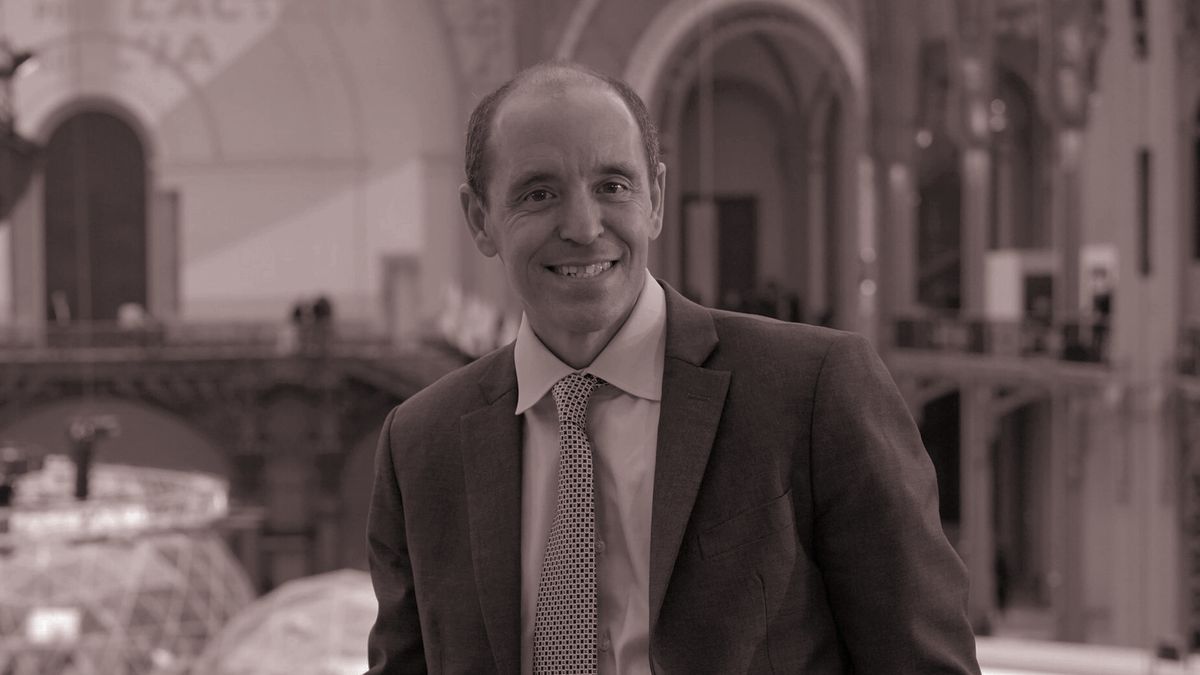
Football—so media-industry equity research analyst Michael Nathanson stopped by to sketch out what’s at stake for the networks and the league. |
|
|
|
As Roger Goodell begins his royal media-rights renegotiation tour, the operating theory is
that his existing partners will hem and haw about having to fork over another $1 billion-ish apiece before eventually ponying up—perhaps soberly concluding that Wall Street will reward them for delaying the NFL’s opt-out potential from the end of this decade to well into the next one. What’s a few billion in exchange for security and, perhaps, postponing the full-scale onslaught of streaming?
This theory rests partly on the fact that the networks have traditionally offered Goodell and the
league what they want, and because the NFL would be best served by brokering one more set of deals while linear TV remains the platform for our dissipating monoculture. But what if a streamer becomes increasingly aggressive or makes Goodell an offer he can’t refuse? Many financial analysts, including MoffettNathanson’s Michael Nathanson, believe that NBC’s control of Sunday Night Football could be most imperiled. Entities like Netflix, YouTube, or Amazon
Prime could be willing to dig deep into their pockets to gain control of the league’s most popular primetime franchise.
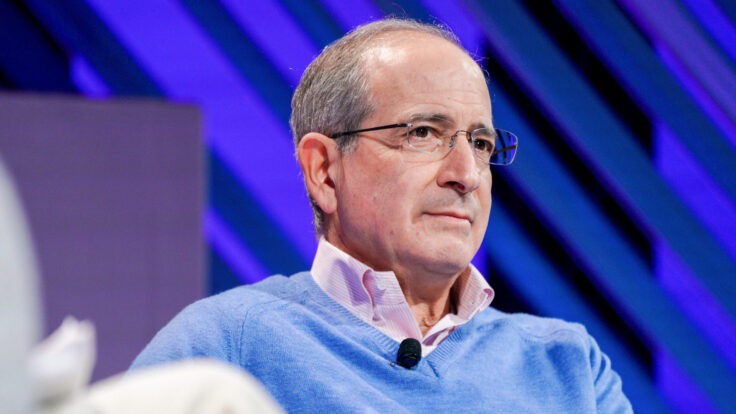
In this scenario, Comcast wouldn’t be able to compete with the streamers on price. And the movement in D.C. to keep NFL games on broadcast television might not help the Comcast-owned NBC—especially since Trump has been at odds with Brian Roberts over the years. Nathanson appeared on yesterday’s episode of The Varsity to dabble
in this evolving discourse and offer other views on the NFL renegotiation. The following conversation has been lightly edited. For the full conversation, listen here. |
John Ourand: What’s the state of sports media overall right
now?
Michael Nathanson: For event programming, and for the NFL, it’s as strong as it’s ever been. For the Olympics, for March Madness, for the Masters weekend, for college football playoffs, it’s amazing. There’s so much tonnage out there. What I worry about is the nondifferentiated content—the midweek Rangers vs. Penguins game, the Yankees going to Kansas City in July.
There’s so much social media fragmentation in this world, and
sports breaks through that. At the same time, there’s so much nonessential, filler programming. That’s where I see the risk. But I’m really bulled up on events. I think the demand for those events just keeps rising and rising. It’s the midweek fodder that’s in trouble.
As of right now, which network is most in danger in terms of renewing its NFL deal?
I would say it’s NBC. Look at what NBC is paying for the NBA [$2.5 billion
annually]. Now imagine what the NFL wants for Sunday Night Football, which is the best game. What’s stopping Netflix, which wants more events, to get Sunday night’s best game for 18 straight weeks? That would accelerate its ability to monetize ads. So, to me, the NBC Sunday night game is probably the most at risk.
You reference Netflix. But why wouldn’t Amazon want to upgrade its Thursday Night package? And we all know Justin
Connolly and YouTube have been very aggressive—why wouldn’t they want to get in? Would the NFL potentially risk selling the number one package to a streaming service in the midst of the D.O.J. and F.C.C. investigations? While I agree that NBC’s Sunday Night Football is most at risk, I still think they’re going to be okay this go-round.
So you’re saying that
Trump’s D.O.J. wants to protect Brian Roberts? I think that’s the one casualty. Trump has been so rude about Brian Roberts. I don’t think it will be a problem if that package goes to Netflix or Amazon.
Although a lot of the network executives told me they haven’t discussed money with the NFL, I’m starting to believe they’ve gotten really scared by the amounts they’ve seen in press reports. I’m getting the sense that networks could say, We’re going to take this
to the end of the decade. Do you think that’s a good possibility?
Historically, the networks have done whatever the NFL has asked them to do. The idea that they will basically grow a spine and push back—I just don’t see it. Whatever the NFL is asking, I’m assuming is going to happen. We don’t know the price, but if they open it up early and trade for more money, that’s what’s going to happen. I just don’t see how they push
back aggressively on whatever the ask is.
Wall Street keeps making up prices. I remember talking with Neal Pilson years back, after he just joined CBS Sports, asking him about a potential sports bubble. He said, There’s always going to be a sports bubble that’s reported—and as far as we’ve seen, the sports bubbles never turned out. I think even the people at Fox would say all the fears about them overpaying haven’t been proven out, because the ad monetization has
gotten better and better. The ratings are fine, and the C.P.M.s keep going up—and they get playoff games, which have become national holidays. These have been good deals. They’ve been win-win.
What I worry about is Paramount. Paramount is going to take on a lot of debt. It’s going to combine a bunch of cable networks. I just can’t see what price it can pay to maintain the NFL, because it’s not in the healthiest position compared to Fox and the others. The others have diversification,
cleaner balance sheets, and simpler businesses. So with Paramount, we’re waiting to see what happens—what the cost will be, and the impact to its cashflow.
We have examples of the Pac-12 going up in smoke—as well as the entire regional sports ecosystem, which was the healthiest part of the cable business for so long. Is that a warning sign? Or just unique to those entities?
It is, John. I don’t want to dismiss those fears. I really
mean to focus on the NFL, because those other fears are legitimate. And there have been some real head-scratching decisions lately, like the UFC deal. The NBA is in great shape because it just did a great deal that’s long-term. But the deals coming up in the near-term are going to take a backseat—and maybe a reduction—until the NFL figures out what it wants to do. If I’m the NFL, I don’t want to see any of these other leagues get re-upped at premiums until we get our chance to negotiate.
|
On CBS’s coverage of the Masters: “How in the absolute hell does CBS lose Rory’s ball on 18?
Beyond embarrassing. Would be like Marchand losing the sancerre. You had one job!” —A media executive
More on CBS: “Great Masters. Do you think we will ever get to see Rory’s second shot on 18?” —A Varsity subscriber
On the NFL’s antitrust exemption: “The NFL says that 87 percent of its games are on broadcast television. I’m sorry, but partial compliance is not compliance. If left unchecked, how much lower will that
number fall?” —A media executive |
|
|
|
Join Puck’s chief political columnist, John Heilemann, as he roams the corridors of power and influence in America on this
twice-weekly interview show, taking you beyond the headlines with the people who shape our culture: icons and up-and-comers, incumbents and insurgents, moguls and machers in the overlapping worlds of politics, entertainment, tech, business, sports, media, and beyond. The conversations are rich and revealing, unrehearsed and unexpected… and reliably impolitic. A Puck-Audacy joint, new episodes drop every Wednesday and Friday. |
|
|
|
An essential, insider-friendly Hollywood tip sheet from Matthew Belloni, who spent 14 years in the trenches at The
Hollywood Reporter and five before that practicing entertainment law. What I’m Hearing also features veteran Hollywood journalist Kim Masters, as well as a special companion email from Eriq Gardner, focused on entertainment law, and weekly box office analysis from Scott Mendelson. |
|
|
|
Need help? Review our
FAQ page or contact us for assistance. For brand partnerships, email ads@puck.news.
You received this email because you signed up to receive emails from Puck, or as part of your Puck account associated with {{customer.email}}. To stop receiving this newsletter and/or manage all your email preferences, click here. |
Puck is published by Heat Media LLC. 107 Greenwich St., New York, NY 10006 |
|
|
|
|