Welcome back to The Varsity. I’m John Ourand, coming to you today from
London. The IMG x RedBird Summit in the Cotswolds takes place later this week, and I’m preparing for my Thursday panel with YouTube’s Justin Connolly, IMG’s Hillary Mandel, The Garcia Companies’ Dany Garcia, and World Rugby’s Sally Horrox. This’ll be a good one.
🚨 Pod alert: What a year Mark Shapiro has had so far: the continued growth of TKO, precedent-setting media rights deals for UFC and
WWE, and nabbing Stephen A. Smith a $20 million-per-year contract with ESPN. I’m going to sit down with Mark at Soho Farmhouse tomorrow to talk about key aspects of the sports and representation businesses, which will constitute Wednesday’s episode of The Varsity podcast. Also, make sure you listen to yesterday’s episode with former NFL
M.V.P. Matt Ryan, who is now a star analyst at CBS Sports. (As always, you can listen here and here.)
Finally, a reminder that Puck is celebrating its fourth anniversary with a
20 percent discount on upgrades to the Inner Circle. Don’t forget: Julia Alexander’s excellent analysis of sports media trends, which appears every Tuesday in The Varsity, is available only to Inner Circle members. Sign up now
and stop asking me to forward you her stuff.
Okay, let’s get started… |
|
|
A MESSAGE FROM OUR SPONSOR |
PERFORMANCE UNLEASHED
Agile, powerful, iconic. The Range Rover Sport is a dynamic SUV with a distinct take
on sporting luxury.
EXPLORE |
|
|
- ManU’s financial mess: Shortly after landing at Heathrow on Sunday, I turned on the telly to watch Man City skunk their intracity rival 3-0. And that drubbing could wind up being ManU’s high-water mark this week: After all, the team will release its financials on Wednesday. The club, considered one of the crown jewels of the Premier League, has been warning investors that the results could be ugly.
The team is controlled by the Glazer
family, which also owns the Tampa Bay Buccaneers. In February 2024, however, Jim Ratcliffe bought a 27.7 percent position in the club for $1.6 billion and started sharing his discontent about its operations. Back in March, he told The Times of London that the club could run out of money by the end of the year. “In
super simple terms, the club has been spending more money than it’s been earning now for the last seven years, and it ends in a very difficult place,” he said. “And for Manchester United, that place ended at the end of this year, the end of 2025, with the club running out of cash. … There’s no money left in the club.” - Netflix’s tech bona fides: For my money, the most meaningful headline emanating from Netflix’s Saturday night
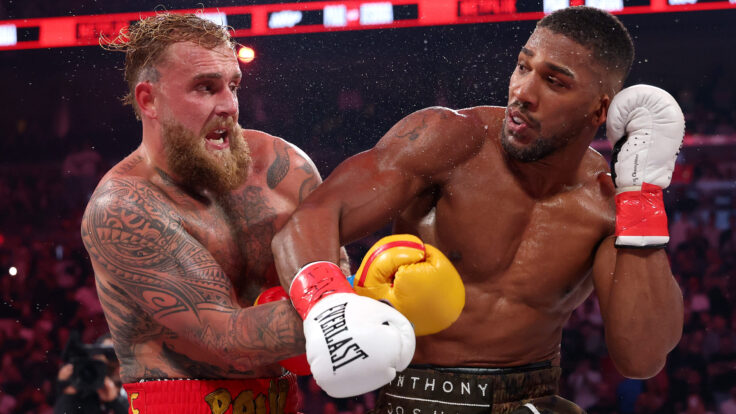
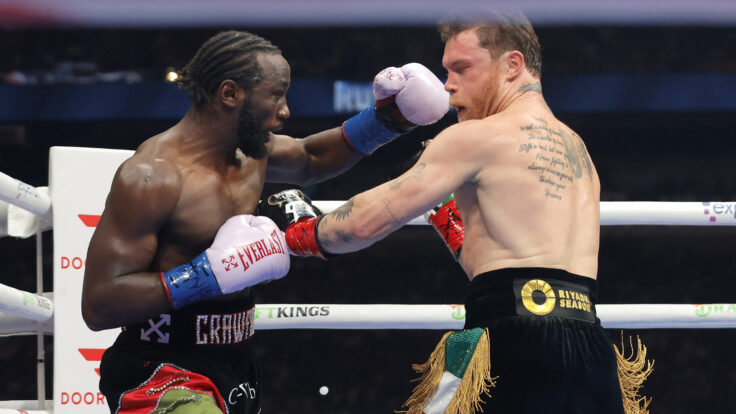
Canelo–Crawford title match was that there were essentially no headlines about Netflix. That’s a good thing, considering the Obamacare-style tech rollout and TMZ-ish concept swirling around the Mike Tyson–Jake Paul fight back in November. In fact, the biggest gripe this time was the late start for the main event: The fighters didn’t step into the ring until well after midnight on the East Coast. Still,
the numbers were good: The main event averaged 20.3 million viewers in the U.S., per VideoAmp and Netflix, and 36.6 million globally.
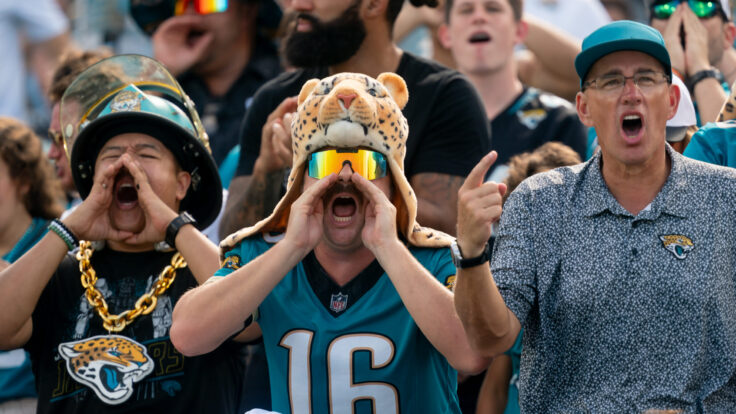
- The NFL fan revolt: Last week, NFL fans were outraged by the league’s decision to incorporate a tiny amount of advertising (four 15-second ads) on the NFL RedZone channel for the first time. Yesterday, many of those same fans were again incensed by new, red borders that framed the screen, resulting in a
slightly smaller picture. Julia Alexander has already commented on the fears about the product’s enshittification lingering in the Redditverse.
And yet the rationale for the red bars was innocent enough: NFL RedZone encountered some problems during Week 1 with graphics getting cut off, including (in some cases) the score bar. Yesterday, the league added red borders on either side of the screen to improve the picture fit and ensure all
of the graphics could be seen. I’m told that the NFL hasn’t determined whether it will use the red borders again this weekend, or if it can figure out a different solution.
In many ways, the second bout of anger over RedZone may have underscored the growing frustration among sports fans about the price and complexity of watching their favorite games. There appears to be a lack of trust that the league—or any league, really—is making decisions with the consumer in mind. As one of my
buddies texted on Sunday, “How long before the league decides that those two borders are the perfect place to put advertising throughout the day?” - Matt Ryan’s 18th game musings: It’s pretty much a fait accompli that the NFL will eventually expand its schedule to 18 games, thereby allowing the league to create yet another highly lucrative media rights package. But former QB Matt Ryan, who retired last spring and is now
an analyst for CBS, believes that players should extract concessions before allowing owners to schedule (and sell) that extra game. “I still view it from the players’ perspective,” Matty Ice said on yesterday’s Varsity podcast. “You’re taking a beating out there. These seasons are hard and long. I was not a fan of changing it to 17 games in 2021.”
Matt continued: “I understand it, you know, from the league side. They’re trying to grow and expand. They want to get rid of another
preseason game and push Super Bowl weekend to Presidents’ Day weekend. My one nonnegotiable is that teams’ roster sizes have to increase. The practice squad has to be eliminated. There’s no reason for a practice squad. Those guys on the practice squad should be on the active roster. There should be one roster with 70-plus players where all of the benefits and the pay are the exact same, because they’re doing the exact same job as everyone else.” - A scary
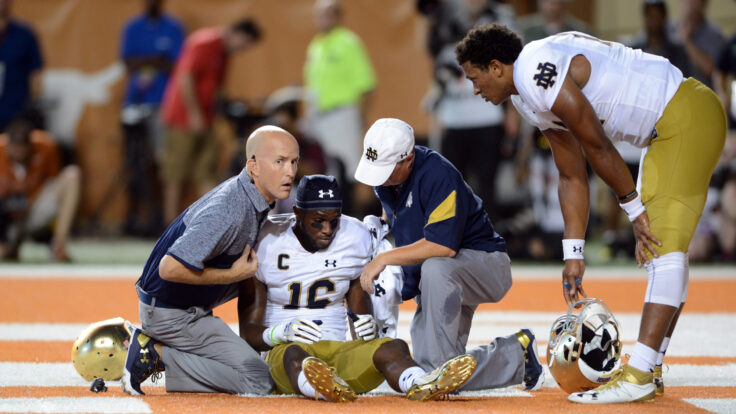
scene: The videos coming out of yesterday’s NWSL game between Racing Louisville and Seattle Reign were shocking: An ambulance drove onto the field after Louisville’s Savannah DeMelo passed out and collapsed toward the end of the first half. DeMelo was taken to the hospital. Thankfully, she’s now stable and alert.
The scene felt eerily similar to the moment, in May, when Savy King collapsed during an Angel City–Utah Royals game and was stretchered off
the field. Back then, the NWSL allowed the game to carry on—to much consternation. Following King’s collapse, the league’s players association pushed NWSL commissioner Jessica Berman to mandate that any injury requiring life-saving measures result in a postponement. It seems that Berman heeded the call. Yesterday, the league postponed the game and promised to make it up at a later date.
|
Now on to the main event… |
|
|
Right now, we’re wading through a bizarre and likely ephemeral market in
which the linear players have become preferred destinations for sports rights. Will this all end when the NFL hits the block? And when it does, who will get left out? |
|
|
When the United States Golf Association brought its media rights to market earlier this year,
including the men’s and women’s U.S. Open, the league considered an aggressive bid from Netflix before ultimately renewing with good ole linear NBC. TKO executives found themselves in a similar market, last month, while negotiating new deals for UFC and WWE’s premium live events. The executives fielded a lot of interest from the streamers, but those two packages ultimately went to mediacos that were still heavily invested in yesterday’s technology, i.e., television.
Yes, it
helped that David Ellison forked over $7.7 billion to get those UFC matches on CBS. But in a few weeks, MLB also will send the bulk of ESPN’s package to NBC, with Netflix getting the Home Run Derby. And while Formula 1 inches closer to an Apple deal, I’m reliably told that the league would have gladly returned to ESPN for the right bid. In some respects, on a superficial level, the sports rights market looks the same as it has for the past 30 years: If the money is at
least close to equal, leagues and conferences are still prioritizing reach over younger demos. The next slate of major rights deals will likely feature more of the same.
Of course, we’re wading through an elongated inflection point in the industry. Right now, linear is demonstrating its unique staying power in sports media—it’s a safe bet for subscale leagues that fret over optimizing revenue and managing awareness. After all, linear players are happily and aggressively
cutting existential checks for sports content to satisfy their O.G. customers and advertisers, while younger viewers can still find the games and matches on O.T.T. options, like Fubo or YouTube TV. |
|
|
A MESSAGE FROM OUR SPONSOR |
PERFORMANCE UNLEASHED
Agile, powerful, iconic. The Range Rover Sport is a dynamic SUV with a distinct take
on sporting luxury.
EXPLORE |
|
|
It’s a fascinating moment in the long, inexorable march to streaming. How long can it last? In
conversations with sources, many wonder whether this jig will end in 2029, when the NFL is expected to create a feeding frenzy by opting out of its media deals and putting its rights on the market. There’s little doubt that every U.S. media company and streamer will be at the table for those negotiations.
The questions already abound. Will Amazon, Netflix, and YouTube endeavor to expand their package of games or remain content with what they have? Another big question centers on
global rights. It’s no secret that the NFL has looked into selling a global rights package made up of international games—and the league, of course, would seek top dollar for those rights. That would favor the hyperscale streamers above everyone else.
But the international twist remains an enigma, at least for now; international viewership for games has been soft. Just last week, YouTube reported 1.2 million non-U.S. viewers for its debut NFL game, Chargers–Chiefs in Brazil, which was
surprisingly low. Was that an anomaly? An inadvertent sign of opportunity, perhaps, since it was a game on a weird night on a wholly new platform for the NFL? Or just the first humble step in the long march toward a future in which the NFL is distributed across streamers?
Perhaps a bit of all—but it’s also likely a sign that the richest companies in the world don’t just want Friday night games from Brazil. If the streamers remain tepid about international rights, sources have
envisioned a scenario in which they instead aggressively pursue the league’s primetime packages, meaning Sunday Night Football, Monday Night Football, and Thursday Night Football. That would be a seismic eruption in the industry.
These sources have posited that the Sunday afternoon schedules, which feature several games in each window, were created for broadcast affiliates and wouldn’t work nearly as well for the streamers. In any event, the NFL will have all
the leverage in 2029, and will dictate whether traditional media companies maintain their exalted sports media position or pass the torch to the streamers. |
On Paramount’s bid to buy WBD: “Can we now hypothesize that perhaps, at the eleventh hour,
TNT let the NBA go because its leadership knew that a merger was inevitable with Paramount or NBCU—each of which already had a sports portfolio—so that they could avoid expense and keep the balance sheet healthier?” —A media executive
[Ed. note: No.]
On a simpler time in media: “Years ago, when I would drive on a football Saturday, we always got the Notre Dame game on the radio with Tony Roberts on the call. You always
could find Notre Dame on the radio. This weekend as I was driving, I must have hit six different channels with ESPN radio, all carrying the LSU–Florida game. I could not find Notre Dame anywhere until some staticky signal late in the drive.” —A former college administrator
[Ed. note: Audacy carries Notre Dame games on its app, and games can be heard on a handful of
terrestrial radio stations.]
On Week 1 in the NFL: “ESPN aired only one MNF game last year in Week 1: the Jets–49ers. It hasn’t aired a Week 1 doubleheader since 2019.” —An ESPNer
[Ed. note: Marchand regrets that mistake.] |
|
|
Finally, a media podcast about what’s actually happening in the media—not the oversanitized,
legal-and-standards-approved version you read online. Join Dylan Byers, Puck’s veteran media reporter, as he sits down with TV personalities, moguls, pundits, and industry executives for raw, honest, sometimes salacious conversations about the business of media and its biggest egos. New episodes publish every Tuesday and Friday. |
|
|
An essential, insider-friendly Hollywood tip sheet from Matthew Belloni, who spent 14 years in the trenches at
The Hollywood Reporter and five before that practicing entertainment law. What I’m Hearing also features veteran Hollywood journalist Kim Masters, as well as a special companion email from Eriq Gardner, focused on entertainment law, and weekly box office analysis from Scott Mendelson. |
|
|
Need help? Review our FAQ page or contact us for assistance. For brand partnerships, email ads@puck.news. You received this email because you signed up to receive emails from Puck, or as part of your Puck account associated with {{customer.email}}. To stop receiving this newsletter and/or manage all your email preferences, click here. |
Puck is published by Heat Media LLC. 107 Greenwich St, New York, NY 10006 |
|
|
|