Welcome back to The Varsity on the actual first day of spring: Masters
Thursday.
In today’s issue, we dive into all the sports activity happening on Capitol Hill and identify a cable carriage fight that will have far-reaching implications for professional sports. Also, some fresh kremlinology around the NFL’s push for its elusive 18th game.
Pod alert: Make sure you tune into the Varsity podcast on Sunday morning. MoffettNathanson’s own Michael Nathanson dishes on what the NFL must do to complete a new round of media
deals before September’s Opening Kickoff. Subscribe here or here.
This issue was created with contributions from Curtis Rowser.
Mentioned in this issue: Luis Silberwasser, Steven
Ginsberg, Dianna Russini, Mike Vrabel, Mark Calcavecchia, Brendan Carr, Mike Lee, Cody Campbell, Mike Florio, JC Tretter, Peter O’Reilly, Caitlin Clark, JuJu Watkins, and… Pete Hegseth’s hot tub. |
Player of the Week: Luis Silberwasser
|
This was the final NCAA men’s basketball tournament before Paramount takes over Warner Bros.
Discovery, which means it was also likely the last time the Final Four will be kept off broadcast TV—at least until 2032, when the current deal ends. What a statement finish from TNT Sports C.E.O. Luis Silberwasser and his team: Monday’s championship game posted 18.3 million viewers across TNT, TBS, TruTV, and HBO Max—the most-watched championship game in seven years. Overall, the 2026 tournament was the second-most-watched March Madness in 32 years.
Sure, Nielsen is counting audiences differently these days, but the game was only on WBD’s cable channels and HBO Max, which makes these numbers quite impressive. |
Down to the J.V.: Steven Ginsberg
|
The Athletic’s executive editor, Steven Ginsberg, put himself out
on a ledge yesterday when he issued a strongly worded statement in support of his star NFL writer, Dianna Russini, who was pictured in the New York Post hugging and holding hands with Patriots head coach Mike Vrabel. Ginsberg
described the photos as “misleading” and lacking “essential context.” But it’s still a bad look for The New York Times. Could you imagine Maggie Haberman sharing a hot tub with Pete Hegseth? As Dylan Byers wrote last night, “That’s one of the hazards of expanding the talent
pool beyond print to television—and particularly sports television, which can be a little more… unbuttoned.” |
Down to the J.V. (Honorable Mention): Mark
Calcavecchia
|
- The NFL’s new antitrust nightmare: Earlier today, The Wall Street Journal reported that the D.O.J. has opened an investigation into the NFL’s increasing reliance on streamers—and whether the league has violated the Sports Broadcasting Act of 1961. For those requiring a refresher on telecom history: The S.B.A. is the federal antitrust exemption that allows football to negotiate leaguewide deals with broadcasters, among other carve-outs. The news of the
inquiry comes after several months of public nitpicking from F.C.C. chair Brendan Carr and rising tensions surrounding the league’s attempts to strong-arm new, astronomically expensive media rights deals with current partners ahead of schedule. (As you’ll recall, the Journal’s editorial page wondered last week whether
the S.B.A. had outlived its usefulness.)
Obviously, the stakes are high. But what’s particularly interesting is how different camps are pushing radically different solutions: The D.O.J. probe was pushed by Sen. Mike Lee, who seems inclined to phase out the S.B.A. on the professional side. Then you have Texas Tech activist booster Cody Campbell, who wants it expanded on the college side. (Remember that this all comes a few
weeks after President Trump hosted a symposium designed to fix college sports, a prelude to a mostly toothless executive order called “Urgent National Action to Save College Sports.”) The billion-dollar question: Will Congress be sophisticated enough to fully understand all of these competing interests? - The local-sports final showdown: I’m not trying to overstate things, but several of my best sources have said that the outcome of
Comcast’s current battle with Scripps will determine the future of local sports on television. For those who haven’t been following: Scripps recently picked up more local sports rights, and is trying to squeeze more money from distributors like Comcast. As a result, Scripps’s local broadcast channels have been dark on Comcast since March 31. But, of course, the story is much more nuanced.
As you know, Main Street Sports is just weeks away from closing up shop, which means a lot of NBA and
NHL teams are scrambling to cut local media deals. Amid the scrum, Scripps scooped up a handful of NHL teams, including the Golden Knights, Lightning, Mammoth, Panthers, and Predators. Other network groups, like Gray Media, have pursued a similar strategy. But Comcast just went through a series of bruising negotiations to migrate regional sports networks to digital tiers—the cliffpath, grinfuckers!—and has absolutely zero interest in allowing broadcast groups to try to re-create the
R.S.N. model. Moreover, Comcast doesn’t think local sports rights really affect subscriber numbers, mostly because they haven’t seen much churn during their R.S.N. battles over the past few years.
We’ll see who blinks first, but Comcast’s hard-line stance is already causing problems for NBA and NHL teams. If local broadcast groups like Scripps and Gray Media—which is also trying to negotiate a new Comcast deal—can’t convince distributors to pay more, then another local revenue stream
dries up for teams desperate to make up for lost R.S.N. money. - Silberwasser’s quiet clapback: After my interview with Luis Silberwasser last week, several sources reached out to express skepticism that the TNT Sports C.E.O. was really, actually still negotiating rights deals while Paramount was in the middle of buying his parent company. Those sources were wrong, as Silberwasser proved earlier today, when TNT Sports announced a deal with DAZN
for an undetermined number of boxing matches. It follows a similar deal between the two parties for last summer’s FIFA Club World Cup matches. “We like the idea of experimenting with things and trying to see if we can add our DNA to properties that may not have that ability themselves,” Silberwasser told me. “The boxing deal that we’re going to do with DAZN falls in that category.”
|
And now for the main event… |
|
|
|
The D.O.J.’s new investigation into the NFL is ostensibly a major setback for the
Shield. And yet, there are some potential upsides to kicking rights negotiations down the road… |
|
|
|

| John Ourand
|
|
|
|
Several months before today’s stunning (if not entirely surprising) move by the
Department of Justice to open an investigation into whether the NFL violated the Sports Broadcasting Act of 1961—the antitrust exemption permitting the Shield to negotiate leaguewide deals with broadcasters—league officials were strongly hinting to media partners their desire to wrap up the next round of rights negotiations before the 2026 season kicks off on September 9. Obviously, this new development could significantly push back that timeline.
On yesterday’s remarkably
well-timed episode of the Varsity podcast, NBC Sports’s Mike “F’n” Florio explained how a delay might ultimately help the league: The NFL wants to expand to 18 games by 2027, which would create enough new content to warrant a new package; rushing the process might constrain their options. Plus, if the league begins offering teams two bye weeks each season, TV networks would end up with two extra weeks of football, which would make the existing packages worth more. What
follows are the most salient highlights from our conversation, lightly edited for length and clarity. |
John Ourand: Will the NFL have new media deals in place by
Opening Kickoff in September?
Mike Florio: It sure seems like they want to. With CBS, it seems like it’s just a matter of time. But I’ll be surprised if all of them are done by then. The NFL wants to sell these packages with a clear date for when it will move from 17 games with one bye to 18 games with two byes—a 20-weekend package of games with all those different primetime windows that can be filled. That package has greater
value.
The NFL has been frustrated that it hasn’t been able to get something down with the NFLPA on 18 games. They’re going to give new executive director JC Tretter a grace period, but not a big one. They’re going to swoop in with an offer that’s calculated to get him to accept it quickly. They want to start with an 18-game season by 2027—which is why there isn’t a date yet for the Super Bowl to be played in February 2028. NFL E.V.P. Peter O’Reilly
acknowledged last week that leaving the date open leaves room for potential scheduling flexibility.
The league’s argument is, The longer you make us wait, the less you get, so it’s in your best interest to agree to this now. At the end of the day, one side is willing to shut down the sport for a year to get what it wants. And the other side—the players—aren’t willing to miss a game check. It’s an imbalance that the NFL, I think, plans to leverage to try to get this deal done by
next year so they can have 18 games as soon as ’27.
So essentially, you don’t think the NFL has to give up anything to force through the 18-game schedule. You think it’s just a matter of, We’re going to get it eventually, so you may as well do it now.
People assume this creates a real opportunity for the players to extract all kinds of concessions. But I had one person on the league side
tell me that the players shouldn’t worry about getting anything but money—that it should be a financial transaction and nothing more. Back in May 2025, at a league meeting, the commissioner pivoted—unprompted—to say that the owners had a long discussion that morning about the salary cap and whether it’s working. He mentioned increased expenses. I think the league may try to tell the union it wants to change the formula dramatically—that they no longer want to do 50–50 revenue
sharing.
Splitting the revenue is fine until the uncapped potential goes through the roof. At some point, people are going to question why they’re paying them so much money. They could posture around slashing that percentage and offer fixed cap numbers over the next 10 years regardless of revenue growth. Then they walk back on that point, and the players “gain” by simply preserving the split they already have. They wouldn’t actually be gaining anything—just avoiding a loss. I have a
feeling that’s going to be part of how the NFL tries to get this done. |
Home
Is Wherever the Phone Is
|
You mentioned the 2028 Atlanta Super Bowl. Can you elaborate on the uncertainty around how
that’s being scheduled?
They haven’t scheduled it because they’re holding out hope for 18 games—I know that for a fact. The moment they announce it’s scheduled for February 13 is the moment they’ve given up on 18 games for the 2027 season. If they get 18 games and two byes starting Labor Day weekend, the Super Bowl will be February 20. If they start the weekend after Labor Day, it will be February 27. The league abandoned Labor Day
weekend following the 2001 season because they figured not enough people were home or watching football while traveling. Well, now home is wherever the phone is—so they can start Labor Day weekend if they want to. But until they lock in February 13, the league is keeping hope alive for 18 games by 2027.
Every single league is trying to do more tentpole events. The NFL is considering a Thanksgiving Eve game. What’s the likelihood of that moving forward? And what other opportunities
for tentpole NFL games are out there?
We have to remember that the broadcast antitrust exemption comes with a limitation. From the second weekend in September to the second weekend in December, the NFL can’t play games on Friday nights or Saturdays. But that leaves the other five days free and clear. Thanksgiving Eve is a perfect night—people are typically home, relaxing, and the NFL can draw 30 million viewers that way. I think that’s going to
happen. They’re going to keep looking for creative ways to drop in games on Tuesdays and Wednesdays. I think they’re actively looking for any and every way they can put more games in stand-alone windows. They’re going to get between 20 million and 30 million viewers and a lot more money than what they get from the group of games that kick off on Sundays at one o’clock. |
On ESPN’s YouTube losses: “When Disney goes dark on any distributor today, it can shift
consumers directly to Fubo TV or the ESPN D.T.C. app. I’m sure Disney gained a lot of subscribers during the YouTube TV blackout. So these ESPN layoffs would seem to indicate that 1) the ESPN app or Fubo TV were unable to take advantage of Disney content being unavailable on YouTube TV, or 2) Disney is playing a shell game and willing to allow ESPN off-camera employees to take a disproportionate hit.” —A media executive
On the cost of free TV: “A lot of The Varsity’s
digital ink was spilled about over-the-air TV being free. That’s true for now, but the NAB is heavily pushing a digital rights management (D.R.M.) system for over-the-air feeds. With some big TV manufacturers dropping ATSC 3.0 support—which is required to decode the D.R.M.—the narrative of O.T.A. being easy and free will soon go out the window—or, should I say, be defenestrated.” —A Varsity subscriber
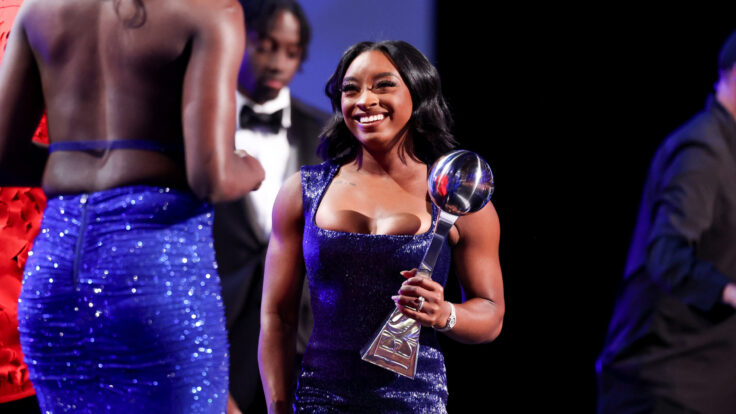
On women’s Final Four viewership: “This was the most
important stat in the last four years. The Caitlin Clark games will always show us what transcendent star power can do (and USC’s JuJu Watkins may do that again next year), but this year showed us what the new floor is: without UConn, without a ‘transcendent’ star, on Easter Sunday, and a 30-point blowout. If that doesn’t tell everyone about where women’s sports is, I don’t know what will!” —A media executive
On ESPN’s NFL
Network: “Is there any reason why NFLN is not available for ESPN Unlimited subscribers yet?” —A financial executive
[Ed. note: I checked in with an ESPN source, who said that the company expects it to be in place for the start of the 2026 season.] |
Have a great weekend. See you Monday,
John |
|
|
|
Join Puck’s chief political columnist, John Heilemann, as he roams the corridors of power and influence in America on
this twice-weekly interview show, taking you beyond the headlines with the people who shape our culture: icons and up-and-comers, incumbents and insurgents, moguls and machers in the overlapping worlds of politics, entertainment, tech, business, sports, media, and beyond. The conversations are rich and revealing, unrehearsed and unexpected… and reliably impolitic. A Puck-Audacy joint, new episodes drop every Wednesday and Friday. |
|
|
|
An essential, insider-friendly Hollywood tip sheet from Matthew Belloni, who spent 14 years in the trenches at
The Hollywood Reporter and five before that practicing entertainment law. What I’m Hearing also features veteran Hollywood journalist Kim Masters, as well as a special companion email from Eriq Gardner, focused on entertainment law, and weekly box office analysis from Scott Mendelson. |
|
|
|
Need help? Review our FAQ page or contact us for assistance. For brand partnerships, email ads@puck.news. You received this email because you
signed up to receive emails from Puck, or as part of your Puck account associated with {{customer.email}}. To stop receiving this newsletter and/or manage all your email preferences, click here. |
Puck is published by Heat Media LLC. 107 Greenwich St., New York, NY 10006 |
|
|
|
|