Welcome back to The Varsity, our now thrice-weekly private email on all things sports media. I’m back in D.C. after a rousing couple of days in San Francisco, where Puck co-hosted an event at Tishman Speyer’s gleaming new space at Mission Rock, just outside of Oracle Park. San Francisco Giants C.E.O. Larry Baer and Fox Sports senior V.P. of strategy and analytics Ben Valenta headlined the standing-room-only conversation about the role that community plays in sports. Alas, Marchand was too busy preparing for his egg hunt to make the trip.
🚨🚨 Pod alert: You can enjoy my conversation with Baer and Valenta on the Varsity podcast this weekend. Also, make sure to listen to Wednesday’s episode with Axios media reporter Sara Fischer, whose analysis of why social media companies like Meta and X aren’t dabbling in live sports, beyond tech partnerships, is particularly on point. (Hint: Nobody watches Meta and X content on the big screen.)
A quick reminder that unless you’re an Inner Circle subscriber, you missed Julia Alexander’s spot-on piece, on Tuesday, about the market for U.S. F1 rights. Julia offered a prescription for what Liberty Media—which owns the racing circuit— should do. Click here to upgrade so you won’t miss any more of Julia’s stories.
Also, Julia is moonlighting in Matt Belloni’s What I’m Hearing tonight with a completely brilliant piece on Netflix’s new math and the next phase of the streaming wars. Make sure you’re subscribed to What I’m Hearing by clicking here.
|
Player of the Week: Lee Corso
|
There’s not much left that hasn’t already been said about the universally beloved Lee Corso, the GOAT college football analyst who is calling it quits this August after a stellar 38-year career. I’d point you to Bryan Curtis’s great 2023 oral history of College GameDay to understand Corso’s impact on college football. Meanwhile, his studio mates— Rece Davis, Chris Fowler, and Kirk Herbstreit—offer a sense of Corso’s influence. His benevolence and gratitude were leavening agents on a show that manages a lot of egos. He’ll be missed.
|
Down to the J.V.: Mat Ishbia
|
Bill Simmons once coined a smart term, “New Owner Syndrome,” to describe how thoughtful billionaires can turn into reckless egomaniacs the minute they’re given the keys to a pro sports franchise. Few embody the concept more than Mat Ishbia, a likeable former Michigan State bench player who became a feel-good insurance kingmaker. Since acquiring the Suns in 2023 for a then-staggering $4 billion, Ishbia has brought in Kevin Durant, given up draft picks, and fired a series of championship coaches—he’s now looking for his fourth head coach in four years, in fact. Even with the NBA’s highest payroll (about $214 million), the Phoenix Suns finished 10 games under .500 and out of the playoffs, and Stephen A. has nominated Ishbia for the title of worst owner in NBA history.
|
- MLB’s local conundrum: MLB commissioner Rob Manfred has made it perfectly clear to teams that he eventually wants to control their local streaming rights at the league level—it’s the cornerstone of his plan, after all, to go to market with a highly desirable media package in 2028. The problem is that many of the big-market teams—the Dodgers, Yankees, Cubs, etcetera—believe their local market rights are too valuable to cede to the league office. At least one big-market team, though, has bought into the idea. “That’s something we’re very open to, and most teams are very open to,” San Francisco Giants C.E.O. Larry Baer told me on Tuesday night at the event that Puck co-hosted with Tishman Speyer.The Giants own about a third of NBC Sports Bay Area, a regional sports network that broadcasts their games, but even Baer admitted that pro sports teams have more questions than answers about where local sports are headed. “There’s a lot of interesting experimentation,” he said. “We’re in the middle of experimenting with different pieces of this.”
He referenced NBC’s decision to make streamed games available to Peacock subscribers this season—the first time Giants games have been available outside the cable bundle. “We’ve seen all the new players now that are interested in talking to all of us—Apple, Amazon, Peacock, Netflix. … Obviously, YouTube is having some interesting discussions with lots of folks. … It’s too soon to understand exactly where it all settles.”
- NFL below the equator: We know that the Los Angeles Chargers will be playing their Week 1 game on Friday night, September 5, in São Paulo, Brazil. But we’ll have to wait for mid-May, when the NFL releases its schedule, to find out whom the Chargers are playing. We also don’t know which media company will carry the game. Last year, the NFL announced in March that Peacock had exclusive rights to stream the Brazil game between the Eagles and the Packers.It’s possible that the game winds up on Peacock again. After all, Peacock has the rights to stream at least one game each season on an exclusive basis. But I’d expect this game to wind up on another streaming service. I’m hearing that the game has piqued the interest of streamers and traditional mediacos alike, which shouldn’t come as a shock, since the NFL is the most popular entertainment programming around. The NFL goes into every season with a couple of games that fall outside of their media deals. And this game is particularly attractive to streamers because of its international reach.
- Tariff tremors: Media companies held their breath earlier this month during the stock market’s tariff-induced freefall. Sure, ad and marketing budgets are the first thing corporations cut when the economy takes a hit, but so far, sports media execs are putting on their game faces. On Tuesday, one of the biggest marketing and advertising companies went public about the economic uncertainty. Per the WSJ’s Megan Graham, Omnicom C.E.O. John Wren said on an earnings call, “As you’re all keenly aware, there’s been increased volatility in the economy and the markets. We’re assessing the implications of these events to determine how they will affect our clients and our business.”The theory has always been that live sports will outperform other entertainment programming during an economic downturn. But recent reports, like one from Citi this past week, have predicted that the tariffs will have an unequivocally negative effect on ad spending. It’s enough to make even the most optimistic ad sales execs linger a bit longer over their morning coffee.
- M.J. dunks on NASCAR: In his great What I’m Hearing+ newsletter, my partner Eriq Gardner wrote about a Michael Jordan move that puts him at odds with the league where His Airness gained extraordinary fame and fortune. I’ll let Eriq explain: “Jordan’s stock car team, 23XI Racing, is at the center of an antitrust fight against NASCAR over its charter system—a structure that, according to Jordan’s attorney, Jeff Kessler, depresses the share of television revenue that teams receive compared to what a competitive market would offer. As part of the case, 23XI has subpoenaed the NBA, NFL, MLB, and Formula One, seeking detailed information on how revenue is split among teams, along with valuations of current franchises and potential expansion clubs. The leagues, predictably, aren’t thrilled. They’ve resisted the subpoenas, prompting 23XI to file new cases in New York, Colorado, and Indiana to compel compliance. Today, the NBA asked a federal judge for more time to respond.”
- An NFL antitrust update: Eriq also has an update on the antitrust case filed against the NFL. Here’s Eriq again: “Speaking of TV money on the sports broadcasting front, the opening brief in the Sunday Ticket antitrust case against the NFL has finally been made public, after months under seal. Last summer, a jury found that team owners conspired in restricting football telecasts. Now, some eight months later, you can read the full brief, which argues that the judge wrongfully excluded the plaintiffs’ economic experts, and that the Ninth U.S. Circuit Court of Appeals should reinstate a $4.7 billion verdict against the NFL. If not that amount, then $2.81 billion or $1.39 billion, per alternative calculations of damages. No hearing date has been set.”
|
|
And now, on to the main event…
|
|
|
|
Sports needs Netflix exponentially more than Netflix needs sports. But with holiday NFL games, Women’s World Cup soccer, and a flirtation with the NBA, Netflix’s heart is growing fonder. And Rob Manfred is waiting by the phone.
|
|
|
|
When it comes to sports programming, the mantra around Netflix has always been to watch what they do, rather than listen to what they say. For instance: While they said they were perfectly content to stick to sports-adjacent docuseries like Quarterback, what they eventually did was acquire a couple nine-figure Christmas Day NFL games. Anyway, with all that in mind, I decided to ring up LightShed’s Rich Greenfield on the day that the streamer released its first-quarter financials.
Netflix, of course, is doing just fine. The company reported more than $10.5 billion in revenue in Q1, up 12.5 percent year over year, and the stock popped nearly 5 percent in after-hours trading. But like all seductive Lotharios, Netflix is not just rich, but rich and international: A deal with the streamer can help a sport travel globally, which is a marked benefit over the TV deals that leagues have cut during the past several decades. You know all this…
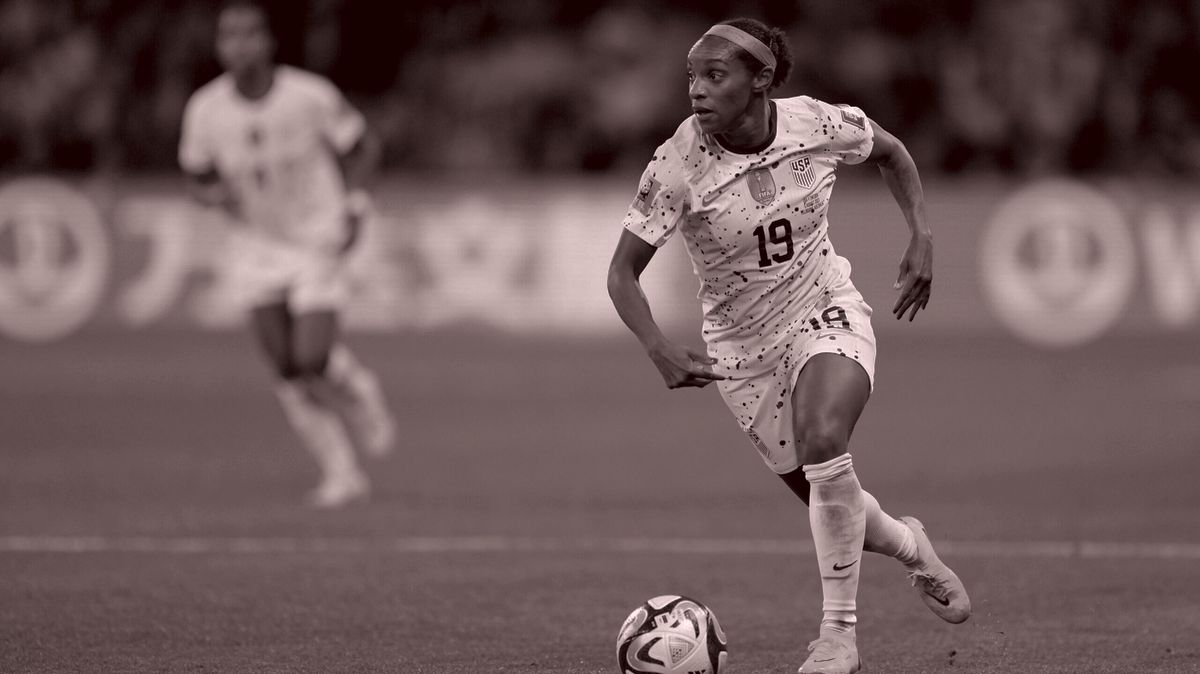
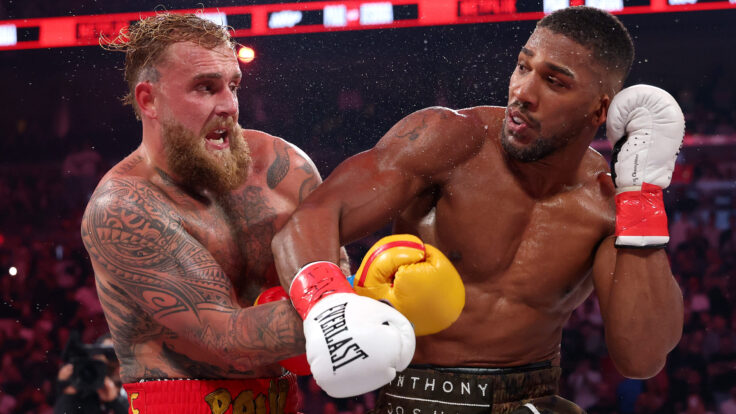
Sports leagues have salivated for years over the possibility that Netflix will become a steady and recurring party at the negotiating table. And after swearing off sports for years, Netflix has slowly started to come around, and the leagues have taken particular notice of its viewership numbers. Back in November, the company’s Mike Tyson–Jake Paul exhibition boxing match drew 65 million concurrent streams at its peak, according to Netflix. Its Christmas Day NFL games last year averaged 26.5 million viewers, a figure that puts it in the same neighborhood as the broadcast networks. And its Monday night WWE Raw consistently cracks Netflix’s weekly top 10. “Netflix is very much trial-and-learn—kind of a crawl, walk, run scenario,” Greenfield told me. “You’ve seen that with television, movies, and originals. Maybe sports is up-and-coming.”
Sure enough, sports leagues have successfully coaxed Netflix executives to the table for some sports rights—they showed some initial interest in the NBA’s in-season tournament rights but passed, with those rights eventually going to Amazon Prime. Back in December, Netflix surprised the sports business by outbidding Fox and picking up rights to the Women’s World Cup in 2027 and 2031. MLB has also engaged with Netflix regarding some of the rights to ESPN’s package, which will be available after this season, though it’s not known how serious those talks are. Netflix executives have also taken meetings about the current UFC and F1 packages in the market.
It’s hard to figure out, however, whether Netflix is still in exploration mode, or something a little more significant. Co-C.E.O. Ted Sarandos declined to comment when Greenfield asked him about these rights specifically on this afternoon’s earnings call. “The main thing that’s important to realize is, none of those rights is necessary for Netflix to be successful,” Greenfield said. “Netflix doesn’t need any of those things. They’re winning with or without those properties.” Indeed, Sarandos said that the streamer’s live programming represents a small part of its content spend. “We have about 200 billion view hours, so it’s small relative to [overall] ‘view’ hours as well,” he added.
The reality, of course, is that Netflix seems more focused on streaming monocultural events, and less interested in filling the hours of the scheduling week, the anachronism that made sports so valuable to linear partners. Greenfield believes that Netflix could be interested in a UFC or F1 deal, but it all comes down to price, which tracks with what Sarandos said today about his view of the business. “Anything we chase in the event space or sports space is a deal that has to make economic sense as well.”
Sarandos did say that he wants to keep building the amount of live content, including sports, that Netflix offers, adding that most of its live programming is carried in the U.S., “but we intend to grow the capability to do it around the world in the years ahead.” All of which suggests that Netflix is certain to get more involved in picking up sports rights, but it will be on its own terms. “The two streaming winners right now are YouTube and Netflix, and they’re in the driver’s seat choosing what they want and what they don’t want,” Greenfield concluded. “They’re in a great position.”
|
Who’s that in the green jacket?: “ Brian Roberts has been in the Masters backdrop for a couple years now. Sitting next to him was Atlanta Braves chairman and former Turner exec Terry McGuirk. Those cable guys stick together!” — A former Fox Sports exec
On the Lewis & Clark beat: “I’m gonna gently push back on your befuddlement as to how the Blazers’ ratings went up to note that while, yes, they weren’t particularly good again this year, they did manage to win 15 more games this year than they did last year. Combine that with getting out of the ROOT deal and being available to more fans (not me, sadly) and it begins to make sense that their ratings went up. P.S., I hope you’re treating Marchand well.” — A Varsity subscriber
[ Ed. note: Thanks for the reminder. Andrew, it’s sancerre time! Crisp not tart. Please just ring the bell and leave the tray.]
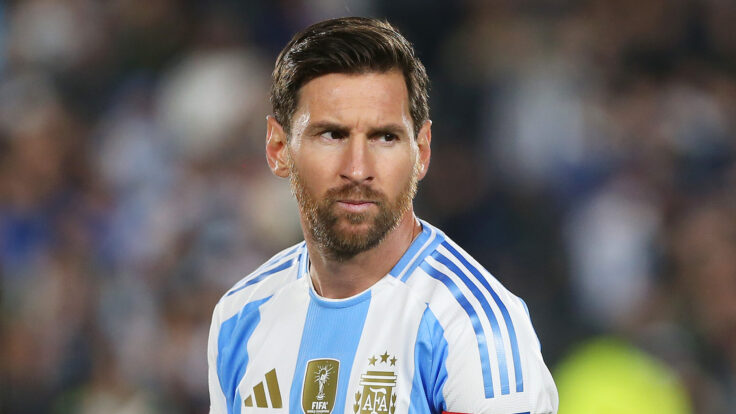
On Sara Fischer’s appearance on the Varsity podcast: “Sara Fischer’s succinct living room answer to why Meta and X are not interested in live sports is very astute and spot on. I was at Meta when they were experimenting both with sports and a connected TV app, and the company moved away from both. I’m curious if TikTok can follow YouTube into the living room and be a future bidder for sports rights beyond the Messi Cam for MLS.” — A media executive
|
|
|
|
Finally, a media podcast about what’s actually happening in the media—not the oversanitized, legal-and-standards-approved version you read online. Join Dylan Byers, Puck’s veteran media reporter, as he sits down with TV personalities, moguls, pundits, and industry executives for raw, honest, sometimes salacious conversations about the business of media and its biggest egos. New episodes publish every Tuesday and Friday.
|
|
|
|
Ace media reporter Dylan Byers brings readers into the C-suite as he chronicles the biggest stories in the industry: the future of cable news in the streaming era, the transformation of legacy publishers, the tech giants remaking the market, and all the egos involved.
|
|
|
Need help? Review our FAQ page or contact us for assistance. For brand partnerships, email ads@puck.news.
You received this email because you signed up to receive emails from Puck, or as part of your Puck account associated with . To stop receiving this newsletter and/or manage all your email preferences, click here.
|
|
Puck is published by Heat Media LLC. 107 Greenwich St, New York, NY 10006
|
|
|
|