Welcome back to The Varsity on Opening Day. I’m John Ourand.
On
Saturday, I’ll be hanging out in Camden Yards’ new Truist Club. I’ve always been a big fan of Game 2s—not as crowded, and the bunting is still up. Speaking of baseball, MLB launched its new season on Netflix last night. The streamer tried to eventize the game, but I heard from a bunch of sports business types who were unimpressed. More on that below, plus news on how the push to fix college sports is winding through D.C., Marchand’s enlightened musings on the
three-person booth phenomenon, and plenty more…
This issue was created with contributions from Curtis Rowser.
Mentioned in this issue: Jimmy Pitaro, Gerry Cardinale, David Zaslav, Eric Shanks, Barry Bonds, Aaron Judge, Brad Stevens, AJ Dybantsa, Grant Hill, Bill Raftery, Jameis
Winston, Shohei Ohtani, and more… |
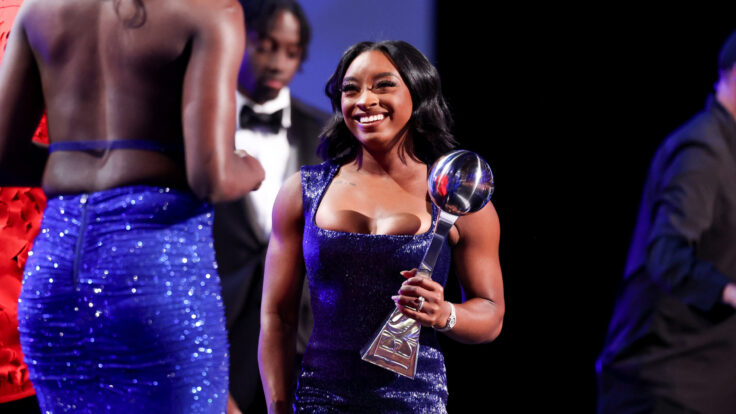
Player of the Week: Samantha Holloway
|
At long last, the NBA took a significant step toward returning to Seattle yesterday, approving the
process to explore whether it actually wants to add two franchises to its ranks. Insiders expect multiple bids for the team that’s likely to land in Seattle within the next two years. Seattle Kraken owner Samantha Holloway looks to be the frontrunner, largely because she also owns the hockey team’s Climate Pledge Arena, which is presumably where the new NBA outfit will play. |
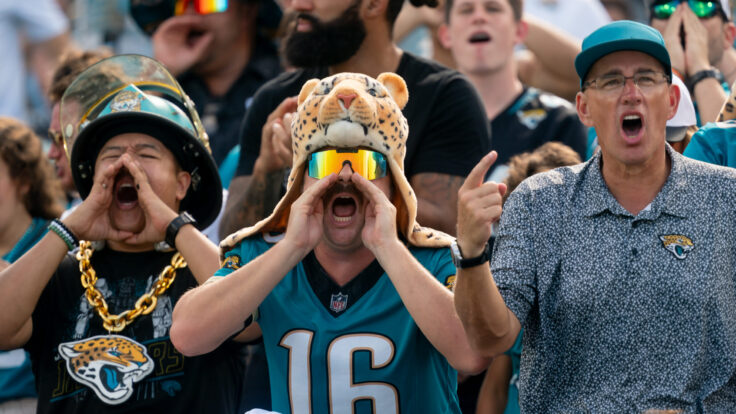
Down to the J.V.: Ryan Smith
|
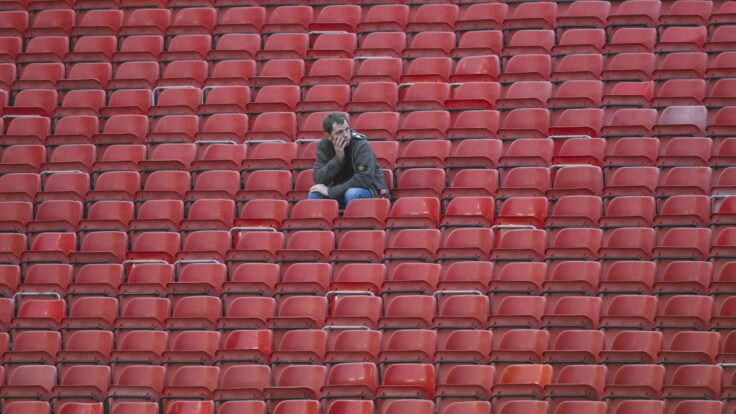
During a press conference yesterday, Adam Silver was asked about tanking. “We are
going to fix it. Full stop,” he said defiantly. A few hours later, of course, the woeful Wizards (who had lost 16 straight games and were playing without their stars) played the Jazz (who were fined last month for sitting otherwise healthy starters). Alas, the Jazz proved to be better at taking the dive, at least last night, and lost by 23. Kudos, I guess, to Jazz owner Ryan Smith, whose team still won’t be able to lose enough games to welcome B.Y.U. star AJ
Dybantsa. (Smith is among the school’s most famous and active alums.) |
- Fixing college sports: I got my hands on a list of presidential committees that were formed after Trump’s roundtable on the future of college athletics earlier this month. According to a source, these groups were created to provide subject matter expertise that will inform an executive order on the issue.
The committees were notable both for who was appointed and who was omitted. The media committee, which was formed to sort out media rights
issues and possible reforms to the Sports Broadcasting Act, includes ESPN’s Jimmy Pitaro, Fox’s Eric Shanks, and RedBird’s Gerry Cardinale. But missing from the roster were reps from NBC, Warner Bros. Discovery (such as it is), or any of the streamers. Anyway, the committee also includes college conference commissioners (Greg Sankey, Tony Petitti, Brett Yormark, Jim
Phillips, Tim Pernetti, and Notre Dame A.D. Pete Bevacqua) along with booster/agitator Cody Campbell, executive/investor David Blitzer, Marc Ganis, lawyer and Trump sycophant Boris Epshteyn, and current U.S. attorney for the Southern District of New York Jay Clayton.
The upshot is that while these committees feature some of the
most powerful names in the sports business, fixing college sports hardly appears to be on a fast track right now. (Usual disclosure: Through our acquisition of Air Mail, RedBird is a minority investor in Puck.) - Zaz’s tax angels: As my partner Bill Cohan pointed out in yesterday’s edition of Dry Powder, Paramount’s takeover of Warner
Bros. Discovery is “one of those deals that keeps on giving.” To wit, new details buried in the company’s latest proxy statement revealed how the WBD board has been fighting tooth and nail to shield David Zaslav from hundreds of millions in potential tax consequences related to the deal.
Here’s Bill: “A new provision was
added on March 10 that is very, how shall we say, executive friendly. … The provision appears designed to help Zaz avoid feeling any pain resulting from WBD’s decision to switch teams from Netflix to PSKY. Because the PSKY deal is expected to close later this year, much sooner than the Netflix deal would have closed, Zaz is apparently facing a potential excise tax on the $517 million. As a result, WBD has estimated that it will have to pay another $335 million to cover the excise taxes
plus the taxes on the benefit of paying his excise taxes. … That money isn’t going to go to Zaz personally, but it does allow him to not have to be penalized by the excise tax. Instead, a new ‘tax reimbursement agreement’ with the WBD board will allow WBD to make Zaz whole on the potential excise tax. … I guess that means he gets his $517 million free of the 20 percent excise tax.” (More disclosure: Because of our acquisition of Air Mail, Zaslav is a de minimis
investor in Puck.) - A booth for three: Last Friday, while watching a first-round matchup between the Villanova Wildcats and Utah State Aggies, I noticed there was a three-announcer booth on the call—and not the CBS A-team of Ian Eagle, Bill Raftery, and Grant Hill. Typically, three-person booths have been reserved for the biggest stages—the national
championship, maybe a marquee Final Four or Elite Eight game—not an 8-9 first-round matchup. Lately, though, CBS Sports and Turner seem to be leaning into the format more often. But why?
I put the question to my guy Marchand on yesterday’s episode of The Varsity. Here’s what he had to say: “Number one, it allows them to feed more mouths. They can bring in more people. A lot of these broadcasters do other things for the networks, and many of them want to do the NCAAs,” Marchand
said. “I don’t think it’s a great idea—especially for teams that don’t work together often. When you throw a trio together on a big stage, you’re asking for trouble. The producer’s job is to put people in the best and easiest position to succeed. I don’t even think execs would have a great answer for why you’d go with a trio that hasn’t worked together much, as opposed to a duo.”
|
And now for the main event… |
|
|
|
The streaming giant invested in a lightweight MLB package to see whether
it could fully eventize the industry’s most tonnage-friendly sport. So far, the jury’s out. |
|
|
|
| John Ourand
|
|
|
|
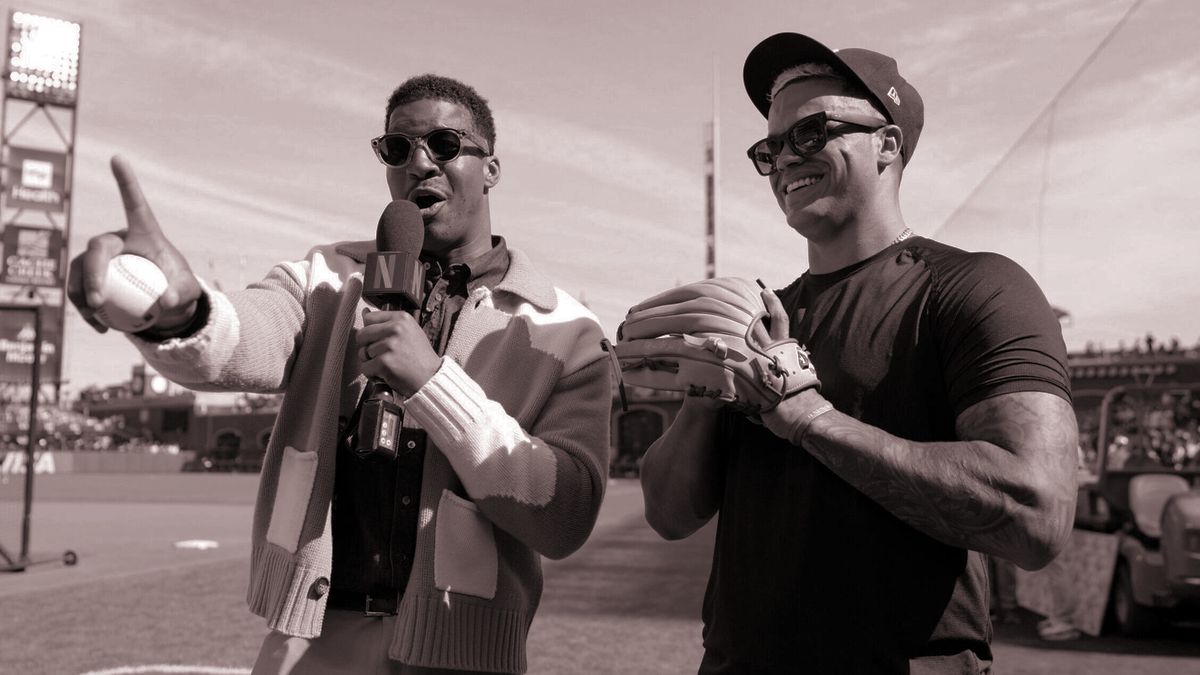
My text threads were flying fast and furious last night during the Yankees’ 7–0 Opening Day victory
over the Giants on Netflix—you know, that little streamer once referred to as the Albanian army that’s been tantalizing the sports media business with its enigmatic, methodical plan to achieve global content domination ever since. Opening Day is an annual springtime ritual filled with mirth and anticipation. But it’s also the threshold of an arduous slog that now runs from March to November, across 162 games and 30 teams (with a possible future strike as a backdrop), and now, various new media
partners. In other words, for Netflix, it’s just more clay on the potter’s wheel to get eventized! Right?!
Currently, the company is paying MLB about $50 million a year for the rights to carry three events: the Opening Night game, the Home Run Derby, and one regular-season theme game that, in this year’s case, will take place at the ballpark in Dyersville, Iowa, where Field of Dreams was filmed. Netflix originally agreed to the three-year deal using the same logic that
drove its investment in boxing and Christmas Day NFL: aggressively attempting to optimize its ad-tier business via special live event programming in order to placate the Wall Street analyst community.
On the surface, the eventization erogeny was everywhere last night. Polarizing misanthrope Barry Bonds, who also happens to be the greatest hitter in between the Williams and Ohtani eras (send the hate mail to Marchand), was
on the pregame. Wrestler Jey Uso threw out the first pitch. (Two years ago, Netflix signed a deal to become the exclusive home for WWE Raw.) The kinda funny comedian Bert Kreischer was ripping Coronas on a paddle board in the bay, anticipating a Ben Rice or Aaron Judge bomb that never landed. Alas, viewers missed the first-ever A.B.S. challenge in the fourth inning because of a boring dugout
interview with Tony Vitello, who is on his own Brad Stevens–esque journey.
Then there was New York Giants backup QB Jameis Winston, who also played baseball at Florida State, yucking it up with Harrison Bader, a former Gator. And, hell, an inadvertent prep-school gimmick: That moment when
Harvard-Westlake alum Max Fried squared off against Bader, who went to Horace Mann, surely made all their lawyer-banker former classmates exceedingly proud! Anyway, my crowd had feelings about all of it.
But when you strip away all the public displays of eventization, Netflix’s first MLB telecast felt like pretty much any other baseball game on network television. In fact, when Netflix tried to sell its baseball package to advertisers, the company quickly
discovered that the market felt the same way: According to a half-dozen sales executives I spoke with, advertisers were generally not persuaded by the streamer’s pitch that baseball’s first game of the season qualified as a big event.
Instead, the market broadly viewed the game as merely the first of 2,430 in the regular season—a drop of water in a sea of tonnage. “They came to us with a ‘full-season package,’ but nobody is buying that,” one ad buyer told me. “There’s
not a single advertiser across this business that’s going to desperately need to be in this Opening Night game. For Netflix, this is an event. But in reality, it’s not, especially since tomorrow there are 11 games we could buy.”
Another glaring problem for Netflix last night: Several of the ads that appeared during the game were make-goods for partners due to the streamer’s failure to gin up the viewership it had promised for those NFL Christmas games. While Netflix averaged an impressive
27.5 million viewers for the Lions–Vikings game and 19.9 million for Cowboys–Commanders, those figures still fell short of the viewership guarantees in the 18-54 demo. (Sources said they were around 18 percent below projections.)
Make-goods are a time-honored tradition in the television business. When a broadcast network fails to reach a ratings guarantee for, say, an NFL game, it will run an ad the following week in another NFL game. The issue with Netflix is that it doesn’t have a lot
of sports programming with which to make good. The streamer offered up some of its entertainment programming as an alternative, but the NFL advertisers bought live sports, and—rather understandably—many of them wanted to run against other live sports. (The highbrow brilliance of Monday Night Raw wasn’t going to work for most.)
Anyway, TV viewership should come out in the next few days, and advertisers are expecting to see big numbers internationally. But U.S.-based
advertisers generally aren’t as interested in international viewers, who can’t buy or use their products—yet another wrinkle. Perhaps the lesson for Netflix is that genuinely big events can’t be manufactured. Even if they manage to pack more stars in a stadium than the Milky Way, the only thing that advertisers really want to see is more viewers tuning in. |
On retrans and antennas: “A note to the whiny ‘cable guy’ from last issue who mocked NAB
president Curtis LeGeyt’s claim that broadcast networks are ‘freely available.’ You must be smoking something illegal in many states, because Curtis is 100 percent correct. The Super Bowl, the Olympics, March Madness, the NBA finals, the World Series, and the Masters come free of charge for viewers who slap up an inexpensive antenna.” —A blissfully retired NAB spokesman
On safety schools: “As a UNC fan, I loved seeing you refer to Duke as the ‘number one
safety school.’ I wonder what Duke alum Adam Silver thought when he read that.” —A media executive
[Ed. note: Silver is also the board chair of said renowned safety school.]
On commercial licenses: “DirecTV losing Sunday Ticket in the bars and restaurants late last week seems like it should be a bigger story, especially for casinos and some larger establishments. Will streaming technology deliver?” —A sports TV consultant
On the dearth
of NCAA tournament upsets: “Cinderella is dead. It was obvious back in 2023 what was about to happen. What’s happening to college sports pains me. A fix for the one percent is destroying opportunities for the other 99 percent.” —A former D1 assistant A.D. |
Have a great weekend. Let’s go O’s. And see you Monday.
John |
|
|
|
Puck sports correspondent John Ourand and a rotating cast of industry insiders take you inside the executive suites
and owners boxes where the decisions that shape the entire sports business are made. You’ll hear interviews with players, network execs, and everyone in between. The Varsity is an extension of John’s private email for Puck by the same name. New episodes publish every Wednesday and Sunday. |
|
|
|
An essential, insider-friendly Hollywood tip sheet from Matthew Belloni, who spent 14 years in the trenches at
The Hollywood Reporter and five before that practicing entertainment law. What I’m Hearing also features veteran Hollywood journalist Kim Masters, as well as a special companion email from Eriq Gardner, focused on entertainment law, and weekly box office analysis from Scott Mendelson. |
|
|
|
Need help? Review our
FAQ page or contact us for assistance. For brand partnerships, email ads@puck.news.
You received this email because you signed up to receive emails from Puck, or as part of your Puck account associated with {{customer.email}}. To stop receiving this newsletter and/or manage all your email preferences, click here. |
Puck is published by Heat Media LLC. 107 Greenwich St., New York, NY 10006 |
|
|
|
|