Welcome back to The Varsity, coming to you from the Acela corridor—literally.
I’m headed back to D.C. after a busy couple of days in New York: Yesterday, NBC invited me to speak at an off-site, where legendary comms exec Greg Hughes grilled me in front of a group of the network’s senior executives. Yes, the NFL came up more than once…
Pod alert: My sommelier Marchand is returning to The Varsity for a special Memorial Day weekend episode where we’ll play all the hits and hash out the biggest issues in sports media.
Also, make sure you check out yesterday’s pod: Horizon Media’s Adam Schwartz offered an ad buyer’s perspective of the business that you probably don’t get too often. Listen here and here.
For today’s private email, I took the mood in
and around Netflix following its 17-second Ronda Rousey–Gina Carano match, the streamer’s first major foray into the M.M.A. game. While the legacy media vets were passing the haterade following the title fight’s lightspeed conclusion, the reality is certainly nuanced. My full readout on the situation is available exclusively to Puck Inner Circle members, so be sure to upgrade your subscription now if you haven’t already. You know you can afford it. And the
sancerre doesn’t pay for itself…
Before we begin: R.I.P. NASCAR legend Kyle Busch.
Also mentioned in this issue: Wemby, Mike Tyson, Tony Petitti, Brandon Riegg, Mark Shapiro, Bela
Bajaria, Matthew Broderick, Gabe Spitzer, Mina Kimes, Logan Paul, Ted Sarandos, Nate Diaz, Adam Silver, Nakisa Bidarian, Marvis Frazier, Greg Sankey, Mike Perry, and more. |
Player of the Week: Adam Silver
|
Kudos to the eagle-eyed readers who’ve noticed how much I’ve curtailed my reporting on TV ratings
following Nielsen’s crowd-viewing-friendly methodological changes, which have increased numbers across the board and largely made year-over-year juxtapositions irrelevant. That said, have you seen the ratings for the NBA playoffs this year? NBC and Peacock combined to log 9.2 million viewers for Wemby’s incredible double overtime performance over Oklahoma City in Game 1 of the Western Conference Finals on Monday. The numbers for the Knicks historic comeback victory over
the Cavs on Tuesday were also massive: 7.1 million viewers just from ESPN’s linear channel. NBA commissioner Adam Silver has to be thrilled, regardless of the Nielsen lift. |
Down to the J.V.: Greg Sankey, Tony Petitti
|
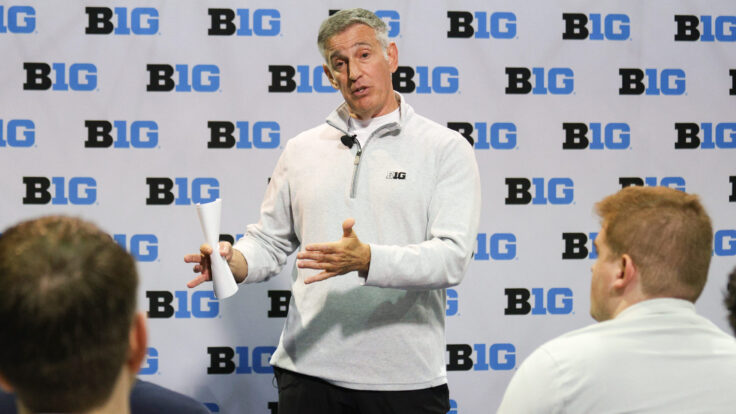
The SEC’s Greg Sankey and the Big Ten’s Tony
Petitti were two of the biggest proponents of the SCORE Act, which aimed to create legal guardrails around paying players and revenue sharing. It looks like the legislation is D.O.A. and won’t make it through Congress this year. That’s millions of lobbying dollars the commissioners will never get back. |
- An Apple stunt: Apple TV will produce Saturday’s L.A. Galaxy–Houston Dynamo game using only the cameras from 15 Apple iPhone 17 Pros—a more fully realized extension of a gimmick it has previously deployed during MLB games. Nevertheless, the move also highlights an industry trend toward cheaper production techniques that still result in broadcast quality feeds.
A dozen years ago, ESPN spent nearly $200 million on a state-of-the-art digital production center on its
Bristol campus. Today, you’re just as likely to see the PTI guys or Mina Kimes in their home studios as Digital Center 2. Many legacy media executives like to recite parables about their networks’ superior production quality, but these differentiating factors are inevitably eroding in an era when authenticity matters most. I’m not suggesting that the Super Bowl is headed to Meta Ray-Bans anytime soon, but I think we are soon entering a world where iPhone broadcasting
may be less anomalous than most traditional formats. (And if you think I’m wrong, just ask the nearest person under 40…) - Da Stalking Horse: When Warner Bros. Discovery spurned Netflix and accepted Paramount’s superior bid earlier this year, the target company was on the hook for a $2.8 billion breakup fee—a standard corporate practice that capitalizes a suitor for cosplaying as a stalking horse in a negotiation. This afternoon, as the Bears continued
to play Chicago off of suburban Arlington Heights off of dreary Hammond, Indiana, in their quest for a new stadium, one veteran sports media executive questioned why municipalities don’t fight for those same clauses. Hammond, a Lake Michigan town named for a 19th century Detroit butcher, won’t get a dime for its efforts if, as expected, the Bears don’t move there. “Why aren’t they presenting exploding offers or getting something akin to a breakup fee? It seems so stupid because everybody knows
the Bears aren’t going to Hammond,” the executive said. “They just did this massive favor for the team, and they are going to get nothing out of it. Why do municipalities and states do this?” Good question!
|
|
|
|
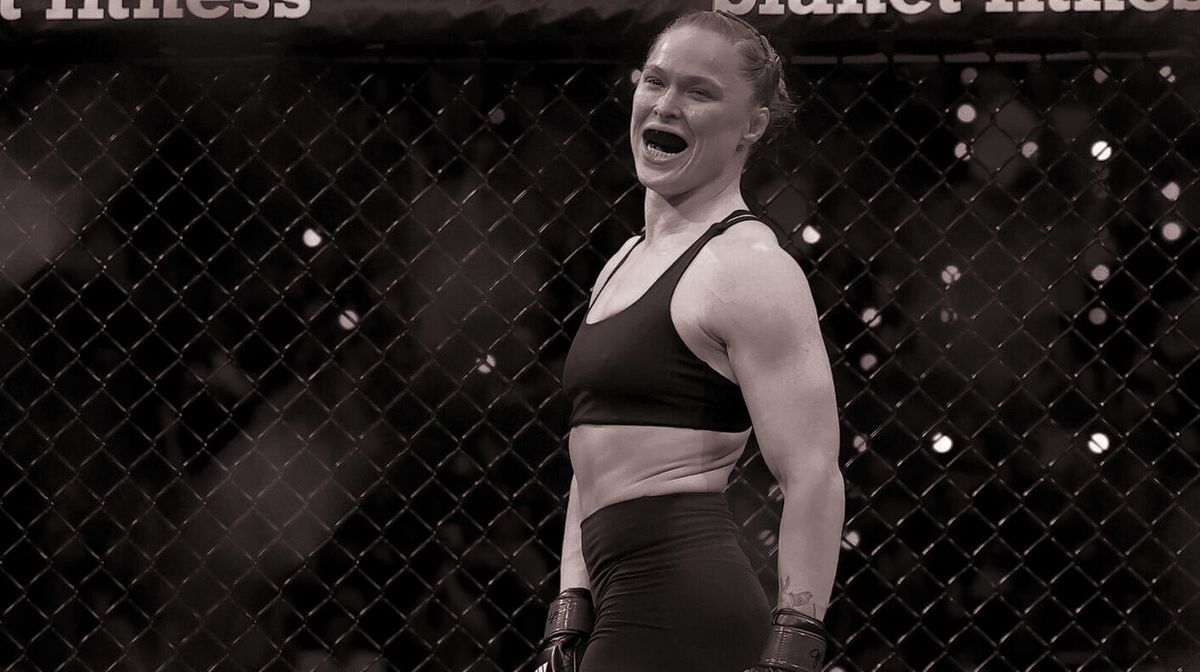
Obviously, the short-lived Rousey–Carano title fight wasn’t the ideal
scenario for Netflix’s M.M.A. debut. But it also wasn’t a refutation of the streamer’s “eventized” sports content strategy. |
|
|
|

| John Ourand
|
|
|
|
When Gina Carano tapped out 17 seconds into her fight with
Ronda Rousey on Saturday at Los Angeles’ Intuit Dome, you could almost feel the schadenfreude emanating from the legacy sports media group chats. After all, Netflix has spent the past half-decade or so attempting to disrupt the sports media ecosystem with their eventized content strategy, which relies on the assumption that the streaming company could skim the cream off the top without carrying the tonnage. Along the way, the streamer has become a legitimate
contender for the sports rights that keep legacy players afloat—a frustration compounded by the inescapable reality that competing against a $376 billion market cap company is a losing game.
Indeed, just a few days before the fight in Los Angeles, Netflix picked up a new five-game NFL package. It also signed a $150 million MLB deal
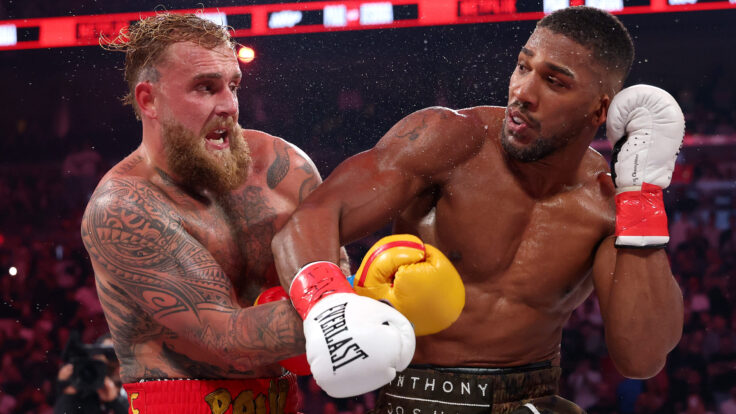
back in November, two years after its historic 10-year, $5 billion WWE deal and acquisition of FIFA Women’s World Cup rights. In the current environment, any perceived Netflix sports weakness—from the various snafus during MLB Opening Night (those backup dancers!) to the technical problems during the Mike Tyson–Jake Paul fight in 2024—has become the stuff of legacy guys’ dreams. On its face, the Carano–Rousey match must have seemed like
the latest flub: In what universe could a 17-second fight between post-prime, 40-ish fighters be categorized as anything but a nonevent?
Netflix co-C.E.O. Ted Sarandos and his content chief, Bela Bajaria, might not have been thrilled by the match’s brevity, but the executives also knew it probably didn’t matter: M.M.A. fans would show up anyway. Moreover, the result couldn’t have been a surprise for Netflix’s top sports execs, Brandon
Riegg and Gabe Spitzer, who surely knew that Rousey had won eight professional fights in less than one minute—and quick knockouts can be exciting. Fans still talk about Mike Tyson’s 30-second kayo of Marvis Frazier from 40 years ago.
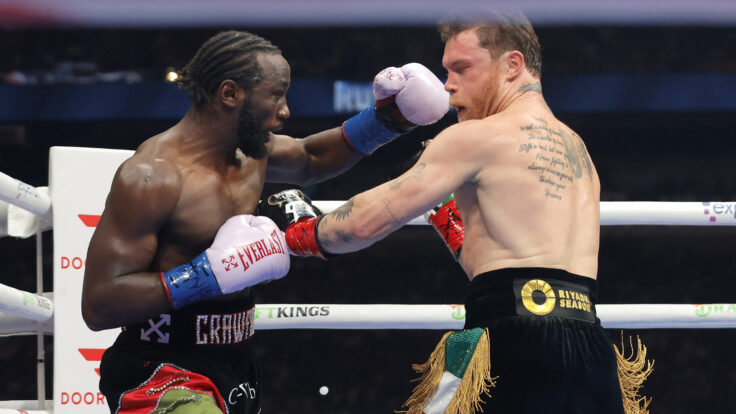
In the end, the streamer’s first foray into the M.M.A. business drew 17 million global viewers, including a record-setting 9.3 million in the U.S. And the numbers remained steady throughout
the night, a marked change from Netflix’s boxing cards over the past few years, where the audience increased as the main event drew nearer. (Yes, these numbers are not Nielsen-rated. But they’re what we have to go on right now.) Plus, this fight was available to all Netflix subscribers; in the past, the match would have only been available on pay-per-view, so rabid fans didn’t have to shell out $70 or so to watch it. And the fighters reportedly only split a purse of around $3 million
(though the fight’s promoter said that the fighters made more than that figure).
Considering that the potential for a short main event was so high, Netflix and the fight’s promoter, Nakisa Bidarian, the founder and co-C.E.O. of Most Valuable Productions, programmed the four other fights on the card with known fighters. “That’s the fight game,” he told me. “On the main card, my thought was any of these fights outside of Nate
Diaz versus Mike Perry could finish within one round… and that’s not a bad thing.”
Still, there was some prominent public detraction. Speaking at a J.P. Morgan conference in Boston on Monday, Mark Shapiro, who runs TKO, UFC’s parent company, correctly predicted that the Rousey–Carano viewership numbers would be huge. But he also described the fight as a “stunt” and worried that it was a bad look for the sport. “I don’t
believe that a fight like that, just the way it played out, is really good for M.M.A.,” he said. “Netflix has a massive audience, a highly engaged audience, that is going to sample what comes up on the front page with Netflix. For them to then go to that fight and then think that’s what M.M.A. is, I don’t believe it is good for the sport long term.” Bidarian also dismissed the grumbling surrounding the evening. As for
Shapiro’s criticism, he countered that the viewership numbers demonstrated that MVP is making strides in the M.M.A. space. He’s worked with Netflix since the Tyson–Paul fight in the fall of 2024, and said that the streamer’s strategy has helped grow his business. “They know how to communicate to their customers,” he said. “They know how to get mainstream attention, and their execution capabilities are second to none because they have the resources to deliver.” |
On NFL deals: “When the contractual ‘out’ comes up in the NFL media contracts at the end
of the decade, do the networks have a right to walk? Or, if they can’t come to an agreement, is it just the NFL who decides whether to walk or stick with the initial deal? The bigger question is, if the NFL exercises the out, can networks that may not want to extend just walk, or are they tied to the negotiated terms? The network calculation here is, do they lose more money with or without NFL rights?” —A sports business veteran
[Ed. note: Only the NFL can exercise the
out, at which point the networks would be able to walk if the rights fee prices get too high.]
On Super Bowl ads: “I loved hearing Adam Schwartz on your podcast. It’s about time you got some of the folks with money in The Varsity!” —A media veteran
More on Super Bowl ads: “I’m with you on the cost of Super Bowl ads. I’d need to see some definitive proof that they are worth it. The only one I remember was with Matthew Broderick for some
A.I. company.” —A Varsity subscriber
[Ed. note: The ad was for Genspark.]
On pickleball: “After seeing the back-and-forth on pickleball, I had to chime in. It’s bowling. It’s a family activity, a hobby, and an old-person sport.” —A sports media veteran |
Have a great long weekend. I’ll be back on Tuesday.
John |
|
|
|
Join Puck’s chief political columnist, John Heilemann, as he roams the corridors of power and influence in America on
this twice-weekly interview show, taking you beyond the headlines with the people who shape our culture: icons and up-and-comers, incumbents and insurgents, moguls and machers in the overlapping worlds of politics, entertainment, tech, business, sports, media, and beyond. The conversations are rich and revealing, unrehearsed and unexpected… and reliably impolitic. A Puck-Audacy joint, new episodes drop every Wednesday and Friday. |
|
|
|
An essential, insider-friendly Hollywood tip sheet from Matthew Belloni, who spent 14 years in the trenches at
The Hollywood Reporter and five before that practicing entertainment law. What I’m Hearing also features veteran Hollywood journalist Kim Masters, as well as a special companion email from Eriq Gardner, focused on entertainment law, and weekly box office analysis from Scott Mendelson. |
|
|
|
Need help? Review our
FAQ page or contact us for assistance. For brand partnerships, email ads@puck.news.
You received this email because you signed up to receive emails from Puck, or as part of your Puck account associated with {{customer.email}}. To stop receiving this newsletter and/or manage all your email preferences, click here. |
Puck is published by Heat Media LLC. 107 Greenwich St., New York, NY 10006 |
|
|
|
|