 |
 |
|
Welcome back to The Varsity, my twice-weekly private email on the power, money, and egos behind your favorite sports leagues and teams. I’m coming to you tonight from my hometown of Washington, D.C., where it seems like I’ve spent most of the week talking to sports business types encamped in Paris for the Olympics. I’d love to see NBC’s T&E from these games.
Mea culpa: Before we begin, I want to correct a mistake I made in Monday’s issue. Somehow I quoted Michael Nathanson, the respected MoffettNathanson analyst whom I have known for decades, as David Nathanson, the co-president of Mapleton Investments. I regret this mistake, and as my punishment I will rewatch Marchand’s interpretive dance routine set to Taylor Swift’s 1989 (Taylor’s Version).
Let’s get to it…
|
| Player of the Week: Snoop Dogg |
|
| Whatever you make of Snoop’s surprise turn as the face of NBC’s Olympics coverage in Paris—seriously, he’s had more airtime than Katie Ledecky—it’s definitely a leading indicator of what’s to come. Between reuniting the rapper with Martha Stewart for the dressage competition and constantly pointing the cameras into the stands to shout out all the A-listers watching the events, NBC is clearly making a play for younger generational engagement and boosted media impressions across nontraditional channels. Judging by the TV ratings, streaming numbers, and social conversations—and the fact that the 2028 games are in Los Angeles—you can bet that NBC will double down on this celebrity-forward strategy in four years. |
| Down to the J.V.: David Zaslav |
|
| In the past couple of weeks, David Zaslav lost NBA rights, sued the league, and watched WBD stock plunge to record lows after booking a $9.1 billion impairment charge, mostly based on the plunging value of the cable TV channels. WBD investors John Malone and Steve Newhouse are historically loyal to Zaz stemming all the way back to their Discovery heyday. He’s their guy, and he’s operating the board’s strategy… but this guy is sure learning how to alienate people in the chummy worlds of Hollywood and sports media. My partner Matt Belloni will have more tonight in his newsletter What I’m Hearing (sign up here). |
|
A MESSAGE FROM OUR SPONSOR
|
 |
|
The all-electric BMW i7 embodies luxury at every turn. Learn more at BMWUSA.com.
|
|
|
|
|
- Cord-cutting blues: Sure, Disney posted the first streaming profits in its history. And Warner Bros. Discovery executives spent a lot of time on their otherwise disastrous earnings call touting the growth potential of Max. But the main takeaway from both earnings calls was that cord-cutting is accelerating at a rapid clip. This afternoon, I called up Rich Greenfield, the plugged-in LightShed analyst, who told me, “All signs are that consumers are abandoning the linear cable bundle at record levels. On top of it, you’ve got the double whammy of advertising in decline.” He continued: “The common theme is that all of these companies are hoping that streaming can get big enough to offset the weakness or the declines in linear.”
Rich also pointed out an irony with the growth of streaming, particularly as it tries to displace cable. “The problem, as you’ve seen from everyone that’s reported so far, is that subscriber growth has slowed dramatically. On the streaming side, there is a race to jack up prices, slash spending on programming and marketing, and pray that bundling will save them. As they raise the price, they’re seeing much higher levels of churn. So they’re trying to push people into bundles just like they did in the old cable days.”
- NBA non-update update: As WBD awaits the NBA’s response to its lawsuit, company executives are imagining life without the NBA. During yesterday’s call, WBD C.F.O. Gunnar Wiedenfels described TNT’s NBA business as profitable, leading some analysts to place blame for WBD’s $9.1 billion impairment charge on the fact that it was unable to renew its rights deal.
Greenfield had a different take. He believes that WBD’s stock slid because its executives haven’t done a good enough job explaining how they plan to move forward after the NBA. “They’re getting killed for not explaining whether they will survive without the NBA,” he said. “The key thing to think about is that investors can handle bad news. Investors love good news. What investors hate more than anything is uncertainty. And that’s what’s been created here.”
Sure enough, when Zaz was asked how the loss of the NBA would impact TNT’s affiliate deals, he avoided the question. I’ve previously reported that TNT’s affiliate deal with Comcast is up at the end of next year.
- Planet Venu: My partner Eriq Gardner is spending this week in a New York courtroom as Fubo looks to derail the Disney/Fox/WBD streaming service Venu, né Spulu. (Good luck!) I asked Eriq for a quick update on how things are going, and he made a noteworthy observation about U.S. District Judge Margaret Garnett, who has added one day to the mini-trial, which now runs to Monday. “She’s engaged and asking her own questions,” Eriq texted.
Of course, as close observers of this deal will remember, Disney, Fox, and WBD signed a non-compete for three years, meaning that they can’t launch a similar Venu-style streamer with other co-partners, like Paramount or NBC, for 36 months. This point infuriates companies like Comcast, Charter, and DirecTV, who don’t have the flexibility to launch a sports-focused bundle akin to Venu. While we chewed this over, Eriq referenced internal documents that say Disney, Fox, and WBD will remain in “strategic alignment” over Venu.
Other items of interest, per Eriq: “Disney, Fox, and WB plan on investing $1.2 billion in Venu; Fox has projected Venu will up its bottom line by $1 billion; and the price of Venu will increase by $5 a year.”
- Down to the J.V. part 2: If you plan to launch your own regional sports network, it’s critical to put an entertaining team on the field. Alas, Jerry Reinsdorf has not done that. The White Sox are the worst team in baseball, having just lost 21 games in a row. The Sox may eclipse the ’62 Mets as the losingest team in history. And still, Reinsdorf is moving forward with his plans to launch his own R.S.N. by next season.
Today, as the team fired its manager, Pedro Grifol, Reinsdorf was painted as a villain in a variety of local and national publications. The harshest criticism came in the Chicago Sun Times, where Rick Morrissey wrote, “Reinsdorf is permanently embedded as chairman, unless he decides to move the team to Nashville, Tennessee. You can almost hear a fan base say in unison, ‘One can hope.’”
- R.I.P. Broadcast magazine: When I was a young reporter covering the media business for Cablefax, Broadcast & Cable magazine was a dominant trade. I vigorously competed with B&C and its sister pub Multichannel News for scoops and relevance. I loved tweaking my competitors whenever I could. For example, Broadcast changed its name to Broadcasting & Cable in 1993—a change I refused to acknowledge in print. It was always just Broadcast magazine to my readers, and I was delighted when their people would call to complain.
Anyway, about 15 years ago, a venture-capital-backed company bought the trades and, as cord-cutting emerged, they became much less relevant. Still, it was shocking to see the trades’ current owner, Future Plc, announce this week it would be shutting down both titles and their newsletters in September. The company is only keeping a Hall of Fame dinner that, apparently, still makes money.
|
 |
| NBC Prepares for Those NBA Economics |
| Comcast executives are thrilled about the value that the NBA can offer NBC’s primetime lineup and Peacock’s growth and retention rates. But making the deal profitable will require some strategery at the affiliate and distributor level—and the fun is about to begin. |
|
|
|
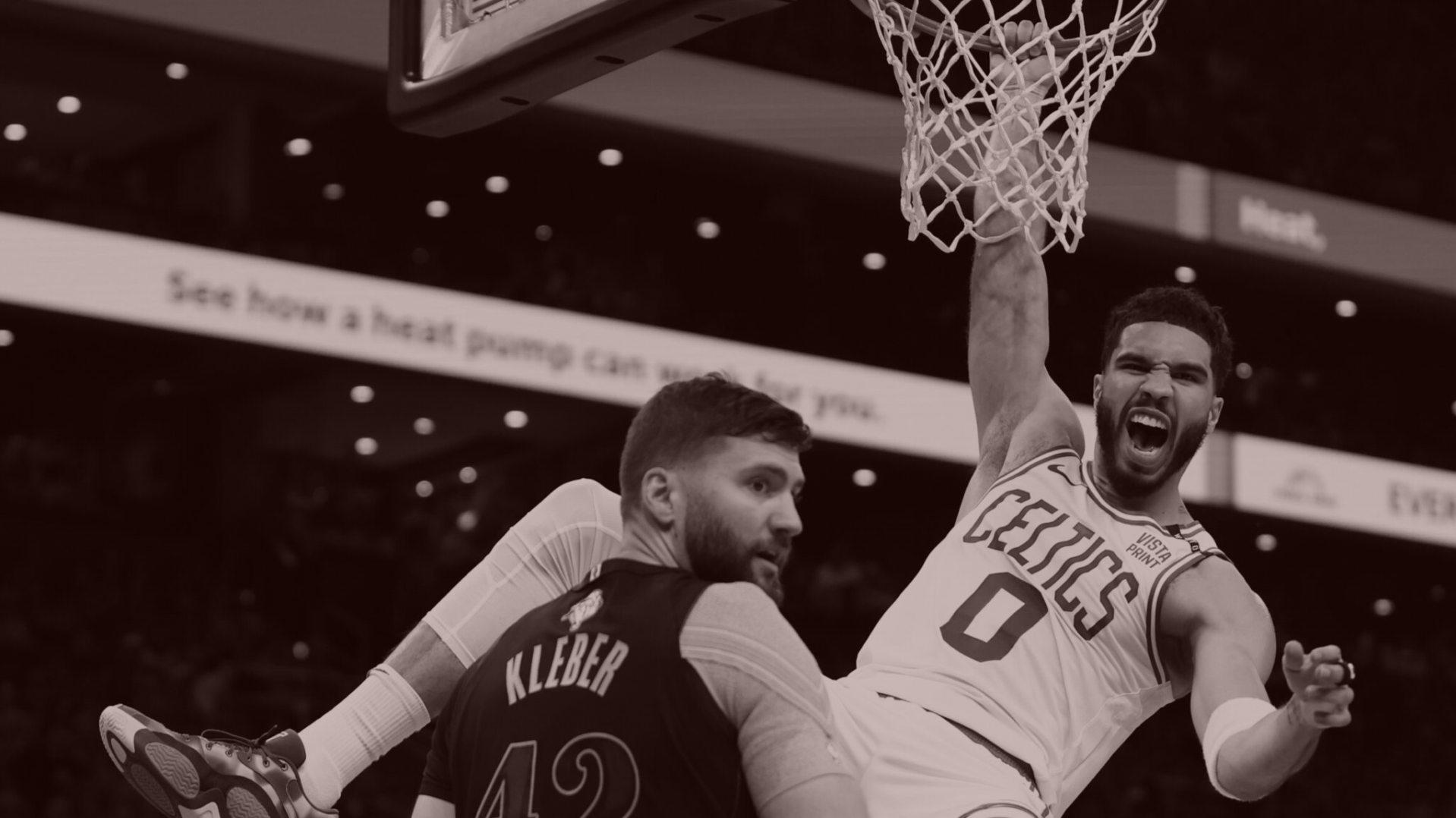
| Soon after Brian Roberts’ surprising and carefully crafted decision to bid $2.5 billion per year for NBA rights—a number that blew his competitors, Warner Bros. Discovery and C.E.O David Zaslav, out of the water—the media narrative quickly turned to how the league could help boost Peacock and become shrewdly amortized across two large weekly primetime windows on NBC. But media business veterans, who know that the Comcast C.E.O. is a savvy negotiator and a P&L viper, also assumed that Comcast and NBCU would be using the rights package as leverage in downstream negotiations with partners and distributors.
Loyal readers will even recall how I broke the news that part of Comcast’s NBA deal thesis involved their ability to eventually punish WBD in future negotiations by lowering the carriage fees for TNT. WBD’s Turner networks contracts with Comcast are up at the end of next year. With the NBA, TNT currently costs Comcast around $3 per subscriber, per month. Without the NBA, Comcast will push to pay a much lower fee. As the analyst Michael Nathanson told me earlier this week: “Sure, TNT has March Madness and baseball playoffs, but it’s really repeat TV. Why is TNT $3 per month when USA is 50 cents or AMC is $1?”
NBC also faces end-of-year negotiations with Nexstar and Sinclair, two big local broadcast groups that own a significant number of local NBC stations. These negotiations will go a long way in determining just how much financial support the local broadcast groups will give to NBC, which has not tipped its negotiating hand yet. I’m told that executives will begin to focus on these deals after the Olympics close and everyone gets back from Paris. (Inside Comcast, everyone is rolling their eyes about the T&Es.) |
|
|
| This waiting game hasn’t stopped local broadcasters from girding for what they know will be a tough negotiating process given the network’s game load. NBC will carry regular season games on Sundays and a doubleheader on Tuesday nights. (Peacock will have exclusive access to stream a Monday night doubleheader.) My sources say they’ve heard rumblings about NBC trying to extract an incremental payment for the NBA. But several local broadcast executives believe that NBC will wait until its affiliate deals are up, rather than trying to work out a surcharge.
Local broadcast executives are particularly annoyed about the Peacock element of Comcast’s NBA deal. They know that Comcast executives so vastly outbid their competitors because they wanted to use the NBA to grow the streamer, and these executives don’t love the notion that the cost will likely be passed on to them. And while local stations do get some compensation from people who subscribe to Peacock within their markets, there is an overwhelming sense that any push to a streaming service will hasten the decline of their businesses. As a way to compensate, local broadcast groups will almost certainly try to extract more local advertising time from the NBA games.
Notably, NBC can’t just press down on its partners to ensure it is profitable on its $2.5 billion economics. After all, affiliates pay NBC on a per-subscriber basis. And as cord-cutting continues to ravage the business, the number of subscribers keeps declining. So the network can’t put so much pressure on these partners to the point where the price tag flips a consumer to cut the cord. It’s going to be a delicate balance of grinfucking, applying pressure to relieve their own financial pressure, while ensuring that the equilibrium does not break. “For NBC to continue to keep the revenue that they have today from their station groups, they will have to make sure that their annual increases match that of the cord-cutting losses,” one industry executive told me. “And that’s just break-even. And that’s before the NBA.”
In the end, of course, Comcast made this deal with a longitudinal view. Like every other large-cap legacy mediaco, they are trying to manage the decline of cable in tandem with the growth of streaming, and balance the intricacies of a subscriber business and a commercial advertising operation. Not every current media company will be intact when the NBA comes back up for auction in the next decade, but this one will be, even if a few eggs are cracked along the way. |
|
|
| On Venu’s $42.99 per month cost: “Venu’s retail price is less than MVPDs pay for the same content. It’s a problem for distributors who literally funded the development for those channels. WTF.” —A cable guy
On Nike’s problems: “I’ve seen a few of the Nike Olympic spots and don’t love them. Nonetheless, the brand idea has never been about winning—it’s always been about the pursuit. Get up, get moving, just do it. Indeed, the corporate strategy group should take a few cues from the marketing team.” —A digital executive
On the race to replace Norby: “Mike McQuade as a potential Norby replacement? Wow! I worked for/with Mike throughout my ESPN tenure. As an aspiring producer, I learned so much from him. He’s a brilliant television mind, though I sensed Mike had no appetite for the political games required at ESPN’s highest levels. (I think Norby loved that stuff: defenestrations, grinfucking, all of it.) Mike probably has many advocates among influential ESPN talent, especially Scott Van Pelt. On a separate note, you have no idea how much I swell with pride anytime you invoke my glide path/cliff path/grinfuck drinking game. With Diamond and Comcast reaching an agreement, is that gimmick taking the glide path (one final drink?) into oblivion?” —A loquacious producer
[Ed. note: Seems more like the cliff path to me (drink!).]
On Pete Rose’s Hall of Fame chances: “I’d be far more forgiving of Pete Rose if it turned out that he bet on the Reds to win 162 games a year for as long as he managed. Since that’s not the case, it’s reasonable to assume that he managed differently in games he bet on versus games he didn’t.” —A logical Varsity subscriber
More on the Hit King: “The Pete Rose doc cannot be helping his Hall of Fame push. I’m from Cincinnati and I could barely get through the first episode. The man will never change. I grew up not far from where he did. My brother played against his kid. We grew up loving Pete. But he is so unlikable and bitter, I couldn’t listen to him talk in a sound bite. It’s a truly sad story.” —An executive producer via Threads |
|
|
See you Monday,
John |
|
|
|
| FOUR STORIES WE’RE TALKING ABOUT |
 |
|
 |
|
 |
|
 |
| Wonder Walz |
| Trading notes on the real impact of Tim Walz. |
| PETER HAMBY & JOHN HEILEMANN |
|
|
|

|
 |
|
|
|
Need help? Review our FAQs
page or contact
us for assistance. For brand partnerships, email ads@puck.news.
|
|
You received this email because you signed up to receive emails from Puck, or as part of your Puck account associated with . To stop receiving this newsletter and/or manage all your email preferences, click here.
|
|
Puck is published by Heat Media LLC. 227 W 17th St New York, NY 10011.
|
|
|
|