Welcome back to The Varsity. I’m John Ourand, and I am
trying to get as excited about this Trae Young trade as his three agents are. I may need a few…
Breaking: All nine MLB teams that have deals with Main Street Sports terminated their local media contracts, per this Athletic story from Evan Drellich. That’s the Braves, Reds, Tigers, Royals, Angels, Marlins, Brewers, Cardinals, and Rays. Much more to come on this…
Pod alert: From the influx of private capital to the never-ending transfer portals, the college sports industrial complex has become something of a lawless rump state. But I’m going to try and break down the most consequential issues when NCAA president
Charlie Baker joins the Varsity podcast this weekend. The former Massachusetts governor has led the NCAA for three years now, and is trying to bring some order to the chaos.
Before we get started: Disney settled on a replacement for former platform distribution president Justin Connolly, whose departure for YouTube last year led to a now-settled lawsuit. The company promoted Jimmy Zasowski to president of platform
distribution for Disney Entertainment and ESPN, which means he’ll soon be the point person fighting with distributors over rates and packaging. Good luck, Jimmy, you’re gonna need it!
Mentioned in this issue: Doc O’Connor, Ian Charles, Demond Williams Jr., Mark Marshall, Austin Karp, David Zaslav, Samuel Di Piazza Jr., Jessica Reif Ehrlich,
Tony Dokoupil, Jerry Jones, Mike “F’in” Florio, Maria Taylor, Jim France, Lesa France Kennedy, Steve Phelps, Michael Jordan, Jonathan Marshall, Mark Silverman, Brad Zager, Eric Shanks, David Hill, and Ed Goren.
Okay, let’s get to
it… |
Players of the Week: Doc O’Connor & Ian
Charles
|
Five years after launching the sports investment platform Arctos Sports Partners, the
co-founders have found a willing buyer in the private equity behemoth KKR. The deal, which still needs approval from the leagues, values Arctos at $1 billion. Arctos was among the first private investment firms to take minority ownership positions in teams, ranging from the Chargers to the Warriors and Dodgers. |
Down to the J.V.: Demond Williams Jr.
|
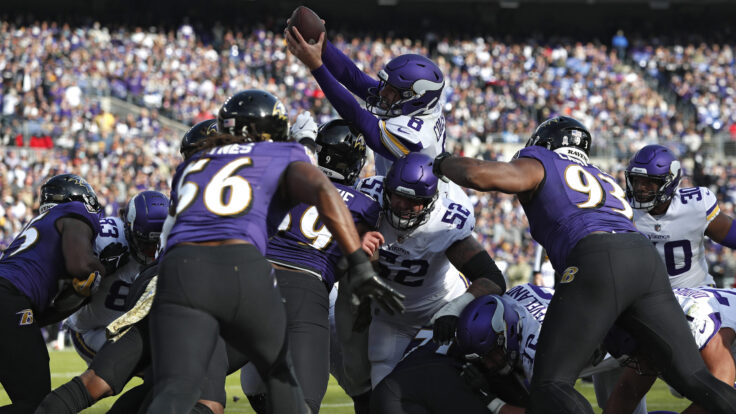
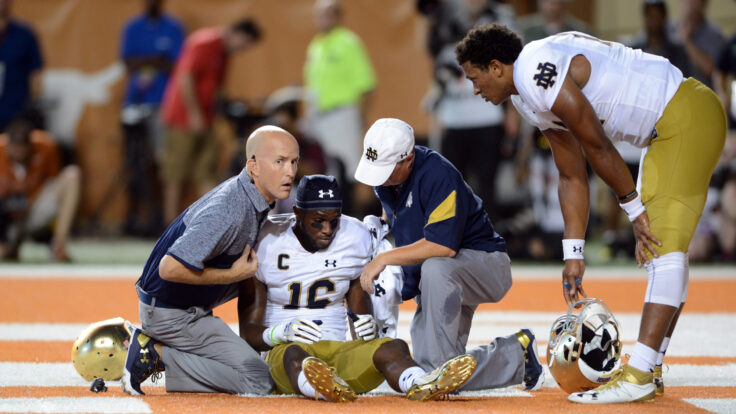
The rising junior’s week perfectly encapsulated the chaos of modern college sports. Williams, 19,
had a hell of a season as the starting quarterback for the University of Washington Huskies last season, and signed a deal to remain at the school just a week ago. But on Wednesday, he declared for the transfer portal. Before even showing up for his two seasons in Seattle, Williams had committed to Ole Miss, de-committed from Ole Miss, signed with Arizona, and left Arizona without playing a game. (Washington head coach Jedd Fisch used to run the UA program.)
So far, it
seems like Washington is willing to dig in legally and enforce the deal, perhaps marking the first popular dispute between a player and program in the N.I.L. era. And while it’s easy to sympathize with Washington, remember that Fisch recruited Williams to Arizona when he ran that program, and, fairly or not, there had been rumors that he might consider one of the other high-profile gigs that opened in this season. In the end, this saga merely reveals what is already patently true
about the modern college sports landscape: Everyone plays for themselves. |
- The ad sales bellwether check: Ad sales around sports and tentpole live events have long functioned as an early-warning system for the broader economy. In 2001, a dip in the sector signaled the dot-com bust. In 2008, ad buyers were among the first to feel the ground soften beneath them. Which is why NBC Sports’s ad sales performance coming out of a nerve-wracking winter and heading into spring is striking: By all accounts, the market looks anything but shaky.
I
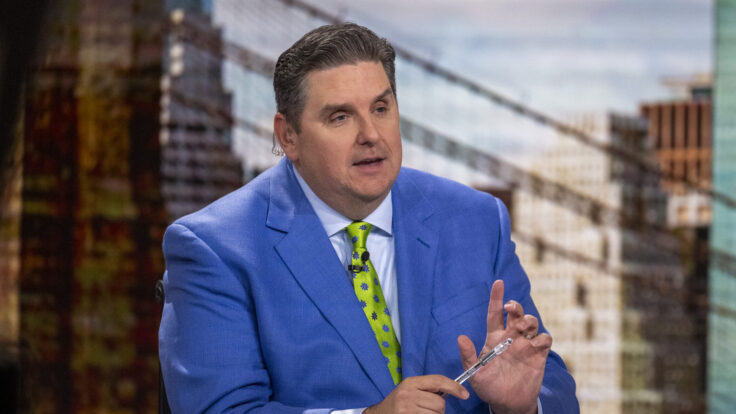
invited Mark Marshall, NBCUniversal’s global advertising chief, on to the latest episode of The Varsity to unpack what his team is seeing in the market. “Sports has always been a bit of a barometer—especially because of the big-ticket price tag,” Marshall told me. In 2025, he said, NBCU posted growth across every one of the
13 advertising categories. “I’ve never seen that in my career,” he said. Part of that resilience, he added, comes from the diversification of advertisers. Categories like retail, once marginal in sports advertising, are now central—helping to buoy the entire marketplace. - 2025 on TV: I had two main takeaways from the end-of-year viewership rankings for television shows this week. First, the fact that sports made up 96 of the 100 most-watched shows
demonstrates why the NFL is about to make its partners renegotiate early and break the bank doing so—and why everyone thinks college football is undervalued. You can’t compete in the TV business without the NFL, which took up 84 of the top 100 slots, or college football, which claimed another eight. The only non-sports programs on the list were live events: the Oscars, the Macy’s Thanksgiving parade, the inauguration, and a Trump speech. Secondly: Expect the networks to continue to push for an
expansion of the college football playoff. Six CFP games made the top 100 list for 2025. My buddy Austin Karp compiled the best list I saw. Check it out here.
- David rebuffs David: David Zaslav & Co. dismissed Paramount Skydance’s
latest $30-per-share offer yesterday, doubling down on their Netflix deal. So, where does that leave Paramount? Are there any strategic moves left to convince WBD’s shareholders that their bid is the better deal? No one has dissected the financial nuances of this drama better than my partner Bill Cohan, who provided a timely update in his newsletter
yesterday.
Here’s Bill: “The Ellisons originally determined that the cable assets were worth $1 a share, which would make their overall $30-a-share all-cash deal for the entirety of WBD more valuable. Samuel Di Piazza Jr., the chairman of the WBD board of directors, recently said on CNBC that Global Networks was worth between $3 and $5 a share—and that, as a result, the overall Netflix bid was worth between $32 and $34 per share, with $23.25 a share in cash and $4.50 a
share in Netflix stock, plus the value of the Global Networks stub, besting Paramount’s offer,” Bill wrote. “Last month, Jessica Reif Ehrlich, the Bank of America research analyst, put the value of the Global Networks stub at $3 per share, while Morgan Stanley valued the stub at $1.50 per share. Raymond James took the bold position of saying the stub would be valued between $0 and $2 per share. So what are these cable assets worth? Of course, that has become the
$108 billion question.” - Tony does Dallas: As CBS News navigates its sweeping overhaul (brilliantly chronicled by my partner Dylan Byers), the network turned its camera to a familiar figure in the
sports world: Cowboys owner Jerry Jones, who recently invited Evening News anchor Tony Dokoupil aboard his helicopter for an aerial tour of The Star, the Cowboys’ sprawling new headquarters.
While the Cowboys’ 7–9 season fell far short of expectations, yet again, Jones pivoted the spotlight away from the team to highlight a different kind of on-field attraction: the cheerleaders. Fresh off the success of America’s Sweethearts, their 2024
Netflix reality hit, the cheerleaders were celebrated—and rewarded—with a 400 percent raise. (The total comp package is murky, but reports have pegged veteran-cheerleader pay to about $150,000 per year after the raise. Not Dak money, but not bad.) “They’re wonderful young women who come from many walks of
life,” Jones told Dokoupil. “It never has been about the money. What it is about is the opportunity to be a part of a team and build on a legacy.” Yeah, Jerry, sure… - The Dancing Florios: If you consume sports media, odds are you’ve come across videos of NBC’s Sunday Night Football crew dancing and lip-syncing to various pop tunes, including this one where Mike “F’in” Florio channels his inner Kendrick Lamar. One Varsity reader asked me to get Florio to stop, calling it “cringeworthy.”
I reached out to the ProFootballTalk founder, and I can report that he has no intention of hanging up his dancing shoes. “It’s the most fun part of a long, stressful day,” he said. “And it was a brilliant move by Maria Taylor to build camaraderie. Family, friends,
strangers constantly comment about it. I ran into [NBC News’s] Peter Alexander at LaGuardia last month and the first thing he said was, ‘I love the TikToks.’”
|
And now for the main event… |
|
|
After a landmark settlement, a slew of unfavorable publicity, and the departure of
its commissioner, NASCAR may finally have to make real room for outside investment. Could it all push the France family to go full sale? Plus: some Fox Sports kremlinology. |
|
|
Unlike other U.S. sports entities, NASCAR remains a family-owned business. Bill France
Sr. founded the racing circuit way back in 1948, when stock car racing’s Prohibition-era roots were barely memories. The outfit is currently run by Jim France, Bill’s 81-year-old son, and granddaughter Lesa France Kennedy. As team valuations have skyrocketed in recent years, some of the largest companies in the sports business have beaten a path to the Frances’ office to try and persuade the family to cash out. The family has entertained some
conversations: In 2018, they hired Goldman Sachs to explore a potential sale. NBCUniversal came close to a deal eight years ago before parentco Comcast spent $40 billion on Sky instead.
The Frances have always remained steadfast in their commitment to keep NASCAR private, but a bruising past few months have tested that resolve. It was recently revealed that commissioner Steve Phelps referred to tenured team owner Richard Childress as “a stupid redneck” in
an unfortunate text chain while the circuit was fighting off Michael Jordan’s much-publicized antitrust lawsuit. NASCAR settled the suit anyway, and team charters will now function as evergreen licenses rather than contracts to be renewed with new media rights deals. On Tuesday, Phelps resigned.
The lawsuit and its aftermath have heightened the sense that the France family may be more open to outside investors in the sanctioning body. NASCAR has allowed private equity
firms to invest in team charters in the past, essentially mirroring other professional leagues that have allowed them to take minority stakes in teams. Sources say that media companies and private equity players have had informal talks about what it would look like to take a minority stake in the racing series.
Anyway, my phone has been buzzing with these rumors all week. Some have wondered whether the France family could be looking for strategic partners—like real estate
companies that could develop around the circuit’s tracks—rather than selling an equity stake in the business. Others, of course, are hopeful this could be the first step toward an outright sale. There are plenty of companies that could be interested, including groups like Liberty, which owns Formula One, and TKO, which owns UFC and WWE. There’s the long list of private equity companies that already have a ton of sports investments, like Ares, Arctos, and Sixth Street. Then there are media
companies that have long sought to own their own content. To be fair, this is all premature, and there’s been no indication that’s about to happen…
Race Team Alliance executive director Jonathan Marshall testified that some NASCAR teams would be open to buying equity positions in the racing series, per this SBJ
report. Nothing’s imminent. But there does appear to be edging toward a green flag. |
Phelps’s resignation was not the only monumental sports business departure on Tuesday. A few hours
later, Fox Sports president and C.O.O. Mark Silverman announced his own exit after an eight-year run. Silverman had been working on an exit plan with Fox Sports’s C.E.O. and executive producer, Eric Shanks, since last summer. In an email to staff on Tuesday, Silverman wrote: “There is a feeling inside telling me that it is time to move on. I have learned and seen firsthand that life is indeed short, and for me, this is the right time to leave.”
Naturally,
much of the focus has been on his departure. Since joining Fox in 2018, he’s earned the reputation as the grown-up in the room, setting the network’s strategy with college football. But I’m more interested in what the decision to have Brad Zager replace Silverman says about Shanks’s own succession plan.
Yes, yes, Shanks isn’t going anywhere: Not only is Fox on a roll, but Shanks is well-liked and respected by top Fox Corp executives. But it should come as little surprise that
Zager, Fox Sports’s president of production and operations, appears to be his heir apparent. Throughout its 32-year history, Fox Sports has been run by executives with production chops. David Hill launched the division in 1994 and Ed Goren ran it as president until 2010, which is when Shanks took over. Zager, who moved to Japan in 2012 to launch a network, certainly fits that mold. |
On linear TV ad sales: “On your great pod with Mark Marshall, he referenced that ‘72
percent of impressions are still on linear.’ I’d love to know more specifics about exactly what he was quoting. I agree that linear still provides a tremendous value, but that number seems high in a world of zillions of TikTok and YouTube impressions.” —A media executive
[Ed. note: Mark was talking about impressions during live sports, an area that’s still dominated by broadcast television.]
On outdoor hockey: “I was at the Winter Classic in Miami, and
went to the one at Citi Field in 2018 and Stadium Series at Yankee Stadium in 2014. The atmosphere was incredible. Everyone who attended came away much more impressed than people who watched it on TV. With back-to-back Stanley Cup champions and the NY–FL contingency, it was absolutely electric. That doesn’t sell TV ads—but makes for a great live experience!” —A finance executive
On the professionalization of youth sports: “With all this money being thrown at youth
sports, maybe the NFL will have 15 QBs that matter in the next decade.” —A media executive |
Have a great weekend. See you Monday,
John |
|
|
Puck fashion correspondent Lauren Sherman and a rotating cast of industry insiders take you deep behind the scenes of
this multitrillion-dollar biz, from creative director switcheroos to M&A drama, D.T.C. downfalls, and magazine mishaps. Fashion People is an extension of Line Sheet, Lauren’s private email for Puck, where she tracks what’s happening beyond the press releases in fashion, beauty, and media. New episodes publish every Tuesday and Friday. |
|
|
An essential, insider-friendly Hollywood tip sheet from Matthew Belloni, who spent 14 years in the trenches at
The Hollywood Reporter and five before that practicing entertainment law. What I’m Hearing also features veteran Hollywood journalist Kim Masters, as well as a special companion email from Eriq Gardner, focused on entertainment law, and weekly box office analysis from Scott Mendelson. |
|
|
Need help? Review our FAQ page or contact us for assistance. For brand partnerships, email ads@puck.news. You received this email because you
signed up to receive emails from Puck, or as part of your Puck account associated with {{customer.email}}. To stop receiving this newsletter and/or manage all your email preferences, click here. |
Puck is published by Heat Media LLC. 107 Greenwich St., New York, NY 10006 |
|
|
|