Greetings! As you can probably tell, today’s newsletter looks a little different.
After three years, we’ve redesigned the look and feel of our private emails, and want to know what you think. If you have any feedback, please click here to take a brief survey.
|
Greetings from Los Angeles, and welcome back to In the Room. In
tonight’s email, fresh reporting on The Washington Post, where— drum roll— Will Lewis has decided to appoint Matt Murray as executive editor, but is waiting until after the new year to share the news with his staff. Plus, some new details on Mark Thompson’s impending CNN layoffs.
By the way, if you haven’t taken our survey for the second installment of The Puck Private Conversation series, powered by Orchestra, you can fill out your responses here. It should be fun, and only takes a minute or two.
Also mentioned in this email: Joe Kahn, Krissah Thompson, Marty
Kady, Cliff Levy, Carolyn Ryan, Fred Ryan, Bob Iger, Marty Baron, Anne Kornblut, Sally Buzbee, Steven Ginsberg, Karen Pensiero and many more…
|
|
|
Instagram Teen Accounts: automatic protections for teens
Parents want safer online
experiences for their teens. That's why Instagram is introducing Teen Accounts, with automatic protections for who can contact teens and the content they can see.
A key factor: Only parents can approve safety setting changes for teens under 16.
Learn more
|
|
|
- 🍸 On today’s edition of The Grill Room, Puck co-founder Jon Kelly joins me to discuss Matt Murray’s aforementioned surprising ascent to the Washington Post executive editor job. Then, Eriq Gardner swings by and weighs in on Bob Iger’s Trump-ABC settlement calculus. Follow The Grill Room on Apple, Spotify, or wherever you get your podcasts.
- CNN’s impending cuts: Back in early November, on the heels of the election, I reported that Mark Thompson was planning to implement another round of layoffs that will impact hundreds of employees, including those whose TV production talents won’t be needed as much in the new digital-first landscape. Now I’m told that those cuts are likely to be announced early in the new year. They’re going to be devastating for so many people involved with CNN, and likely the beginning of a new normal as the business diversifies its investments in the future.
- Neil Cavuto exits: Veteran Fox News anchor Neil Cavuto is leaving the network after 28 years, the latest casualty of the new economic realities facing cable news. Cavuto was offered a new contract, albeit at a significantly reduced salary, which he didn’t want to take. Alas, that will be the offer on the table for many Fox News talents in the years ahead. While the network remains dominant in cable news, it is not immune to the broader structural declines that are forcing pay reductions across the industry. Indeed, most anchors with contracts coming up in the months ahead will be asked to take a haircut.
- Cable news crater watch: Speaking of… six weeks after the election, Fox News continues to command nearly three-quarters of the cable news audience, while CNN and MSNBC languish with around half the viewership they had prior to the election. Morning Joe, which historically drew more than 1 million viewers, is now averaging just over 600,000 viewers, with a mere 56,000 in the key news demo.
|
|
And now, on to the main event…
|
|
|
|
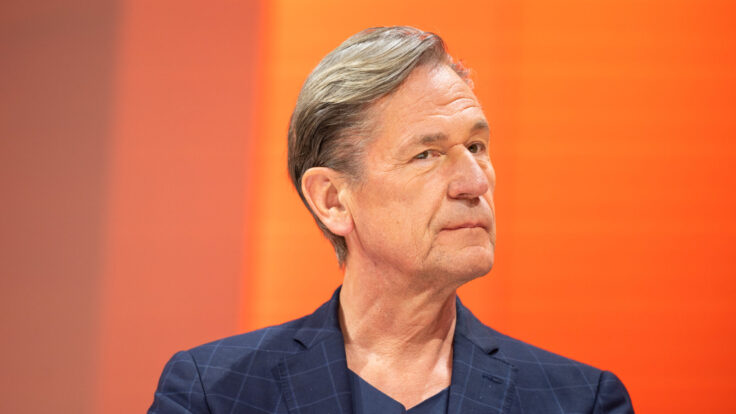
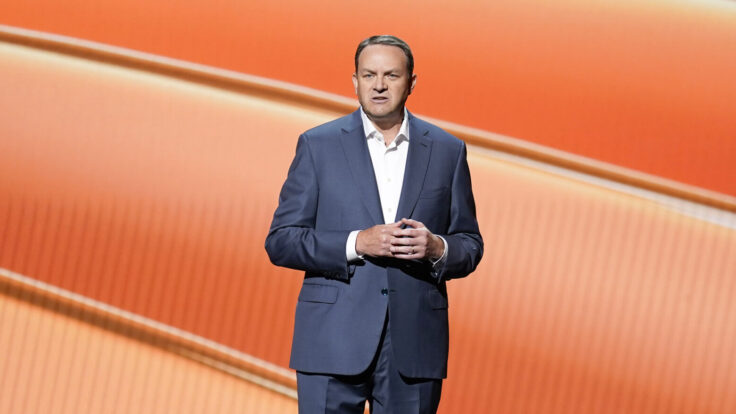
After six excruciating months, Washington Post C.E.O. Will Lewis is naming acting executive editor Matt Murray as his new editorial leader—a fitting capstone to a lackluster search effort that never quite came to fruition.
|
|
|
Next year, presumably on the earlier side of the first quarter, Washington Post publisher and C.E.O. Will Lewis intends to announce that he has appointed acting executive editor Matt Murray as the newsroom’s permanent chief, according to sources familiar with his plans. The news, which Will has been delaying for unspecified reasons, will bring an anticlimactic end to a long and tortured recruitment effort at a storied paper that—as you know, dear reader—has endured a rather miserable and ignominious few years of financial irresponsibility, soul-searching, and chaos.
Murray, after all, was not Will’s first choice. In June, he had tried, quite inelegantly, to appoint his fellow Brit Rob Winnett to the post while transitioning the lackluster incumbent Sally Buzbee out of the role—only to be all but mutinied by veterans who chafed at the incursion of a Fleet Street sensibility at their august institution. Instead, Will enlisted Murray, his former Wall Street Journal top editor, to man the rudder until he could appoint someone else, at which point Murray was slated to become head of a “third newsroom” focused on new digital projects and innovations.
It was an open secret that Murray, who had sort of been pottering around since his Journal exit, coveted the job and thought he had an outside shot. Lewis nevertheless cast about for alternatives, presumably a swashbuckling innovator prepared to become his wingman to truly reinvent the institution. But he and executive search firm Egon Zehnder engaged a now familiar rolodex of obvious (too obvious, really) candidates from across the Post’s competitive landscape—including New York Times masthead fixtures Carolyn Ryan and Cliff Levy, and former Post editors Anne Kornblut and Steven Ginsberg—while also giving consideration to internal candidates like Matea Gold and Murray, himself. As I’ve noted, it seemed that the folks he might have been able to recruit weren’t the ones he really wanted, and the ones he wanted weren’t really interested. The whole process felt rather depressing.
|
|
|
|
This may have been inevitable, given the heavy pall of negativity and ennui that had set in on the newsroom since the latter Fred Ryan era, and which Will only exacerbated with his irreverent disregard for traditional Postian decorum, beyond just the paper’s decision to pull their presidential endorsement. Of course, he was indisputably correct when he told the proud Post newsroom that no one was reading their stuff—well, it was a slight exaggeration—but the affront only made them more dubious about his ability to lead the paper. At the same time, he didn’t exactly articulate a vision or announce what the Post should be doing differently, nor how he intended to reverse its nearly $100 million annual revenue losses. Could you blame Carolyn Ryan for preferring to stick around at the Times and play the long Joe Kahn waiting game?
In any event, by the time Egon Zehnder sent the invoice, it had probably become clear to Will that the best available option was the guy who had been in the building all along. (Not a great endorsement for Egon Zehnder, alas.) For starters, Matt had already demonstrated that he could do the job without alienating the staff. His deference to his boss would also allow Will to effectively serve as the true top editor, a role he held at multiple papers across the pond and seemed keen to replicate when he tried (and failed) to dissuade Buzbee from pursuing certain stories (a scenario Marty Baron would never have countenanced). Finally, Will also knows that Matt will be able to do the tough work of implementing layoffs, which will be a necessary part of the grand transformation coming down the line—or, frankly, immediately following his coronation.
In recent days, Matt has made some internal moves signaling that he will remain atop the Post, including hiring his former Journal managing editor Karen Pensiero to serve in a newly created position of standards editor.
If all goes according to Lewis’s hopes, Matt may one day find himself with oversight of a reinvigorated newsroom. In private conversations, Will has articulated a multifaceted vision for the Post’s future: the core news report, led by Matt; the opinion section, led by David Shipley; the “third newsroom” WP Ventures arm for new initiatives and verticals, which will be helmed by Krissah Thompson, reporting in to Matt; and a separate WP Intelligence policy-professional subscription service, led by Marty Kady. But getting there will take a considerable amount of time, since the negativity and ennui are unlikely to abate upon the news that Lewis’s grand plan for the paper is to promote the guy who is already running the place. Good luck, Matt. You’re gonna need it.
|
|
|
|
Finally, a media podcast about what’s actually happening in the media—not the oversanitized, legal-and-standards-approved version you read online. Every Tuesday and Friday, join Dylan Byers, Puck’s veteran media reporter, as he sits down with TV personalities, moguls, pundits, and industry executives for raw, honest, sometimes salacious conversations about the business of media and its biggest egos. New episodes publish every Tuesday and Friday.
|
|
|
|
A professional-grade, insider-friendly tip sheet from John Ourand, the industry’s preeminent sports business journalist, covering the leagues, agencies, media deals, and the egos fueling it all.
|
|
|
Need help? Review our FAQ page or contact us for assistance. For brand partnerships, email ads@puck.news.
You received this email because you signed up to receive emails from Puck, or as part of your Puck account associated with . To stop receiving this newsletter and/or manage all your email preferences, click here.
|
|
Puck is published by Heat Media LLC. 107 Greenwich St, New York, NY 10006
|
|
|
|





_01JE9TASK73K71BQ57HKMDRCNE.gif "Instagram")