 |
|
Good evening, and welcome back to In The Room. Tonight, new details on Mark Thompson’s Herculean attempt to transform the CNN business model before the linear house burns down. Plus, notes on the Welker-Trump Meet The Press microdrama.
Still to come: On Thursday’s edition of The Powers That Be, my colleague Peter Hamby and I discuss journalism in the Trump era, and Michael Wolff’s highly anticipated and inevitably controversial new Fox book. Listen here.
|
|
|
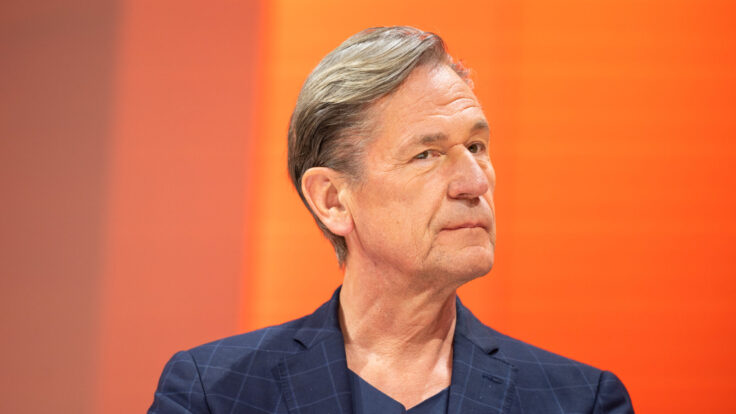
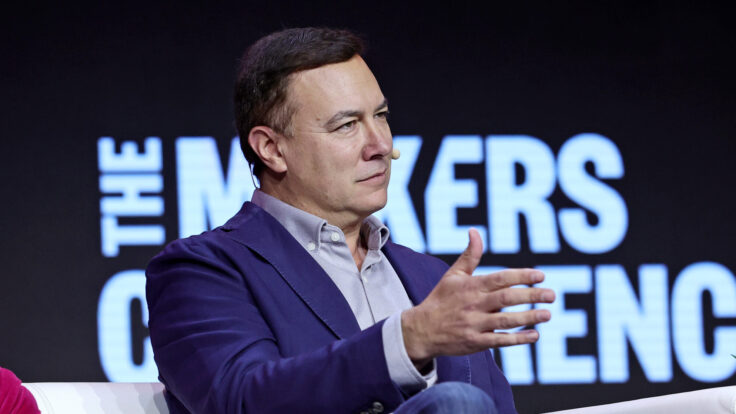
| In recent weeks, as incoming CNN chief Mark Thompson has gone about introducing himself to the organization’s top executives, producers and on-air talent in one-on-one meetings and phone calls, he has expressed a few near-term priorities for the beleaguered news network.
In some exchanges, sources familiar with the conversations said, Thompson has encouraged his new charges to abandon the anxieties about editorial bias that weighed on them in the early, Malone-ordained view-from-both-sides era. He has said, for instance, that the Hunter Biden indictment should not be covered out of some obligation to balance the partisan scales, but simply because it’s a good, newsworthy story. In others, he has expressed a desire to better distinguish the staid primetime hours by taking a “bolder” approach to covering stories. More broadly, he has described himself as “a firewall” between the journalists and the demands of the parentco and its shareholders. At surface level, it calls back to Zucker.
Far more notable, however, is Thompson’s stated commitment to a potentially revolutionary, long-term transformation of CNN’s business model, which he says will take at least five years to achieve. In those five-plus years, Thompson will attempt to transform CNN from a linear news channel with a nascent streaming service (launching next week on Max) and a messy-if-heavily-trafficked digital site, into a sleek, digital-and-streaming-first news brand that also happens to produce a linear feed—just as he transformed The New York Times from a newspaper with a website into the multiplatform news-and-lifestyle brand that it is today, with an ever-slimmer print paper for the aficionados and luddites and nostalgic Boomers, alike.
The challenges here are Herculean, of course, especially given CNN’s unique status as a global mass-market news utility that can never fully go behind the paywall, as well as one owned by a debt-saddled Hollywood conglomerate that will inevitably pursue consolidation in the years ahead (very different from the Times Company, to be sure). Nevertheless, Thompson is likely to draw inspiration from the playbook that he and his former colleagues drew up in their 2014 Innovation Report, which called for the Times to wean itself off of its reliance on print revenue—in CNN’s case, linear revenue—and retrain its journalists for the digital era.
Indeed, one need only read that 2014 report and replace the words “Page One” (the front page of the print edition) with “linear programming” to understand Thompson’s ambitions for CNN. “We are focusing too much time and energy on Page One,” the report stated. “Page One sets the daily rhythms, consumes our focus, and provides the newsroom’s defining metric for success.” The goal, the report continued, should be to “shift the newsroom’s center of gravity away from Page One [by] creating additional measures of success, using metrics like traffic, sharing and engagement.”
The shift cannot come soon enough, of course. As linear audiences continue to decline, and in the wake of Chris Licht’s disastrous thirteen-month run at the network, CNN continues to hit more ratings nadirs. Pick your statistic: Last week, the network averaged less than 500,000 viewers and less than 100,000 in the demo in prime time. On Saturday and Sunday, it drew its lowest weekend audience in more than three decades. Anderson Cooper’s heavily-marketed new Sunday evening show drew a mere 33,000 viewers in the 25-to-54 year-old demo. So long as these are the metrics by which CNN measures its success, this will not be a sustainable business. The question for Thompson, as one media executive phrased it, is whether he can build a sustainable digital business while the linear house is burning down.
At the very least, Thompson’s effort to shift the metrics of success by prioritizing the product transformation, rather than week-to-week and quarter-to-quarter linear ratings, should buy him more time from a public relations perspective. His methodical “long view” narrative is certainly a radical and mature departure from the approach employed by Licht, who thought he could immediately transform the network by tinkering with chyrons and ill-advised personnel shifts while inviting journalists from the Times and The Atlantic to tell the tale. (As I reported last week, Thompson will wisely forego any press interviews until at least early 2024.)
In any event, the palace intrigue of Thompson’s CNN will likely be far less dramatic than it was under Licht—and Zucker, for that matter. From a business perspective, however, Thompson’s story will be far more compelling. After all, nothing’s riding on this but the future of the free world’s most renowned news brand. |
|
|
| Meanwhile, down in the omphaloskeptic fever swamps of the political news industry, much hay is being made of Kristen Welker’s interview with former president Donald Trump, which christened her maiden voyage in the Meet The Press anchor chair. According to the critics, Welker’s interview “was a gross dereliction of journalistic duty” (L.A. Times), that “failed spectacularly to meet the moment” (CNN), once again demonstrating that, in the year 2023, the mainstream media remains “totally inadequate to the job of covering an aspiring authoritarian” (The Bulwark), yada yada.
Not since Kaitlan Collins’ Trump town hall, all of a few months ago, has one of the former president’s interlocutors been so roundly criticized for failing on the job. Alas, we can’t all be Jonathan Swan. (On that point, it’s an odd quirk of our current high-stakes political moment that the one journalist who capably held Trump to account on camera opted to pursue a job at the Times rather than a job in television, but that’s a story for another time.)
Welker and NBC failed to elicit any agenda-setting news from the interview. Several NBC News sources I spoke to this week placed the blame for that on the absence of a decisive editorial leader at NBC News, à la Zucker or Andy Lack; others suggested there were too many cooks in the MTP kitchen, including the talented former Times editor turned NBC News editorial president Rebecca Blumenstein, who may not yet fully appreciate the unique demands of the televisual medium.
But for my money, the most baffling part of this whole microdrama has been the reaction from the cottage industry of press critics who still seem to believe that Meet The Press has the power and authority to act as a firewall against Trump’s designs on a second term. And perhaps more depressingly: The whole reason we’re having this conversation now, rather than a number of years ago, is because Trump nearly single-handedly buoyed the cable news business with his ubiquitous, often-terrifying, bullshit-spewing media-whoring, from approximately 2015 to 2020, when the industry was already beginning to demonstrate serious signs of secular decline. And despite the fact that we all know better, and the fact that he himself can no longer muster the energy of 2016, the industry still relies on Trump for an old-school blast of ratings glory (cloaked, as always, in the fact that he is a “likely future nominee”). On Tuesday, I asked an NBC source how the network was holding up amid the criticism; he suggested, without irony, that they were “relieved” by the ratings. (The Welker interview drew just under 3 million viewers, about as many as the 3.3 million who tuned in for CNN’s town hall.)
When it all blows up, as it inevitably does, people blame the journalist. But this interview flop wasn’t Kristen Welker’s fault, just as the blame for that CNN Town Hall can’t be squarely heaped on Kaitlan Collins. The whole thing just whiffs of desperation—once again, the latest sign that these enormous news networks aren’t making the products that their consumers want. In what modern world, after all, could anyone expect a pre-taped interview with Trump, who has long expressed an inability to tell the truth, to revivify the ghost of Tim Russert?
Welker is a highly qualified talent, but MTP’s influence has long since run its course—despite her predecessor Chuck Todd’s quixotic mission to transform the show into its own 24/7, multi-platform media mini-empire. As I’ve noted before, MTP never really had the brand permission to veer out on its own. It belongs to a golden age of television long since gone, and has now become a rounding error on Cesar Conde’s P&L, drafting off its legacy. Alas, in TV news, past is not prologue. |
|
|
|
| FOUR STORIES WE’RE TALKING ABOUT |
 |
| The Kamala Swap Fantasy |
| Calls to drop Harris from the 2024 ticket are as predictable as they are pointless. |
| PETER HAMBY |
|
 |
|
 |
| Trump’s Imperfect Call |
| Dish on Trump’s furious fundraising request to Peter Thiel, an FTX legal bombshell, and more. |
| THEODORE SCHLEIFER |
|
 |
|
|
|

|
 |
|
|
|
Need help? Review our FAQs
page or contact
us for assistance. For brand partnerships, email ads@puck.news.
|
|
You received this email because you signed up to receive emails from Puck, or as part of your Puck account associated with . To stop receiving this newsletter and/or manage all your email preferences, click here.
|
|
Puck is published by Heat Media LLC. 227 W 17th St New York, NY 10011.
|
|
|
|