 |
|
Happy New Year, and welcome back to In The Room. I’m Dylan Byers.
|
|
In tonight’s email, fresh reporting on Mark Thompson’s plan to transform CNN into “an entirely digital organization”—and the digital product guru he wants to help him do it.
But first…
📺 Fox & Friend: Fox News has announced that Donald Trump will participate in a town hall event in Des Moines on January 10, less than a week before the state’s first-in-the-nation caucuses. The timing of the town hall was strategic for both parties: Fox and Trump will counterprogram a previously announced CNN Republican debate—also in Des Moines, also on January 10—that will feature Ron DeSantis and Nikki Haley. For Trump, it’s an opportunity to overshadow his would-be competitors and suck all the oxygen out of the room. For Fox, it’s a chance to once again assert its dominance over a G.O.P. primary cycle while sticking its finger in CNN’s eye. And for CNN, most notably, it’s a reminder that this irregular election cycle will not necessarily buoy their record-low ratings.
💻 The Messenger nears its end: The Messenger’s board recently weighed shutting down the fledgling news startup after learning that the company is on track to run out of money by the end of this month, Semafor’s Max Tani reported Wednesday. The company announced that it will implement layoffs instead, which began today (national politics reporter Tom LoBianco was among those laid off, I’ve learned.) Nevertheless, the future of the business seems tenuous, at best. Earlier this week, founding president Richard Beckman announced that he would be leaving the company.
|
 |
| When Mark Met Alex |
| The newish CNN C.E.O. has his eye on Alex MacCallum, the Washington Post C.R.O. and his former Times disciple, to help him enact his drastic digital transformation effort. |
|
|
|
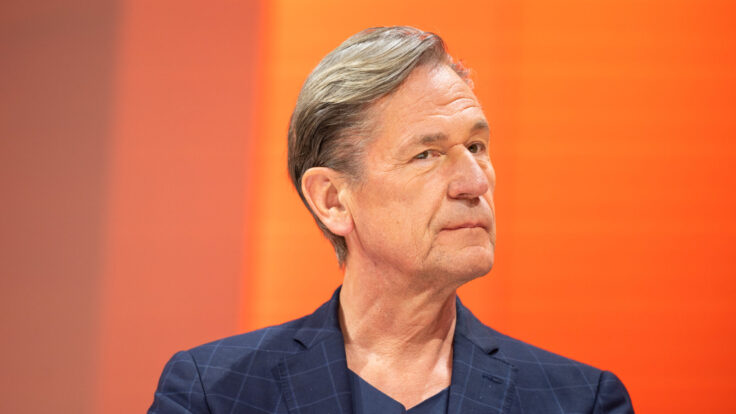
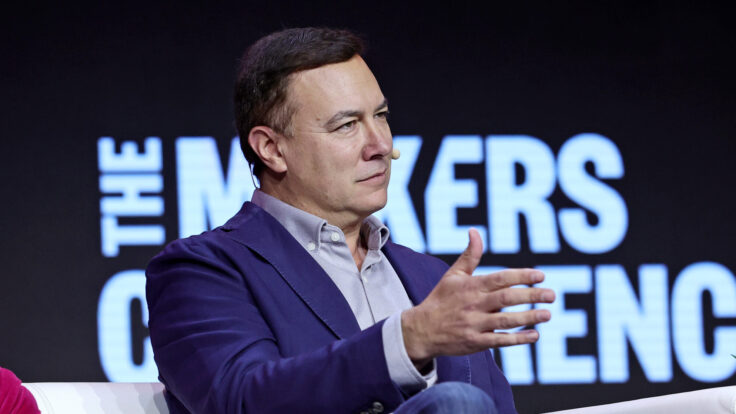
| On Wednesday morning, not-quite-new CNN chairman and C.E.O. Mark Thompson tried to patch into his network’s 9 a.m. all-hands call from an offsite location to share some news. But, alas, he failed to establish a strong connection and only came into spotty service about 20 minutes later, while driving through a mountain range. From there, in garbled transmission, Thompson informed the staff what I had reported last night: that CNN’s chief digital officer, Athan Stephanopoulos, would be stepping down. Thompson had recently conveyed the news to the network’s digital leadership team ahead of the all-hands.
Thompson cited differences of strategic vision with Stephanopoulos, etcetera, but in practice he was just clearing the way to bring in his own, hand-selected lieutenant to help lead CNN’s transformation from a linear television brand into a multiplatform, digital-first business. Not everything Thompson said on the call was entirely clear, but this bit sure was: Going forward, CNN, the 44-year-old, once-trailblazing 24/7 TV network, would now need to think of itself as an entirely digital organization.
Indeed, as I reported a month ago, Thompson has been working on an ambitious plan to restructure CNN around this multiplatform, digital-first philosophy. Thompson will formally unveil his manifesto in mid-to-late January, I’m told, and it is likely to draw from the playbook he deployed while executing the digital reinvention of The New York Times as its C.E.O. in the previous decade. (It’s hard to recall what a mess Janet Robinson had made of the place before he arrived…) The core product will be news and journalism across platforms (digital, streaming, linear, etcetera), buoyed by new ancillary businesses and subscription products likely built around cultural offerings, such as health, travel, and food. If Thompson was able to turn the Times into a daily obsession of the wealthy liberal elite, the hope is to deepen user engagement with CNN and turn it into the go-to news and information source for a more mass-market audience.
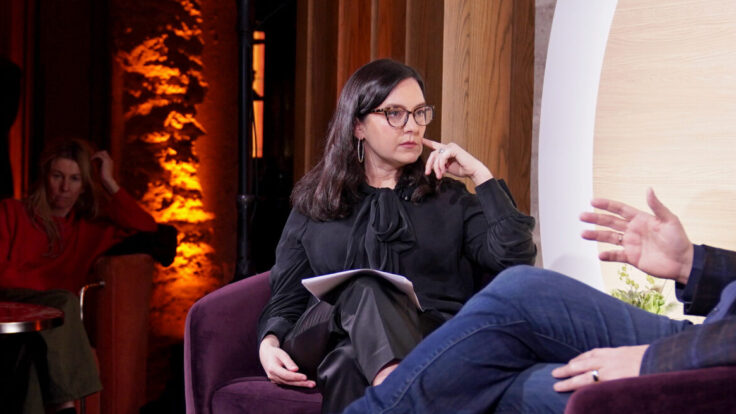
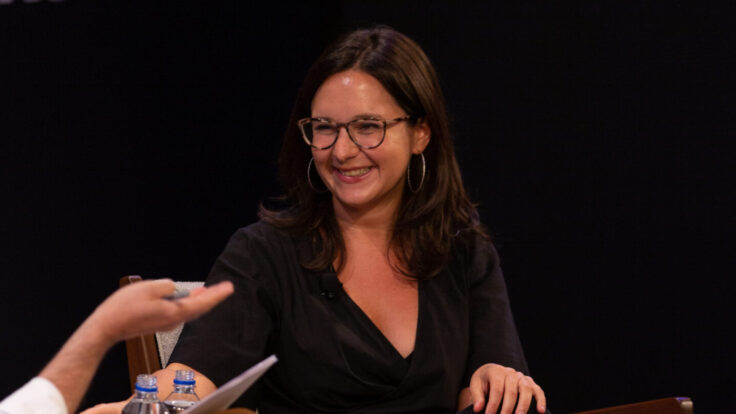
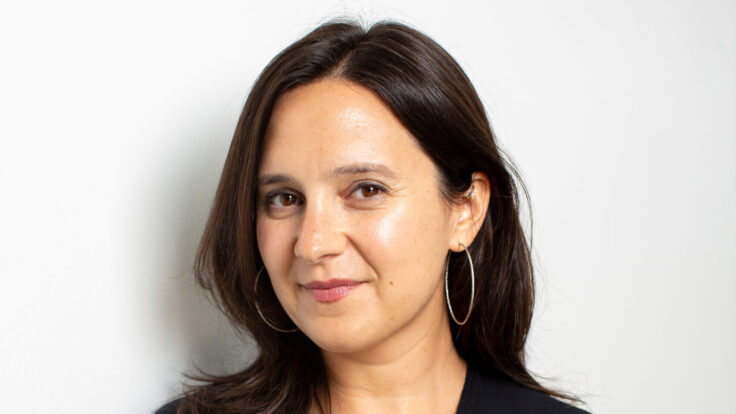
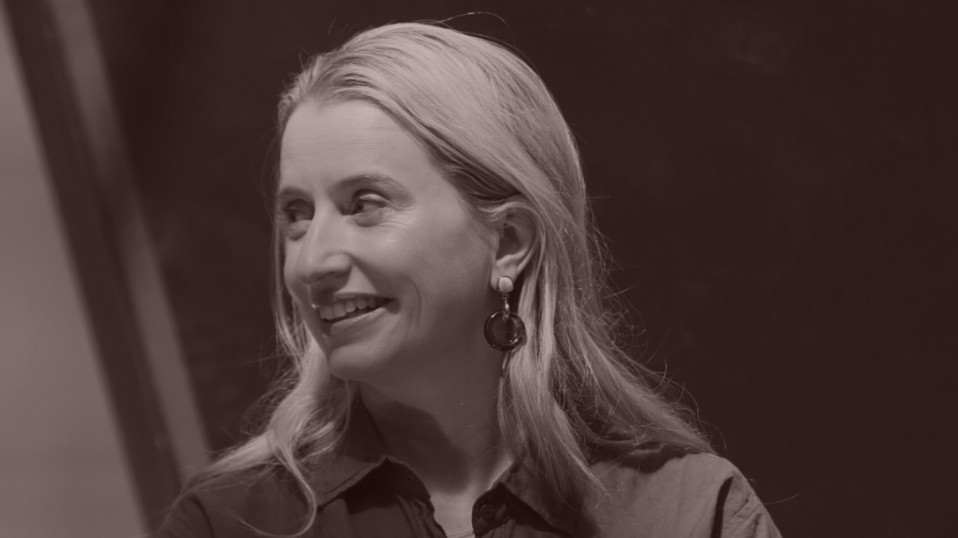
In order to execute this vision, I learned this morning, Thompson has been in extensive talks with Alex MacCallum, the well-regarded digital product guru who served with him for eight years at the Times. In 2014, MacCallum became the youngest person ever appointed to the Times masthead—a totem of internal significance that doesn’t necessarily register with outside cultures, but is nevertheless a major accomplishment. During the second half of her tenure, she headed up new products and ventures.
MacCallum joined CNN in 2021, during the last year of the Zucker administration, as global head of product and a key architect in the creation of CNN+, the ill-fated streaming subscription service that had been somewhat modeled on the Times’ strategy. The next year, after Discovery agreed to acquire the much larger WarnerMedia assets from AT&T, the plan became immediately imperiled—a reality that was exacerbated when Zucker was ousted for having a romantic relationship with Allison Gollust, CNN’s then-C.M.O. Of course, David Zaslav and Chris Licht shuttered CNN+ immediately, ending the operation essentially as they took control of the asset. MacCallum fled, took meetings, and enjoyed the payout. In August, after the Fred Ryan defenestration, she was named chief revenue officer at The Washington Post.
MacCallum has not formally accepted a job offer yet, I’m told, but that appears to be an inevitability, barring an eleventh-hour offer-you-can’t-refuse from Jeff Bezos and the Post’s newly installed C.E.O., Will Lewis, who may want his own C.R.O. in the seat anyway. (And, for all her talents, MacCallum never made conventional sense in that role, which is usually for sales honey badgers.) |
|
|
| There is perhaps some poetic justice to MacCallum’s presumptive return to CNN. After taking control of the network in 2022, Warner Bros. Discovery executives had been extremely critical of CNN’s digital strategy, and most notably the plan to build a costly, stand-alone streaming service that, frankly, they themselves couldn’t afford. Zaz and his streaming chief, JB Perrette, knew from before the merger’s close that they wanted to shutter CNN+, which they dismissively referred to as CNN-minus. WBD executives never paid much attention to the presentation that MacCallum and Andrew Morse, then the network’s chief digital officer, had created laying out the long-term strategy.
And sure, it was easy to knock the initial slate of programming—Jake Tapper’s book club, etcetera—and the insane upfront costs. Why, the Zazfolk wondered, did CNN need to create a wholly separate network to achieve the business objective of going direct to the consumer? The executives at CNN, they surmised, weren’t accurately fathoming the true scale of the challenges facing the industry. CNN+ wasn’t going to make CNN relevant on streaming, but moving CNN to a rebundled Max service might. The Zuckerfolk had a different theory, of course: CNN needed its own post-linear strategy, à la the Times, and the imperfect editorial slate was a mere placeholder for a more ambitious future product. In any event, the Zazfolk won.
And yet, the origin story of CNN+ may help articulate both the challenges and opportunity of the new Thompson playbook. Indeed, CNN created a separate streaming vessel in part to continue milking the carriage fees and advertising revenue of the late-Zucker cable product, but also because its culture inherently rejected the notion of confronting the linear business with honesty. Some two years ago, few inside Hudson Yards could have adequately contemplated just how quickly the cable business would erode. The future of TV news, after all, isn’t some Tapper book club B-side; it’s a bunch more hours of less-expensively produced television, hosted by Tapper—and then, eventually, a guy who makes half his salary.
The good people at CNN may not have been willing to countenance that reality nearly two years ago, even if Zucker, Morse, and MacCallum saw the writing on the wall. And Zucker, after his tremendous run, may not have wanted to manage those conversations, either. But Thompson, who turned around the Times by confronting old dogmas and clearing roadblocks, doesn’t give a shit. And he’s got Zaz’s full support. And Alex, if she takes the job, has his.
There’s already a fair amount of anxiety inside CNN regarding The Thompson Plan. And, as you might expect, it reflects some of the old fetishes of TV journalists—that they don’t see him around, or that he hasn’t shaken up the underperforming primetime lineup, and so on. But the reality, which Thompson knows well, is that CNN’s challenges are larger than Laura Coates’s flagging show. Indeed, Thompson’s digital pivot will require him to significantly scale down the linear operation, reducing anchor salaries and consolidating production teams in the process—presumably to the tune of at least $100 million in savings that can be funneled into digital. And at a company with longstanding linear customs, full of outsize egos for whom airtime is oxygen, that’s likely to elicit palpable agita. |
|
|
|
|
FOUR STORIES WE’RE TALKING ABOUT
|

|
Ozempic Mysteries
|
|
A medley of fashion predictions and concerns for 2024.
|
|
LAUREN SHERMAN
|
|

|
|

|
TikTok Geopolitics
|
|
On the wartime crumbling of a Congressional status quo.
|
|
ABBY LIVINGSTON
|
|

|
Bezos’s Sports Fever
|
|
Why is Amazon interested in the sclerotic regional sports business?
|
|
JULIA ALEXANDER
|
|
|
|

|
 |
|
|
|
Need help? Review our FAQs
page or contact
us for assistance. For brand partnerships, email ads@puck.news.
|
|
You received this email because you signed up to receive emails from Puck, or as part of your Puck account associated with . To stop receiving this newsletter and/or manage all your email preferences, click here.
|
|
Puck is published by Heat Media LLC. 227 W 17th St New York, NY 10011.
|
|
|
|