 |
|
I’m Dylan Byers, with a special Sunday night edition of In The Room. Why bother you on a summer Friday, I figured. Tonight, we turn the lens back toward CNN. The defenestration of Chris Licht temporarily calmed the waters around Hudson Yards, but the future of the network, and David Zaslav’s plans for it, are as uncertain as ever. Herewith, a close look at the not-so “interim” executive team, the Kaitlan Collins dilemma, and more.
|
|
|
| In less than nine months—on April 8, 2024, to be exact—the tax statute prohibiting David Zaslav from offloading Warner Bros. Discovery assets will be lifted and he will be free, should he and his board so desire, to pursue a sale of CNN—a move that seems increasingly likely in light of Warner Bros. Discovery’s $45-billion net debt load; the downward trajectory of the news network’s revenues; the immense headaches it seems to create for its owners; and the general understanding, articulated most recently and brazenly by Bob Iger in Sun Valley, that declining linear assets are no longer core to large media businesses in this everything-is-on-the-table era.
And there is an added incentive, too, sui generis to CNN. If you believe—as most high-level media insiders do—that Zaslav is ultimately positioning WBD for a homecoming tie-up with NBCUniversal, it might make sense to offload CNN rather than attempt to integrate it with the NBC News Group, which would trigger all kinds of F.T.C. headaches, all of which could be deftly avoided by a strategic it’s-not-you, it’s me transaction.
There is a counter-thesis, to be sure, one a WBD executive might use to dissuade such speculation, and I hear it aplenty: In the war for streaming subscribers, news (like sports) can be a key differentiator for the Max streaming service; a sale isn’t necessary because WBD is deleveraging and the debt is relatively cheap; and, of course, CNN is a reputational asset. As for any putative NBC deal, that’s irrelevant, they say, because Warner Bros. Discovery is being built, as their P.R. team has put it, “for the long term.” That’s all well and good, but CNN’s declining ratings are now indicating that news is becoming a commodity, not a differentiator. (Donald Trump town halls aren’t quite the College Football Playoff games.) And, yes, it is a reputational asset—which might be an ultimate argument to sell it at a premium.
In any event, as my colleague Bill Cohan and I reported in June, bankers for Warner Bros. Discovery have been calling prospective buyers recently to delicately gauge their interest in CNN—a truly standard exploratory and hypothetical exercise, sure—and, more recently, there’s been ample speculation among the Sun Valley set about whether Zaz will pursue a sale to private equity. His people tell me this simply isn’t true, but it’s an appealing asset to all kinds of private equity players, including Apollo and Standard General, who have long been intertwined in Tegna. (A WBD spokesperson said there had been no internal discussions about selling CNN to private equity.)
After all, we are living through an extraordinary moment in media in which Paramount Global is worth a mere $10 billion, Disney is looking for a strategic partner, ABC appears to be headed for some sort of divestment, and on and on. Yes, there are plenty of reasons to believe in CNN’s value, but nothing is sacred any longer. Media bankers market these concepts constantly, of course, because C.E.O.s need to know their options—especially now. |
|
|
| In the midst of all this uncertainty, CNN has been left in a state of limbo. On the one hand, the fears and frustrations of the Chris Licht era have now been replaced by relief, and a return to some semblance of normalcy. Staff seem more or less content with the current four-pronged leadership structure of Amy Entelis, Virginia Moseley, Eric Sherling and David Leavy, though different journalists prefer and gravitate toward different executives. (There are Amy people, there are Virginia people, etcetera.) Meanwhile, some of the veteran on-air talents seem to be leading a morale revival.
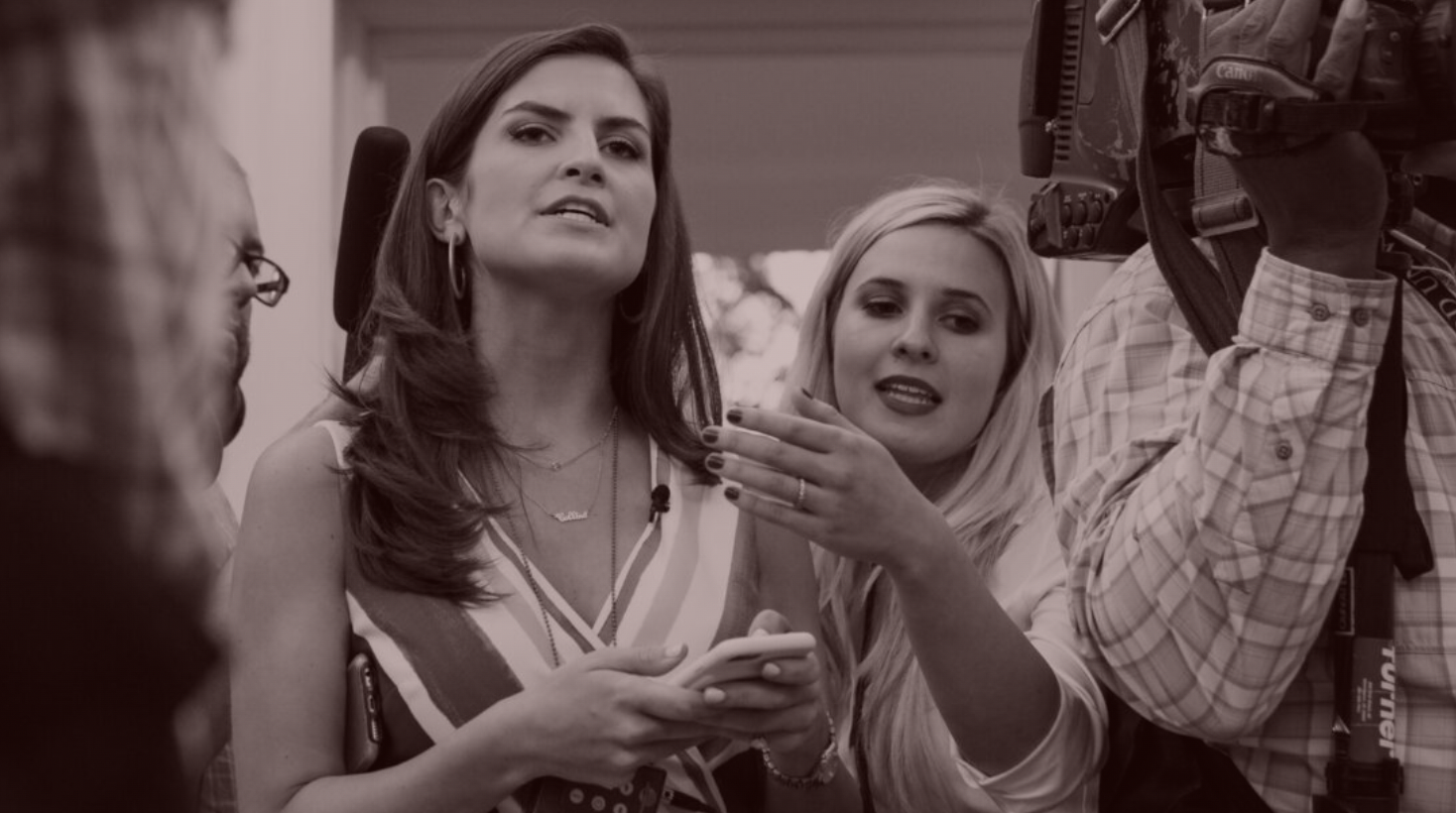
And yet the trauma of the Licht era has been replaced by something else: a low-lying anxiety about the lingering damage he caused, and the enduring confusion surrounding the network’s future. Six weeks on, CNN remains mired in a distant third place behind MSNBC, averaging about half-a-million total viewers and just over a hundred thousand in the 25-to-54 year-old demo—despite a plethora of major news stories including the 2024 campaign and the indictments of Donald Trump. The network’s primetime strategy also remains tethered to Licht’s decision to install Kaitlan Collins—an impressive political correspondent, but an inexperienced anchor—as the 9 p.m. host. The morning show she left behind is also once again more or less irrelevant. CNN hopes to reverse its fortunes by installing Phil Mattingly as the show’s permanent male lead, I’m told.
Six weeks in, Collins’ show has shown little substantive growth and draws roughly a third of the audience that Rachel Maddow and Alex Wagner average on MSNBC, and a quarter of the audience Sean Hannity draws on Fox News. Her greatest contribution to the network still seems to be in her reporting, which she continues to do at a clip, despite her hosting duties. “Kaitlin Collins will go down as Chris Licht’s original sin,” one veteran news broadcaster observed. “She was the perfect high-visibility White House Correspondent for the Trump years, [and] a rare American in coastal network media.” Unfortunately, this person continued, Licht was “unable to recognize when an employee is doing what they were meant to do.” Moreover, Licht never put Collins through the various training stages—weekend show, daytime show, etcetera—that anchors usually endure before taking on primetime. “She is blameless,” this person added. “She was in the perfect job for her.”
The root cause of many of CNN’s problems, of course, is that there is no single leader articulating a vision for the network’s post-Licht future. Indeed, many of the journalists I spoke to this week seemed to be coming to terms with the fact that the absence of Licht does not translate to the presence of leadership. And, of course, the four-pronged “interim” leadership coalition is actually not “interim” at all. As I’ve reported, Zaz intends to keep them in place at least until next spring, and probably through the 2024 election. Outwardly, WBD presents this decision as a wise, parental move intended to assuage fears. It’s also an easy way to rein the asset in should an exit opportunity present itself.
After all, this current structure creates myriad problems. Several CNN sources said Entelis and Moseley, really the de-facto editorial leaders (Sherling runs programming) do not always seem to act in concert, nor do they have similar views on the network’s future. Moseley is described as a Washington-focused animal who prioritizes political coverage above all else and believes the network can simply scoop its way to success by breaking news. Entelis, who was responsible for bringing both Anthony Bourdain and Stanley Tucci to CNN, as well as Chris Cuomo and Bill Weir, thinks more broadly about the need to create good television. Unsurprisingly, Moseley is a Kaitlan champion, while Entelis believes the anchor is still too green for the role, and that it was a mistake to cast her in primetime without giving her adequate preparation, sources familiar with both executives’ thinking said.
“There’s a clash of philosophies about what makes for good television,” one CNN correspondent said. “In Virginia’s opinion it’s all about ‘breaking news,’ which is obviously one aspect of it. But there are others: personality, performance, range.” This person later added: “When there’s no final decision maker, it’s inevitable that there will be confusion.”
Of course, the most troubling aspect of the shared-leadership structure is that CNN employees themselves, world-weary and battle-tested, feel like it is yet another sign that WBD has not articulated a future for the network. And this uncertainty leaves staff feeling demoralized about their own futures. One media executive observing post-Licht CNN from the sidelines likened it to a science experiment wherein test rats who have repeatedly been given electric shocks experience a momentary sense of euphoria once the shocks stop—only to realize that they’re still in a cage. |
|
|
|
| FOUR STORIES WE’RE TALKING ABOUT |
|
|
|

|
 |
|
|
|
Need help? Review our FAQs
page or contact
us for assistance. For brand partnerships, email ads@puck.news.
|
|
You received this email because you signed up to receive emails from Puck, or as part of your Puck account associated with . To stop receiving this newsletter and/or manage all your email preferences, click here.
|
|
Puck is published by Heat Media LLC. 227 W 17th St New York, NY 10011.
|
|
|
|