• Washington
  • Wall Street
  • A.I.
  • Hollywood
  • Media
  • Fashion
  • Sports
  • Art
  • Join Puck Newsletters What is puck? Authors Podcasts Gift Puck Careers Events
  • Join Puck

    Directly Supporting Authors

    A new economic model in which writers are also partners in the business.

    Personalized Subscriptions

    Customize your settings to receive the newsletters you want from the authors you follow.

    Stay in the Know

    Connect directly with Puck talent through email and exclusive events.

  • What is puck? Newsletters Authors Podcasts Events Gift Puck Careers
Welcome back to In the Room. I’m Dylan Byers. In tonight’s email, we focus on the predictable decline and collapse of The Messenger, which Jimmy Finkelstein finally put out of its misery on Wednesday. In doing so, Finkelstein made a weak attempt to pin the company’s failure on the aforementioned economic headwinds. Of course, as everyone and their mother knows, this failure was written from the jump.
 ‌ ‌ ‌ ‌ ‌ ‌ ‌ ‌ ‌ ‌ ‌ ‌ ‌ ‌ ‌ ‌ ‌ ‌ ‌  ‌ ‌ ‌ ‌ ‌ ‌ ‌ ‌ ‌ ‌ ‌ ‌ ‌ ‌ ‌ ‌ ‌ ‌ ‌  ‌ ‌ ‌ ‌ ‌ ‌ ‌ ‌ ‌ ‌ ‌ ‌ ‌ ‌ ‌ ‌ ‌ ‌ ‌  ‌ ‌ ‌ ‌ ‌ ‌ ‌ ‌ ‌ ‌ ‌ ‌ ‌ ‌ ‌ ‌ ‌ ‌ ‌  ‌ ‌ ‌ ‌ ‌ ‌ ‌ ‌ ‌ ‌ ‌ ‌ ‌ ‌ ‌ ‌ ‌ ‌ ‌  ‌ ‌ ‌ ‌ ‌ ‌ ‌ ‌ ‌ ‌ ‌ ‌ ‌ ‌ ‌ ‌ ‌ ‌ ‌  ‌ ‌ ‌ ‌ ‌ ‌ ‌ ‌ ‌ ‌ ‌ ‌ ‌ ‌ ‌ ‌ ‌ ‌ ‌  ‌ ‌ ‌ ‌ ‌ ‌ ‌ ‌ ‌ ‌ ‌ ‌ ‌ ‌ ‌ ‌ ‌ ‌ ‌  ‌ ‌ ‌ ‌ ‌ ‌ ‌ ‌ ‌ ‌ ‌ ‌ ‌ ‌ ‌ ‌ ‌ ‌ ‌  ‌ ‌ ‌ ‌ ‌ ‌ ‌ ‌ ‌ ‌ ‌ ‌ ‌ ‌ ‌ ‌ ‌ ‌ ‌ 
In The Room

Welcome back to In the Room. I’m Dylan Byers.

It’s a season of new beginnings here at Puck. On Tuesday, our West Coast contingent celebrated the arrival of new C.E.O. Sarah Personette with a lively and spirited dinner at Evan Funke’s Mother Wolf. A few hours earlier, John Ourand, the newest addition to Puck’s talent roster, preempted the launch of his highly anticipated sports business franchise, The Varsity, with a market-moving scoop about the sale of the Baltimore Orioles to private equity giants David Rubenstein and Mike Arougheti.

Even by the kinetic standards of startup life, this was one of those weeks when you really feel the momentum at your back, and it’s inspiring to see Sarah and John jumping on board at full throttle. (Note to Inner Circle members: John will be hosting a private call about the future of the sports business tomorrow with Jon Kelly. Everyone else: You can upgrade your subscription here, and email fritz@puck.news for a link to their conversation.)

Alas, the broader media industry is still facing extraordinary headwinds, as evidenced by the slew of layoffs that continued apace at a great many companies. Impending staff cuts at The Wall Street Journal’s Washington bureau, which I first reported last Wednesday, will officially commence this week. This comes amid broader cuts to D.C. bureaus across the legacy media landscape, as beleaguered regional newspapers struggle to justify the expense of competing in an already oversaturated market.

In tonight’s email, however, we focus on the predictable decline and collapse of The Messenger, which Jimmy Finkelstein finally put out of its misery on Wednesday. In doing so, Finkelstein made a weak attempt to pin the company’s failure on the aforementioned economic headwinds. Of course, as everyone and their mother knows, this failure was written from the jump.

But first …

🗞️ Will Lewis watch: New Washington Post C.E.O. Will Lewis told staff this week that he won’t outline his specific, detailed plans for growing the paper’s business until May. In the meantime, he plans to create nine working groups to focus on fixing the business’s most pressing challenges, starting next week. This is the first step in the TED Talk-ready business formula he devised that I first reported on last week: “Fix It” (address existing challenges), “Build It” (launch new initiatives), and “Scale It” (self-explanatory).

🐎 Zucker’s Telegraph chase, cont’d: U.K. regulators, presumably miffed at Jeff Zucker’s RedBird IMI for tweaking the terms of their proposed Telegraph and Spectator takeover, have issued a legal order preventing the Abu Dhabi-backed firm from making any further changes to the deal while they conduct their probe. For those who missed it, I reported on Zucker’s latest strategic moves last week—as well as the latest Oliver Stone-style conspiracy theory about his endgame.

🎙️ Linear’s NFL lifeline: On today’s edition of The Powers That Be, Peter Hamby and I discuss the NFL’s role in delaying the decline of pay TV, and what might come next. Plus, stick around for Eriq Gardner’s take on a surprise ruling in a Murdoch defamation case. Listen here.

Jimmy’s Quibi
Jimmy’s Quibi
News, notes, and reflections on a totally predictable, ego-driven, anachronistic media tragedy.
DYLAN BYERS DYLAN BYERS
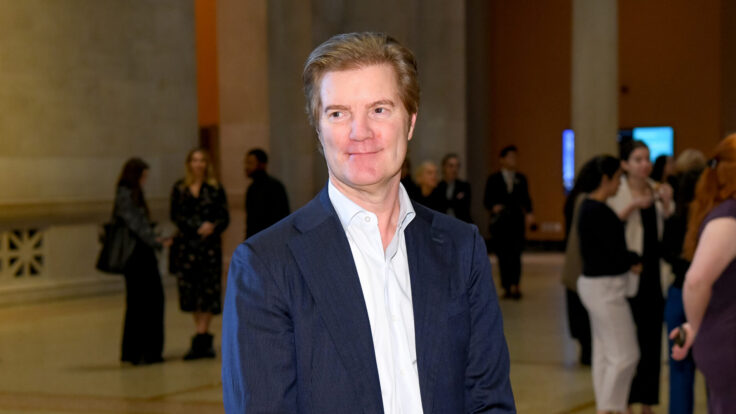
In mid-January, Jimmy Finkelstein privately conceded to some friends and business associates that his last-ditch efforts to save The Messenger, his media startup built on a decidedly anachronistic business strategy, might not pan out. By that point, of course, the full scope of his mediaco’s rapid yet entirely predictable demise had been laid bare for all to see. The company that he brought to market in May 2023, propped up by $50 million in funding and an audacious business plan to make $100 million in annual revenue, never passed the smell test. Not only was it predicated on the sort of disintermediated, traffic-at-all costs strategy that nearly euthanized the entire industry, and run incredulously by the indestructible Richard “Mad Dog” Beckman, but it was… nowhere. Did you ever read a Messenger story? I didn’t.

In many ways, in this very public industry, the story of The Messenger was akin to a chronicle of a death foretold. Sure, there were rumors about the company’s exorbitant burn rate, but no one thought it would burn out so quickly. Instead, over eight painful and humiliating months, The Messenger spent around $43 million, generated a mere $3 million in annual revenue, and, by the end of 2023, had less than $1 million in cash on hand. Needless to say, this was well short of the necessary cash to sustain its $5-million-a-month burn rate. And the horrific governance and cash management made it a D.O.A. rescue or bridge investment opportunity, even to Finkelstein’s many well-heeled Palm Beach friends.

The Chronicle
To the rest of the industry, of course, this dire financial picture was the inevitable result of Finkelstein’s misguided investment thesis and his illogical faith in an outdated traffic-and-display advertising business model built on the back of a 300-person newsroom. Even his cri de coeur that The Messenger strove to be a trustworthy and nonpartisan media organization seemed ill-considered. A slightly more curious entrepreneur might have noticed that Axios, the AP, the FT, Yahoo, and other media companies have already overtaken that turf.

A more astute entrepreneur would have also appreciated the more macro trends in the industry. First and foremost among them: The decade-long disruption to the front line of American media—the Times, The Washington Post, the aforementioned FT, and more—has largely been settled. The incumbents generally fought off the insurgents, and yet even they are being forced to resize into a crowded and low-margin market. The Washington Post just laid off 240 people. The L.A. Times is in utter free fall and will almost certainly never justify the $500 million its owner paid for it and other assets. Even Business Insider, the only aughts pure-play to truly rival the legacy general-interest publishers, just cut nearly 10 percent of its workforce.

Finkelstein may have conceived a bad business idea in an unfriendly market, but nevertheless maintained his faith until the end, and went searching for an infusion of emergency funding to keep the business on life support. He set a target of $20 million, enough to sustain the business for at least four more months and, presumably, allow himself time to find a buyer.

To media executives looking from the outside, this always seemed Sisyphean. How could even a connected and wealthy guy credibly ask investors to throw good money after bad? How could he not have reduced the burn rate to a more responsible number? Why would even the sharkiest or most sympathetic investor partake in an opportunity that had yet to establish product-market fit?

In those mid-January conversations, according to people he solicited, Finkelstein said he had managed to secure guarantees for about half of the funds needed. (Was he talking about his own money, one wonders?) He also said that he was willing to take some drastic measures to avoid a shutdown—including stepping down as C.E.O., which he suggested could save the company around $1 million in annual expenses, a darkly comical admission. (Finkelstein did not respond to my request to speak; a spokesperson for The Messenger declined to comment.) Delusional as it may have been, Finkelstein saw The Messenger as his legacy and didn’t want it to fail, sources familiar with this thinking said.

Alas, fail it did, and in predictably chaotic fashion. On Wednesday, shortly after The New York Times broke the news of his decision, Finkelstein sent a memo to staff: “I am personally devastated to share that we have made the painfully hard decision to shut down The Messenger, effective immediately,” he wrote. “Over the past few weeks, literally until earlier today, we exhausted every option available and have endeavored to raise sufficient capital to reach profitability. Unfortunately, we have been unable to do so, which is why we haven’t shared the news with you until now. This is truly the last thing I wanted, and I am deeply sorry.” Shortly thereafter, Messenger employees were locked out of their Slack and email accounts. By Wednesday night, the site itself had been taken down, and the 300 newly unemployed journalists learned that they would not be receiving any severance.

Another One Bites the Dust
The ensuing schadenfreude came fast and furious, not least because The Messenger’s failure was both foreseeable and foreseen. Indeed, even the very first Times story breaking news of the venture seemed like a sort of media Space Cowboys spoof, indicating that the company was a relevance vehicle for Finkelstein and Beckman, who cashed out of the last era of digital media too early to appreciate its eventual demise. The duo sold The Hill to Nexstar Media Group in 2021 for $130 million, or $100 million-plus more than the current market cap of BuzzFeed. Business model aside, Finkelstein’s stated nostalgia for legacy media brands like 60 Minutes and Vanity Fair should have been its own red flag.

Nevertheless, in one final display of tone-deaf ineptitude, Finkelstein on Wednesday sought to place the blame for his failure on the broader economic forces that have precipitated a slew of layoffs across the industry. “The industry has faced extraordinary challenges this past year,” he wrote in his memo. “The economic headwinds have left many media companies fighting for survival. Unfortunately, as a new company, we encountered even more significant challenges than others and could not survive those headwinds.” That’s a brave thing to say to 300 journalists you’ve just put out of work because of your own delusional business plan, and, of course, it’s an explanation no one in the industry buys.

“You know the facts: No one who knew anything would think you can make money off traffic and hit the dumbass numbers he put out there,” Jim VandeHei, the co-founder of Axios and Politico, told me on Wednesday. “I was pissed the moment I heard about this dumb idea. It was business malpractice and human cruelty at an epic scale. Anyone who knew anything about the economics of media knew it would die quickly, spectacularly, and sadly. I am pissed on behalf of the journalists sold snake oil.”

On the bright side, The Messenger quickly finds itself in rare company, alongside Quibi and Luminary, in particular, as exorbitantly expensive, head-scratching media companies that quickly met their demise. What’s one thing all have in common? Quibi, of course, was brought to life by Jeffrey Katzenberg, a billionaire who defined his generation in Hollywood and became perhaps the most important player in Democratic politics, and Meg Whitman, a public company C.E.O. and political aspirant. Luminary was the brainchild of Matt Sacks, the son of billionaire investor Michael Sacks. And Jimmy Finkelstein, the son of a self-made publisher and New York political mucketty muck, has already made his fortune. The Messenger may be toast, but he’ll be just fine.

FOUR STORIES WE’RE TALKING ABOUT
Biden’s Dry Powder
Biden’s Dry Powder
The Blob gossip surrounding Biden’s Iran response.
JULIA IOFFE
Streaming’s Sports Groupthink
Interrogating the conventional wisdom surrounding the sports doc boom.
JULIA ALEXANDER
Haley’s Donor Lasso
Haley’s Donor Lasso
Updates from the Four Season Palm Beach donor summit.
TEDDY SCHLEIFER
Leather Heads
Leather Heads
On the unassailable fashion dominance of Hermès.
LAUREN SHERMAN
swash divider
Puck
Facebook Twitter Instagram LinkedIn

Need help? Review our FAQs
page
or contact
us
for assistance. For brand partnerships, email ads@puck.news.

You received this email because you signed up to receive emails from Puck, or as part of your Puck account associated with . To stop receiving this newsletter and/or manage all your email preferences, click here.

Puck is published by Heat Media LLC. 227 W 17th St New York, NY 10011.

SEE THE ARCHIVES

SHARE
Try Puck for free

Sign up today to join the inside conversation at the nexus of Wall Street, Washington, A.I., Hollywood, and more.

Already a member? Log In


  • Daily articles and breaking news
  • Personal emails directly from our authors
  • Gift subscriber-only stories to friends & family
  • Unlimited access to archives

  • Exclusive bonus days of select newsletters
  • Exclusive access to Puck merch
  • Early bird access to new editorial and product features
  • Invitations to private conference calls with Puck authors

Exclusive to Inner Circle only


Latest Articles from Media

Bari Weiss
Dylan Byers • February 1, 2024
Bari’s Prison of Her Own Design
After a month of contentious delays, 60 Minutes finally aired its piece on the notorious El Salvador prison CECOT. The “hostage standoff,” as one person put it, ended in an uneasy truce that could have been reached a month ago—and without exposing the distrust and division at Bari Weiss’s CBS News.
Mathias Doepfner
Dylan Byers • February 1, 2024
The Politico Succession Games Begin…
An era at Politico has been ending for the last decade—at least since the departures of Mike and Jim, then Jake and Anna, and, of course, the sale to Axel Springer. But with John Harris ascending to the chairmanship, again, it’s finally Axel’s baby. And Mathias Döpfner may be looking outside the mothership for Harris’s successor.
Tony Dokoupil
Dylan Byers • February 1, 2024
Tony and Bari on the Rocks
The sponcon set dressing at ‘Evening News’ provoked predictable outcry at the House of Bari. But are brand partners in TV news just an inevitability at this point?


Ben Smith, Justin Smith Semaphor
Dylan Byers • February 1, 2024
Semafornication
Ben and Justin’s recent fundraise at an 8x trailing revenue multiple, which follows David Ellison’s extravagant purchase of The Free Press, suggests we’ve entered a new era of digital media valuations. Unless we’ve just reentered the old one. Anyway, is Punchbowl next in line?
Tony Dokoupil
Dylan Byers • February 1, 2024
The Tony Accords
Tony Dokoupil’s disastrous debut as anchor of CBS Evening News highlights the uncomfortable truth about Bari Weiss’s tenure: While her politics take center stage, it’s her inexperience that’s her real liability.
Jim Steyer
Dylan Byers • February 1, 2024
Common Sense & Sensibility
A candid chat with Common Sense Media founder Jim Steyer on what lies in the hearts of Silicon Valley’s biggest bigwigs and what the A.I. bros are doing to your children. Plus, thoughts on Sundar, Zuck, and his brother Tom’s California gubernatorial bid.


Bari Weiss
Dylan Byers • February 1, 2024
The Weiss Flag
It’s tempting to view Bari Weiss’s first big blunder—pulling a 60 Minutes segment critical of the administration’s deportation efforts—as purely political, which it may have been. But it may have been the product of something more mundane: Bari doesn’t know how to lead a newsroom.


Get access to this story

Enter your email for a free preview of Puck’s full offering, including exclusive articles, private emails from authors, and more.

Verify your email and sign in by clicking the link we just sent.

Already a member? Log In


Start 14 Day Free Trial for Unlimited Access Instead →


Latest Articles from Media

Journalists
Dylan Byers • February 1, 2024
The 2025 Media State of the Union
The inherent tension of the journalist-as-brand model, the continued erosion of institutional authority, the potential for an A.I. newsroom: Industry leaders weighed in on all this and more at a panel this week to unveil the results of our latest Puck–Orchestra survey.
Justin Smith ben smith
Dylan Byers • February 1, 2024
The Gulf of Semafor
As Semafor expands further into the Gulf, it’s becoming clear that Justin Smith and Ben Smith’s media baby is looking a lot more like the former than the latter.
Jim Lanzone Yahoo
Dylan Byers • February 1, 2024
The Lanzone That Time Forgot
Don’t waste your tears on Yahoo, the Internet 1.0 relic that collapsed into Verizon and then the warm embrace of private equity. C.E.O. Jim Lanzone explains how the Apollo-owned company is poised to make the most of its post-search distribution, and why niche is the new scale.


Bari Weiss
Dylan Byers • February 1, 2024
A Weiss Christmas
While The Free Press is flush with holiday spirit, Bari’s job reinventing CBS News is proving more vexing, amid anchor dreams dashed and the age-old challenge of enacting institutional change.
Bari Weiss
Dylan Byers • February 1, 2024
CNN’s Bari Christmas
In the wake of Netflix’s Warner Bros. coup, the folks at CNN are, perhaps naively, looking on the bright side: They may not have to work for Bari Weiss after all. But times in Spinoffville are going to get tough—and fast.
Olivia Nuzzi
Dylan Byers • February 1, 2024
The Nuzzicracker Ballet
The star-crossed saga of Olivia and Ryan continues its salacious, shameful pas de deux—ensnaring not just Vanity Fair’s new editor but further tainting journalism writ large. Even worse, it elides the real question: Why is a certain pathetic world hanging on every word of a jilted lover’s creepy account proffered without editorial oversight?


Hamish McKenzie, Substack
Julia Alexander • February 1, 2024
Substack Entrapment Theory
Google Zero killed the open web, ChatGPT isn’t replacing lost traffic, and superstar talent is a phenomenally difficult business. Digital media companies trying to stay upright are belatedly turning to creator-first subscription platforms in search of sustainable, niche audiences—without realizing that they’ve seen this movie before.
Get access to this story

Enter your email to get access to one article and free previews of our private emails from Puck authors and editors.

OR

Already a Member? Sign in


Latest Articles from Media

Alison Roman
Dylan Byers • February 1, 2024
Roman Holiday
The internet’s favorite food author finds herself at a familiar crossroads for writers who have become brands unto themselves: trying to balance scale, new ventures, and authenticity while keeping a loyal audience fed… in this case literally.
David Zaslav
Dylan Byers • February 1, 2024
Zaz’s Hollywood Endings
With the final bids for Warner Bros. Discovery under careful consideration, David Zaslav’s tenure as an ersatz Hollywood mogul may be coming to an end. Now, it’s all about the numbers, and which suitors have a glide path to regulatory approval. Just which sunset Zaz will ride into is anyone’s guess.
Olivia Nuzzi
Dylan Byers • February 1, 2024
A Brave Nuzzi World
Between the Bravo-ready mess of the Nuzzi-Lizza imbroglio and Michael Wolff’s Epstein deference, it was a monumentally bad week for media ethics. As journalists, even principled ones, become increasingly central characters in the stories themselves, is this kind of spectacle an unavoidable component of a new media world order?


Gerry Cardinale
Dylan Byers • February 1, 2024
The RedBird Balloon
After a second bid to take over The Telegraph met a particularly British brand of resistance, RedBird Capital walked away from the whole ordeal. Now the 170-year-old paper is back to waiting for a Goldilocks buyer.
Jim Bankoff
Dylan Byers • February 1, 2024
The Bankoff Job
Jim Bankoff is considering a spinoff of Vox’s faster-growing podcast network from its legacy publishing business. While it makes economic sense-ish, what does it mean for the future of brands like SB Nation, The Verge, and… ‘New York?’
Stan Duncan
Dylan Byers • February 1, 2024
Stan By Me
A handful of disgruntled employees confronted Stan Duncan, Condé Nast’s H.R. chief, about the company’s decision to shutter Teen Vogue. There was a video, of course, which captures either a noble moment of employee solidarity or a bunch of entitled staffers willfully unaware of Condé’s dwindling fortunes and the realities of the legacy media business. Either way, how far they’ve fallen.


Mark Lazarus
Dylan Byers • February 1, 2024
MS Doom
Spirits are uncharacteristically high at the post-spinoff MS NOW, but this is still a late-stage linear operation that’s shedding (mostly geriatric) viewers at a steady clip. Despite Versant’s money and Rebecca Kutler’s ambitions, is it just a matter of time before the realities of cable’s decline drag them under?


  • Terms
  • Privacy
  • Contact
  • FAQ
  • Careers
© 2026 Heat Media All rights reserved.
Create an account

Already a member? Log In

CREATE AN ACCOUNT with Google
OR YOUR EMAIL

OR

Use Email & Password Instead

USE EMAIL & PASSWORD
Password strength:

OR

Use Another Sign-Up Method

Become a member

All of the insider knowledge from our top tier authors, in your inbox.

Create an account

Already a member? Log In

Verify your email!

You should receive a link to log in at .

I DID NOT RECEIVE A LINK

Didn't get an email? Check your spam folder and confirm the spelling of your email, and try again. If you continue to have trouble, reach out to fritz@puck.news.

CREATE AN ACCOUNT with Google
CREATE AN ACCOUNT with Apple
OR USE EMAIL & PASSWORD
Password strength:

OR
Log In

Not a member yet? Sign up today

Log in with Google
Log in with Google
Log in with Apple
Log in with Apple
OR USE EMAIL & PASSWORD
Don't have a password or need to reset it?

OR
Verify Account

Verify your email!

You should receive a link to log in at .

I DID NOT RECEIVE A LINK

Didn't get an email? Check your spam folder and confirm the spelling of your email, and try again. If you continue to have trouble, reach out to fritz@puck.news.

YOUR EMAIL

Use a different sign in option instead

Member Exclusive

Get access to this story

Create a free account to preview Puck’s full offering, including exclusive articles, private emails from authors, and more.

Already a member? Sign in

Free article unlocked!

You are logged into a free account as unknown@example.com

ENJOY 1 FREE ARTICLE EACH MONTH

Subscribe today to join the inside conversation at the nexus of Wall Street, Washington, A.I., Hollywood, and more.

START 14-DAY FREE TRIAL

  • Daily articles and breaking news
  • Personal emails directly from our authors
  • Gift subscriber-only stories to friends & family
  • Unlimited access to archives
  • Bookmark articles to create a Reading List
  • Quarterly calls with industry experts from the power corners we cover