 |
|
Bonjour! I spent last night at the French ambassador’s residence in D.C. for Puck’s second-annual First Amendment soiree, honoring special guest Andrea Mitchell. It was a swell party, and it was great to see my new partners, plus all sorts of local grandees—Attorney General Merrick Garland, Wolf Blitzer and a bunch of other CNN anchors, White House advisors, senators and congresspeople, etcetera. Who knew my move to Puck would include so much élevage?
I’m writing this edition of The Varsity with my television tuned to CBS, watching the first day of the NCAA Tournament out of the corner of my eye. This year, I took my prediction advice from the always plugged-in AndyKatz, former ESPNer, currently of the Big Ten Network. Sorry, Andy, I’m already expecting to see my bracket busted by this weekend.
P.S., if you’re new to The Varsity or had this email forwarded to you, click here to subscribe. This edition—like all the others—is chock-full of fresh sports business intel, including updates on the Shohei Ohtani scandal, Brian Rolapp’s view of Spulu, and some interesting Peacock numbers. You can afford The Varsity. But you can’t afford to miss a single issue. And if I find out that you forward this email, I’ll send you the first draft of Marchand’s memoir.
Let’s get started…
|
| Player of the Week: Jimmy Pitaro |
|
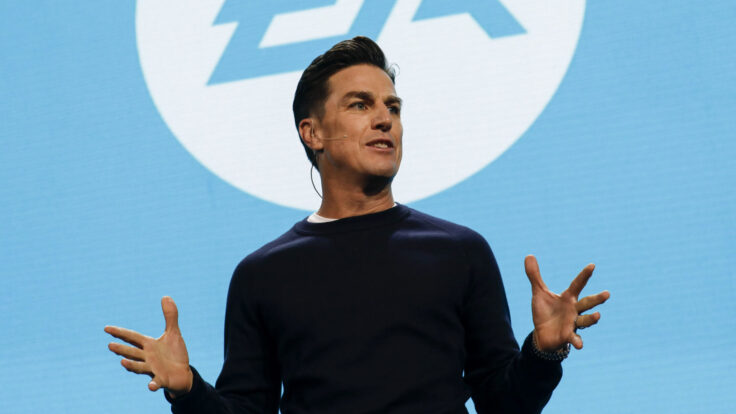
| The ESPN boss’s week started with a glowing page-one profile in The Wall Street Journal. It continued with a deal for the College Football Playoff through 2032, which follows an NCAA deal for 40 championships—pretty much everything except football and men’s basketball—that also runs through the same year.
Pitaro has been the most aggressive media executive in the rights space so far this year—no surprise, since he plans to take ESPN’s flagship channel direct-to-consumer in 2025. But he still has the NBA and UFC deals to complete. And he’s still talking with the NFL, among others, about the league taking a stake in his entity once it’s spun off. |
| Down to the J.V.: Charles McClelland |
|
| I decided to relegate McClelland, the chair of the NCAA Tournament Selection Committee, to the J.V. while watching Virginia’s catastrophic and yips-y 14-point first half against Colorado State during the tournament’s Tuesday evening play-in game. Of course, the NCAA Tournament Selection Committee left deserving teams, like St. John’s, out of the 68-team field—that happens every year. But the committee also ignored good storylines and big personalities, like Indiana State’s Robbie Avila, and reverted to safe big conference bets like Virginia, which seemed to run an offense out of Hoosiers. |
| The Starting Five: Shohei Edition |
|
- MLB nightmare: The most cogent analysis on the Shohei Ohtani scandal came in the form of a tweet from a guy named @jeffisrael25: “Welcome back to SportsCenter Presented by ESPN Bet, for more on the Ohtani situation, we go to our FanDuel MLB Insider Jeff Passan at our DraftKings Studio in Los Angeles brought to you by Caesar’s Sportsbook. Jeff, how could something like this happen?”
Indeed, MLB commissioner Rob Manfred could not have imagined a worse way to start the season than having his sport’s biggest superstar embroiled in a sports betting controversy. The Dodgers may have swiftly fired Ohtani’s interpreter amid questions regarding $4.5 million in wire transfers made to an illegal gambling operation in California, but this crisis is merely starting. These types of stories will continue to shine a negative spotlight on the leagues’ and networks’ embrace of the gambling business as it becomes legalized in more states.
Of course, legalized gambling has become an important new revenue stream for these groups as they try to figure out how to replace shrinking profits from a diminishing cable TV business. Just two days before the start of the NCAA Tournament, U.S. Sen. Richard Blumenthal sent a letter asking eight sports betting companies to stop marketing to problem gamblers. This Ohtani saga likely will lead more politicians and regulators to join that cause—partly, indeed, because it’s a simple bipartisan issue, a rarity these days. Recall, too, that big states such as Texas and California haven’t yet legalized sports betting. I can only fathom that this story will further delay any legislation to that effect.
- Spulu Chatter: Brian Rolapp, the NFL’s top business executive and emerging star of the Varsity Cinematic Universe, opined on Spulu Thursday morning during an interview at a Washington Post event. “I’m a bit confused, personally, by the value proposition,” Rolapp noted about the sports streaming service that Disney, Fox, and Warner Bros. Discovery plan to launch this fall. “They clearly see something, maybe, that we don’t.”
Rolapp pointed out that the service will have ESPN’s Monday Night Football and Fox’s Sunday afternoon schedule. But it won’t have CBS’s Sunday afternoon games, NBC’s top-rated Sunday Night Football, Amazon’s Thursday Night Football, or the NFL Network’s games. “I don’t understand how a sports fan is going to look at that and say that’s a better value than, say, for $20 more a month I can buy YouTube TV and have all of the NFL and have access to Sunday Ticket,” Rolapp said, perhaps rhetorically.
Spulu still hasn’t come up with a price for the service, though it is widely expected to cost consumers around $40-$50 a month—in the sort of YouTube TV stratosphere, somewhere between a traditional cable bundle and the cost of a single streaming subscription. Spulu supporters say that subscribers would still save money if they purchase the service and supplement it with Peacock and Paramount+ (and maybe even Prime) to cover all their football needs.
Rolapp went on to describe Spulu as a way for three big media companies to try and figure out the new media world—precisely the sort of R&D lab that my partner Julia Alexander previewed some weeks ago. “You can’t say that’s not a bold step. It certainly is, that will probably have ramifications a bit through the pay TV world. We’ll have to see how it plays out.”
- Peacock Numbers: First, the good news: As many as 71 percent of the people who signed up for Peacock for the Andy Reid Frozen Mustache Game have remained paying subscribers two months later, per research from Antenna. This data underscores the importance of sports to a healthy streaming slate, as it defies the conventional wisdom that sports fans will automatically churn out once their event—or season—ends. Indeed, Comcast paid $110 million for the game, which is either a lot or very little depending on the lifetime value of the subscribers that it pushed through the marketing funnel and onto the platform.
Now, for the bad news: According to Nielsen, viewership on the service has reverted back to pre-NFL playoff numbers. Peacock’s total day average viewership hit 789,000 viewers in November and 786,000 in December before jumping to 982,000 viewers in January, fueled by the NFL game—which NBC said at the time was the most streamed live event in U.S. history. In February, the total day average viewership dropped back down to 791,000.
NBC executives are surely more interested in the number of paying subscribers than viewers, but the latter does matter quite a bit. Peacock has about 30 million subscribers, all told, but it also has the largest ad-supported audience of the streaming services owing to its initial decision to launch as an AVOD product—a decision that was borderline lampooned at the time but now seems prescient. The group’s ad sales execs care deeply about average viewership. Peacock’s next big investment comes this summer with the Paris Olympics, which will include an NFL RedZone-style feed—with Scott Hanson and Andrew Siciliano providing commentary.
- Dodgers D.T.C.: Distributors hate it when network programming leaks outside of the cable bundle, like when NBC simulcasts Sunday Night Football on Peacock, or CBS makes its Sunday afternoon NFL slate available on Paramount+. For that reason, when I first heard that Dodgers SportsNet would roll out a direct-to-consumer service this season, I assumed that the price point would be sky-high.
Actually, the service is literally priceless. Charter Communications, which owns the channel, developed the most unique D.T.C. offering I’ve seen. The service is free, but it’s only available to people who subscribe to one of Charter’s core utility services: video, phone, or internet. You don’t need to subscribe to Charter’s video service to have streamed access to Dodgers games in Los Angeles. But you do need to subscribe to one of Charter’s services—a unique strategy to try to preserve the bundle.
- Alex Sherman’s mini-doc ESPN's Fight for Dominance, produced with Tala Hadavi, and featuring interviews with Bob Chapek and Jimmy Pitaro, among others, is well worth a watch. The piece goes in-depth on the challenges facing not just ESPN, but the whole industry.
I asked Sherman, one of the best media reporters on the beat, whether he has plans to venture farther into the doc space. He said he has his eyes on a project around women’s basketball, after having an epiphany during a South Carolina-LSU game in Baton Rouge. “It struck me that something is happening here; something is changing,” Alex told me. “I don’t know if it’s just a Caitlin Clark effect or the moment we’re in. But it does strike me that there’s something to be probed there, either at the WNBA level or college level. How do they capitalize on this?”
|
|
|
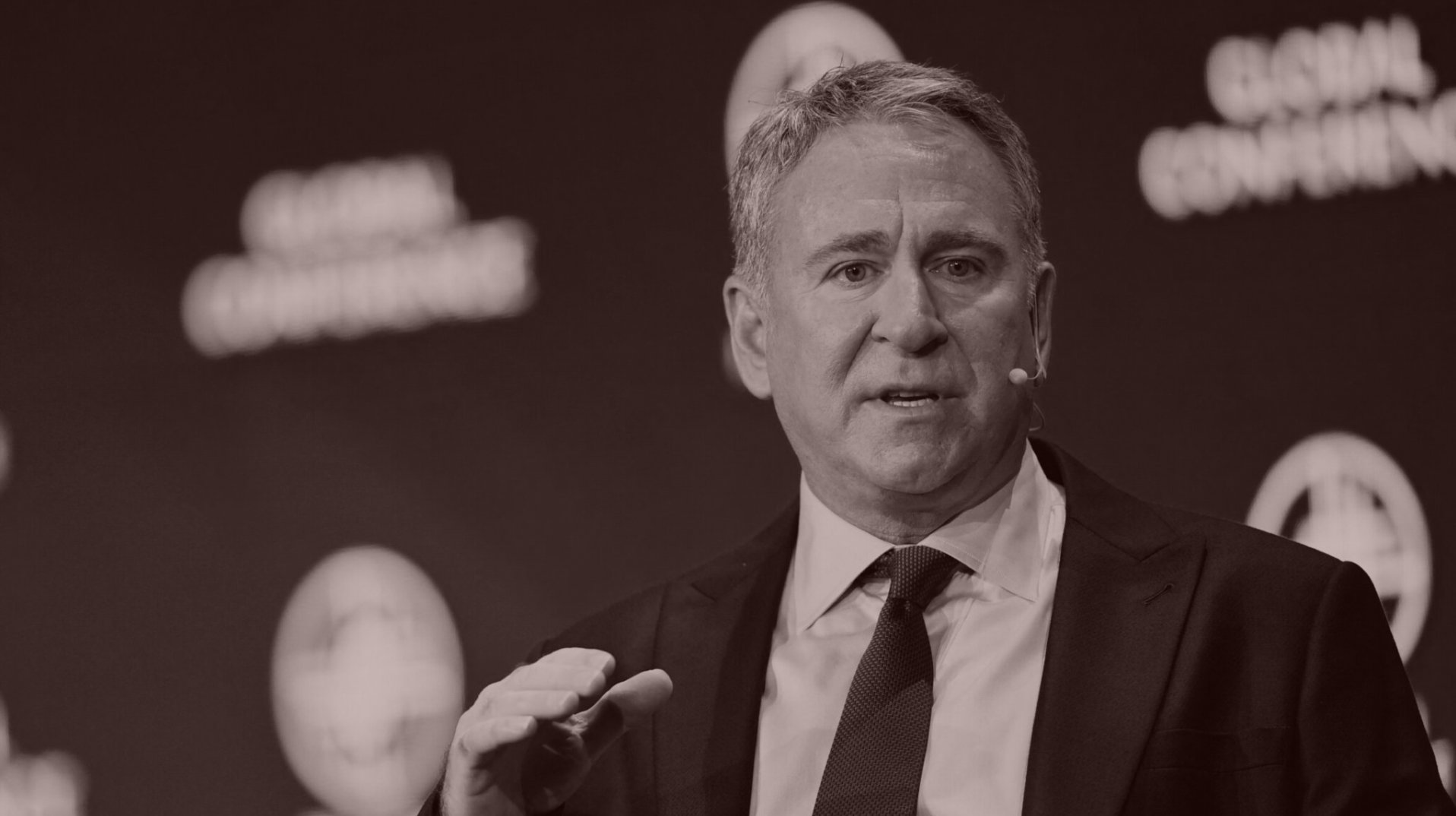
| First, a bit of news… Ken Griffin, the brusque billionaire hedge fund manager and adopted Floridian, has seen his effort to buy a minority stake in the Miami Dolphins break down. Griffin, C.E.O. of Citadel, first engaged in negotiations with Dolphins majority owner Stephen Ross, a real estate tycoon, back in the fall. And talks progressed so far that I was told during Super Bowl week that a deal was 90 percent done.
The size of the position Griffin was set to acquire remains unclear, but the deal would have valued the team—and its arena, Hard Rock Stadium—at $7.5 billion, which would have considerably eclipsed the current record for a transaction. (Unsurprisingly, given his history in the real estate and REIT business, Ross is one of four NFL owners—alongside Josh Harris, the Patriots’ Bob Kraft, and the Panthers’ David Tepper—who also own their own stadium and the peripheral real estate.) Last year, Harris, a private equity mogul, paid a then-record $6 billion for the Commanders and FedEx Field.
Back in the fall, Bloomberg reported that Ross was looking to sell stakes not only in the Dolphins, but also Hard Rock Stadium and the F1 Miami Grand Prix. Griffin, who moved Citadel’s headquarters to Miami in 2022, was kicking the tires on all of those assets. But neither cash nor valuation were the objectionable issue, I’m told. Instead—also unsurprisingly, given his personality—Griffin wanted a path to control. And this was not a negotiable point for Ross, who indicated that he wanted to keep ownership of the team in the family.
In fact, I’m told that Ross’s decision to invite outside investors into his positions should not be interpreted as a sign that he’s looking for some kind of liquidity event or diversification opportunity. Instead, he wants to engage more deeply in the sports business—one might interpret his gestures, instead, as an investment firm seeking outside capital in the form of limited partners.
Ross also owns Relevent [sic], an important media rights business that is focused on European soccer and works with La Liga, EPL, and UEFA. (Also, by the way, I’m told that Griffin and Ross don’t harbor any sort of animosity toward each other over the failed negotiation. The two still plan to work together in Miami via real estate and philanthropic opportunities.)
And even if Griffin’s deal didn’t quite materialize, it still unofficially sets the market for an NFL franchise—a unique asset class that continues to soar despite uncertainty in the media and broadcasting businesses. The market for sports rights is as tight as it’s been in a quarter-century, due to a shrinking cable TV universe that is cutting into revenues and profits for big media companies. But the NFL continues to thrive based on the simple notion, harkening back to Adam Smith, that there are around 750 billionaires living in the U.S. and only 32 professional football teams. And that the only content immune to the gyrations of the pivot from linear to streaming airs on fall Sundays. To wit: The N.F.L. just finished the first year of a 10-year media deal worth $110 billion.
The biggest winner in all of this, of course, is Jody Allen, who inherited the Seahawks from her late brother, Paul, one of the founders of Microsoft. What might the Seahawks, a traditionally competitive team in one of the country’s wealthiest cities, fetch at auction? And could this be the sort of toy that brings Jeff Bezos deeper into the clutches of the league (forcing him to work through the various conflicts posed by the Amazon rights deal)? It’s a tantalizing known unknown, but he’ll likely have to clear the new benchmark established by Harris and Griffin. |
|
|
| “I still think Mark Shapiro is the best candidate to succeed Iger.” —An executive [Ed note: The odds of Shapiro running Disney are only slightly higher than the odds of me starting at second base for the Orioles this season.]
“I really knew nothing about Puck other than the name, but I subscribed because the price was reasonable and I wanted to read your column. What has surprised me is how much I have enjoyed the content from the Puck writers not named John Ourand. The emails I get are well written and very easily digestible, just perfect to read over a cup of coffee. Now, get the pod back in business!” —Another happy Puck subscriber
“John, I truly miss you on the weekly pod. Seriously, my Wednesdays haven’t been the same.” —An old Ourand & Marchand fan [Ed note: Stay tuned. Puck will have some podcast news to announce soon.] |
|
|
See you next week,
John |
|
|
|
| FOUR STORIES WE’RE TALKING ABOUT |
 |
|
 |
| DustinBucks |
| On the Facebook co-founder’s renewed interest in money-bombing D.C. |
| TEDDY SCHLEIFER |
|
 |
|
 |
| Condé Squabbles |
| Documenting the upstairs-downstairs conflict at One World Trade. |
| DYLAN BYERS |
|
|
|
|
|
 |
|
|
|
Need help? Review our FAQs
page or contact
us for assistance. For brand partnerships, email ads@puck.news.
|
|
You received this email because you signed up to receive emails from Puck, or as part of your Puck account associated with . To stop receiving this newsletter and/or manage all your email preferences, click here.
|
|
Puck is published by Heat Media LLC. 227 W 17th St New York, NY 10011.
|
|
|
|