 |
|
Welcome back to The Varsity, my twice-weekly private email on all the fights that occur outside of the lines of your favorite sports. I am writing this from a chilly and wet New York City, where the subject dominating the sports conversation is Aaron Judge’s big toe. It was great to see so many of you last night (IYKYK). I’ll let Marchand know you’re excited to see him on the next season of The Real Housewives of New York.
Friendly reminder: A subscription to Puck will not only allow you to perform better in your job, it will also make you more cosmopolitan—you’ll read what leaders in Silicon Valley, Hollywood, and even the art world are reading to inform their decisions. Don’t just read my work: sign up for Dylan Byers’ excellent private email, In the Room. Or do yourself a favor and devour Bill Cohan’s Dry Powder private email. Yesterday, Bill revealed the structure that Gerry Cardinale and RedBird are proposing for their putative Paramount Global acquisition.
Okay, let’s get right to it…
|
| Player of the Week: Gabe Spitzer |
|
| Two days after Ted Sarandos was seen cageside at UFC 300, my spies spotted Dana White walking into Netflix’s Los Angeles offices. The streaming giant already has a $5 billion, 10-year deal with sister company WWE, so who knows what it all means for UFC, whose broadcast rights deal with ESPN runs through 2025. Maybe there’s a Drive to Survive-style sports docuseries in the offing.
Obviously, there’s no better time to be Gabe Spitzer, the V.P. of nonfiction sports at Netflix, who has become one of the most popular executives in the business. Sure, Netflix still hasn’t fully committed to live sports, playing around with one-off events and dipping a toe in the water with Raw. But all signs point to the company making more of an investment in this category, including a potential NBA rights package that’s still on the table. |
| Down to the J.V.: Jontay Porter |
|
| There’s no doubt that NBA commissioner Adam Silver made the right call by decisively banning Jontay Porter for life after an investigation into the Toronto Raptors bench player uncovered that he had bet on his own games—including betting against his own team. The leagues, teams, and networks have received plenty of criticism about their lusty, headlong gallop towards the world of wager, but it’s going to take more than one disgraced role player to diminish this trend.
In fact, Porter’s fall has counterintuitively emboldened the sector—the sports betting executives I spoke with praised legalized wagering as the reason that Porter’s bets were discovered in the first place, arguing that the transparency that comes with legal wagering makes it easier to spot this sort of market-making irregularity. That’s only true-ish, though. After all, the wager that sparked the investigation into Porter was world-historically shady: an $80,000 parlay on the single-game stats of a bench player (he averaged 4.4 points in just under 14 minutes per game for the Raptors this season) that would have paid out $1.1 million. Congrats to DraftKings for flagging it, I suppose, but I’m not sure such an obviously suspect wager would have passed muster in any era—especially once the player in question took himself out of the game after only three minutes. |
| The Starting Five: Diamond Edition |
|
- Battle lines being drawn: Circle April 30 on your calendar—that’s the date when Diamond Sports’ deal with Comcast expires, prompting a negotiation that may determine the future of the regional sports network business. Right now, Diamond and Comcast are not close. As Varsity readers well know, Comcast’s Greg Rigdon wants to immediately relegate Diamond’s R.S.N.s to a digital tier that would, I’m told, go to just half of Xfinity’s video customers. David Preschlack, the C.E.O. of Diamond, is pushing a “glide path,” wherein his R.S.N.s would move to the digital tier in a gradual step-down process that would take a couple of years—the same deal it signed with Charter earlier this month.
There are at least three possible outcomes here. 1) The two sides could agree to a status quo deal that keeps everything as is, and allows Diamond to emerge from bankruptcy. This will only happen if Comcast C.E.O. Brian Roberts gets involved and decides that it’s better to have a healthy R.S.N. business and satisfied customers than grinfuck these guys out of business. 2) Comcast and Diamond could refuse to compromise, causing Bally Sports R.S.N.s to go dark on Comcast systems across the country and forcing Diamond Sports to wind down its operations. 3) Comcast could adopt Preschlack’s “glide path” proposal and migrate the R.S.N.s to a digital tier over an extended period of time, showing a little grace, even if company executives feel like R.S.N.s fleeced them for years.
Right now, it doesn’t look like there’s any way Diamond will agree to a deal that lets Comcast immediately put its R.S.N.s on a digital tier, cutting revenue overnight by as much as one-third. All sides would seem incentivized to opt for the “glide path” option, at least for now, given their history working together. But we are truly in uncharted territory, and the deadline is less than two weeks away.
- Chicago blues: It is not an overstatement to say that the entire sports business is fixated on Diamond’s negotiations with Comcast. Take the news, reported by the Chicago Sun-Times’ Jeff Agrest, that Bulls and White Sox owner Jerry Reinsdorf is going to take his teams’ local rights (plus the Blackhawks’) to the digital sports network Stadium this fall, after their deals expire with NBC Sports Chicago. Conveniently, of course, Reinsdorf also owns the majority of Stadium.
Frankly, this feels like a stalking horse to me. Neither the teams nor NBC Sports has any incentive to negotiate before the Comcast-Diamond contretemps is resolved, essentially resetting the market. Indeed, I’ve heard about several local sports rights negotiations that have been put on hold until the Diamond mess is figured out. Also, in this particular case, the Bulls, White Sox, and Blackhawks have another option. Four years ago, the Cubs split from those three teams to launch its own R.S.N., Marquee Sports Network, a move that created lots of bad blood. But if the teams can get past that, Reinsdorf’s group could collaborate with Marquee, which needs the content just as much as the Bulls, Sox, and Hawks may need the distribution. Don’t forget that Sinclair owns a stake in Marquee and will use retransmission consent provisions to get better deals from distributors, like Comcast.
- Masters ratings theories: I’ve been stuck in several conversations this week with executives wringing their hands over the Masters’ drop in viewership. The final round of this year’s tournament drew 9.6 million viewers, down 20 percent from last year and continuing a downward trend over the past several years.
Look, professional golf has a lot of issues on television—almost all of which stem from the emergence of LIV Golf, which has watered down the field at most PGA tournaments. The PGA Tour’s viewership is down around 20 percent this year overall. But the majors, which feature the expats, should be immune from this atrophy. Why did the Masters’ numbers disappoint?
The consensus is that the dip had less to do with champion Scottie Scheffler’s boring personality than a lack of drama in the final round. Scheffler’s Sunday win seemed nearly inevitable when he started the back nine, which gave CBS two hours of time to fill until he put on his new green jacket. And I’m sure it didn’t hurt that Tiger played the worst golf of his career after making the cut. Another reason for the drop: the beautiful weather, at least on the East Coast. People had to choose whether to watch a largely drama-free golf tournament or emerge from their hibernation. Personally, I chose CBS on Sunday (I mean, it’s my job…), but I felt guilty about staying inside on such a lovely day.
- What’s going on with Nike?: Earlier this spring, the company was lampooned for its baseball uniforms and those see-through baseball pants—decisions that were both incorrectly blamed on Fanatics, prompting MLB to issue a statement clarifying that Nike selected the letter sizing and fabric. Then, last week, the company muddled through complaints about its Olympic uniforms. And yesterday, news broke that the first batch of Caitlin Clark’s Indiana Fever jersey had sold out and new ones wouldn’t be available for months, until after the WNBA season ends. “It’s a tossup what aspect of this story is more astounding—that Nike was not better prepared for an onslaught of Clark’s jersey sales, … or that they think it’s going to take four months to get them manufactured,” noted the New York Post’s Ryan Glasspiegel. In any event, it’s never a good look when your C.E.O. has to publicly address an “innovation slowdown.”
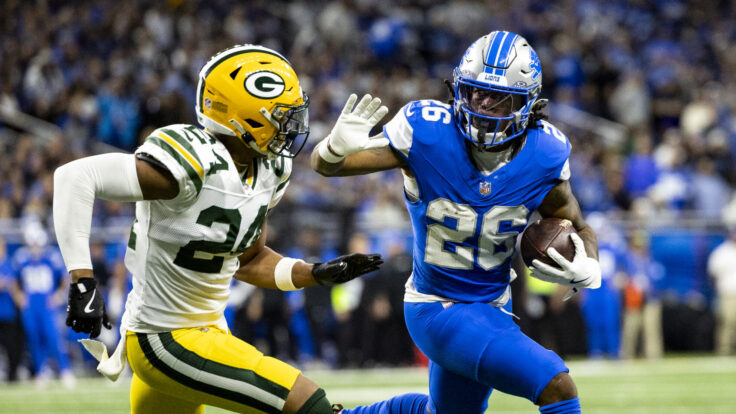
- The NFL Draft draft: The NFL just completed the first year of its multiple decade-long media deals. But I just learned that Brian Rolapp and Hans Schroeder will have another package of rights to sell later this year: ESPN’s deal to carry the NFL Draft ends in 2025. And while ESPN seems likely to renew, other media companies—Fox, NBC, maybe Amazon—will be interested in at least kicking the tires. The NFL typically starts to negotiate these types of deals a year in advance, so look for conversations to take place next week in Detroit.
ESPN has carried the NFL Draft since 1980, when it convinced then-commissioner Pete Rozelle to let it broadcast the event—an early masterstroke in the network’s evolution. The draft has turned into a legitimate TV package, produced as an NFL-themed carnival and spread across three days, almost like a music festival, replete with delirious, intoxicated fans in costume. The first round regularly attracts more than 10 million viewers, and could exceed expectations this year given the hype around Caleb Williams (the pride of Gonzaga High) and the various mysteries surrounding where the other top quarterbacks could land.
|
 |
| ESPN’s Norby Replacement Rodeo |
| Shockingly, given its traditional insularity and promote-from-within culture, ESPN is looking externally to replace Norby Williamson. And I’ve got names that should be on the list… |
|
|
|
| ESPN is famously—almost infamously—the most insular company in sports media, the product of a unique and grinding culture, sure, but also a wee bit of self-aggrandizement. ESPN executives have always displayed a certain smugness, believing that outsiders would surely drown amid the brand’s sheer deluge of obligations—half a dozen TV channels, a streaming service, a website and social, deals with all the biggest leagues, etcetera. The story of George Bodenheimer’s Horatio Alger-esque ascent from the company mailroom to its presidency is still lore in Bristol. And when Bodenheimer decided to retire, Bob Iger only trusted an inside man, John Skipper, to take over. When Skipper had to go, Iger in turn plucked Jimmy Pitaro from his management team.
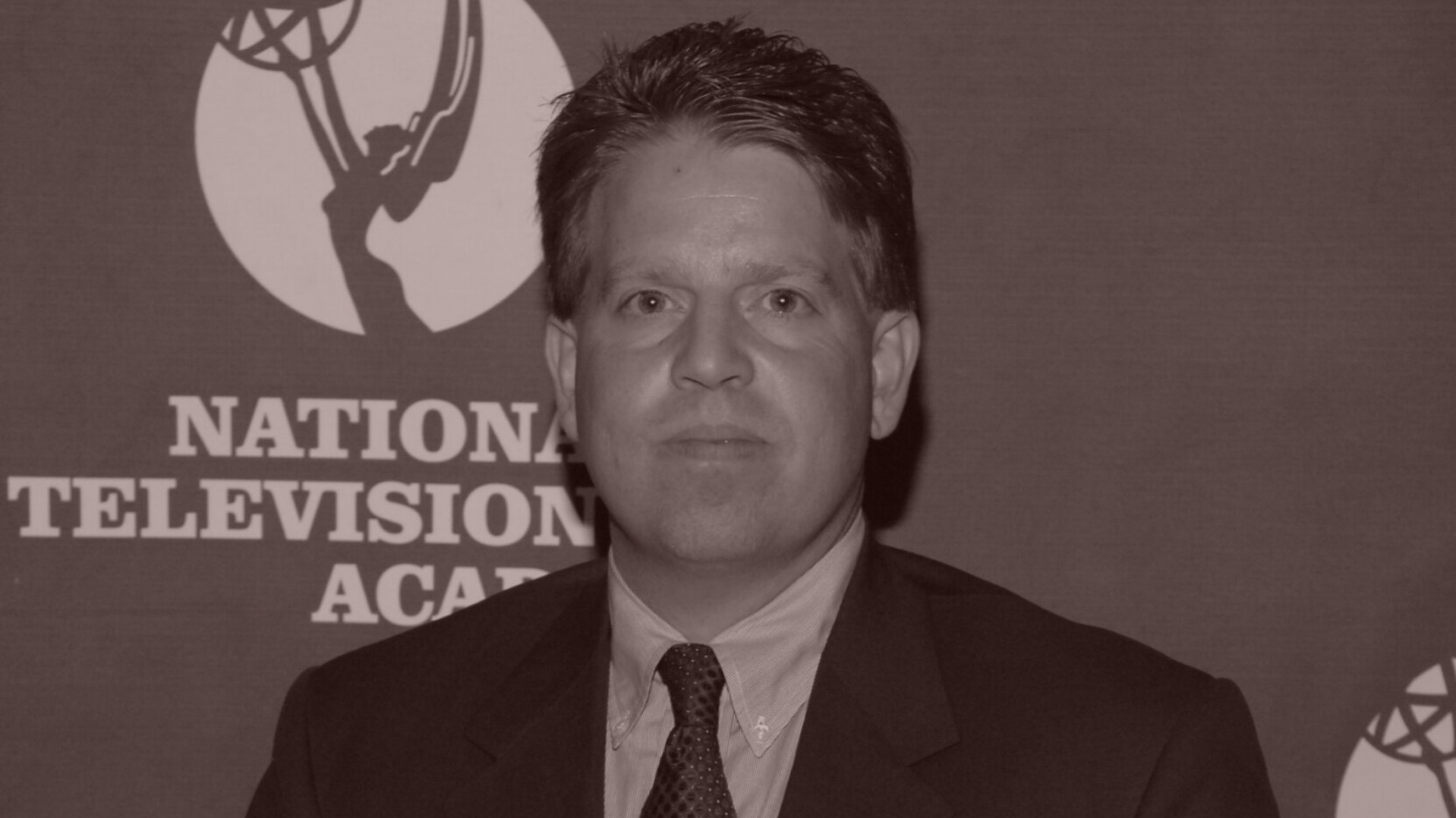
The recently departed, Pat McAfee-defenestrated Norby Williamson came from this tradition. Like Bodenheimer, he rose from the mailroom and spent 40 years amassing a portfolio inside the company that included ESPN’s biggest properties: the NFL, college football, MLB, UFC, golf, tennis, and all the studio shows associated with those sports. All of SportsCenter reported up to Williamson, too.
As ESPN looks to replace Williamson, however, the network appears set on pursuing an outsider, who will report to Burke Magnus. Part of the reason comes down to the changing media business. Top brass still values lifelong ESPNers, sure. But as ESPN readies its direct-to-consumer service for launch next year, top execs also want new blood bringing new ideas. There’s also the Super Bowl, which ESPN will produce in 2027 and 2031. Pitaro ended years of subpar NFL productions (remember the BoogerMobile?) when he poached Joe Buck and Troy Aikman—two outsiders—from Fox Sports. It wouldn’t be a surprise if Buck and Aikman have been pushing to add Super Bowl-worthy talent in the executive ranks, as well.
ESPN’s search is focused on top production executives who won’t be intimidated by its culture—perhaps a major event producer or a studio creative who is steeped in editorial. The top brass will pursue people like Lenny Daniels, the former president of Turner Sports, who departed the network in 2022. Another possibility is Jim Bell, a former NBC executive producer who left the network in 2019. Bell, who helped manage Ann Curry’s exit as the executive producer of Today, used to run NBC’s Olympics coverage. Interestingly, I’m told that Pitaro spoke with Bell four years ago after Connor Schell left.
Top production executives at sports networks will also be considered—NBC’s Molly Solomon, Fox Sports’ Brad Zager, Turner’s Scooter Vertino, NFL Network’s Charlie Yook, and Amazon’s Jared Stacy, among others. It’s unlikely that Solomon would leave NBC, especially in an Olympic year, and it would take a lot to pry Zager from Fox.
Stacy, a young hotshot, is developing a sterling reputation at Amazon, particularly around the studio shows for Thursday Night Football. His boss, Prime Video executive producer Mike Muriano, could also be considered, especially given his work helping to launch NFL Network.
Some other interesting names to consider: CAA Sports’ Matt Kramer and David Koonin, who know ESPN’s talent climate as well as anyone. (After all, this was the issue that befell, or felled, Norby.) If ESPN is interested in talent relationships, Amina Hussein should also expect a call. She’s head of Amazon Prime Video’s U.S. sports on-air talent and development. I hope all these people thank me personally for at least getting them raises. |
|
|
| “A few things. 1.) Sean McManus: Is he the most well-respected and beloved exec out there? I’ve seen nothing but positive things. Good for him if so. 2.) UFC: Did you catch Ted Sarandos sitting ringside with Ari and [his wife and designer] Sarah Staudinger? He went crazy for the knockout too! 3.) If Puck branded Spulu it would be called Defenestration+.” —A sports business executive
“I live in the heart of the new MLB ‘owned’ territory of Salt Lake City, which is ‘claimed’ by both Arizona and Colorado, and I can assure you the blackout territories have not changed. I subscribe to MLB TV, and both the Rockies and Diamondbacks are still blacked out, despite being a 10-hour drive from both ballparks. Of course, I do now have the option to pay $100 x 2 to get the ‘local’ streaming service offered by MLB.” —An aggrieved baseball fan
“The impact of local blackouts are still alive and well, until MLB changes the actual blackout territories. Fortunately, I have one other option—DirecTV—which still works the same as before, so I can subscribe to the Sports Pack and see both teams through old-school satellite. Thank you, Rob Thun. There’s still work to be done by MLB.” —A Varsity subscriber |
|
|
See you next week,
John |
|
|
|
| FOUR STORIES WE’RE TALKING ABOUT |
 |
| Greene Inferno |
| Digging into M.T.G.’s motion-to-vacate theatrics. |
| TINA NGUYEN |
|
 |
| Diller’s Gambit |
| Evaluating the Daily Beast resuscitation strategy. |
| DYLAN BYERS |
|
 |
|
 |
| A Paramount Epiphany |
| On the deal dynamics underpinning the Ellison-KKR-RedBird bid. |
| WILLIAM D. COHAN |
|
|
|
|
|
 |
|
|
|
Need help? Review our FAQs
page or contact
us for assistance. For brand partnerships, email ads@puck.news.
|
|
You received this email because you signed up to receive emails from Puck, or as part of your Puck account associated with . To stop receiving this newsletter and/or manage all your email preferences, click here.
|
|
Puck is published by Heat Media LLC. 227 W 17th St New York, NY 10011.
|
|
|
|