 |
|
Good evening, and welcome back to In The Room, my twice-weekly look inside the power corridors of the media industry. (If someone forwarded you this email, click here to cut out the middleman and get these notes directly in your inbox. You can obviously afford it and probably expense it.)
Tonight, the inside scoop on Jeff Bezos’ search for his next Washington Post C.E.O., with new intel on Patty Stonesifer’s shortlist of candidates, some discouraging revenue projections and a dishy little preview of Marty Baron’s forthcoming book.
But first… Warner Bros. Discovery launched CNN Max in beta today, and as anticipated the new streaming product will lean heavily on a live simulcast of the flagship network, including the marquee afternoon and primetime shows hosted by Jake Tapper, Wolf Blitzer, Erin Burnett, Anderson Cooper, Kaitlan Collins, Abby Phillip and Laura Coates, as well as two hours of the morning show. The incentive for viewers who want their news via streaming, including yours truly, is obvious, and for that very reason it’ll be interesting to see how the cable providers react. On the other hand, as one veteran media executive noted, “If CNN airs programming in the Max forest and no one is watching, does Jake Tapper make a sound and do the MVPDs even care?”
|
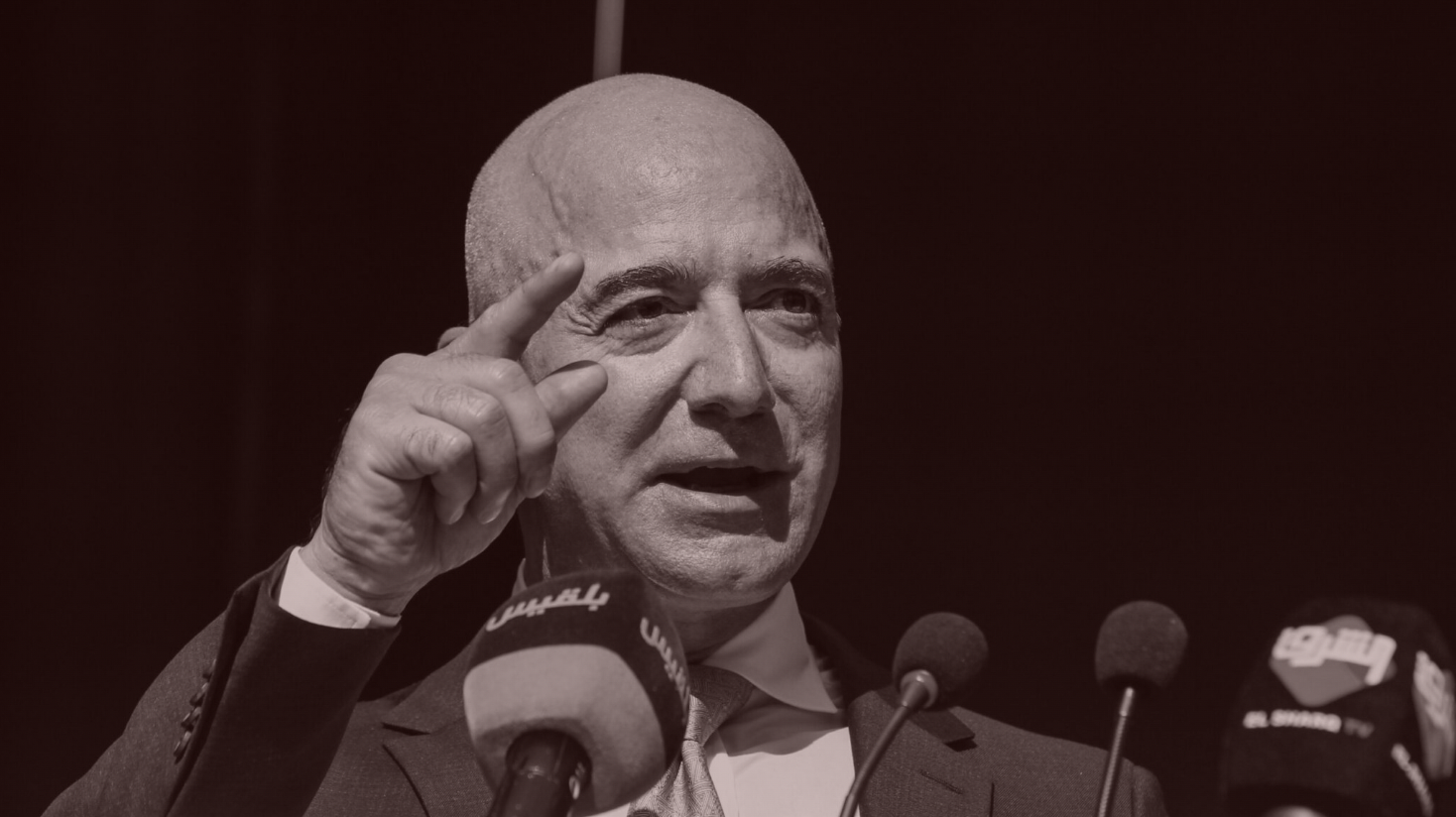 |
| Inside Bezos’s WaPo C.E.O. Bake-Off |
| Interim leader Patty Stonesifer has whittled down the shortlist to about five candidates, as the Bezos-owned mediaco, on track to lose roughly $100 million this year, struggles to regain its footing against The New York Times et al. |
|
|
|
| Marty Baron and Fred Ryan, the duo who guided Jeff Bezos’s Washington Post through its heady and expansive Trump-tinged “Democracy Dies in Darkness” era of digital transformation, are generally considered the model executive editor and C.E.O. tandem. The two might look like an odd couple—Baron is a less Hollywoodesque simulacrum of Liev Schreiber’s brooding Spotlight portrayal while Ryan has the elan of a Heritage Foundation boulevardier—but their extraordinary collaboration helped the Post discard the deflated ambitions of the latter Graham years. During their time together, the Post revived its journalistic heritage as the House of Woodward, it became the subject of a Tom Hanks and Meryl Streep movie, and once again grew into a journalistic and financial competitor to its more urbane and august competitor, The Times.
In actuality, of course, Baron and Ryan more than disagreed from time to time, and they had plenty of audible disputes during their nearly seven-year run together. Before settling into what Baron describes in his forthcoming memoir as “a constructive, friendly, mutually supportive groove,” the two men “argued, incessantly and furiously” about “almost everything.” “Whenever Fred entered my office,” Baron writes, “my executive assistant, sitting just outside my door, knew she would soon hear me shouting.”
One of their final disputes came in Baron’s final years, when he realized that despite a pattern of record digital growth, fueled in no small part by liberal Trump agita, “the paper faced a seemingly insurmountable competitive gap” with The New York Times. In Collision of Power, which will publish next week, Baron writes with envy of the Times’ aggressive diversification into lifestyle offerings like Cooking and Games and Wirecutter that made the brand an indispensable part of readers’ lives beyond newsroom coverage, fueling the company’s growth to what is today nearly 10 million digital subscriptions. “The Post had not made big strategic bets,” Baron writes. “No active efforts were made to identify potential acquisitions… Importantly, unlike The Times, we had not insinuated ourselves into people’s daily, non-news routines.”
According to Baron’s rendition of events, he saw the early signs of what would be the Post’s slow fade from its renewed grasp of glory. “Several times over my final two years at The Post, I implored Fred to pull Bezos into a thorough, long-term strategy conversation,” Baron writes. “There was an urgent competitive threat, and we needed his counsel. And whatever we settled on doing, we needed his bank account. To my frustration, that meeting was never proposed to Bezos. In early January 2023, I asked Fred why. He didn’t give me a direct answer, only saying: ‘Whenever we have Jeff ’s time, I’ve never missed the opportunity to take it.’”
The paper’s inability to keep pace with the Times in the post-Trump years would ultimately prove fateful for Ryan, as I’ve reported on several occasions. Subscriber churn, declining ad revenue, the lack of a clear vision, and a talent exodus soon gave way to inertia and pervasive frustrations with Ryan’s leadership, particularly among members of the Post’s vocal and engaged union. In June, Bezos announced that Ryan would step down and that Patty Stonesifer, a longtime Bezos confidant and Amazon board member, would serve as interim chief executive, spearheading the search for Ryan’s permanent replacement.
To her credit, Stonesifer steadied morale overnight, and she remains widely revered throughout the newsroom. But she could not reverse the economic trendlines. After years of profitability, the Post went into the red in 2022. Now, sources familiar with the Post’s financials tell me that the paper is on track to lose roughly $100 million this year, a fate that it risks repeating annually if it does not course correct pronto. (A Post spokesperson declined to comment.) |
|
|
| Refocusing the business, and providing a post-Ryan strategic plan, will be the prerogative of the Post’s next chief executive, of course, and Stonesifer is nearing her final decision, I’m told. Over the summer, she enlisted Erik Sorenson’s executive search firm, Sucherman, to assist her in casting a wide net for a C.E.O. Sucherman looked at media executives, yes, but also veterans of finance and tech—leaders who could simultaneously pursue profitability while navigating the Post through the uncertain political climate that awaits the paper in the years ahead, especially if Trump is re-elected. Notably, both Bezos and Ryan are involved in the search, and Stonesifer has also sought the advice of several former Post executives, including Baron and former chief product and technology officer Shailesh Prakash, as well as members of the Graham family, which sold the paper to Bezos in 2013.
By late summer, Stonesifer had put together an initial list of roughly a dozen candidates. Befitting the Post’s preoccupation with its rival, Stonesifer’s top candidate for the position was the woman largely responsible for the Times’ meteoric growth, its C.E.O. Meredith Kopit Levien, sources with knowledge of the matter said. From the beginning, however, Stonesifer believed that Kopit Levien, who happens to spend about half her time in Washington, was highly unlikely to take the position—why leave the thriving Times for the beleaguered Post? Stonesifer may have also sought out Kopit Levien’s predecessor, Mark Thompson, though by the time of her search he was already engaged in talks to become the C.E.O. of CNN.
Other candidates on Stonesifer’s initial list included (but were not limited to) more editorialish business leaders, like The Atlantic C.E.O. Nicholas Thompson and The Economist president Bob Cohn, who both began their careers as journalists. The search also included newish Politico C.E.O. Goli Sheikholeslami. All three took meetings with Stonesifer, as did Dawn Ostroff, the extremely connected former Spotify chief content officer who now serves on the boards of Activision and Paramount. Others under consideration included McClatchy C.E.O. Craig Forman and Texas Tribune co-founder and former C.E.O. Evan Smith, both of whom were contacted by Sucherman.
Interestingly, the candidate yield suggests the challenges of filling the position—providing the patina of both change and continuity, the ability to manage unprecedented high-wattage headaches, and report into one of the world’s richest men. While all are accomplished in their own right, many either hail from much smaller organizations or adjacent fields, and none—at least none so far—have the gravitas of Meredith, or maybe even Fred. Regardless, in recent weeks, Stonesifer has whittled her list down to about five finalists, sources familiar with the matter said, though it’s not entirely clear who remains. |
|
|
| Ultimately, the Post is looking for someone who can do more than solve the revenue challenges. For all of Baron’s observations about the Post’s business, he devotes the vast majority of his book’s real estate to the challenges posed by Trump, who sought to cast the Post and its contemporaries in the media as the enemy of the people. (Baron recounts that in one dinner meeting at the White House, Trump told Bezos, Ryan, and Baron that the Post was “the worst of all media outlets”—one distinction it did win over the Times.) Both Bezos and Stonesifer are said to be readying themselves—and the paper—for the prospect of a second Trump term, and want a C.E.O. who has the same fortitude to stand up to the White House that Ryan exemplified.
Finally, there is the matter of staff morale, which has only just been placated. Stonesifer is wary of selecting any C.E.O who may rock the boat. And, indeed, many staff have asked why Stonesifer doesn’t just take on the position herself—an ask that Bezos made at one point, according to a source familiar with the matter.
Alas, Stonesifer appears eager to move on from the Post, in part due to the need to care for her husband, the veteran journalist Michael Kinsley, who has been suffering from Parkinson’s disease for thirty years; in part because, at 67, she has earned the right to travel and spend more time with her grandchildren, free from the demands of running a struggling newspaper in the nation’s capital at a fraught time in American history.
Of course, no one will be more instrumental to the success of the Post than Bezos himself. The money is coming out of his own pocket, after all, and without so much as an advisory board to guide his investments. Indeed, as Baron notes, the C.E.O. is the only person from the Post who meets with Bezos on a one-on-one basis. Toward the end of Collision of Power, Baron notes that “when Bezos stepped down as C.E.O. of Amazon in July 2021 to become executive chair of the board, he signaled he’d be devoting more ‘time and energy’ to The Post, Blue Origin, and his charitable endeavors. Blue Origin and philanthropy got the extra attention,” Baron continues. “The Post did not, even as it badly needed it.”
“I suspect The Post is getting it now,” Baron adds. “In one-on-one meetings with key staffers, [Bezos] has been apprised of deep internal discontent.” After all, he continues, “Few news organizations in American history have played as important a role as The Post in holding power to account. The country needs a healthy, growing, and confident Washington Post. I feel sure it will have one.” |
|
|
|
| FOUR STORIES WE’RE TALKING ABOUT |
|
|
|

|
 |
|
|
|
Need help? Review our FAQs
page or contact
us for assistance. For brand partnerships, email ads@puck.news.
|
|
You received this email because you signed up to receive emails from Puck, or as part of your Puck account associated with . To stop receiving this newsletter and/or manage all your email preferences, click here.
|
|
Puck is published by Heat Media LLC. 227 W 17th St New York, NY 10011.
|
|
|
|