Good evening, I'm Dylan Byers.
Welcome back to In the Room, my private email on the inner workings of the American media. Thanks as always for subscribing to Puck, and please feel free to reach out anytime. If this email was forwarded to you, you can sign up here.
Thanks, Dylan
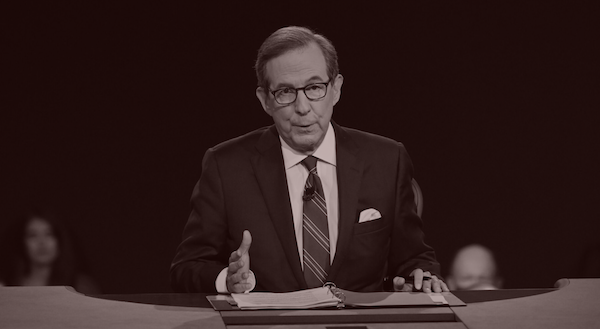
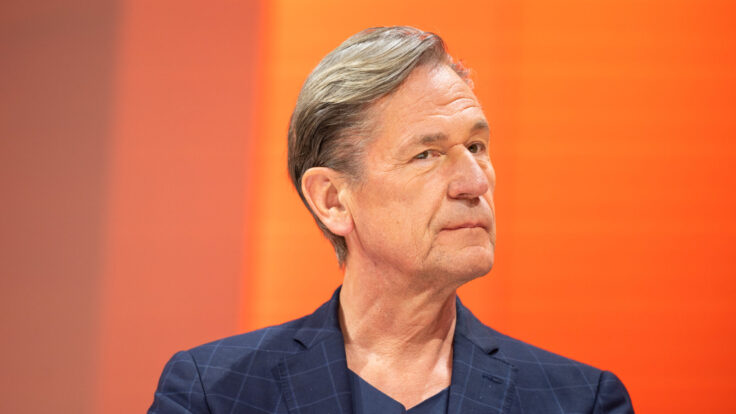
Is Zucker’s poaching of Chris Wallace a harbinger of CNN+’s centrism and maturity, or a trophy hire to buy time for a new streamer. Or (hint!) both, and then some? If you're a regular reader of this column, you know I've assigned a possibly irrational level of importance to John Malone's recent musings about the future of CNN. The media mogul called on the network to dial back its opinion programming, “actually have journalists'” and “evolve back to the kind of journalism that it started with”—itself a critique that I find notable in light of Malone's impending influence as a board director at CNN's future parent company, Warner Bros. Discovery. I thought I had spilled all the ink there was to spill on those remarks—Malone is neither C.E.O. of Warner Bros. Discovery, nor president of CNN, and he’ll be one board member among thirteen—and yet I found myself thinking of those words once again when I heard that the distinguished newsman Chris Wallace was leaving Fox News to join CNN's new streaming service, CNN+.
I don’t want to read too far into Wallace’s move. Like others who have decamped from Fox recently, he had become alarmed and discouraged by the network's tolerance for falsehoods, conspiracy theories, and culture war provocation, and didn’t have enough sway to do much about it. (A plea from Wallace, Bret Baier, and others to Fox News leadership over Tucker Carlson’s incendiary “Patriot Purge” documentary appears to have fallen on deaf ears.) In an industry dominated by five news networks—Fox, CNN, NBC, ABC, and CBS—there are only so many places that a 74-year-old fourth-place Sunday show host can go besides retirement. By the same token, there are only so many camera-ready anchors that a cable news chief like Jeff Zucker can hire. In other words, I wouldn't go looking for evidence of some grand CNN+ strategy here. Wallace needed a home; CNN always needs talent.
Nevertheless, the upshot of the deal is that CNN's first big, headline-grabbing get for its new streaming service is exactly the kind of person that a stakeholder like John Malone would want to see at CNN. As one D.C. media executive said to me, Wallace's hire “pulls CNN closer to the functioning political center, which is narrower but vacant,” and gives CNN+ “an opportunity to create value for millions of politically homeless people'” who resent the partisan and opinionated programming that dominates so much of cable news. As one Hollywood executive put it, the Wallace move also suggests CNN+ will be more “Charlie Rose” than “Vice.” (So far, CNN+ has announced three other shows: a news show anchored by NBC News alum Kasie Hunt, which very much plays into the straight news strategy; a business show hosted by the very outspoken entrepreneur and Kara Swisher wingman Scott Galloway; and Searching for Mexico with Eva Longoria, a Bourdain-style miniseries that follows in the footsteps of Stanley Tucci’s successful Searching for Italy.)
CNN’s ability to create value for the politically homeless in streaming only exists, however, if the network can convince people to cough up $5 to $8 a month for CNN+. Despite his bona fides, Wallace is hardly a marquee player or ratings magnet. On Sundays, from a ratings perspective, he was the fourth horse in a four-horse race. “I mean I like Chris Wallace, but I’m not paying a monthly service fee,” Howard Stern said on his radio show this week, likely channeling the attitudes of the vast majority of Americans. Stern also pointed out that “people don’t watch CNN,” so “who the hell is going to pay for CNN+?” Hiring a 74-year-old Fox News veteran doesn't really answer that question, nor does it signal a grand strategy for the future of news in streaming, much less what the next generation of talent looks like.
What it does signal is that Zucker cares at least enough about CNN's streaming business to put a notable name like Wallace there, rather than on linear. I wrote in September that Zucker, with his knack for managing high-wattage talent, “may prove more successful than his peers at incentivizing one or two of his broadcasters to lead the way into the network’s streaming future.” He has at least succeeded in convincing Wallace. And in cable news' long, slow and overly cautious crawl to the inevitable, that is at least some form of progress.
Bankoff vs. Peretti
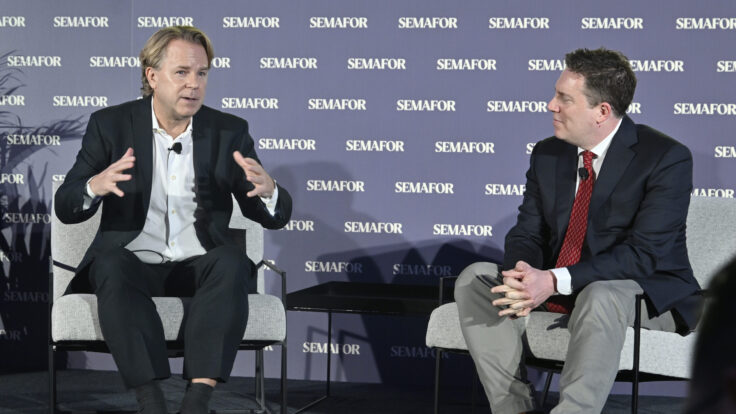
Speaking of inevitable futures, the world of digital media has taken another big leap toward consolidation: On Monday, Jim Bankoff confirmed that Vox Media would be merging with Group Nine in an all-stock deal that will put Bankoff at the head of an empire that includes New York magazine and NowThis, Eater and The Dodo, The Vox and The Verge, to name a few entities. The combined company is expected to bring in $700 million in revenue next year, and $100 million in profit, presumably of the EBITDA-adjusted variety. It comes on the heels of BuzzFeed's SPAC-assisted acquisition of Complex Networks, which puts Jonah Peretti at the helm of both those companies, plus HuffPost, which received an icy reception from investors in its rocky public market debut. In the relentless pursuit of scale, perhaps one day Bankoff and Peretti will merge their empires—an idea Peretti floated more than three years ago in The New York Times.
In the meantime, I’m struck by the differences between these two princes of digital media, and the differences in their approach. The soft spoken, low-drama Bankoff has been methodically acquiring digital assets to build his private media empire while the more affable and playful Peretti has taken his company public via SPAC. Bankoff surely considers himself the more serious businessman, and may see Peretti as a bit of a dilettante. Peretti surely sees himself as a visionary, and perhaps thinks of Bankoff as a bit of a Web 1.0 dweeb. Whatever the case, they are now, along with Vice’s Shane Smith and Nancy Dubuc, two of the last people standing from the early-aughts wave of formerly buzzy digital media upstarts that raised capital at multi-billion dollar valuations before right-sizing their ambitions.
FOUR STORIES WE'RE TALKING ABOUT 
Marvel has been so successful for so long, begging the question: if we've reached Peak Marvel, how is Kevin Feige using his power? MATT BELLONI 
In a wide-ranging interview, Huma Abedin talks candidly about Hillary, Weiner, the Laptop, more Hillary, and Kamala. PETER HAMBY 
The recall election of Chesa Boudin is pitting tech’s billionaires against one another—and forcing the city to look itself in the mirror. TEDDY SCHLEIFER 
An exploration into the latest B.S. post-crypto fiscal fantasy of the economy’s late-stage-Covid consensual hallucination. WILLIAM D. COHAN 
You received this message because you signed up to receive emails from Puck.
Was this email forwarded to you?
Sent to {{customer.email}}
Puck is published by Heat Media LLC.
For support, just reply to this e-mail. For brand partnerships, email ads@puck.news |


SHARE