Good evening, I'm Dylan Byers.
Welcome back to In the Room, my biweekly private email on the intrigue and inside story behind what’s going on in the media industry.
Today, my notes from Hudson Yards on the imminent launch of CNN’s highly anticipated, frequently misunderstood streaming service—and what it all means for the future of the global news network as its parent company is folded into David Zaslav’s new media empire.
Sponsored by Facebook 
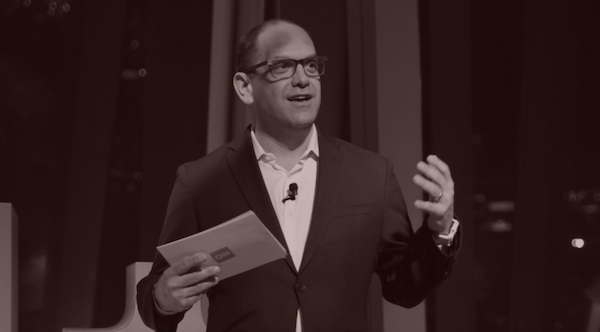
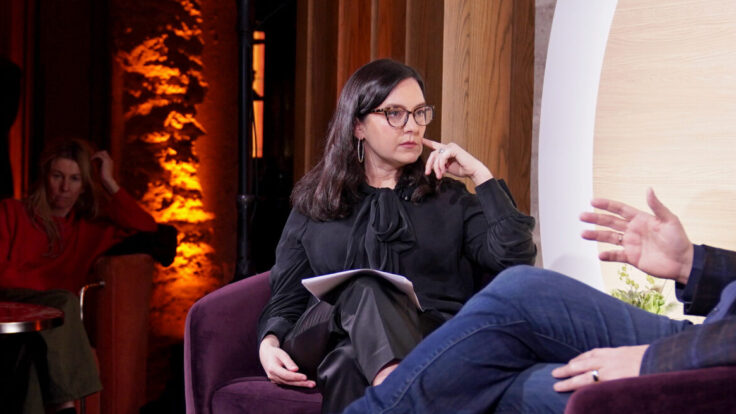
David Zaslav’s date with destiny—the endlessly anticipated consummation of Discovery and the WarnerMedia assets—is finally (finally) less than two weeks away. And yet the first major artifact of his tenure—the emergence of CNN+—is already in the market. Herewith, some notes from Hudson Yards. On Monday evening, Andrew Morse, the executive in charge of CNN+, offered some remarks at a launch party in Hudson Yards attended by top talent from the network and its about-to-debut streaming product. It was a refreshing moment amid a bewildering season beset by Omicron, Cuomo, Zucker, and a clandestine search for his successor, which ultimately led to the hiring of Chris Licht. Morse, who had been considered a contender for the top job on CNN’s greasy pole, did not betray any signs of frustration, angst, or even anxiety. Instead, he sounded like the model low-key, HBR-imbibing leader of the David Zaslav era. “This is the right time to launch CNN+,” Morse said. “We know the media landscape is changing quickly, and so is the way people are consuming news. In order for us to ensure our journalism remains as essential to the world for the next 42 years as it's been for the last, we must always continue to push ourselves and to innovate.”
CNN+, as Morse plainly noted, is being launched to ensure the long-term relevance of the brand’s journalism. And that testament, perhaps inadvertently, gets to the heart of the matter: news channels are building streaming services these days out of sheer necessity, just like magazines and newspapers built websites 25-30 years ago. The day will come when all of these channels need to make their core offering available via streaming, and the linear product will wither. They can’t do that yet because of the economics of linear, so they’re building placeholders in the meantime. Indeed, similar to the transformations of the music and print industry decades earlier, news brands must convince their employees, and audiences, that the real action is on their streaming service, not their cable channel—and to do so probably before that’s actually legitimately true. The brands that carefully execute this sleight of hand trick should be rewarded handsomely. Those who don’t will end up with an expensive version of Cheddar.
CNN came to the party late, but it came smart. Most existing streaming news services are either minor-league versions of the linear product or additive, B-side style bonus material—either way, they often leave consumers feeling like they’re watching something other than the main event. CNN+ has plenty of this filler, too, but it’s also got a healthy slate of new and unique lifestyle programming that, coupled with CNN’s unparalleled global newsgathering and competitive domestic coverage, might justify the $6-per-month price tag.
Some media observers like to say that news streaming services will only appeal to brand superfans. That is certainly true of something like Fox Nation or MSNBC’s The Choice, on Peacock, but I don’t think it’s at all true of CNN+. Think of it this way: Let’s say you’ve cut the cord, and you don’t miss the usual cable news fodder—you get your news on your phone anyway—but you like having access to wall-to-wall coverage when there’s actual news, like the unfolding war in Ukraine or a presidential election. CNN has just spent more than a month demonstrating its value in hard news coverage. Now, on top of that, there’s at least one food-travel personality whose name you know—Stanley Tucci, Eva Longoria, Alison Roman—and whose new show you’re at least marginally interested in. (Plus easily bingeable light fare like the Anthony Bourdain catalogue, or even one of those A&E-style Wiki-ish-documentaries on historical figures that you might get down with after the kids are asleep and you’d prefer to eschew the garbage on Bravo.) And all that is equivalent to the price of one bougie cappuccino a month? As I’ve reported, the CNN+ growth goals are modest: 2 million subscribers in year one, 5 million in year two, and so on. I think they can achieve that.
This goal, however, highlights one of the most underappreciated elements of CNN+, in particular, and the streaming wars, in general. The entire blossoming industry of subscription media is, to be sure, built on great content. The heightened anxiety of the Trump era, after all, elevated the necessity of all the great work published by organizations like The New York Times and The Washington Post. But those companies actually built their subs businesses not only on their prized journalism, but also on word-class tech and marketing stacks, following a playbook developed by Netflix regarding how to create an enormous consumer-based funnel. Disney+ rose to instant prevalence in streaming through shows like The Mandalorian in addition to its operational ability to cut huge deals with Verizon and Indian Premier League cricket, and spend gazillions to drive awareness for their product, and push consumers down their funnel to subscription and retention.
ADVERTISEMENT 
We build tools that give you control and help keep you safe
Real connection can only happen on safe platforms. So we build tools to protect our communities.
What About Morse?
Now, all of this said, it’s also worth noting that there’s nothing in the CNN+ lineup that looks poised to be a breakout hit, let alone the kind of tentpole franchise that will capture the zeitgeist and garner a ton of earned media. Instead of the Mandalorian, they have Scott Galloway. Indeed, it’s quite telling how much the CNN+ marketing team has leaned—quite eerily, almost morbidly—on the late Anthony Bourdain to sell subs. They’re listing him alongside Chris Wallace and Alison Roman and Audie Cornish as if he were launching a new show. And of course, quite tragically, he’s not. I understand most streaming services go to market touting both new and existing inventory, but the Bourdain flex, in addition to being discordant, highlights their inability to sign a living name who can match his influence and stature in the culture.
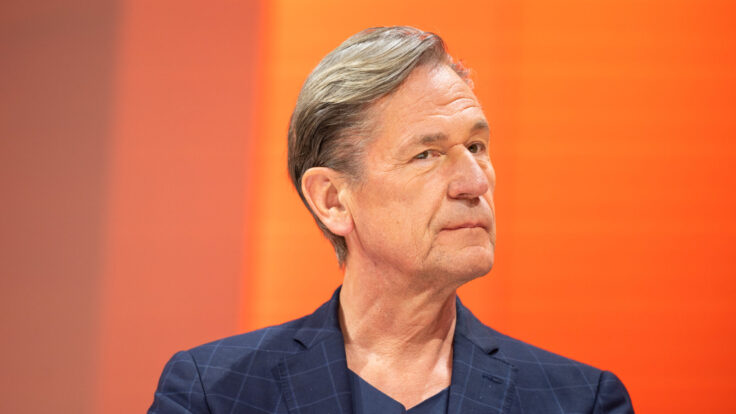
As for Morse? I think he’s rightfully watching his back. Licht has at least been surveying the market for available replacements, as I’ve reported, and while I’m sure he’d be willing to offer Morse some new, lesser role in the new administration, I’m not sure that’s something Morse wants. Remember, he thought David Zaslav might give him the top job, and in the end, he—like many others—didn’t even get a phone call. So I’m guessing that, despite his adulatory speech, Morse isn’t feeling great about Hudson Yards right now.
ADVERTISEMENT 
Zazwood
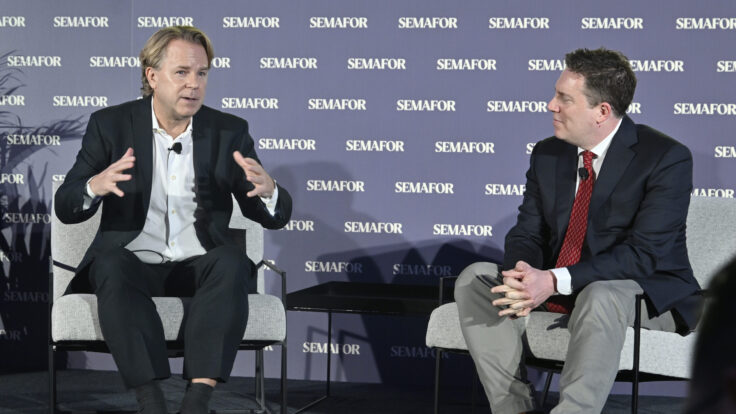
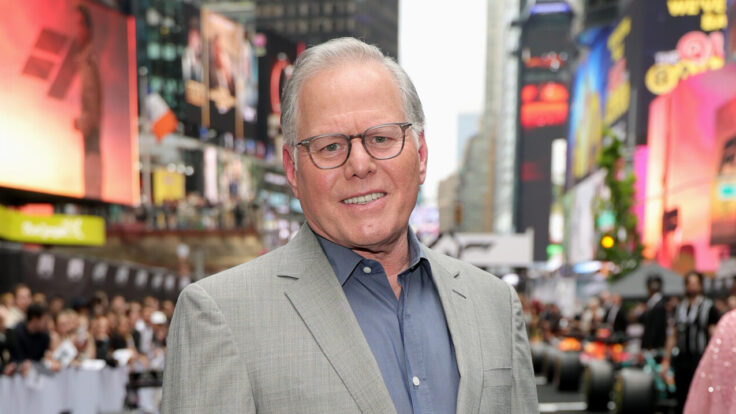
Hollywood, meanwhile, is pretty bullish on Zaslav’s new media company, which will finally conclude its immaculate conception on April 11. At the very least, the executives I talk to admire him for engineering a stealth deal that put him at the same table with the likes of Bob Chapek and Ted Sarandos. And so I think the goodwill will last because Zaslav holds a fair amount of sway in an industry where power is increasingly being consolidated into the hands of very few. Now, Chapek’s Don’t-Say-Gay fiasco in Florida certainly shows how quickly things can go wrong when you’re running a massive media company. But barring any unforced errors, I think he’ll be fine.
Some media insiders have kibitzed in the past year that CNN might present itself as a potential spinoff opportunity, freeing up cash for Warner Bros. Discovery to pay down debt and enjoy the valuation of a more pure play entertainment company. (Disney has faced similar speculation regarding ESPN.) The reality is that Zaslav has plenty of time to allow Licht and Morse (or whomever) to figure out CNN and reorient it for streaming while he focuses on the key entertainment decisions that will have a material bearing on WBD’s stock price, which still lags the industry’s enthusiasm for the combined entity.
One thing is clear, though—triumphant Hudson Yards speeches aside, shit is about to get real. Zaslav has the Igerian showmanship that Hollywood loves, matched with the former Disney C.E.O.’s ability to sustainably transform a business and change its narrative in real time. Zaslav has engineered a modern media colossus, with Netflix, Disney and Comcast as market comps. Change, to slightly misquote Hemingway, often happens slowly—until it occurs all at once.
FOUR STORIES WE'RE TALKING ABOUT 
Most shows don’t make it past three seasons. So how did a foul-mouthed cartoon become perhaps the most valuable asset in media? JULIA ALEXANDER 
During the peak of his powers, Will Smith allowed what should have been his brightest moment to reveal his own darkest shadow. BARATUNDE THURSTON 
An interview with Chesa Boudin on the media, billionaires, and the recall. Is he the victim of a smear campaign—or just bad at his job? THEODORE SCHLEIFER 
In our age of AMC apefests, social media influence is becoming the people’s leverage in the world of professional finance. WILLIAM D. COHAN 
You received this message because you signed up to receive emails from Puck.
Was this email forwarded to you?
Sent to {{customer.email}}
Interested in exploring our newsletter offerings?
Puck is published by Heat Media LLC.
For support, just reply to this e-mail. For brand partnerships, email ads@puck.news |


SHARE