Good evening, I'm Dylan Byers.
Welcome back to In the Room, my biweekly private email on the intrigue and inside story behind what’s really going on in the media industry.
In today's email, I'm sharing a few intriguing new details about Ben Smith and Justin Smith's forthcoming global media venture. But first, some fresh reporting on the dawn of the Chris Licht era at CNN...
Sponsored by Hulu 

Chris Licht may share Jeff Zucker’s super-producer past, but his reign over CNN is likely to be quite a bit different–though not in the ways you might assume. Plus, some fresh dish on Ben & Justin. Back in the fall, a New York media executive posed a question to me: Was Jeff Zucker sacrificing the integrity of CNN's brand, built over decades, in a bid for short-term ratings gains during the hyperpartisan, hair-on-fire, occasionally-democracy-on-fire Trump era? For years, after all, Zucker had positioned CNN as the network de la résistance against Trump and his loyalists in the G.O.P. and at Fox News. He encouraged the likes of Chris Cuomo, Brianna Keilar, and Jim Acosta to speak out vehemently against the president and his party, and ran marketing campaigns that cast CNN as one of the last bastions of truth in a world threatened by lies and misinformation. Economically, it worked. CNN was approaching a billion dollars in annual profit by the end of the Trump years. But it did seem shortsighted, especially as the media industry was reconfiguring itself in the streaming era.
Indeed, during that time much of CNN's traditional, just-the-facts journalism—the kind of journalism that has been on display this week in Ukraine—took a back seat to a sort of self-righteous, grandstanding, chest-thumping opinionation machine that largely blanketed primetime. Arguably, this played right into Trump's hand, and gave his supporters evidence that the network had the politics and credibility of the Huffington Post.
The executive's question was rhetorical, of course, and contained the seeds of a thesis. The value of the CNN brand—about $10 to $15 billion, by many estimates—came from the aforementioned integrity of its journalism and its unparalleled newsgathering prowess, not the fulminations of its most highly-paid anchors. No other television network, this person suggested, could match its army of global correspondents or its production infrastructure; internationally, too, CNN is synonymous with news—a high value proposition, in particular, in countries where independent news is scarce. Zucker, on the other hand, seemed prepared to leverage this dimension of the brand. A seasoned entertainment executive, he had tried to turn big news events—the poop cruise, the missing Malaysia Airlines jet, and Trump's presidential candidacy—into episodic dramas with a supporting cast of CNN talking heads. In doing so, the executive said, he was gambling the entire reputation of the network and the long-term value of the asset itself. And by going head to head with Trump's White House, he had gone all in.
ADVERTISEMENT 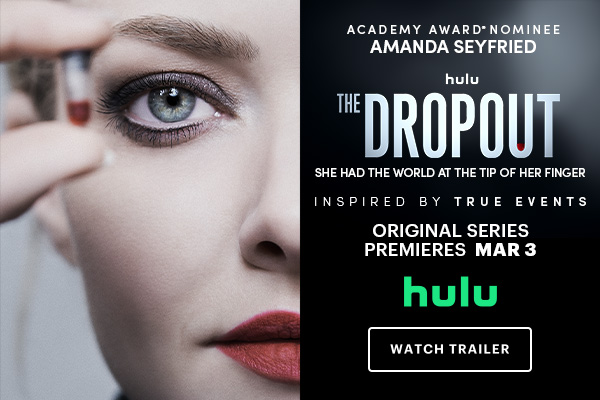
Money. Romance. Tragedy. Deception. Hulu’s limited series “The Dropout,” the story of Elizabeth Holmes (Amanda Seyfried) and Theranos, is an unbelievable tale of ambition and fame gone terribly wrong. How did the world’s youngest self-made female billionaire lose it all in the blink of an eye?
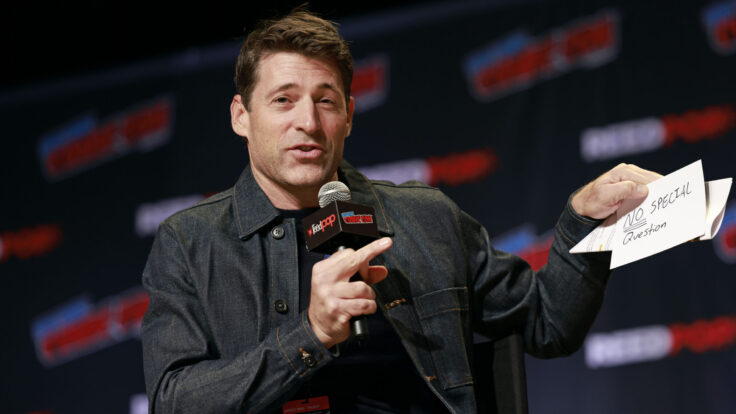
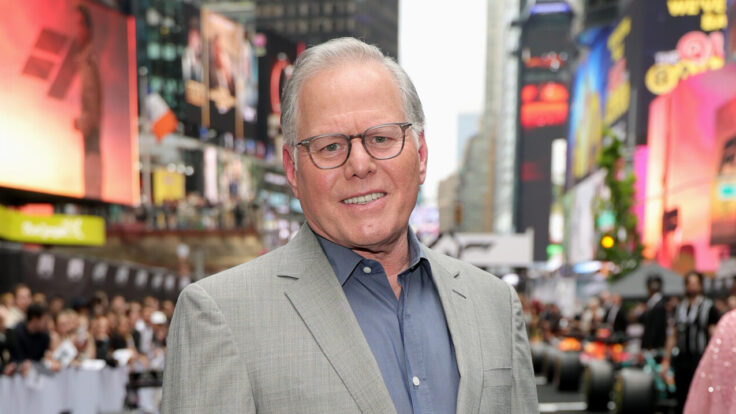
I thought of that conversation a few weeks later when John Malone, the powerful Discovery shareholder, publicly called for CNN to abandon its partisan programming and “evolve back to the kind of journalism that it started with.” And I thought about it again this week, when David Zaslav and Discovery formally announced that all-grown-up-now wunderkind executive producer Chris Licht would be taking the helm at CNN.
In his inaugural message to CNN staff, Licht said that Zaslav had “given me one simple directive: To ensure that CNN remains the global leader in NEWS”—emphasis his—“as part of Warner Bros. Discovery.” In his own note, Zaslav described himself as “a big fan and admirer of CNN with its extended leadership in breaking news, global news, and investigative reporting.” CNN employees looking for some signal about the network’s future direction hardly needed to read between the lines. The message was clear: Under Zaslav and Licht, CNN would be getting back to its roots. Reputation would trump ratings.
That is the message, anyway. The reality will be a bit more nuanced, and complicated. Television is a talent-driven business, after all, and the Licht playbook is all about building brands around high-profile hosts and anchors. At Morning Joe, CBS This Morning, and The Late Show, Licht took big egos like Joe Scarborough, Gayle King, Charlie Rose and Stephen Colbert and encouraged them to speak genuinely and informally about the news—to eschew the conventions of television and show their human side. The result was often highly partisan programming. Few TV news hosts are more outspoken than Scarborough and Mika Brzezinski. Colbert has succeeded, in part, because he and Licht turned The Late Show into the late-night center of the resistance.
This is not to say that Licht isn't capable of following a new, nonpartisan mandate, but it would be a rather radical departure from his past. Moreover, television's biggest talents really like the Licht playbook because it allows them to bolster their own brands. That will be significant to Licht's recruitment efforts, too. Free agents like Brian Williams and Jen Psaki—both of whom Licht will talk to, I'm sure—want to show audiences more of themselves, not less.
The bigger challenge for Zaslav's hard news vision is economic. Both Zaslav and Licht praised CNN's Ukraine coverage—and rightfully so—but I have to imagine they'll be feeling a different range of emotions when they see the bill that was required to send all those anchors, correspondents, and producers into Kyiv, Lviv, and Kharkiv while ensuring their safety and protection. Corporate mergers always necessitate greater efficiencies, particularly when Discovery is required to raise $30 billion in debt to clear this deal. For now, Discovery’s C.F.O. Gunnar Wiedenfels has said those synergies won’t affect CNN, and Zaslav hasn't given Licht a mandate to cut costs there. But what’s true in this fiscal year may not be true in the next one.
Meanwhile, the linear business model is in irreversible decline and CNN's streaming business hasn't yet launched. (I've been assured by CNN+ chief Andrew Morse that the service will launch on schedule later this month, despite rumors to the contrary.) At the end of the day, it's a lot cheaper to put four or five people around a desk, and let them talk, than it is to send correspondents around the world where they are risking their lives, following unpredictable events. I don't doubt that Zaslav and Licht's CNN will continue to go all-in on major global news events, especially ones as massive as the Russian invasion of Ukraine, but major European ground wars happen—fingers crossed—once every 75 years. So I wouldn't interpret Licht's all-caps “NEWS” as a sign that partisan crosstalk is gone for good. It will absolutely continue. Zucker wasn’t wrong: it’s still good business.
One last note on Licht's ascension: I am struck by how self-assured Zaslav was in making his decision. Appointments this consequential often involve a formal search process, headhunters, interviews with a diverse range of candidates and human resource-driven background checks. To the best of my knowledge, Zaslav didn't interview anyone else for the job, inside or outside of the organization. He simply turned to a star executive producer he had known for 15 years, a regular guest at his Hamptons garden parties, and just gave him the gig.
Depending on who you ask, that is either a sign of Zaslav's bold and decisive leadership, or a foolhardy move that may come back to bite him in the event that Licht proves to be in over his head. (Unlike Zucker, he has never before run a mediaco, and not even a network or news division.) Like most folks in this business, I am extremely bullish on Licht's prospects, especially given his talents as a producer and his knack for nurturing talent. But I'm perhaps even more impressed by Zaslav's chutzpah.
ADVERTISEMENT 
Ben & Justin’s First Big Hire
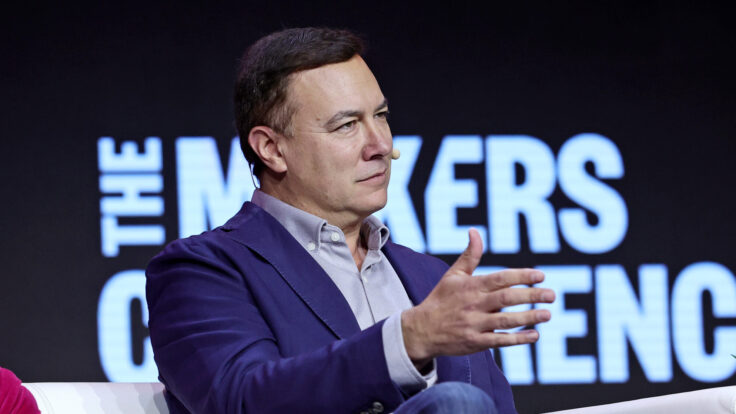
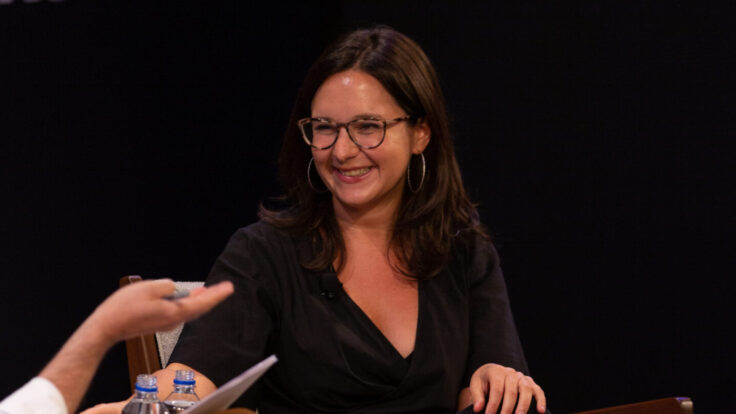
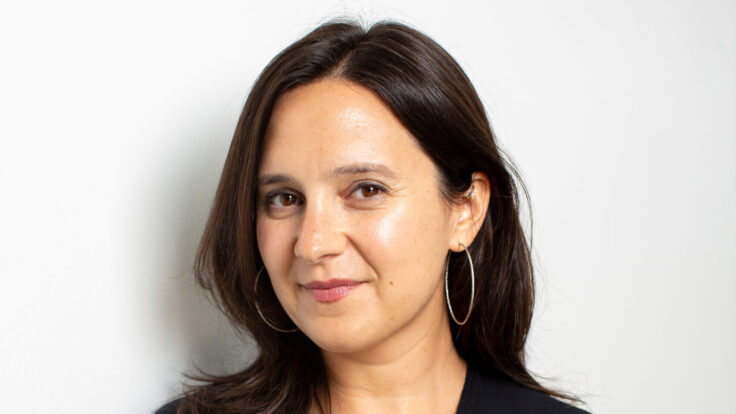
Elsewhere in the media, Justin Smith and Ben Smith are closing in on about $30 million in initial funding for their new global media venture and are likely to announce their investors in a matter of weeks, sources familiar with the matter tell me. Those investors will be a mix of personal and institutional investors who will have equity stakes in the business. An Axios report earlier this week identified a few bold faced names who had been approached for “Project Coda,” including Bob Iger and Laurene Powell Jobs. According to my sources, conversations with Iger didn't go anywhere and Powell Jobs' Emerson Collective passed on the opportunity, citing conflicts with The Atlantic. (David Bradley, the former publisher of The Atlantic, does intend to invest, according to sources familiar.)
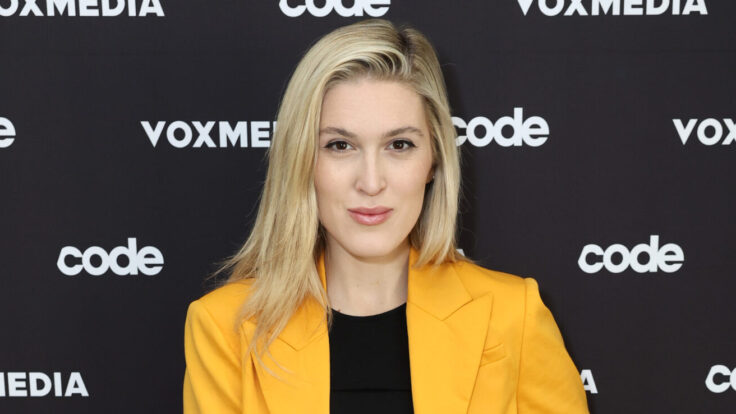
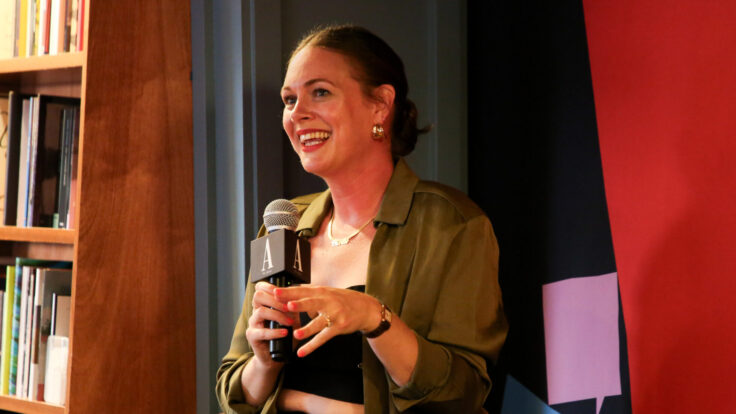
Meanwhile, I can report that the Smiths have made their first notable hire: Caitlin Roman, the vice president of product at The Athletic, will join the Smiths' yet-to-be-named company as Head of Product. A veteran of LinkedIn and Medium, Roman was key to helping The Athletic get to 1.2 million subscribers and thus making it an appealing acquisition target for The New York Times Company, which bought the sports news site for $550 million earlier this year. “Ben and I are thrilled to welcome Caitlin Roman as Head of Product on our founding management team,” Justin Smith told me via email. “Caitlin is a rising star in the media and journalism product world with an exceptional track record of driving innovation and growth.”
Any further details on the Smiths' venture are hard to come by, though I have learned that one aspect of their strategy will be to vary news content by market and region. Rather than offering one news report globally, they will produce and distribute their news offering differently in each country. But getting to the point where they’re capable of doing that will take a good deal more than the $30 million they’re raising now. The Smiths have told investors that they’ll need as much as $100 million in the years ahead to bring their vision to scale. 
You received this message because you signed up to receive emails from Puck.
Was this email forwarded to you?
Sent to {{customer.email}}
Interested in exploring our newsletter offerings?
Puck is published by Heat Media LLC.
For support, just reply to this e-mail. For brand partnerships, email ads@puck.news |


SHARE