 |
|
Welcome back to In The Room.
|
|
Tonight, a requiem for the Licht era at CNN, and news and notes on what comes next.
|
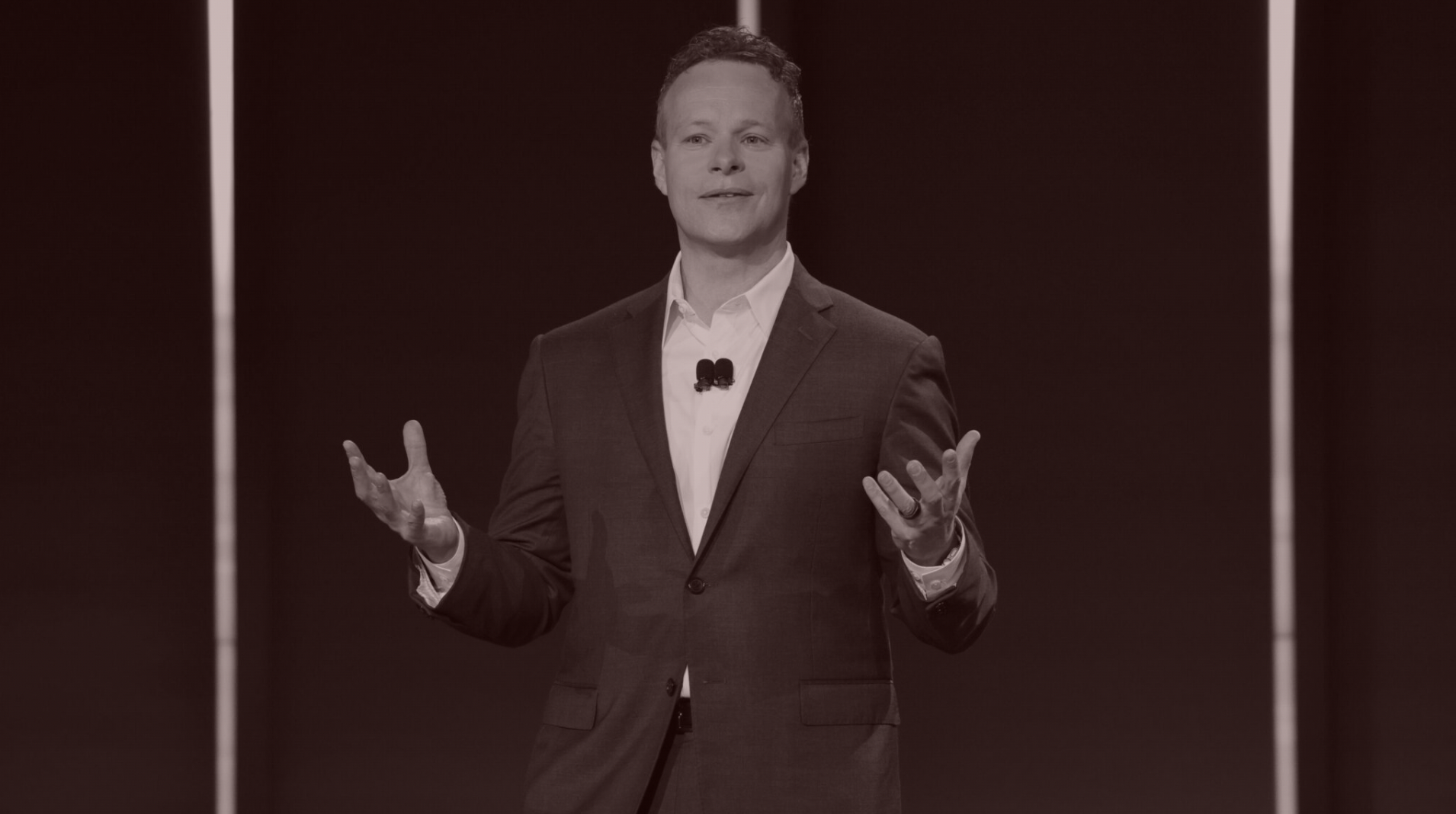 |
| In the Afterlicht |
| CNN staffers are cautiously optimistic about the potential for a leadership reset, even if they are also clear-eyed about the reality that Zaz & Co. haven’t lost any of their conviction in the mission to re-center the network, or that the cable TV business is getting smaller every day. |
|
|
|
| On a Saturday morning last October, then-CNN C.E.O. Chris Licht was celebrating his 51st birthday when he received a call from Gunnar Wiedenfels. Gunnar, the chief financial officer at Warner Bros. Discovery, was leading David Zaslav’s $3 billion post-merger cost-cutting effort, and had already earned a reputation as Zaz’s “hatchet man” for scrapping film projects, shelving HBO Max shows, and implementing mass layoffs. Wall Street analysts loved him for it; the creative community, less so.
CNN was initially thought to be immune from that effort—the early death of CNN+ notwithstanding. When Licht took the job, Zaz and Gunnar asked him to conduct a six-month review of the business, but also gave assurances that his journalists would be spared the ax. “As it relates to CNN, there are no layoffs per se,” Licht had told staff in June. “A layoff is a downsizing, where you are given a target, and that is not happening at CNN.”
One night earlier, however, I broke the news that CNN would be implementing layoffs—a claim the network’s spokespeople categorically denied because, as I would later learn, Licht himself was not fully aware of what the parentco was about to ask him to do. On that Saturday morning call, however, the hatchet man informed Licht that he would indeed need to cut staff. A few days later, Gunnar called again while Licht was in Washington, D.C., for a going-away party for Kaitlan Collins, who was moving to New York to co-host the morning show. Sitting in the back of a black car outside of Blue Duck Tavern, Licht listened as Gunnar conveyed the full extent of the damage: Licht would need to cut more than $100 million from CNN’s annual budget, a target he could only hit by laying off hundreds of CNN employees.
Licht was demoralized, but nevertheless acquiesced. He announced the cuts that week and, befitting the responsibilities of a divisional leader, took the heat for them. Across CNN, employees who were already wary of Licht’s leadership style and his pivot-to-the-middle editorial ambitions now saw him as something else, too: a hypocrite, a leader who could not be trusted, maybe even a patsy. It was, in many ways, a pivotal juncture for Licht’s tenure as C.E.O., the moment at which he lost whatever benefit of the doubt he might have still retained in the eyes of the rank-and-file. And from there, of course, Licht went on to evidence a fundamental lack of business acumen, editorial vision and P.R. savvy that would ultimately lead to his spectacular downfall this week. |
|
|
| Licht was deposed on Wednesday, during an early morning walk with Zaslav in the smoke-saturated air of Central Park. In the immediate aftermath, CNN staffers from New York and Washington to Los Angeles and London have described widespread feelings of relief and optimism, a sense that their long national nightmare has finally come to an end. Some have even pointed to the lifting of the fog in New York as a fitting metaphor for their own condition. The interim leadership trifecta on the editorial side, headed up by Amy Entelis, is made up of trusted CNN veterans who predated Licht’s arrival and, at least psychologically, feel like a bridge back to the era of Jeff Zucker, their revered former leader. (Virginia Moseley has taken the reins on the daily 9 a.m. all-hands call, filling the Licht role in at least one sense.) Meanwhile, David Leavy, the Zaslav deputy who was recently installed as CNN’s business leader, has telegraphed a desire to repair WBD’s relations with Zucker—an overture that may have to begin with an apology, given how WBD executives accused him of damaging CNN’s brand while he was in office, then of trying to undermine Licht once he was on the outside.
Meanwhile, CNN journalists feel eager to return to work, to cover the news rather than be the news. And, serendipitously enough, the news gods seem to have offered a familiar lifeline: just as Russia’s invasion of Ukraine gave these journalists a sense of common purpose in the rudderless days following Zucker’s defenestration in early 2022, the Justice Department’s indictment of Trump has now given them a renewed sense of purpose—and, they hope, an opportunity to grow ratings that had fallen to record lows under Licht.
It is, however, a cautious optimism. Many of the CNN employees who welcomed Licht’s departure are also clear-eyed about the fact that the parentco remains firmly in place, and that its leadership had more influence over CNN’s affairs than perhaps was initially considered. It was, of course, Zaz who mandated CNN’s new, more G.O.P.-friendly editorial posture; appointed an under-qualified executive producer as C.E.O., without interviewing other candidates; and ultimately decided to renege on Licht’s no-layoffs promise.
It was also Zaz, as I’ve reported before, who wanted Don Lemon out of primetime, if not off the network entirely. In addition to regular calls with Licht to discuss programming—in the infamous Atlantic profile, Tim Alberta reported how the WBD boss liked to call Licht at 6:30 in the morning—Zaz also sought final approval on a recent marketing campaign and the network’s newly revamped on-air graphics.
The fact that Zaslav has taken such a hands-on approach is hardly surprising to those who know how he manages other parts of his portfolio, and it befits WBD’s status as an operational company, rather than a holdingco like AT&T. But it also marks a significant shift from what CNN veterans are used to. Under both AT&T and TimeWarner, CNN operated more or less autonomously. One reason CNN employees held Zucker in such high regard is because they believed he was working on their behalf and protecting them from the bean counters upstairs. Licht, by contrast, was seen as a WBD errand boy who managed up to an audience of one who was, in fact, managing Licht himself behind the scenes.
By now, Zaslav & Co. have realized—after more than 50 Puck articles and one devastating 15,000-word Atlantic profile—that Licht lacked the experience, acuity, and leadership skills to execute their vision for a more centrist, less polarizing CNN. But they have not lost conviction in the mission itself. Nor has Licht’s ouster changed the realities about the long-term trajectory of the cable news business: somewhere down the line, there will need to be more belt tightening, more budget cuts, more layoffs.
How CNN staffers feel about this future will depend in large part on who Zaslav puts in charge of the network, as well as how willing he is to entrust that person with actually managing the company. This time around, Zaslav will conduct a formal search with the assistance of an executive recruitment firm, I’m told. And he will take his time, perhaps not installing a new C.E.O. until 2024, in the middle of the presidential campaign cycle. But determining a list of potential leaders who are both qualified for the job and actually want to manage the linear business through decline, all while Zaslav hovers over their shoulder, will be a formidable task.
One veteran media executive I spoke to this week recommended that the next leader of CNN, whoever they might be, take the job on two conditions: First, that Zaslav does not call at 6:30 in the morning, or at any other point in the day; and second, that he pledges to ask for no layoffs until after Inauguration Day in 2025. Presumably those are requirements Zaslav would not be willing to agree to. And that, in part, is what makes this job so hard. |
|
|
|
| FOUR STORIES WE’RE TALKING ABOUT |
|
|
|

|
 |
|
|
|
Need help? Review our FAQs
page or contact
us for assistance. For brand partnerships, email ads@puck.news.
|
|
|
|
Puck is published by Heat Media LLC. 227 W 17th St New York, NY 10011.
|
|
|
|