 |
|
Welcome back to In The Room, I’m Dylan Byers.
|
|
Almost two months to the day since Disney’s Bob Iger hung a for-sale sign on ABC, Bloomberg published a report that “exploratory talks” had commenced with Nexstar Media about a deal for the network. In today’s issue, what I’m hearing about the status of those conversations, the other suitors ringing up Iger & Co., and more.
|
 |
| Iger’s New Suitors & ABC Agita |
| Nexstar and other potential suitors, including strategic buyers and private equity firms, have called to express interest in ABC, but none have enough clarity about exactly what Disney is willing to sell—or how they would structure a deal—to move forward. |
|
|
|
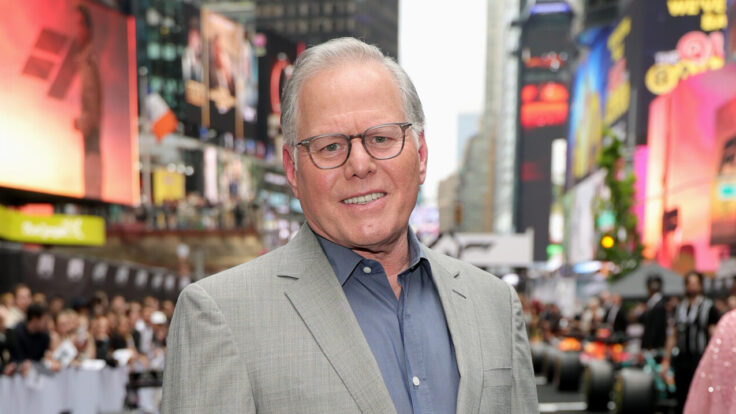
| This week, David Zaslav sought to assuage the concerns of Warner Bros. Discovery employees who had endured a year-and-a-half of aggressive restructuring, cost-cutting and debt servicing efforts by assuring them that Max was finally profitable, the company was making $5 billion in free-cash flow, and, perhaps most poignantly, that things were so much worse over at the competition. “All of our peers are losing a lot of money,” he said at a town hall, a recording of which I obtained from a source. “You can’t play offense if you’re losing money.”
In fact, Zaz is probably still as vulnerable as all his contemporaries to the tectonic shifts and macroeconomic predicaments that plague the industry: the stock is down 50 percent since launch, and there’s still far more debt servicing to be done. Nevertheless, his assessment of the Sisyphean challenge facing all his friends and colleagues in the Hollywood C-suites was spot on. Beset by their massive debt loads and dying linear businesses, they’ve been forced to abandon strategy and focus on tactics, running financial engineering maneuvers quarter to quarter and mitigating the fallout with investors, all without any grand, overarching master plan for long-term success.
Of course, no one feels this agony more acutely than Bob Iger, who after fifteen years of empire building is now—by dint of his decision to “ruin a perfectly good retirement,” as my partner Bill Cohan puts it—engaged in the unenviable task of dismantling that very empire, and thus enduring his time in the barrel (a once-implausible scenario). On Thursday, two months and a day after Iger hung the for-sale sign on ABC in Sun Valley, Bloomberg reported that Disney had held “exploratory talks” about selling that network and its local stations to Nexstar Media, the nation’s largest local television station owner and parent of the CW and NewsNation. Bloomberg also reported that Byron Allen, the comedian-turned-media mogul, had made a $10 billion offer for ABC and the local stations, as well as FX and National Geographic.
The Nexstar talks are perhaps not quite as far along as the headline suggests. Nexstar and other potential suitors, including strategic buyers and private equity firms, have certainly called to express interest in ABC and seek further details, I’m told (the sources would not name names of specific parties). But the talks haven’t progressed much further than that. Most of these calls come to Iger or Kevin Mayer, the former Disney executive who Iger has brought in to serve as his advisor and dealmaker-in-chief, and who, as I’ve reported, is working with leaders across Disney Entertainment, ESPN and HotStar to help envision their post-linear future. (In his day job, Mayer runs Candle Entertainment, a Blackstone rollup, but that’s another story.) But, beyond Allen, none of these potential suitors have enough clarity about exactly what Disney is willing to sell, or how they would structure a deal, in order to materially move forward.
In a statement issued after the Bloomberg report, Disney said that while they were “open to considering a variety of strategic options for our linear businesses,” the company had “made no decision with respect to the divestiture of ABC or any other property and any report to that effect is unfounded.” This was, of course, a non-denial denial. It was also a tacit acknowledgment of Disney’s own uncertainty surrounding their strategy for offloading the asset. And indeed, how much is this thing actually worth if it doesn’t come with Monday Night Football and the top-tier entertainment content that has already migrated to Hulu and Disney+? |
|
|
| As I noted back in Sun Valley, the Nexstars and Sinclairs of the world, or perhaps the private equity blue-chippers like Apollo, are now Disney’s best hope for an ABC transaction. There was a time not so long ago, in Iger’s first iteration as chief executive, when ABC might have reasonably hoped to be acquired by the likes of Apple or Google or Amazon—and, indeed, there may still be some logic in Jeff Bezos buying Good Morning America (the only real asset at ABC News) and using Robin Roberts and the cachet of morning television to push linens and kitchenware and other household appliances. Alas, the desperation wasn’t yet apparent then and everything wasn’t yet on the table. In hindsight, though, Iger probably waited too long.
In any event, the Bloomberg report precipitated a Cat-4 freakout at ABC News headquarters, as staff descended into what one source described as a “full-scale meltdown.” The anchors and producers who once thought they’d survive Disney’s shift to a direct-to-consumer distribution model are reasonably panicked at the thought of becoming the national network in Perry Sook’s local stations portfolio, without the patina of Disney’s Magic Kingdom, its marketing prowess, and, presumably, the deep pockets required to furnish its star anchors’ eight-figure salaries. (One other sub-subplot in New York media circles: Would Nexstar combine ABC News with NewsNation and, if so, would NewsNation’s Michael Corn, the veteran GMA executive producer who left after a since-dismissed sexual assault suit, thus be reinstated at his alma mater, possibly even replacing ABC News president Kim Godwin, whose leadership shortcomings are the stuff of legend on 66th Street?)
Meanwhile, an ABC divestiture raises potential challenges for ESPN, as well. Even in the age of Apple and Amazon, major sports leagues have stuck with legacy media partners in part because they wanted to ensure access to the broadest possible audience, which included having their games on free-to-air broadcast channels. Does the NFL’s calculus change if ESPN can no longer simulcast Monday Night Football on ABC? What about the NBA, which will renew its media rights in 2025 and may now see NBC as a more reliable partner? “If I’m Brian Roberts or Mark Lazarus, I’m on the phone with Adam Silvertoday assuring him that our free-to-air network isn’t going anywhere,” one veteran media insider said, referring to the Comcast chairman, NBCU Media chairman, and NBA commissioner, respectively. (NBC is currently planning to bid for NBA rights).
In this day and age, when everything is on the table and so much is up in the air, it’s hard to ascertain the fate of any television organization. CBS is secure only until Shari Redstone pursues her inevitable exit strategy. Fox’s fate could change dramatically upon the death of Rupert Murdoch. Before Zaz announced plans to hire Mark Thompson as his CNN chief and simulcast the network’s most popular content on Max, the conventional wisdom was that he’d sell the network as early as next spring, when the Reverse Morris Trust rules from the WarnerMedia-Discovery merger expired.
The new moves suggest Zaz now wants to preserve his so-called “reputational asset” a while longer, even if a WBD-NBCU tie-up still looms on the horizon. (Contrary to popular belief, such a merger would not require a divestiture of CNN or MSNBC; they can be combined. Alternatively, MSNBC could be the one to get spun off.) In any event, Zaz said during this week’s town hall that Thompson and his deputies would “have to take the next year or two” to figure out how to make CNN Max successful.
Nevertheless, no network seems so suddenly vulnerable as ABC which, coincidentally, has been suffering from a mouse infestation at its 66th street offices. A sale to private equity or a strategic buyer would be a humbling off-ramp for one of the Big Three, a media giant that’s been cut down to size. But in many ways, ABC would simply be ahead of the curve, the largest and latest legacy property to change hands as technology remakes the entertainment business, and certainly not the last. |
|
|
|
| FOUR STORIES WE’RE TALKING ABOUT |
|
|
|

|
 |
|
|
|
Need help? Review our FAQs
page or contact
us for assistance. For brand partnerships, email ads@puck.news.
|
|
You received this email because you signed up to receive emails from Puck, or as part of your Puck account associated with . To stop receiving this newsletter and/or manage all your email preferences, click here.
|
|
Puck is published by Heat Media LLC. 227 W 17th St New York, NY 10011.
|
|
|
|