 |
|
Welcome back to In The Room. I’m Dylan Byers. In tonight’s issue, a close look at the myriad headwinds pummeling Bob Iger, the quiet resurgence of a former heir, and a consideration of why, exactly, in this second iteration, the Disney C.E.O.’s superpowers seem waning, as if sapped by kryptonite.
But first...
- Earlier this week, MSNBC promoted Jen Psaki to the 8 p.m. hour on Monday nights, giving her marquee billing as the lead-in to Rachel Maddow’s highly rated weekly show (she’ll keep her Sunday show, as well). Readers of this email know that Psaki’s ascent to primetime has been a foregone conclusion ever since we first reported on her ambitions in cable news nearly two years ago. This move could potentially make Psaki the second-biggest star at MSNBC after Maddow, since the network seems to be investing in Monday night as political “Must See TV.” (Given the decline of primetime cable news viewership generally, “event”-izing one night seems like a reasonable strategy.) And in the not-too-distant future, it seems likely that Psaki’s primetime presence could expand significantly.
|
 |
| The Iger Bunker |
| As Disney’s stock has hit a decade low, former heir (and current Blackstone-funded roll-up guru) Kevin Mayer is making his presence felt across the Disney portfolio. But in the everything-on-the-table era, what’s actually on the table? |
|
|
|
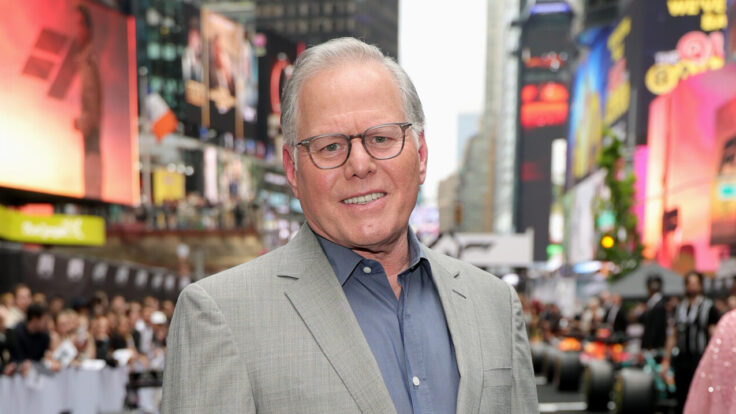
| In recent months, as Bob Iger has sought to maneuver The Walt Disney Company through the now all-too-familiar gauntlet of challenges both local and systemic—the botched Chapek transition, the proxy fights, the box office woes, the streaming conundrum, the ESPN dilemma, the parks pricing, the actors and writers strikes, and, of course, the greater (gestures broadly at everything) macroeconomic pressures—some of his current and former associates started to suggest, as I reported in August, that the once smooth and self-confident C.E.O. seemed notably and uncharacteristically overwhelmed by the myriad headwinds. On Thursday, as Disney stock cratered below $80 a share, its lowest price in nearly a decade, one such associate offered a more acute assessment: “He must be in a bunker right now.”
Chief executives often live and die by the stock, for better or worse, and in legacy media no executive seems so inextricably linked to the fortunes of his or her company as Iger. The story of Disney in the 21st century is a testament to the Great Man theory of history (thanks in no small part to Iger’s unwillingness to cede the throne). Of course, in his first iteration as C.E.O., Iger derived his greatness not just from his business acumen and acquisitive instincts but also from his legendary ambassadorial strengths.
Indeed, Iger embodied Disney in the Marvel era: a superhero C.E.O. in Tom Ford uniform who arose at 4:30 a.m. to ascend the VersaClimber before setting out to conquer the town and Wall Street with his indelible charm, winning transformative deals with Steve Jobs, George Lucas and Ike Perlmutter that his rivals could never have conceived of; flying to Shanghai to massage communist party leaders and force Disneyland into China; or momentarily convincing Mr. Market that Disney had gone “all in” on streaming and was no longer in the terminally declining linear business. (Turns out: it was.)
So far in his second iteration, Iger’s superpowers seem waning, as if sapped by kryptonite. The glib remarks in Sun Valley about the Hollywood strikers’ disruptive behavior—harsh but true, but also harsh—offered early signs that he was off his game (and perhaps missing his longtime communications consigliere, Zenia Mucha, who is now working her dark arts on behalf of TikTok). More recently, his half-hearted reassurances about Disney’s long-term trajectory have failed to sway investor concerns about the more pressing and possibly existential challenges. Finally, he seems to have no great options at his disposal for negotiating his way out of the current carriage dispute with Charter that, as I noted earlier this week, could prove to be a watershed moment for the entire ecosystem, accelerating the linear business’s aforementioned inexorable decline.
What is perhaps most debilitating for Iger, however, is the simple fact that the rules of the game have changed, and the ambitions have diminished. The glory days of growth and conquest that defined his first tenure have given way to a brutal battle for survival, one in which Iger may be forced to deconstruct the very empire he helped build, starting with a sale or spin-off of various linear assets—and, eventually, perhaps, what remains of the company. Instead of pursuing bold acquisitions, he is now locked in pedestrian squabbles with cable operators and union leaders who refuse to be swayed, let alone charmed.
On top of it all, his archnemesis Brian Roberts is trying to squeeze him for the remaining third stake in Hulu, which he said this week is “way more valuable” now than the “minimum of $27.5 billion that was just a hypothetical we picked out five years ago.” Iger indeed feels under siege. And, thanks to the strike, he can’t even escape to his yacht for fear of how Fran Drescher would wield the inevitable paparazzi photos against him. |
|
|
| Alas, there are no great options for Iger. Over the summer, as my Puck partner Matt Belloni first reported, Iger brought back two of his former lieutenants and onetime heirs apparent, Kevin Mayer and Tom Staggs, to act as consultants on the company’s streaming transition. As I noted then, the return of these prodigal sons—both of them still smarting from being passed over for the top spot, but still willing to help Iger and Disney, because, after all, it’s Iger and Disney—did nothing so much as highlight Iger’s desperation, as well as his longing for the former brain trust that supported him during his exalted first run.
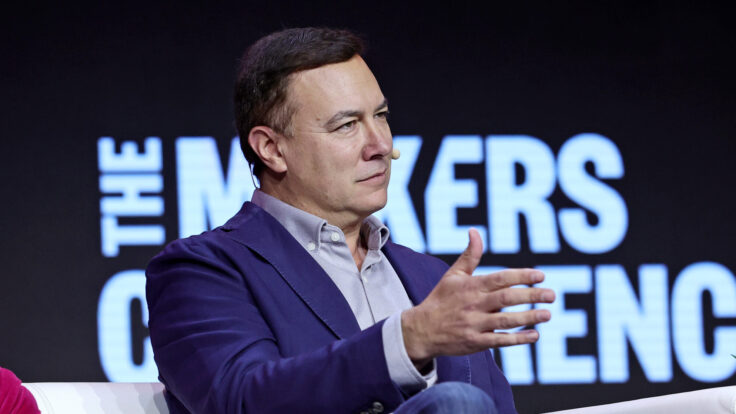
Iger now seems to be leaning heavily on Mayer as a trebuchet to beat back against all his various problems: I am told by sources familiar that Mayer is working closely with leaders across the company, including entertainment co-chairs Dana Walden and Alan Bergman; ESPN chairman Jimmy Pitaro; and even the India team that oversees Hotstar. Mayer is, in many ways, fully embedded in the company once again, even though his own Candle Media is ostensibly a minor rival. (Again, I have no idea why the Blackstone guys are ok with this arrangement.)
At times like these, deal talk tends to hit a fever pitch. A few weeks ago, I noted that Disney’s willingness to divest its television networks could open the door to an Apple acquisition—a perennial fever dream given Iger’s own assessment that, if Steve Jobs were still alive, such a deal might have already taken place. Earlier this week, in a lengthy deep dive into the Iger-Chapek succession drama (well worth your time), CNBC’s Alex Sherman reported that “more than a dozen past and present Disney executives” believe “Iger’s desired end game is to stay as C.E.O. for as long as possible and then sell the company to Apple.”
Not to put too fine a point on it, but that’s an awful lot of executives who seem to have the same idea about where Iger wants this to end up. Of course, what really matters in that equation is what Apple wants. Maybe Iger still has the power to charm them into a deal, but also maybe not. Apple seems to have entered the streaming business gingerly, and may prefer to avoid Disney’s costly mistakes rather than absorb them. It’s also still an innovation factory, hardly known for M&A (outside Beats and some smaller deals)—and it sure is hard to see how a division like parks, which is so core to Disney, might fit in the equation.
But the Apple fixation, in and of itself, may illuminate the larger challenge—that deal might have made sense a decade ago, but no longer. Alas, all the tools Iger so brilliantly deployed in his first era seem woefully ineffective in his second. Indeed, in the everything on the table era, there isn’t all that much on the actual table. |
|
|
|
| FOUR STORIES WE’RE TALKING ABOUT |
|
|
|

|
 |
|
|
|
Need help? Review our FAQs
page or contact
us for assistance. For brand partnerships, email ads@puck.news.
|
|
You received this email because you signed up to receive emails from Puck, or as part of your Puck account associated with . To stop receiving this newsletter and/or manage all your email preferences, click here.
|
|
Puck is published by Heat Media LLC. 227 W 17th St New York, NY 10011.
|
|
|
|