Welcome back to The Varsity, our thrice-weekly private email on all the egos who run the sports business and the deals they consummate. I’ll be out east, as those insufferable people say, next week to partake in BofA Securities’ annual and excellent Media in Montauk event, organized by the incomparable Jessica Reif Ehrlich. Say hi if you’re stopping by or see Marchand in the dunes trying to crawl his way in. ( Andrew, it’s almost sancerre o’clock. I don’t want to have to break another bell pull!)
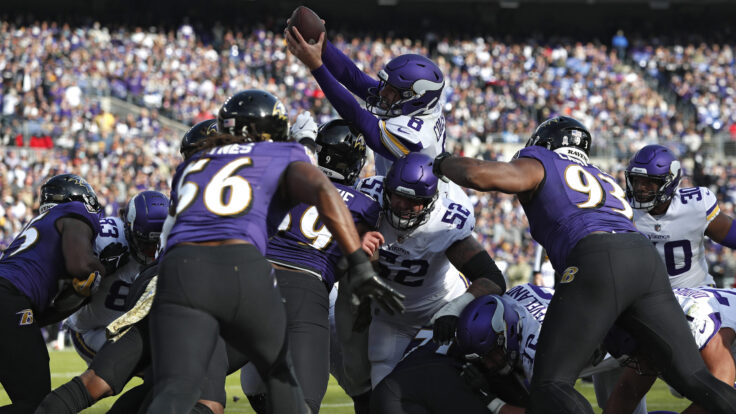
🚨 Pod alert!: NFL commissioner Roger Goodell enjoys the same sort of iron-fisted omnipotence that Pete Rozelle accumulated during his epic 30-year run, which is why it’s surprising that his move to ban the appallingly named Tush Push failed to gain enough support with owners. ESPN’s Seth Wickersham joined yesterday’s Varsity podcast to describe the politics around the rule— Jeffrey Lurie’s filibuster, Jed York’s frustration, etcetera. And make sure to listen to this weekend’s episode, which features American tennis player Chris Eubanks, who went from playing in the French Open qualifiers to the TNT Sports studio. He’s been a fixture of the coverage this week from Roland-Garros. Chris has a unique perspective about the state of tennis, and how it can grow in the States.
In tonight’s issue: News about plans to expand the NCAA men’s basketball tournament; the future of Inside the NFL; Gerry Cardinale’s R.S.N. plan; Goodell’s contract; and MLB’s bet on women’s sports. Plus, what should we make of the numbers from NASCAR’s first race on Amazon?
|
Player of the Week: Tim Kiely
|
|
The greatest studio show in sports will sign off for good tonight—if the Pacers can manage to close out the Knicks at the Garden. (I know… I know…) ESPN will carry Inside the NBA next season, and the show will still be produced by TNT Sports, and will still star Chuck, Shaq, Kenny, and Ernie—but does anyone think it will have the same feel as TNT’s version? Chuck and Shaq get the headlines, but producer Tim Kiely’s vision is what made this the antithesis of a traditional studio show. Remember, Inside has no teleprompters, but does have hosts who treat the camera like an inconvenience and can straddle the line between hijinks and serious topics. The show was a revelation when it debuted—and while all involved hope that it will transition gracefully to its new home, few things ever do. But at least Kiely will still be shepherding the production.
|
Down to the J.V.: Cathy Engelbert
|
While the WNBA’s growth has intensified during the past couple of years, commissioner Cathy Engelbert has had a consistent message: Sure, Caitlin Clark is an historic talent, but the league also has other stars who deserve credit. Now we’ll get a chance to test that theory! Clark’s recent left quad strain will sideline her for about two weeks, allowing us to measure how big an impact she’s had on the league.
Alas, we’re already getting some worrisome signs. During the Fever’s first game without their star, last night in Baltimore, the secondary market crashed, with some tickets dropping to just $6 about an hour before the game. According to The Washington Post’s Dave Sheinin, “The announced attendance of 11,183 reflected tickets sold; the actual number of occupied seats was far fewer.” The Fever’s next three games appear to be following the same trend.
|
Down to the J.V. (Honorable Mention): Pat McAfee
|
John Mellencamp, once arguably the most famous Indianan, does not appear to be a fan of the current reigning champ, Pat McAfee. McAfee’s enthusiasm during the Pacers’ playoff run has been considered a positive for a market in need of star power, but his singular personality has a generational appeal—and turns off members of other age cohorts. (See also: Nick Saban’s face during certain moments on Game Day.)
|
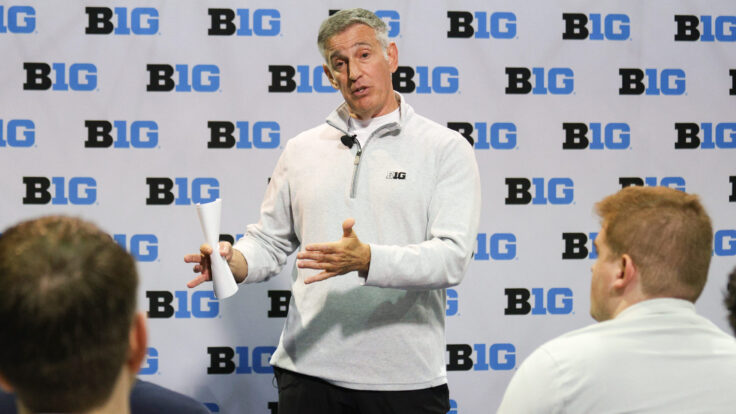
- NCAA expansion math: NCAA president Charlie Baker made headlines at the Big 12 conference’s meetings this week when he said that he’s been in talks with CBS Sports and TNT Sports about expanding the NCAA Men’s Basketball Tournament from 68 to 72—or even 76—teams as soon as next season. But here’s the issue: Any expansion would situate more games on the opening two days of the tournament—the first Tuesday and Wednesday—when CBS or TNT Sports are already carrying the play-in games. A significant increase in rights fees based on a handful of early-round games is fanciful, too: CBS and TNT Sports, which hold tournament rights through 2032, are not contractually obligated to increase their rights fee if the tournament expands.
But… CBS and TNT Sports could agree to pay a higher fee if the NCAA modifies the way that they sell corporate sponsorships around the tournament, among other possible sweeteners. We’re still in the experimental, market-testing phase. This should all shake out in the next few months.
- A new home for ‘Inside the NFL’: Remember the NFL Films–produced highlight show Inside the NFL, whose hosts last season included Bill Belichick, Ryan Clark, Chad Johnson, and Chris Long? The show had a three-decade run on HBO before moving to Showtime in 2008 for 13 years, then to Paramount+ for a few seasons, and has spent the last two years on The CW. Well, it’s on the move again. Sources have told me that The CW opted not to renew the show for the upcoming season.
Obviously, the market for this kind of studio show is tight—ESPN, FS1, and NFL Network produce a glut of NFL content every fall, and a new generation is increasingly gravitating toward user-generated highlight/commentary content on YouTube and TikTok. Still, I’m told that the league has already opened talks with several interested parties, though no announcement is imminent. Media companies that want to curry favor with the league will certainly kick the tires, and streamers have shown they’re open to NFL-branded content. The league is also shopping rights to the NFL Draft beginning next year, and has been talking with ESPN about some sort of arrangement regarding NFL Media.
- Gerry Cardinale’s R.S.N. Venn diagram: RedBird Capital holds ownership stakes in both NESN and YES Network—the regional sports networks that carry the Red Sox and Yankees, respectively—so the business takes notice when its founder, Gerry Cardinale, floats a potential R.S.N. solution. Speaking to CNBC’s Alex Sherman, Cardinale said that MLB’s most popular teams (Yanks, Sox, Dodgers, Cubs…) should anchor a new, centralized media company that would control those teams’ local rights. “The challenge baseball always has is that there's a subtle tension between the big markets and the small markets. They both need each other,” said Cardinale. “You’ll see a comprehensive restructuring of the economics around baseball in total. Part of that will be the media rights, and the way it’s distributed. Part of it is going to be revenue sharing. And part of it’s going to be the relationship with the players. Everybody needs to Venn diagram themselves and have a seat at the table in figuring this out together. That’s the story of the new world.”
As regular readers of The Varsity know, MLB wants to pool all local media rights at the league level and create a package to sell to a streamer like Amazon Prime, YouTube, or ESPN’s new D.T.C. service. While baseball executives know they’d have to make concessions to persuade big-market clubs to join, they probably haven’t given much thought to the idea that the teams could be anchor tenants of a new media company.
- Roger’s contract: Even though Roger Goodell has a few years left on his reported $64 million-a-year contract—yes, a lot of that is bonuses—it’s widely believed that the commish is on the cusp of signing an extension. In fact, there was speculation over whether NFL owners would vote on his extension during last week’s meeting in Minnesota. (No vote was taken.) On yesterday’s Varsity podcast, I asked ESPN’s Seth Wickersham what, if anything, we should read into the absence of discussion on the topic last week.Wickersham reiterated that an extension is certain, but owners want Goodell to focus on a succession plan. “Owners would like to have a better sense of the bench,” Wickersham told me, noting that talented (and ambitious) executives have left the league because Goodell is so entrenched in his position. (For that kind of cash, you would be, too.) “Owners look at the role of commissioner as similar to switching from an iPhone to a Samsung. Do the pictures transfer? Where does my music go? Do I have to redo all this formatting? At the end of the day, they like to stick with the thing that they know. Roger’s done a good job as commissioner for the owners.”
- MLB’s bet on women’s sports: The Athletes Unlimited Softball League season starts next week, its first following MLB’s acquisition of around 20 percent of the business for eight figures. MLB is copying the blueprint for women’s sports that the NBA developed nearly 30 years ago, and Rob Manfred has pointed to the WNBA’s stability as a goal in numerous interviews. Former Marlins general manager Kim Ng has been installed as league commissioner, and MLB’s public support of the league—on top of its media deal with ESPN—gives the AUSL a good shot at succeeding. Given the ramped-up interest in women’s sports, not to mention all the P.E. money sloshing around, AUSL’s growth trajectory should be much steeper than the WNBA’s multidecade climb. The season kicks off with four teams, each playing 24 games in 12 cities. ESPN and MLB Network will carry all the games on linear TV.
|
|
|
|
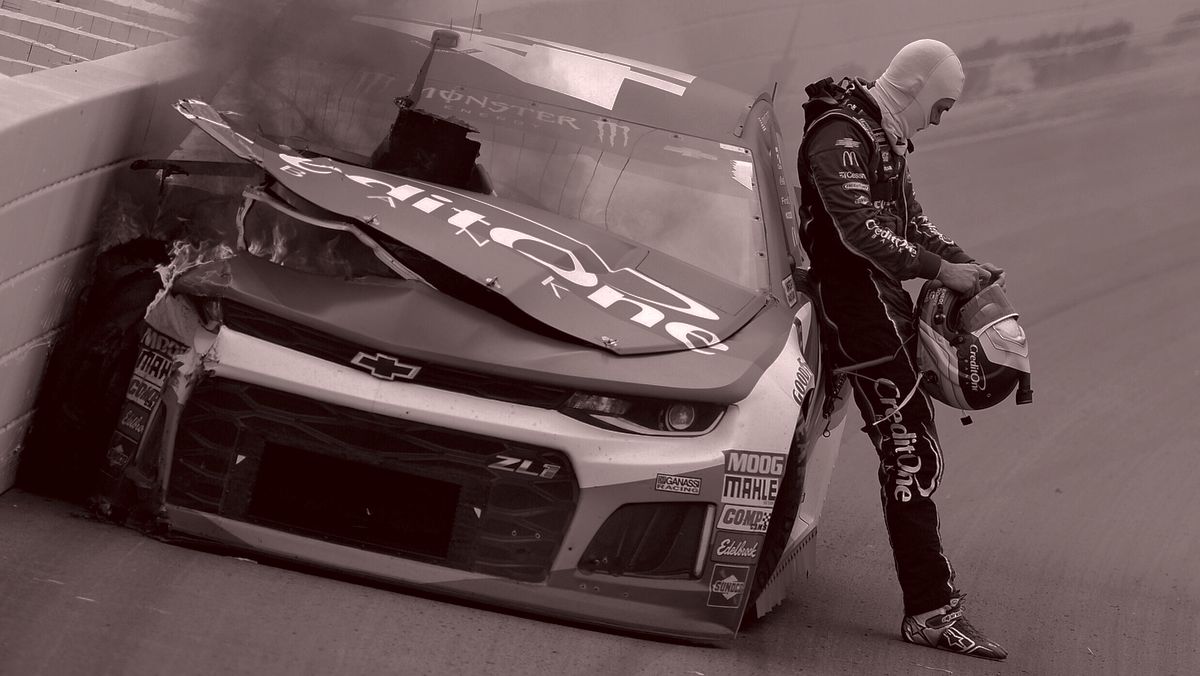
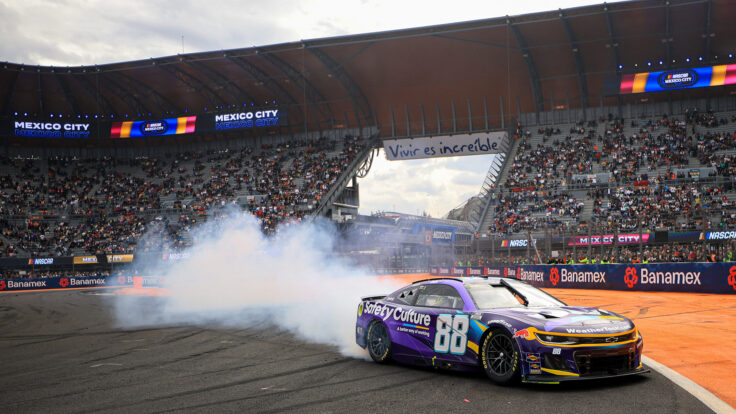
Amazon streamed its first NASCAR race over the weekend, drawing fewer, but more youthful, viewers than last year. Is this just a speed bump on the way to comprehensive live sports streaming? As one TV exec said, “Look, the fact is, there’s still a big moat between streaming and broadcast.”
|
|
|
Way back in 2001, a little cable channel called ESPN outbid NBC by $300 million to pick up rights to the NBA. Then-NBA commissioner David Stern decided to sacrifice the bigger audiences on broadcast TV for the guaranteed money and younger viewers on cable. It was one of the great masterstrokes of the Stern era, and a harbinger of the sports-on-cable era. A quarter-century later, leagues face a version of the same choice: Should they hitch their wagons to younger but smaller streamers, or stick with the remaining (and declining) mass audiences on broadcast?
So far, most of the larger leagues have implemented the ass-covering strategy of splitting their rights between broadcast and streaming. NASCAR, more than most, has truly leaned into this formula—cutting $1.1 billion in annual deals with outlets spanning broadcast (Fox and NBC), cable (TNT Sports), and streaming (Amazon). The industry has abounded with questions ever since. Would audiences port over? Would it lead to mass confusion? Did any of it matter amid the irreversible death throes of cable and linear?
Anyway, that’s why so many executives were interested in the numbers from NASCAR’s first streaming race last weekend. Amazon Prime reported an average-minute audience of 2.72 million viewers for the Coke 600 in Charlotte—a figure well below broadcast averages, and on par with cable. Last year, Fox had 3.1 million viewers on its broadcast channel for the same race. (That race was also cut short by rain, resulting in lower-than-expected viewership.) In 2022, the last time the race was not afflicted by weather delays, Fox’s audience was 3.9 million.
Amazon’s spin is that its NASCAR audience was about six years younger on average than Fox’s—a spry 56 years versus 62 on linear TV. (Senior Fox Sports executive Mike Mulvihill pushed back, posting on X, “It’s easy to look younger when you lose 5 older people for every 1 younger viewer you gain.”) “Look, the fact is, there’s still a big moat between streaming and broadcast,” another TV executive told me. “It will narrow over time, but it’s still pretty big.”
The Netflix Christmas NFL games last year produced big audiences—24.3 million viewers for the late-afternoon Ravens-Texans contest—but were still down more than 20 percent from 2023, when those Christmas games aired on broadcast. That aligns with current thinking among TV executives, who estimate that big events lose around 20 percent of their audience when they move to streaming. The question is what happens to the more casual events, like a NASCAR race in mid-May.
|
|
When NASCAR considered streaming five midseason races, its executives chose to view its cable TV ratings, rather than broadcast, as the bellwether. And by that measure, last weekend’s Coke 600 was a hit—the race’s 2.7 million viewers was 25 percent higher than NASCAR’s 2024 cable average. “The way we thought about the Amazon portion of the season, both when we were putting our media rights agreements together in 2023, and then going into the 2025 season, was, if we got to a cable number over time, we would’ve been happy,” NASCAR’s chief media and revenue officer, Brian Herbst, told me. “It’s down from last year’s Fox broadcast number. But to exceed our cable average in the first-ever streaming race in the history of the sport, we are pretty encouraged.”
NASCAR still views broadcast TV as its biggest megaphone, which is why the Daytona 500 and championship races will remain on broadcast through at least 2031, when its media rights deals with Fox, NBC, TNT Sports, The CW, and Amazon end. But the Amazon numbers, in NASCAR’s opinion, were
particularly encouraging because the sport was essentially asking its fans to alter their viewing habits. “This was a first test for our fan base in terms of their loyalty and willingness to shift over to a streaming model,” Herbst said. Of course, NASCAR also knows which way the wind is blowing: Amazon will grow while the others eventually fade. Starting from a solid base with a top-flight streaming partner is a good problem to have.
Amazon’s younger audience is another feather in NASCAR’s cap. According to Herbst, the 18-to-34, 18-to-49, and 18-to-54 demos all posted the sport’s biggest numbers outside of broadcast TV. “It’s the highest level we’ve seen for each one of those demos since at least 2022,” Herbst said. Amazon also offers some pre- and post-race advantages because their studio shows aren’t constrained by broadcast time slots.
Last weekend, Amazon’s post-race show ran until 12:20 a.m. ET, and averaged more than a million viewers after 11 p.m. “The numbers that we receive in a typical broadcast weekend, they’re usually pretty easy to predict because it’s a very dependable fan base that has shifted from broadcast to cable,” Herbst said. “Now, for the first time, we’re seeing that same fan base shift from cable to streaming.”
|
On Justin Connolly’s move from Disney to YouTube: “I get it from both sides. On Connolly’s side, it’s a huge job with a great future, and a lot of $$. On Disney’s side, the company just stepped up with a new contract after Connolly’s dalliance with NBC Sports. Disney is in the middle of Comcast talks, about to launch a direct-to-consumer service, and then has to negotiate a YouTube TV deal, of all things. The timing really puts Disney in a squeeze. And Google/YouTube doesn’t give a damn about breaking glass.” — A media executive
More on Connolly’s move: “YouTube TV has a precarious summer ahead. When YouTube TV raised prices shortly after the Paramount carriage renewal, it offered many subscribers a six-month extension of the previous monthly rate as a retention tactic. Those $10 per month retention offers begin to expire during June and July billing cycles, right before the reported renewal with Disney/ABC/ESPN this fall. My assumption is the Disney/YouTube TV deal is similar to what Spectrum dealt with, where the agreement expires on the kickoff to Monday Night Football and college football season.” — A Varsity subscriber
On YouTube’s sports ambitions: “Why would YouTube pay for a single NFL game? To get more people to install/set up/use the YouTube app on their TVs. Many people do already, but there’s always more out there.” — A Varsity subscriber via X
On CFP seeding: “You wrote that Ohio State would have had a bye in January if CFP’s new seeding format had been in place. Penn State and Texas would have had byes. Not OSU.” — A Varsity subscriber
|
|
Have a great weekend,
John
|
|
|
|
Puck founding partner Matt Belloni takes you inside the business of Hollywood, using exclusive reporting and insight to explain the backstories on everything from Marvel movies to the streaming wars.
|
|
|
|
Ace media reporter Dylan Byers brings readers into the C-suite as he chronicles the biggest stories in the industry: the future of cable news in the streaming era, the transformation of legacy publishers, the tech giants remaking the market, and all the egos involved.
|
|
|
Need help? Review our FAQ page or contact us for assistance. For brand partnerships, email ads@puck.news.
You received this email because you signed up to receive emails from Puck, or as part of your Puck account associated with . To stop receiving this newsletter and/or manage all your email preferences, click here.
|
|
Puck is published by Heat Media LLC. 107 Greenwich St, New York, NY 10006
|
|
|
|