Welcome back to The Varsity. I’m John Ourand, still basking on the
Delaware shoreline. Yesterday afternoon, I ventured to Dewey Beach for a beer with Burke Magnus, ESPN’s president of content. We met at The Starboard, where one of the most popular menu items is the Scott Van Melt—a double-decker grilled cheese club sandwich. (If you must know, we opted for the brisket nachos instead.)
Of note: The Grinfuckers are back for another year of Puck’s fantasy football league. Yes, that’s the name of the team I run with Puck’s
engineering guru Phil Roth—and, yes, at Puck we only hire engineers named after canonical American authors. And, yes, we drafted the pride of Gonzaga High: Caleb Williams. We don’t need to win. We just need to finish better than the teams run by Jon Kelly & Alex Bigler and Dylan Byers & Lauren Sherman.
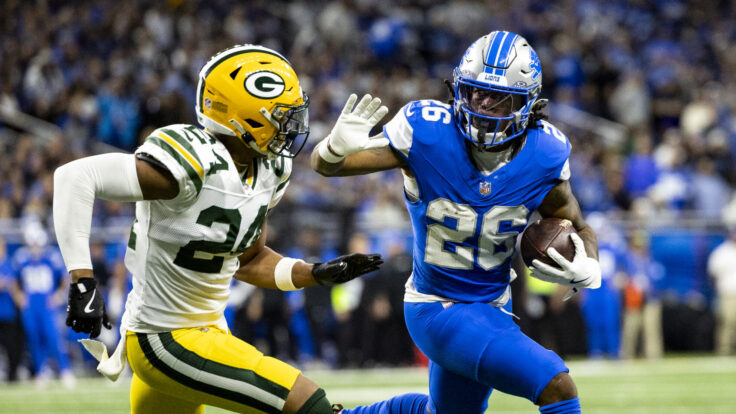
Pod alert: We’re officially one week away from the NFL season opener,
which prompted me to get Mike Tirico to join the Varsity podcast this weekend. Mike, of course, is NBC’s top NFL voice and will call his first Super Bowl this February from Santa Clara. That will be around the same time that Tirico will be leading coverage of the Winter Olympics for the network. Oh, and he’s NBC’s top NBA voice, too. Also, make sure you listen to yesterday’s pod—a
vintage performance from Mike “F’n” Florio. |
Player of
the Week: Lee Corso
|
In all my years of covering ESPN, I have yet to come across anyone with a negative thing
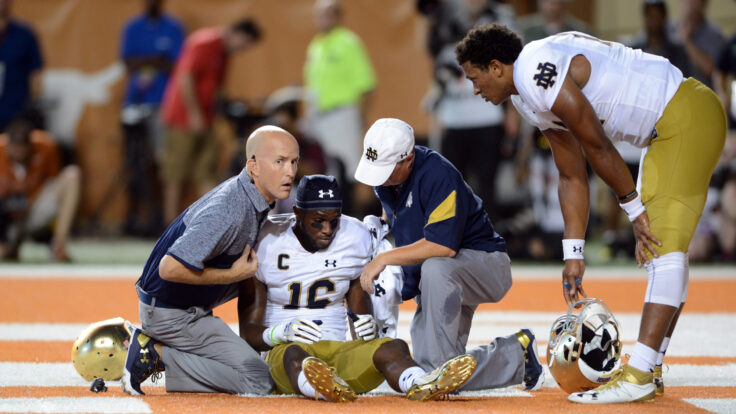
to say about Lee Corso, the Dick Vitale–like figure who parlayed a solid college coaching career into an extraordinary, and heretofore unprecedented, second act as a beloved broadcaster. ESPN isn’t exactly a Montessori school, and yet on-air talent, behind the scenes producers, rank-and-file office drones, and top executives have all authentically praised the actual guy as the same grateful and avuncular swell that he plays on TV. Corso wraps up his
38-year College GameDay run in Columbus on Saturday, and it will truly mark the end of an era. |
Down to
the J.V.: Mat Ishbia
|
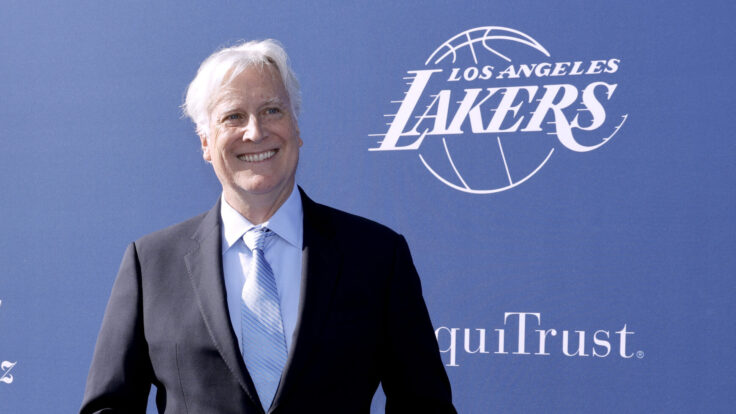
Mat Ishbia’s two-year run as the Phoenix Suns owner has been marked by a series
of botched moves and embarrassments. See, e.g.: the short-lived Kevin Durant era; the predictably ill-advised Bradley Beal deal; and the time that Ishbia, once a benchwarmer at Michigan State, got into it with Jokić during a playoff game (bad enough, but have you seen his brothers?). Bill Simmons is fond of pointing out Ishbia’s terminal case of “New Owner Syndrome,” the psychological affliction that leads narcissistic billionaires to believe that their past experience in tech or private equity or real estate (or, in Ishbia’s case, the mortgage-lending business) means they have nothing to learn about running a professional sports franchise—and Bill should know: He coined the term!
Now ESPN has
reported that two Suns minority owners—Kisco Senior Living C.E.O. Andy Kohlberg and Kent Circle Partners president Scott Seldin—have sued Ishbia for not sharing internal information about the team. This marks the sixth time the Suns have been sued since November. The other five suits
have come from current or former employees. |
|
|
A MESSAGE FROM OUR SPONSOR |
PERFORMANCE UNLEASHED
Agile, powerful, iconic. The Range Rover Sport is a dynamic SUV with a distinct
take on sporting luxury.
EXPLORE |
|
|
- Peacock’s new Channels strategy: Amazon’s deal to make the ad-free version of Peacock available on Prime Video Channels, announced earlier today, offers a blueprint for how the NBC-owned streaming service plans to grow its subscriber base in advance of its new NBA deal. NBC has, notably, shied away from negotiating these types of deals with Amazon—or anyone else, for that matter. But as Amazon’s strategy evolved toward a hybrid model of direct-to-consumer apps
and channels, Peacock decided that the time was right. (Indeed, the streamer has every incentive to grow its 41 million subscriber base.) Today’s announcement also included an extension of the deal that makes the Peacock app available on Fire TV—a practical but consequential discovery tactic. It wouldn’t be a stretch to see NBC strike similar agreements with companies like Roku, Google, Apple, etcetera.
I assume this move foreshadows other Peacock bundling deals, possibly similar to the
arrangement that Fox and ESPN recently announced regarding their direct-to-consumer services. Though it’s still too early to determine which streamers would garner the most interest from Peacock. Sports, obviously, would be the anchor behind any partnership—especially considering the trio of tentpole events that NBC will produce at the start of next season: the Super Bowl, the Winter Olympics, and the NBA All-Star Game. - The next NFL commissioner: Yes,
NFL commissioner Roger Goodell’s current contract runs until 2027. And yes, it seems almost certain that he will sign yet another extension that could stretch well into the 2030s. Amazingly, the NFL has had only three commissioners during the last 65 years: Pete Rozelle, Paul Tagliabue, and now Goodell—a remarkable chain of organizational continuity.
Naturally, there’s always palace intrigue around who could eventually
succeed him. Brian Rolapp, who left the NFL to become PGA Tour’s C.E.O. in June, had been viewed as the most likely internal candidate. On this week’s Varsity podcast, NBC’s Mike Florio suggested that Rolapp’s age—he’s now 53— could work against him, as owners would likely look for a younger executive when Goodell finally hangs up his cleats.
Florio also surmised that the league’s extraordinary financial growth—and potential for yet more growth—will lead the
membership, a.k.a. the team owners, to seek a real business operator, rather than a league operator. “Given the growth of the NFL’s business, at some point, the commissioner is going to be someone from the C.E.O. world,” Florio said. “Then there will be another person who’s the football czar, who in the past would have been the commissioner. I don’t know whose name ends up on the football under those circumstances. Maybe they put both. But I think that the owners are gonna realize at
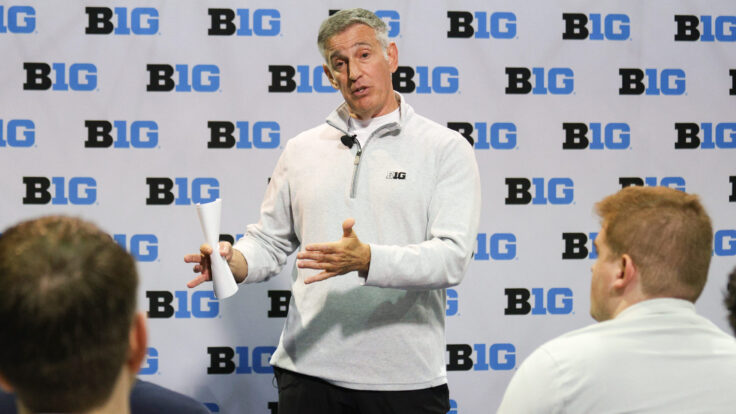
some point the idea of a homegrown, career league office employee, who navigates the structure and puts him or herself in position to be the commissioner, doesn’t work given the many different businesses the NFL is in.” - Previewing more changes to come in college: Penn State opens its football schedule with three home games against terrible teams: Nevada, Florida International, and Villanova. In fact, the Nittany Lions are a 44-point favorite against
Nevada this Saturday. And Penn State’s not alone: This weekend, Marshall visits Georgia, and Georgia State goes to Ole Miss. But as college football continues to professionalize, these kinds of early-season cupcakes will likely become a thing of the past, Fox Sports analyst Joel Klatt said on a recent Varsity podcast
appearance.
Schools now create their own nonconference schedules, and the incentives have changed. Rather than paying these cupcake teams to come into their stadiums and get beaten up, they can challenge evenly matched teams from other conferences and bundle the media rights. Also, as the College Football Playoff appears likely to keep adding more teams, early season losses are no longer such a blight. What would happen if the conferences negotiated early-season clashes with one
another, all in the name of bundled TV rights? “All of a sudden, the non-league inventory would explode, with 20, 30 games that can generate 5 million to 7 million viewers,” Klatt told me. “I could sell that package for a billion-plus dollars annually.” - Remembering ESPN’s old days: Laura Gentile, a former top ESPN marketing executive who spent 20 years in Bristol, recently took to the digital pages of
Sportico to lament the NFL’s new 10 percent ownership stake in the business. According to Gentile, ESPN has lost its soul. “ESPN was a great American success story. Sprung from a dirt lot in central Connecticut, it was built on the boundless energy of sports fanatics who doubled as employees, growing into a distinctly
focused institution left alone to serve millions of fellow fans night and day and generate billions in profits,” she wrote. “Now ESPN is in the increasingly untenable position of serving two mightier masters: the NFL and The Walt Disney Company. It will become ever more difficult to remain objective—never mind critical, irreverent or funny.”
There’s been a fair amount of hand-wringing about how this new equity deal could imperil the network’s objectivity. But the truth is that ESPN has
long been financial partners with the very leagues it covers. The larger issue here, of course, is that ESPN is no longer a startup, as Gentile remembers it, or an indomitable force, as it was during the ’90s and aughts. Now, it’s a very large and very consequential business in a rapidly transforming industry that often lets sentimentality obfuscate business objectives. - People moves: This
WaPo story on how Colts owner Jim Irsay relapsed, with the help of a doctor who prescribed him opioids and ketamine, during the last two years of his life is tragic, and worth reading. … Doris Burke is out, and Tim Legler is in, for ESPN’s top NBA booth. Burke will now work out of ESPN’s number
two booth with Dave Pasch, while Legler will join the broadcast team of Mike Breen, Richard Jefferson, and Lisa Salters. … I had to laugh at Dave Portnoy’s reaction to the news that ESPN had hired two former Barstool Sports personalities, Taylor Lewan and Will Compton, for its Get Up morning show: “ESPN is officially Barstool Jr.,” he
posted on X. … And yes, that was the NFL’s vice president of communications, Brian McCarthy, calling on “Mike F. Florio” during a Wednesday presser following an owners’ meeting. Thanks for reading, Brian.
|
|
|
YouTube and Fox reached a deal Thursday night. But their unusual carriage spat
had YouTube asking Fox to treat it like Amazon, while Fox insisted the real comp should be Charter or DirecTV. The stakes of this battle could impact YouTube TV’s coming deals with NBCU and Disney, too. |
|
|
In some respects, this week’s carriage battle between YouTube TV and Fox was just like every other
dispute from the past three decades where a distributor and programmer beef over the cost and tiering of linear television channels. And, despite public rancor from both sides, YouTube and Fox were able to reach a deal Thursday night. That means that Fox, FS1 and Fox News will remain on YouTube TV without disruption.
But in other respects, this spat was sui generis to these strange times. First, there was F.C.C. chair Brendan Carr
exhorting YouTube’s owners from the sidelines on X to “Get a deal done Google!” And there was a more material, distinctly modern twist to these negotiations.
In a nutshell, YouTube TV wanted to make Fox’s new streaming service available within its environment—ingesting Fox One, in the argot of the business. This is a simulacrum of Amazon’s hugely
successful Channels structure, which lets viewers subscribe to other services through Amazon Prime for a rev split. As with its other business units, Amazon created Channels to overindex on convenience in exchange for hoovering up all the user data. |
|
|
A MESSAGE FROM OUR SPONSOR |
PERFORMANCE UNLEASHED
Agile, powerful, iconic. The Range Rover Sport is a dynamic SUV with a distinct
take on sporting luxury.
EXPLORE |
|
|
We don’t know yet how this part of the negotiations netted out between Fox and YouTube—the ink on
the deal was still drying late Thursday night. But it quietly became an important part of these negotiations watched by every other company in the business.
Legacy media players naturally don’t love cutting Channels deals for all the obvious reasons. And the networks counter that the comp is all wrong, too: YouTube TV, with its 10 million subscribers, is not a streamer like Prime Video, but rather a distributor like Charter or DirecTV—and the network executives generally believe
that its deals should follow the paradigm set by its distribution peers. And Charter has created the blueprint for these deals in recent years in a fairly compliant manner.
Charter, after all, became the first cable company to allow access to these apps for authenticated subscribers—a lightweight system that allows its customers to access the platforms conveniently and, critically, keep the user data within its digital walls. But Charter is a $35 billion legacy distributor trying to find
creative ways to operate with partners in an omnichannel world. And YouTube, as you may have heard, is currently the most powerful force in media—an epiphany that dawned embarrassingly late on the industry—and a prized unit of a $2.5 trillion behemoth.
Industry executives viewed the outcome of this negotiation as profoundly important for the legacy media business. YouTube TV’s deals with NBCUniversal and Disney also end this fall. Any deal YouTube TV makes with Fox will
almost certainly set the precedent for those negotiations. Exacerbating matters further is the fact that these renewals will occur right in the middle of the NFL and college football seasons—a calendar twist that confers some extra leverage to the mediacos and nearly assures that everyone will be on their worst behavior. Distributors are naturally loath to go dark during football season, which may explain why YouTube TV and Fox were able to reach a deal before Saturday’s Texas-Ohio State game on
Fox. |
The Channels concept has become increasingly common and unavoidable for legacy
players—particularly as Roku, Apple, and Amazon have become much more focused on developing those platforms on their own. Despite its Channels beef with YouTube TV, Fox struck a deal with Prime Video Channels last week. Today, NBC announced a similar deal, albeit for Peacock’s ad-free version. For some market participants, access to more users may be a necessary tradeoff to forgoing some data.
Sources have said that YouTube TV has discussed launching a broadcast-and-sports tier, and
there’s debate around what networks will be included. Fox, of course, comes to market with a much smaller group of channels than other media companies: a broadcast channel, FS1, and Fox News. If the broadcast channel goes into that tier, Fox will fight for Fox News to follow.
Football season conferred leverage for Fox, but the recently released Fox One service undercut that a bit. After all, if Fox went dark for college football games, YouTube TV subscribers could have downloaded the app
and buy their own subscription. (YouTube TV said that it would have offered a $10 credit if Fox goes dark. Fox One costs $20 per month. That point is moot now.)
It’s really no surprise that this dispute was resolved. They always get resolved. But the underlying issues of these negotiations have the potential to shape the pay-TV world for years to come. And, frankly, its sheer complexity is the latest sign of how the vampire squid of the platforms has, and will continue to, wrap itself
around legacy media. |
On WWE’s media approach: “WWE has effectively emulated the NFL’s U.S.
distribution approach. WWE is now producing and distributing its own content on NBCUniversal’s Peacock platform for Saturday night’s Main Event, Nexstar for The CW’s NXT, Versant for USA Sports’ SmackDown!, Disney for ESPN Unlimited’s Premium Live Events, Fox for Tubi’s Evolve show, A+E Global Media for A&E’s WWE LFG and WWE Biography docs, Google for YouTube special events, and Netflix for Raw. When considering the recent UFC
agreement with Paramount, who isn’t doing business with TKO Group right now? Impressive.” —An observer, but not a shareholder
On ESPN’s MLB deal: “You do not need to be a subscriber to ESPN to access MLB.TV’s out-of-market product, but if you are a subscriber, it gives you more to watch on the app, helping ESPN in their goal of becoming the directory for sports. It also starts ESPN down the path of taking over the R.S.N. content. It has at least five teams next
season. How many more down the road?” —A finance executive
On ESPN and Fox’s D.T.C. offering: “I was interested to see the comments from distributors upset about ESPN bundling with Fox without having the same ‘skinny bundling’ opportunity. Any other feelings should be refocused on growing their broadband/mobile subscribers, since that’s where their growth/margin expansion lies. More than 15 years ago at Time Warner, we gladly would trade a broadband subscriber
for a video subscriber. And given the financials of the industry today, that fact hasn’t changed.” —A cable executive
On Puck’s Bethany Beach bureau: “Enjoy your time in Delaware. Get some Thrasher’s fries and Dogfish Head.” —A Varsity subscriber |
I am taking a break on Monday for Labor Day. See you on Tuesday.
John |
|
|
Finally, a media podcast about what’s actually happening in the media—not the oversanitized,
legal-and-standards-approved version you read online. Join Dylan Byers, Puck’s veteran media reporter, as he sits down with TV personalities, moguls, pundits, and industry executives for raw, honest, sometimes salacious conversations about the business of media and its biggest egos. New episodes publish every Tuesday and Friday. |
|
|
An essential, insider-friendly Hollywood tip sheet from Matthew Belloni, who spent 14 years in the trenches at The
Hollywood Reporter and five before that practicing entertainment law. What I’m Hearing also features veteran Hollywood journalist Kim Masters, as well as a special companion email from Eriq Gardner, focused on entertainment law, and weekly box office analysis from Scott Mendelson. |
|
|
Need help? Review our FAQ page or contact us for assistance. For brand partnerships, email ads@puck.news. You received this email because you signed up to receive emails from Puck, or as part of your Puck account associated with {{customer.email}}. To stop receiving this newsletter and/or manage all your email preferences, click here. |
Puck is published by Heat Media LLC. 107 Greenwich St, New York, NY 10006
|
|
|
|