Welcome back to The Varsity. I’m John Ourand, and I’m way
over-caffeinated following a week of late nights watching this epic World Series. In my view, Fox’s production has enhanced all of the on-field drama, from the broadcast booth to the camera angles. What a series!
In today’s issue: YouTube TV and Disney are staring down a deadline to reach a carriage deal tonight, while Fox Sports rakes in cash from this Series. Plus, news on Disney and Fubo, Comcast’s cord-cutting, and Lululemon. For the main event, I’m sharing my candid
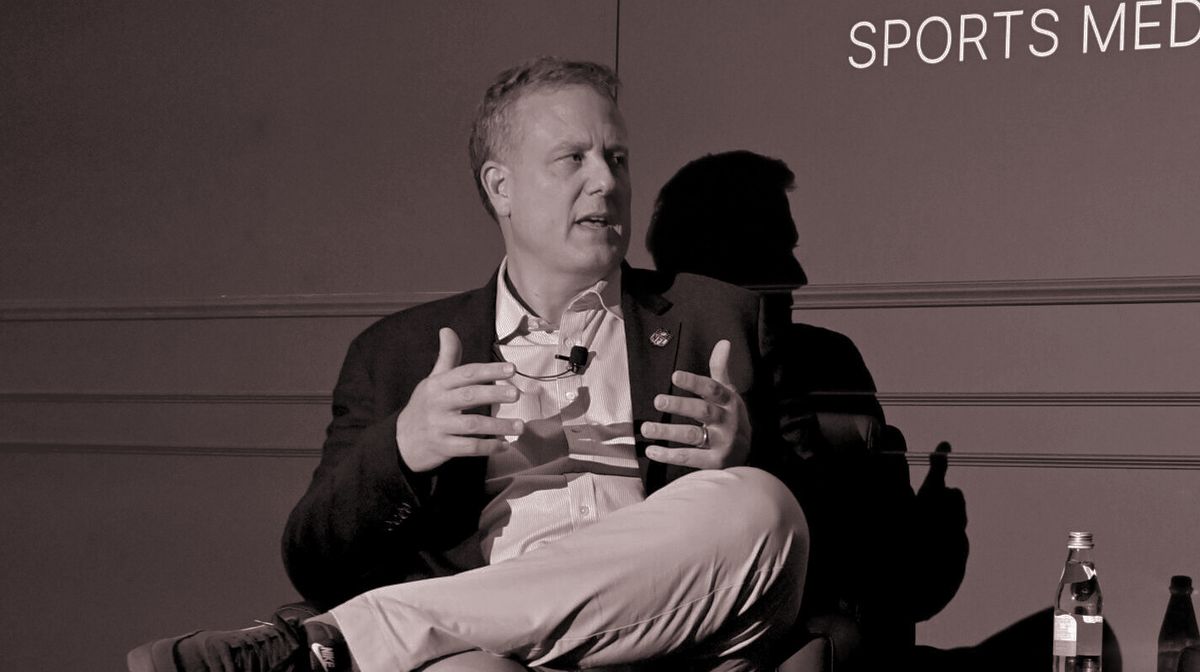
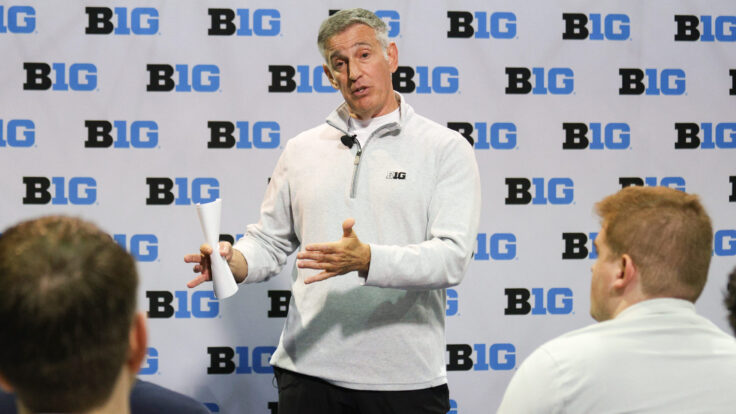
conversation with the NFL’s E.V.P. of media distribution, Hans Schroeder, who appeared at our recent In the Arena sports media conference.
🎧 Pod alert: Other than a few P.R.-approved statements, the legalized gambling business has stayed quiet in the week since Chauncey Billups, Terry Rozier, and Damon Jones were indicted on federal charges related to illegal sports betting and rigged poker games. So I was happy that Fanatics Betting & Gaming C.E.O. Matt King agreed to join The Varsity this weekend. We’ll talk about the NBA scandal, its potential effects on the business, and the path forward. Also, make sure to download yesterday’s pod: Jay Marine walked us through Amazon’s sports strategy and how that $20 billion NBA deal came
together.
One personal note, before we start. The sports business is a unique space where friendships seem to matter as much as financials. When I mentioned my mom’s passing in Monday’s private email, I was not surprised at all by the number of people who reached out to express their sympathy or share their own stories. It was heartwarming, and I just wanted to take a moment to express my sincere thanks.
Okay, now let’s get to it… |
Player
of the Week: Shohei Ohtani
|
Who cares that the Dodgers are down 3–2 to the Blue Jays in a World Series that’s headed back to
Toronto? (Dodgers fans notwithstanding.) Not only has Major League Baseball found a star who captivates even casual viewers, but he plays in one of its most important markets. Ohtani’s celebrity has helped give this World Series a buzz—and objectively good viewership—even with a Canadian team in the opposing dugout. Plus, now that the Series is guaranteed to last at least six games, it’s a boon for Fox Sports’s ad sales efforts. |
Down to the
J.V.: Tony Clark
|
The feds are investigating an MLBPA-owned youth baseball company called Players Way, according to a
blockbuster ESPN report from Don Van Natta and Jeff Passan, who cite a whistleblower complaint that names the players association’s executive director, Tony Clark. The inquiry appears to be an outgrowth of the Justice Department’s prior scrutiny of OneTeam Partners, which the
MLBPA co-founded with the NFLPA.
Here’s the most salient point: “Investigators also have asked witnesses about whistleblower allegations of excessive union spending on international and domestic trips for Clark and other senior union executives, the sources said.” Clark hasn’t been charged with a crime and has called the allegations “baseless.” But news of another federal investigation—especially with labor negotiations in the offing—is a terrible look. |
- Disney–YouTube TV deadline: Here’s what you need to know about tonight’s deadline for Disney’s carriage dispute with YouTube TV: The two sides aren’t fighting over YouTube ingesting ESPN content on its platform the way it did with NBC. And they aren’t fighting about giving YouTube TV the ability to offer skinny bundles. The dispute is all about price—and, as of a few days ago, the parties were still far apart.
The Journal’s Joe
Flint has a good primer on why price is such a big issue in these negotiations. “Larger distributors often can negotiate lower rates than what smaller pay-TV providers pay,” he wrote. “YouTube TV is already seeking rates similar to what bigger distributors Comcast and Charter pay.” If past is prologue, expect the two sides to
sign a short-term extension on Friday, with a full deal coming soon. Channels, after all, rarely go dark when disputes are over price. - Fox’s Game 3 ad conundrum: If you stayed up until 3 a.m. E.T. Monday night for the Dodgers’ thrilling 18-inning win, you probably noticed that every ad break from the 14th inning on—nearly two hours’ worth—was filled with Fox promos. I didn’t see even a single paid advertisement. Essentially, the network ran out of
ads by the 13th inning. In a nine-inning game that is won by the home team and features no pitching changes, national networks generally have room for 76 ad spots. Most games afford more inventory, of course—especially playoff games—so Fox goes into its World Series games with 108 and a half spots sold. When those 108 and a half spots were used up on Monday night, that was it. The cupboard was dry.
But rather than try to sell more ads in real time, Fox decided to cut the rating after
the 13th inning—at 12:30 a.m. on the East Coast. Even an all-time-classic World Series game loses viewers after midnight, and it wouldn’t have made financial sense for Fox to keep the game rated. Interestingly, Fox’s Mike Mulvihill noted that 8 million people were still watching at 2:45 a.m. ET, when Freddie Freeman hit his walk-off homer. “Remarkably more people were watching when Freeman ended it than were watching at first pitch,” Mulvihill posted on
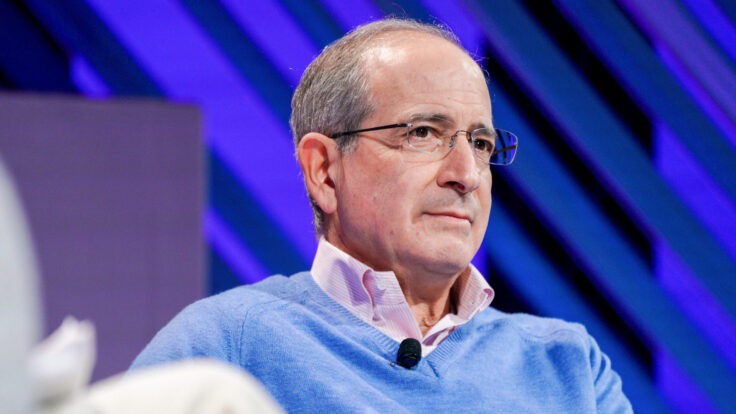
X. - Cord-cutter blues: The chatter surrounding Comcast’s Q3 earnings was mainly about Brian Roberts & Co.’s potential interest in Warner Bros. Discovery’s Streaming and Studios businesses, Peacock’s flat subscriber numbers (41 million), and Comcast’s 10th consecutive quarter of broadband losses. But the number I
focused on was 1.3 million—that’s how many video customers Comcast lost over the past year, down to 11.5 million from 12.8 million. Despite all the talk about the Great Rebundling, cord-cutting hasn’t slowed down.
To that end, it was instructive to see how streaming services Tubi and Fox One figured into Fox’s quarterly earnings, also released Thursday. “While linear television remains Fox’s lynchpin, Tubi’s momentum continues alongside newly launched Fox One. Tubi serves as a reliable
growth engine in engagement and advertising revenue,” MoffettNathanson’s Robert Fishman wrote in a report, which noted that Tubi was profitable for the first time this quarter after posting a 27 percent revenue jump. - Iger’s lucky day: Yesterday, my partner Eriq Gardner reported on a positive twist
in Disney’s pursuit of FuboTV, a deal that’s been on pause since April after the D.O.J. opened an inquiry into the deal. Fortunately for Iger, the pause is set to end while the government is shut down. “The D.O.J. issued a rare ‘second request’ for documents, placing the deal in a bucket of transactions subject to deeper scrutiny,” Eriq wrote. “The two sides then entered a voluntary timing agreement—effectively pressing pause on the closing. Under normal circumstances, the D.O.J. might have
sought another extension. But thanks to the standoff on Capitol Hill, many Antitrust Division staffers have been furloughed, meaning deadlines could lapse with regulators quite literally out of office. In short, Bob Iger got lucky.”
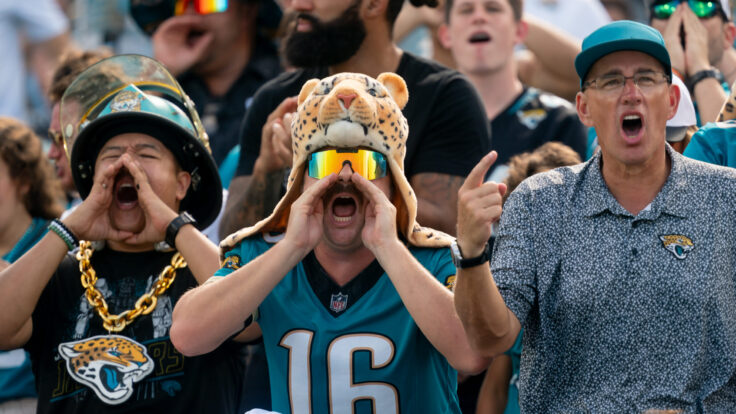
- Fashion’s NFL stimulus package: My colleague Sarah Shapiro recently broke down the NFL-fashion crossover, reporting that “Lululemon, which is in the midst of a 50 percent drop in its stock price year to date, is aiming to court a slice of the country’s 140 million NFL fans with new leggings and hoodies with NFL team logos, now available at
Fanatics and NFL.com. This partnership further illuminates the growing interest in football, particularly girls’ flag football. In a similar play, I’ve heard from an inside source that cashmere sweater maker Naadam’s new collab with the NFL is performing well.”
|
|
|
With more games in more markets airing with more partners than ever before, the
NFL is constantly seeking to maximize its rabid domestic audience while minting new fans abroad. Hans Schroeder, the league’s media distribution chief, explains how it’s all working, and where on Earth there’s still room for growth. |
|
|
As the NFL’s media landscape shifts faster than ever—from its continued foray into streaming to its
new stake in ESPN—few sports executives are juggling more change than Hans Schroeder, the NFL’s E.V.P. of media distribution. He’s steering the ship of the NFL’s domestic and international media rights—from billion-dollar broadcast deals to experimental (and uber-successful) partnerships with the likes of Netflix, Amazon, and YouTube.
At our recent In the Arena sports media conference in New York, Hans joined me onstage to discuss how the league is preparing for its next
round of media negotiations, what the streaming era portends for the Sunday model, why traditional broadcasters are still essential to their business model, how international games could evolve into the NFL’s next premium package, and much, much more. As always, this excerpt has been lightly edited for length and clarity. |
Early
Negotiation Chatter
|
John Ourand: A lot of new responsibilities fell to you after
Brian Rolapp left for the PGA Tour. How has your job changed?
Hans Schroeder: Increasingly, the nature of media is one where the learnings and evolutions away from linear to digital are applicable to any market in any place. We saw this with Netflix, we’ve seen this now with YouTube—for the first time, partners are looking for global rights, and that global aspect is bringing us together in a different way. At some point, we’ll be
entering the next phase of discussions and negotiations with our partners. We’ve been at the center of that, overseeing the deal side domestically, but now we’re really pulling in all the licensing we do across media, beyond just the live games. We have one central group thinking about how and where to deploy our rights across all media, all countries, everywhere. I think it’s a real opportunity to be more efficient going forward, and better align with the work we need to do to make
sure we have the best plan when we start deciding on what those future partnerships look like.
The rights go through 2032, and there’s an out in 2029. The commissioner has said he’s willing to go early, and the executives I’ve talked to say the same thing. Why aren’t we talking, like, tomorrow? Is there a possibility of that?
We’re always talking to our partners. To be clear—and maybe a little bit more precise with the
commissioner’s comments, because I think some of them got misconstrued—he said, It could be as early as next year. He didn’t give a definitive that it’ll happen. But from our perspective, we’re always ready whenever our partners want to talk. We’re happy to talk to them and engage, and we want to listen. We’re always smarter to hear what our partners and non-partners have to say. There’s a lot of interest in the NFL, and we’re incredibly fortunate about the place and position and
interest in our content. As we’ve seen over previous cycles, the more we can listen and be smarter about the landscape and potential opportunities, it’s going to let us have those conversations at the appropriate time, in the best way. So we have this marker out there, for after 2029, but there’s no need to wait for it. And I think we’ll be ready when the time comes.
With streamers like Netflix, Peacock, Paramount+, and the ESPN app, is there a new way to imagine the types of
packages and how you sell them?
Absolutely. The way it works now is, every game, all 272 regular season games, are free agents. They can go anywhere. As we’ve expanded—more Thursdays, more early games, more international games, late-season Saturdays—that flexibility to take every one of those 272 games and put it in its right home has been huge for us. You’ve seen the growth in viewership since we’ve done these new deals. Nobody really talks about
that, but flexibility is a huge driver for us. The whole idea of how we regionalize and distribute on Sunday afternoon is largely tied to how the broadcast infrastructure works. As we look out, does that stay, does that evolve with a more digital partner? I think there’s going to be a lot of different interest and opportunities for us. Broadcast is always going to be really critical for us, because it’s still so wide-reaching, but there’s going to be ways in which the platforms and interest we
have gives us different options to consider. |
Do you currently have enough games to create a new package with the international
rights?
That idea’s been floated around and it makes a lot of sense. There’s not another natural window to play games. We can’t play on Fridays and Saturdays from the second weekend in September through the second week in December because of the Sports Broadcasting Act. We want to continue becoming more of a global sport. That’s critically important to us. A lot of those time slots, particularly in Europe, fall into those early windows. Those
games also allow us to get into other parts of Asia, which typically don’t get games in great viewing hours. So [the international games] actually become primetime games in Asia, which we’re excited for.
You oversaw the deal that sold the NFL media assets to ESPN in exchange for 10 percent of the network. Why did you like that deal?
We all see the continued pressure on pay TV. For us, this was about how we make NFL Network stronger
going forward. This idea came to life alongside ESPN and their focus on launching ESPN Unlimited, which led to the opportunity to partner with them, add NFL Network into their portfolio of ESPN channels, and tap into the incredible production and investment that they make in NFL content—and then, through that, potentially add not only more distribution on pay TV, but also more distribution on digital. It was a win-win for all things. |
On MLB’s salary cap idea: “It feels like the baseball owners might be some of your good
sources, because you really came off as a complete shill for them on Peter Hamby’s The Powers That Be podcast. Baseball had more different champions than the three other sports over the last 20 years, yet you say it has the least parity.” —A podcast listener
A vote to send Manfred down to the J.V. this week: “Major
League Baseball has lost its mind. It’s trying to turn the World Series into the Super Bowl by having musical performances before the game with Pharrell and midgame with the Jonas Brothers. Baseball enthusiasts are not interested in this dumb sideshow. We love the purity of the sport. I hope they stop this nonsense.” —A Varsity subscriber |
Have a great weekend. See you Monday.
John
This issue was assembled with the help
of Curtis Rowser. |
|
|
Ace media reporter Dylan Byers brings readers into the C-suite as he chronicles the biggest stories in the industry:
the future of cable news in the streaming era, the transformation of legacy publishers, the tech giants remaking the market, and all the egos involved. |
|
|
Puck founding partner Matt Belloni takes you inside the business of Hollywood, using exclusive reporting and insight
to explain the backstories on everything from Marvel movies to the streaming wars. |
|
|
Need help? Review our FAQ page or contact us for assistance. For brand partnerships, email ads@puck.news. You received this email because you
signed up to receive emails from Puck, or as part of your Puck account associated with {{customer.email}}. To stop receiving this newsletter and/or manage all your email preferences, click here. |
Puck is published by Heat Media LLC. 107 Greenwich St., New York, NY 10006 |
|
|
|