Welcome back to The Varsity. I’m John Ourand, walking briskly out onto
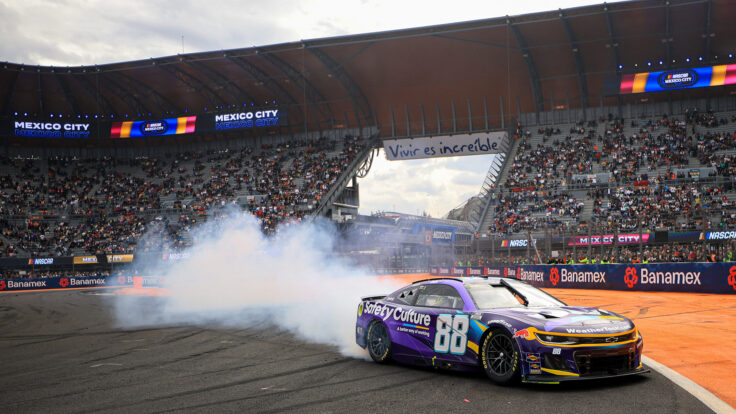
the tarmac for a flight to wine country, where I’m co-hosting a private dinner in Sonoma with NASCAR commissioner Steve Phelps ahead of the race on Sunday. While I’m there, I plan to record a Varsity podcast with Phelps, which will post next week.
Speaking of the pod, Matthew Berry returns this weekend to take us through how he persuaded LeBron, Jeff Shell, Gerry Cardinale, and
David Blitzer to invest in his company, Fantasy Life. Also, make sure you listen to yesterday’s pod: Puck’s new A.I. wizard, Ian Krietzberg, discussed those robo umps that everyone loves to hate, and got real about how much—and how little—A.I. will impact sports. (You really should sign up for Ian’s private email, The Hidden Layer, by
clicking here.)
Party scene: Alas, I didn’t make it up to New York for Tuesday night’s party honoring the second season of Quarterback on Netflix, hosted by Peyton Manning’s Omaha Productions. I hear that Netflix V.P. of sports Gabe Spitzer and NFL C.M.O. Tim Ellis were in the house, as well as
Anheuser-Busch’s Todd Allen, whose Bud Light is all over the show.
Okay, let’s get to it…
|
Player of
the Week: Gary Bettman
|
Negotiations between leagues and players unions almost never go smoothly, which is why
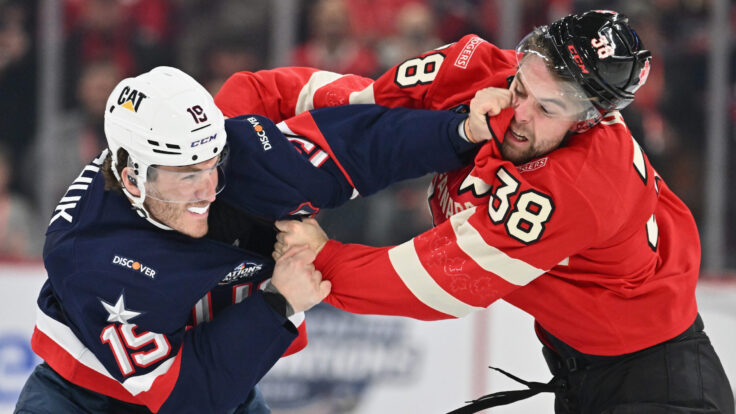
this week’s successful NHL collective bargaining pact was so unusual. The NHL’s board of governors and the NHLPA agreed to a new four-year deal a full year early—and it’s hardly a rubber-stamp deal. The NHL increased the number of regular season games from 82 to 84, and shortened the length of max-term contracts. It wasn’t all that long ago that the league lost an entire season to a work stoppage, so hats off to Commissioner Bettman et al. for finalizing this deal
without any noticeable rancor.
|
Down to
the J.V.: Tim Leiweke
|
Tim Leiweke, whose family has been among the most influential in the sports
business, was forced to step down as the C.E.O. of Oak View Group this week after the Department of Justice indicted him for allegedly rigging the bids to develop the Moody Center at the University of Texas. A spokesperson for Leiweke told CNBC, “Mr. Leiweke has done nothing wrong and will vigorously defend himself and his well-deserved reputation for fairness and
integrity.” Before launching Oak View a decade ago, Tim ran Maple Leaf Sports & Entertainment and Anschutz Entertainment Group (AEG). His brother Tod, who is not named or otherwise involved in the indictment, is a part-owner of the Seattle Kraken.
|
|
|
A MESSAGE FROM OUR SPONSOR
|
PERFORMANCE UNLEASHED
Agile, powerful, iconic. The Range Rover Sport is a dynamic SUV with a distinct
take on sporting luxury.
EXPLORE
|
|
|
- The Goodell doctrine: During a CNBC appearance with Julia Boorstin this morning in Sun Valley, NFL commissioner Roger Goodell spoke of his desire to increase the number of international games to 16, and added that the NFL could
already create an international package that presumably would go to a streamer. “That’s something we absolutely will do in some form, whether it’s 16 games or whether it’s seven, eight, nine, or 10,” he said.Significantly, he also talked up broadcasters, specifically CBS. When asked whether the NFL would exercise a “change of control” clause that’s part of its contract with the network, Goodell demurred, noting instead that the league would wait until Skydance took control of the network
before making any decisions. But on a follow-up question, Goodell was more conciliatory: “We’ve had a long relationship with CBS for decades. We also have a relationship outside of that with Skydance. I don’t anticipate that’s something we’ll see. We have a two-year period to make that decision. I don’t see that happening.” When asked about YouTube, Goodell stressed the streamer’s global audience and “different demographics” (i.e., younger fans).The best part of the interview,
however, was when Goodell was asked whether the league would exercise the clause in its media deals that would allow it to exit its contracts in 2029. “We’ll look, and we’ll have that ability to see how the media landscape changes,” he said. Though his facial expression revealed nothing, he was undoubtedly thinking: Hell yes we will.
- NFL union rep drama: Lloyd Howell Jr. has been the NFL Players Association’s executive director for the past two years, but his future with the union is now in question following a couple of damning reports from ESPN’s Don Van Natta Jr. and Kalyn
Kahler this week. According to their reporting, a special committee of players has hired WilmerHale to look into Howell’s activities while running the union. Plus, Mike “F’n” Florio wrote about a Change.org petition calling for Howell to step down that was created anonymously earlier today.
ESPN’s reporting revealed that Howell remains a paid consultant for the Carlyle Group, a position he kept even after he started running the NFLPA. And, as ESPN noted, Carlyle is “one of a select group of league-approved private equity firms now seeking minority ownership in NFL franchises.” That report came a day after Van Natta and Kahler revealed that senior leaders of the NFLPA and the NFL struck a confidentiality agreement to hide details of an arbitration ruling from players.
- A.I. calls the shots at Wimbledon: Many headlines coming out of Wimbledon have, understandably, addressed the controversial use of artificial intelligence to make line calls. In one match over the weekend, the A.I. system missed three points, which the organizers ironically blamed on “human error.” The technology also proved to be more than a little fallible on other points.My newest Puck partner, Ian Krietzberg, who writes a
private email on the trillion-dollar A.I. industry, said he wasn’t necessarily surprised by those problems. “The assumption is these things get better, but often you’re dealing with incremental improvements,” he said on yesterday’s episode of The Varsity. “If you’re trying to pursue 100 percent perfection, that’s not a realistic goal. What’s your margin for acceptable error? If
the best we can expect to do is 95 percent reliability and accuracy, that could be good, or it could be really bad. This goes far beyond Wimbledon and into everything else, like A.I. and self-driving cars, A.I. and finance. You have to be comfortable with an error rate because perfection is not really attainable.”
- The return of video: Charter’s strategy of making ad-supported streaming services available to its video subscribers “already is showing
signs of working,” per a recent Craig Moffett report. Charter has deals that make the ad-supported versions of Disney+, ESPN+, Hulu, Peacock, HBO Max, and Paramount+ available at no extra cost. Early results weren’t promising, but the strategy appears to be gaining traction as more services come aboard and marketing improves. “Charter’s strategy with video has been to use video both as a retention tool for broadband—a way to offer a more compelling price/value equation for
broadband subscribers— and as a revenue and profit driver in its own right,” Moffett wrote.
- Chalk flew up: This morning, WaPo’s Sally Jenkins unloaded on tennis legend and current on-air commentator John McEnroe—a takedown that nearly every one of my tennis-loving
friends cheered. Jenkins accused McEnroe and his brother Patrick of being unprepared, mispronouncing names, and providing banal commentary. “Responsibility for this lies with cowed producers and frictionless network chiefs who have enabled the McEnroe monopoly despite their shallow blandness—and who have allowed John in particular way too much diva license,” Jenkins wrote. In particular, she highlighted TNT’s coverage of the French Open final, when McEnroe was late to the set.
“The most spoiled actress didn’t behave any worse than McEnroe.”
|
And now, the F1 media miracle…
|
|
|
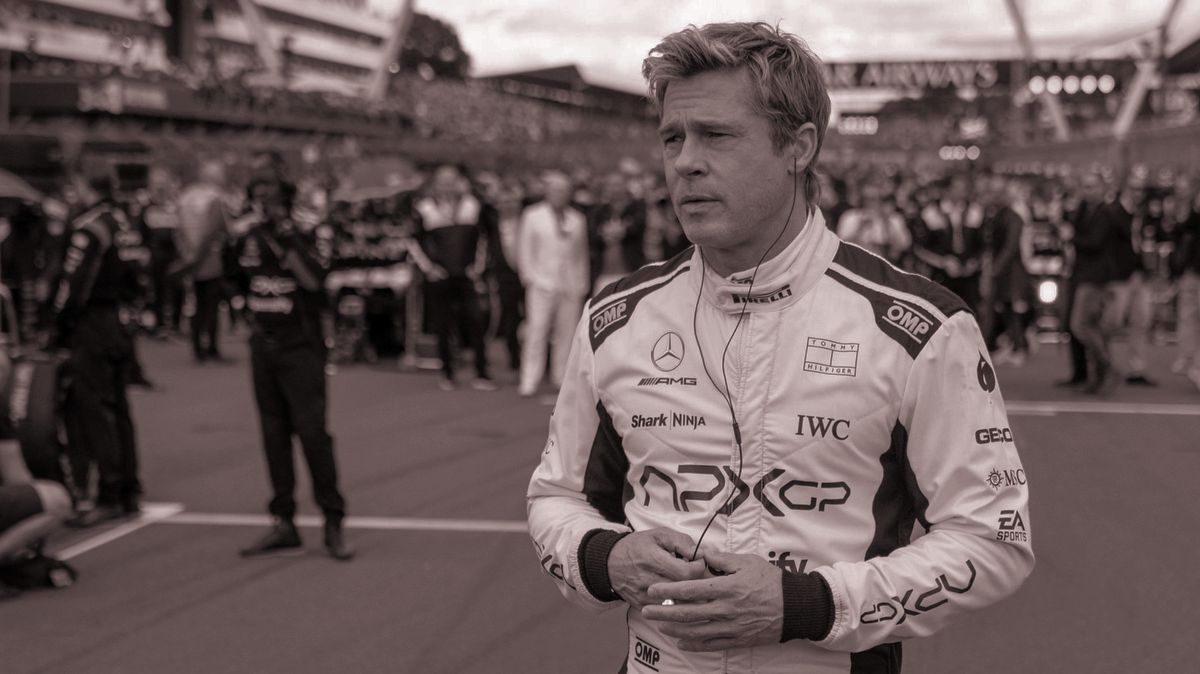
Cupertino has its highest-grossing theatrical release ever in Brad Pitt’s
F1, and F1 execs think it’s time for ESPN to double the racing series’ rights deal. But Bristol doesn’t seem inclined to merge into the fast lane.
|
|
|
Six or so months ago, in the afterglow of the NBA’s historic, fee-tripling deal, F1 executives
could be forgiven for putting the screws to ESPN. Their sport was growing, buoyed partly by the success of Netflix docuseries Drive to Survive and the rise of niche sports. As the two parties entered an exclusive negotiating window, the racing series’ executives told ESPN that they didn’t want to leave the network, but were looking to double their money, from $80 million per year to around $150 million or $160 million.
Alas, ESPN didn’t quite reciprocate, for a
host of understandable reasons. The business, which is about to unveil a new streaming service and has broken out its financials from the Disney mothership, is already paying through the nose for the NBA, NFL, college football, NHL, etcetera. And execs were already digging in to lowball MLB after decades in business. ESPN told the F1 suits that they would have to look elsewhere to get the kind of money they were looking for.
|
|
|
A MESSAGE FROM OUR SPONSOR
|
PERFORMANCE UNLEASHED
Agile, powerful, iconic. The Range Rover Sport is a dynamic SUV with a distinct
take on sporting luxury.
EXPLORE
|
|
|
Indeed, F1 soon discovered that the market had shifted under their feet. They took meetings with
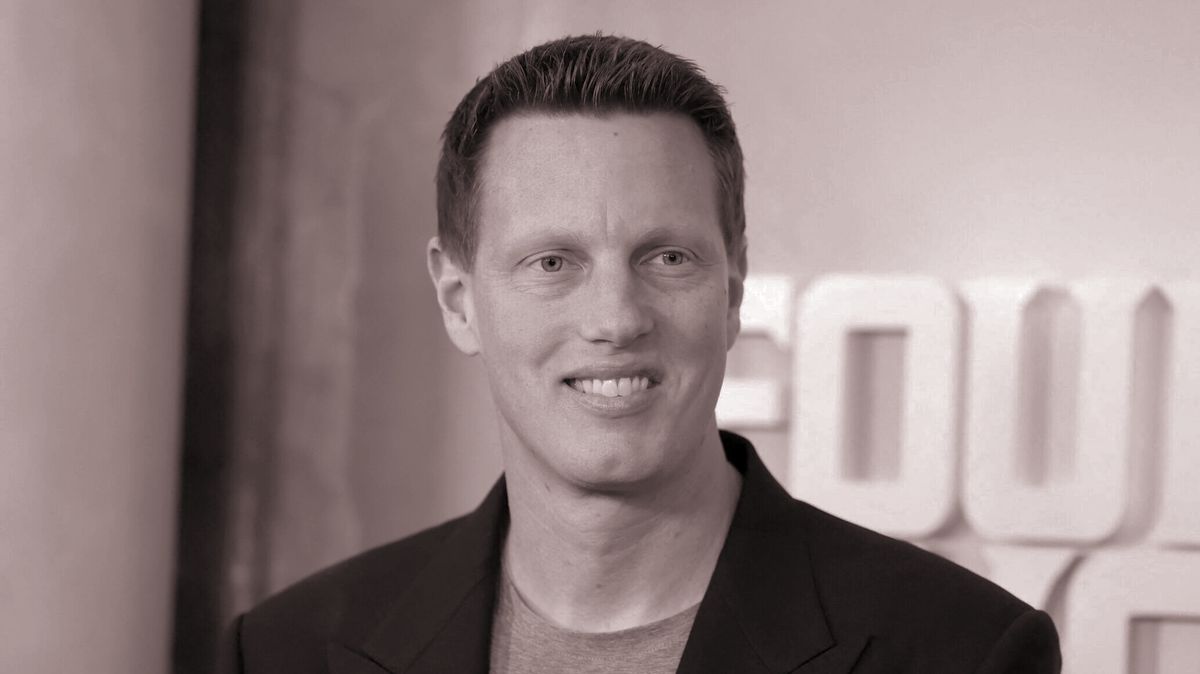
everyone only to learn that the traditional media companies were in the same boat as ESPN. No one came close to meeting F1’s asking price. The streamers showed interest initially, but the only company that progressed to serious talks was Apple, which happened to have its own F1 movie due out in the summer. That movie, it turns out, surpassed box office expectations. And as Dylan Byers reported yesterday, Apple has now told the league that they would pay between $150 million and
$200 million per year for F1’s U.S. rights. ESPN, which remains interested, hasn’t moved much off its initial offer from half a year ago. Indeed, Apple appears to be in pole position.
|
The Apple deal would offer the largest windfall, but it’s not a slam dunk. All major
leagues, even the NFL and NBA, navigate the same revenue-versus-relevance quandary in the modern sports market. Is MLB or MLS thrilled with the exposure that they’ve received from their Apple TV+ deals? It’s an open question, and one reason why large cable players and broadcast networks have remained in the negotiating mix despite their challenged business models. Right now, in fact, there’s little internal consensus among executives about where F1 should go. Some advocate for the Apple deal
because the U.S. is a secondary market for the sport, which is much bigger globally, and they want to optimize for cash—a money job, in other words. F1 teams, after all, get as much as 60 percent. Detractors, however, worry that the sport will lose visibility behind Apple’s paywall, diminishing its Brad Pitt bounce. Plenty cited MLS’s deal, now in its third season, as a cautionary tale. Naturally, F1’s commercial clients also have an opinion: LVMH just cut a 10-year, $1 billion
sponsorship deal with F1, and the Arnaults certainly don’t want to see those races vanish in the lucrative U.S. market.
ESPN’s offer also has limitations—and not just the price, which is far below Apple’s $150 million. Parentco Disney would make ABC and ESPN available for the marquee races but offer limited TV windows for others. An undetermined number of races will be streamed exclusively on the ESPN app, which is scheduled to launch this fall. There’s a risk in that,
too.
It’s worth recalling, of course, that F1 left NBC for ESPN in 2018 as part of a three-year deal that paid it an average of just $10 million per year. Back then, the sport was willing to bet on its own growth, and that bet paid off when ESPN’s next deal reached an average of $80 million per year. It may be willing to make the same bet again.
|
On the NFL’s media deals: “If the NFL is successful in going to market ahead of MLB, it
may be the shrewdest move since Brett Yormark had the Big 12 jump ahead of the Pac 12 to re-up with Fox and ESPN, ultimately leading to the implosion of what used to be known as the Conference of Champions. It seems premature that the NFL would consider this before they get a firm commitment on an 18th game from the NFLPA, which doesn’t seem to be a discussion that will happen until 2026. At the same time, it doesn’t seem like there’s really anything MLB can do to prevent this
nightmare scenario from happening.” —A grizzled sports business veteran
On WBD’s AEW deal: “Last issue, a reader wondered why TNT Sports would do an AEW deal for $180 million per year, and not pursue a Formula 1 deal for the same amount. Between AEW’s two weekly programs, TNT Sports gets approximately 208 hours of live wrestling programming per year for TBS, TNT, and HBO Max. There is value in adding an additional 200+ hours of live programming per year to the
‘ Please don’t relegate us to the premier holy-shit tier’ sales pitch with distributors. No red flags, rain delays, postponements, or collective bargaining lockouts with professional wrestling.” — A Varsity subscriber
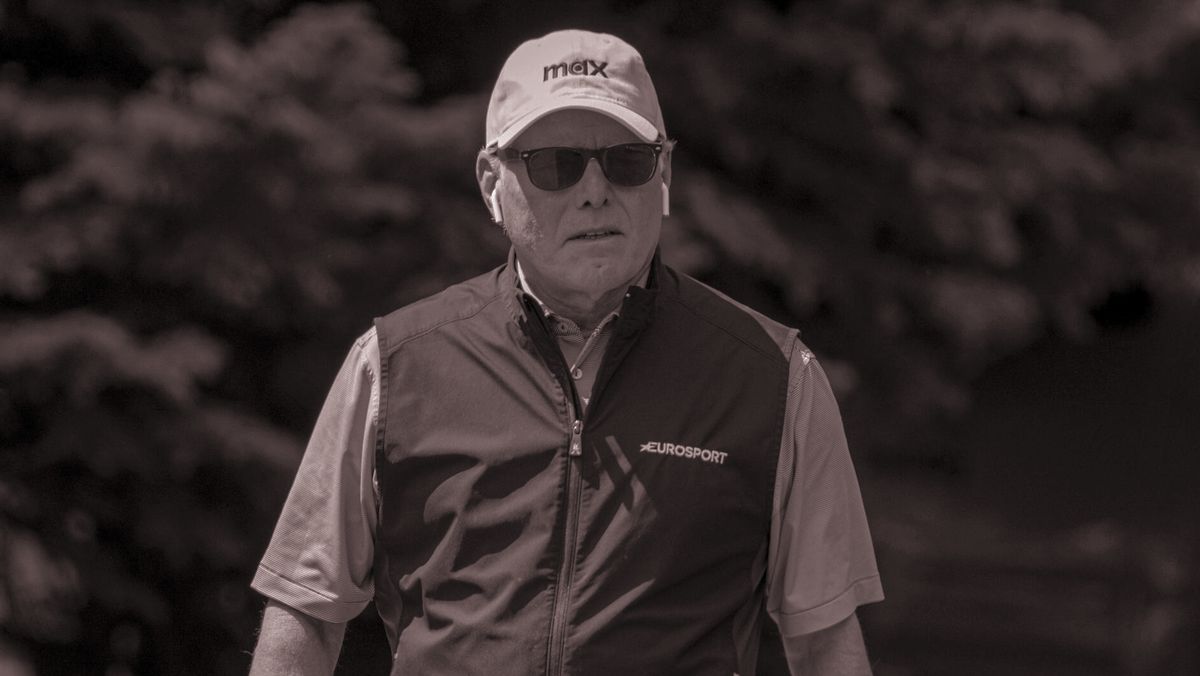
On the idea that it’s becoming more difficult to be a sports fan: “I agree with Bob Costas. The eternal reach-versus-revenue equation is haunting every major league. This diaspora of rights creates more audience friction, even for an
under-35 Millennial consumer like me. Sports fandom is rooted in socialization and community, historically. But as the audience economy fragments further alongside media rights, it becomes less about one monoculture and more about the rise of endless niche subcommunities. No empire lasts forever, and I think we’ll see the NFL’s dominant popularity lessen (though never be fully dismantled) over time. If our nation’s national pastime can become a relic in desperate need of modernization, then
anything is possible.” — A Puck subscriber
On soccer viewership: “You wrote that TNT Sports’s viewership for the FIFA Club World Cup is ‘more or less on par with average Premier League viewership in the U.S.’ The Club World Cup TV numbers are 29 percent lower than what the Premier League did this season. Not exactly close.” — A ruffian
On A.I. and tennis: “I’m no blind defender of our A.I. overlords, but players have been calling for more precise
line-calling technology for years ( e.g., Coco Gauff has been a proponent of E.L.C. and expanded video review, which the U.S. Open also has). Of course, it’s not perfect. But the Hawk-Eye system is far more accurate than humans—and line-judge errors have produced plenty of match-delaying incidents over the years—so, nostalgia/empathy for those being ‘replaced’ aside, I get why we’re here.” — A journalist
Caitlinsanity: “Great
pod with Christine Brennan. Really enjoyed it. I’ve been a WNBA fan from day one, and it’s a shame what the league is going through.” — A sponsorship executive
|
Have a great weekend. See you on Monday from Sonoma.
John
|
|
|
The industry's go-to source for unflinching reporting on the trillion-dollar business of artificial intelligence -
perhaps the single most important technology of our time. Ian Krietzberg, the powerhouse journalist behind The Deep View, delivers twice-weekly insights into the latest dealmaking and breakthroughs in A.I., and how the intersecting worlds of finance, entertainment, media, and politics are being transformed in its wake.
|
|
|
Finally, a media podcast about what’s actually happening in the media—not the oversanitized,
legal-and-standards-approved version you read online. Join Dylan Byers, Puck’s veteran media reporter, as he sits down with TV personalities, moguls, pundits, and industry executives for raw, honest, sometimes salacious conversations about the business of media and its biggest egos. New episodes publish every Tuesday and Friday.
|
|
|
Need help? Review our FAQ page or contact us for assistance. For brand partnerships, email ads@puck.news.
You received this email because you signed up to receive emails from Puck, or as part of your Puck account associated with {{customer.email}}. To stop receiving this newsletter and/or manage all your email preferences, click here.
|
Puck is published by Heat Media LLC. 107 Greenwich St, New York, NY 10006
|
|
|
|