{{ 'now' | timezone: 'America/New_York' | date: '%b %d, %Y' }} |
|
|
Greetings from Los Angeles and welcome back to In the Room. I’ll be spending the long
weekend on the beach, by the pool, and watching as much U.S. Open tennis as I can. Wherever you’re spending these last days of summer, from Montecito to Montauk, I sincerely hope you enjoy yourself and get some much deserved R&R. It’s going to be a very busy fall.
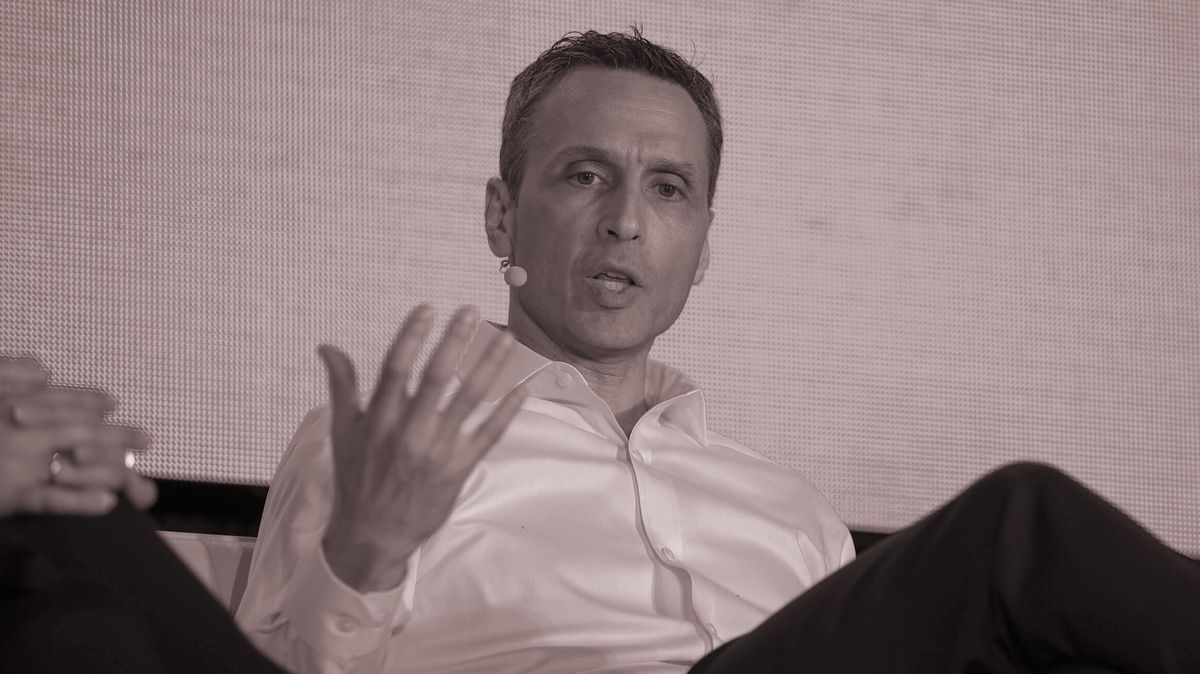
In tonight’s issue, a provocative conversation with digital media sage Andrew Rosen on ESPN’s and The New York Times’s divergent direct-to-consumer strategies, and what Jimmy
Pitaro might learn from Meredith Kopit Levien. Also, highlights from John Malone’s yacht.
🍸 Plus, on the latest edition of The Grill Room, Julia Alexander and I reunited to hash out the week’s biggest media stories: The New York Times’s A.I. investments, Disneyland
price-gouging, the spectacle of the U.S. Open, the brewing Portnoy-McAfee rivalry, and much, much more. Follow The Grill Room on Apple, Spotify, or
wherever you prefer to listen.
Mentioned in this issue: John Malone, James Dolan, David Ellison, David Zaslav, Bob Iger, Jimmy Pitaro, Meredith Kopit Levien, Mark Thompson, Greg Peters, Jannik Sinner, and many
more…
Let’s get started… |
-
The Malone doctrine: If you hadn’t already preordered John Malone’s forthcoming memoir, Born to Be Wired, I imagine you will upon reading the rollout interview today, conducted by the Times’s Ben Mullin aboard Malone’s yacht in Maine. (Congrats, Ben, you made my jealousy list.) As you know, the Liberty
Global chairman and famed “Cable Cowboy” is among the most candid talkers in the business, and this piece is full of choice quotes that are sure to furnish his friends and adversaries with a lot to talk about over the long weekend.
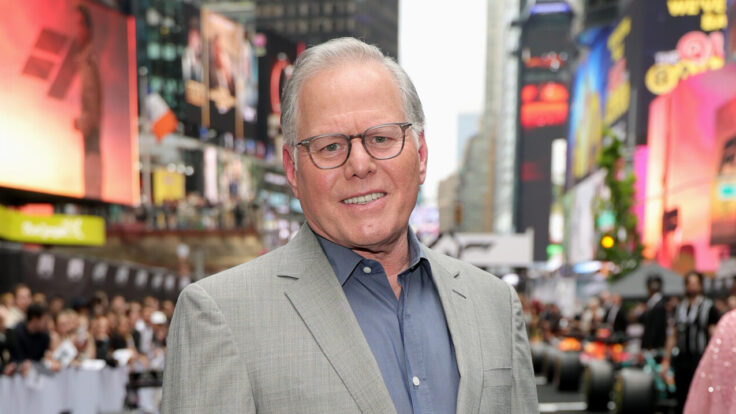
The key moment here is Malone’s meeting in Sun Valley with Skydance chief David Ellison to “talk about further consolidation in the media industry.” As Ben writes, “Mr. Malone said he found the younger Mr. Ellison to be ‘very bright’
and ‘pretty arrogant,’ wryly noting that ‘if your dad is worth $400 billion, I guess you can be arrogant.’ But he credited Mr. Ellison for founding Skydance, saying he would ‘bet on that guy.’”
Ben continued: “Mr. Malone speculated that the Ellison family could be crucial to the future of the media industry. He noted that Oracle already had a relationship with TikTok, which could put the Ellison family in pole position to somehow fuse streaming and social media...” - Malone on CNN: Elsewhere, Malone offered a show of support for his embattled protégé David Zaslav—“I trust him to get this right. You don’t shoot the captain of the ship because the seas are stormy”—while also gently faulting him for having been “unable to have any meaningful impact” on making CNN less partisan. “They can’t help themselves,” Malone said of CNN employees. “And so what you’ve got is a left-leaning, anti-Trump news service.” (As you recall,
Malone had publicly urged Zaz to make CNN more like Fox News, traumatizing the entire network in the process.)
Malone, who helped Ted Turner launch CNN, says the network is now “a shadow of what its founder had envisioned.” A CNN spokeswoman told the Times that C.E.O. Mark Thompson “has made it clear from day one that he believes in a CNN that is fair-minded and biased in favor of the facts rather than any political party or interest,” and added:
“In the nearly two years he has been C.E.O. and editor-in-chief, he has never experienced any attempt by anyone inside or connected to W.B.D. to improperly influence CNN’s journalism in any way.” - The Wizard of Zaz: Speaking of Zaz, you’ve no doubt heard of his alleged cameo
in the Las Vegas Sphere’s presentation of The Wizard of Oz, which debuted last night. Sphere chief James Dolan told reporters that A.I. had been used to superimpose both his own visage and that of the WBD chief over the faces of two munchkins. “I won’t tell you where, it’s only for like two seconds,” he said. “[They] replaced the faces of two very short, two-second characters in the movie with mine and David. I challenge you to find it.”
I’m not convinced Dolan
wasn’t pulling one over on the press here; indeed, I’m told Zaz didn’t know about it until after the report came out. But, having spent considerable time in that venue and being familiar with its mind-bending immersive power, all I can say is, if it is real, I sincerely hope Pam Abdy and the rest of the Warner Bros. crew didn’t take any edibles. Meanwhile, every review I’ve read suggests this is an awe-inspiring presentation, and well worth the $80
million that Dolan paid for the rights. He’ll probably clear over $1 billion.
|
|
|
A surprising conversation with Andrew Rosen, the digital media savant, on how the
Times and ESPN’s digital paths diverged, and who’s getting in right in the long run. |
|
|
On Thursday, in a daring attempt to thread the needle of work-life balance, I opened the
new ESPN app to catch a few strokes from the U.S. Open while simultaneously fielding texts from members of The New York Times masthead who were eager to pick over the finer points of my most recent analysis of their business. (Broadly speaking, they agreed with the gist.)
Amid the gentle din of thwacks and dings, my partner Jon
Kelly sent me a new essay from Andrew Rosen, the digital media advisor and onetime Viacom executive who, in recent years, has become a smart and occasionally provocative analyst on the evolution of streaming, direct-to-consumer strategy, and the economics of digital media. Rather serendipitously, Andrew’s latest missive sought to compare the
D.T.C. strategies of the very two media entities with which I was then engaged.
ESPN and The New York Times are very different businesses—I can’t watch Sinner vs. Popyrin on the Times app, obviously—but, on some level, they’re not. As Andrew explained to me in a conversation this week for The Grill Room, both Jimmy Pitaro and Meredith Kopit Levien are staking their future on
direct-to-consumer businesses, and, given the Times’s ownership of The Athletic, both are seeking different ways to monetize sports fandom.
The distinction, according to Andrew, is that while ESPN remains tethered to a legacy mindset, pursuing the false promise of scale and assuming viewers still want a passive, television-like experience, the Times is focused on super-serving highly engaged digital subscribers who value interactivity.
I don’t
agree entirely with that thesis. Pitaro’s new app embraces several interactive elements—betting, ticketing, merchandise, statistical overlays, etcetera—all of which my partner Julia Alexander has written about at length. But, as Andrew sees it, these are “bells and whistles for a narrow consumer,” and not enough to serve fans who value
agency in an interactive era. And as the cost of sports rights continues to become more burdensome, he believes Pitaro & Co. will need to draw inspiration from the Times in order to find more creative ways to monetize consumers.
Herewith, some of the highlights from our conversation, lightly edited for clarity. |
Dylan Byers: Before we dive in, how did you arrive at this
analysis?
Andrew Rosen: Think of the devil and the angel on either shoulder. When I was at Viacom, the whole digital conversation was about scale. The belief was that online distribution—especially in 2005, with social media—would create massive reach for Viacom’s brands, and it was our job in digital media to chase that. On the other shoulder, you had people in the weeds of direct-to-consumer marketing saying, “This scale talk is nonsense. The economics don’t work. What
you’re doing inside the building makes no sense.” And that’s still true in 2025.
If you look at the timeline, Amazon launched in the ’90s, Hulu in 2007, Netflix streaming in 2007, Apple in-app payments in 2009, Android in 2011, CBS All Access around 2013, Disney+ in 2019. Given all that, my favorite question to ask is: When did the media industry actually start valuing D.T.C. and e-commerce experience when hiring executives? The answers vary—2013 after the financial crisis, maybe
2015 or 2017, some say 2019 when Netflix’s threat became undeniable. And some say… never.
I say all this because what’s happening at The New York Times and ESPN comes down to that dynamic. In 2015, the Times really got aggressive with digital. They’d already put the crossword on iOS back in 2009, but by 2015, they were building apps around specific behaviors, finding inelastic demand within their portfolio, creating subscription businesses, and bundling them
together.
ESPN took a totally different path. If you listen to The Times Company’s Q2 earnings call and hear C.E.O. Meredith Kopit Levien talk about the business, then compare it to ESPN chairman Jimmy Pitaro’s interviews, you hear two very different stories. Pitaro talks about scale—ESPN as the number one sports brand, huge reach, broad numbers. Levien talks about being essential in people’s lives. Every product the Times has launched, even the
podcast app, is tied to that mission. They have 150 million registered users and over 11 million paid subs.
So you see two D.T.C. models: ESPN focused on scale, the Times on pockets of inelastic demand and super-serving them. Pitaro assumes sports fans are still passive—lean back and watch, like TV. Levien assumes people want engaged experiences. They have agency, and the Times builds bundles and products around that agency.
Both companies are led by Gen X
execs—Levien and Pitaro. At the Times, you also have the Sulzberger heirs, digital natives. Pitaro isn’t a D.T.C. or e-commerce native, and that’s not his fault—it’s just the generational training of media executives. But that explains the very different paths. |
If you could wave a magic wand to shake Jimmy out of that legacy mindset and point him
toward the kind of consumer strategy the Times has built—what could ESPN actually do? Isn’t their value proposition simply the rights? I can’t imagine Pitaro launching a cooking or crossword app. So what’s the equivalent move for ESPN?
I think Pitaro has had these conversations. The most telling thing in his interviews is that he basically admits, We’re not in a position to do what you’d expect from a true D.T.C. app. We’re just
putting this out because we have to. He even uses the Netflix “crawl, walk, run” line—but there’s a key difference. When Greg Peters says that on Netflix earnings calls, he lays out a roadmap: Here’s where we are, here’s where we’re going, here’s the long-term vision. Pitaro, by contrast, says, We’re launching this, we know the price point will mean high churn, and we’re still relying heavily on cable and virtual distributors like YouTube TV and Hulu
Live.
So your “magic wand” question goes beyond culture; it’s structural. Over the past 20 years, if you entered media, you didn’t get D.T.C. training. When I was at MTV Networks, the people who truly understood it were in games and e-commerce, tucked away in the back. It wasn’t the core skill set. At the end of the day, if you’re building a D.T.C. business, you have to think more like The New York Times than ESPN does right now.
So are you bearish on
ESPN and the new app?
I mean, I think they’re bearish. Analysts are coming out and saying they project 2 million subscribers, maybe 3 million, over the next few years. I think Pitaro is underselling it. He’s saying We’re afraid of churn, so we’re better off with a portfolio of apps. I think the problem is, when you use ESPN, is it a personalized experience? Does it know who you are? Does it understand your fandom? I don’t think the answer is that they’re passive
viewers. I just don’t think that’s it.
Fandom is something that’s very different on the internet than it is on television. I think that sports betting and commerce on a streaming app are hostile to the consumer. It’s lazy to me.
What do you mean by “hostile”?
Sports betting is a trend with younger users, but so what? They’re defining fandom in a $29.99 app as sports betting, right? The same thing with buying t-shirts. That’s my issue with it. When I read The
Athletic, somebody’s getting me a story, and somebody’s going deeper than anywhere else. There are smart people at ESPN. But taking an idea to execution is hard when the last 20 years of media leadership didn’t reward D.T.C. skill sets. That’s not a knock—it’s just what the market valued.
At the end of the day, it boils down to delight. When you open the Times Crossword app, there’s delight. When you play Wordle, there’s delight. When you read The Athletic and get a story you
can’t find anywhere else, there’s delight. ESPN, digitally, isn’t in the business of delight. It’s in the business of defending a great legacy model.
The full conversation will be available on ‘The Grill Room’ on Tuesday, September 2. Follow on Apple,
Spotify, or wherever you prefer to listen. |
|
|
Puck sports correspondent John Ourand and a rotating cast of industry insiders take you inside the executive suites
and owners boxes where the decisions that shape the entire sports business are made. You’ll hear interviews with players, network execs, and everyone in between. The Varsity is an extension of John’s private email for Puck by the same name. New episodes publish every Wednesday and Sunday. |
|
|
The ultimate fashion industry bible, offering incisive reportage on all aspects of the business and its biggest
players. Anchored by preeminent fashion journalist Lauren Sherman, Line Sheet also features veteran reporter Rachel Strugatz, who delivers unparalleled intel on what’s happening in the beauty industry, and Sarah Shapiro, a longtime retail strategist who writes about e-commerce, brick-and-mortar, D.T.C., and more. |
|
|
Need help? Review our FAQ page or contact us for assistance. For brand partnerships, email ads@puck.news. You received this email because you signed up to receive emails from Puck, or as part of your Puck account associated with {{customer.email}}. To stop receiving this newsletter and/or manage all your email preferences, click here. |
Puck is published by Heat Media LLC. 107 Greenwich St, New York, NY 10006 |
|
|
|