Welcome back to The Varsity, live from Washington, D.C., where I am hoping that we
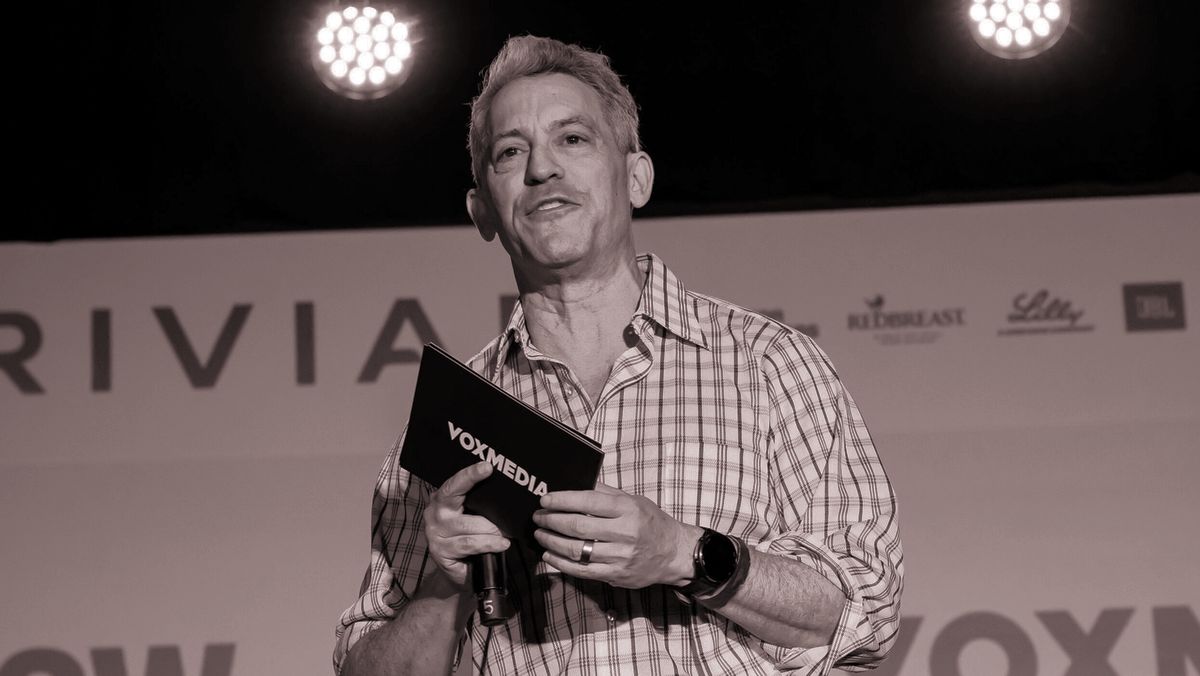
didn’t just see Ovie’s last game in a Caps jersey on Tuesday night. Meanwhile, my bags are packed for a quick swing through Vegas for the National Association of Broadcasters’ annual convention. I will be onstage Sunday to interview NBC Sports president of acquisitions and partnerships Jon Miller—a nearly five-decade veteran of the sports media business.
Pod alert: Matthew Berry, the most famous fantasy football guru in the land,
joins the pod this weekend to discuss next week’s NFL Draft and his burgeoning Fantasy Life business. Also, make sure you listen to yesterday’s episode where my Puck partner Dylan Byers broke down Russini-gate and its discontents.
This issue was created with contributions from Curtis
Rowser.
Mentioned in this issue: Casey Wasserman, Dianna Russini, Mike Vrabel, Dorian Craft, Christy Winters-Scott, Juliana Morgan, Greg Norman, Scott O’Neil, Bill Koenig, Jay Marine, LeBron, Jimmy Pitaro, Ilan Ben-Hanan, Bret
Baier, Brian Rolapp, Brooks Koepka, Bryson DeChambeau, Jon Rahm, Cam Smith, Brian Roberts, Roger Goodell, and more… |
Player of the Week: Bill Koenig
|
Did you see the NBA’s regular-season numbers? Amid all the talk of tanking and load management, the
league posted its best viewership in seven years, up 16 percent from last year. Yeah, I know Nielsen counts differently than it used to, but the league’s strong numbers are also a result of league media tsar Bill Koenig’s pursuit of a broadcast-first strategy. The NBA had 62 games on broadcast TV this season—nearly triple last year. |
Down to the J.V.: Jay Marine
|
Not only did Amazon Prime Video lose the feed to its first NBA playoff game for almost two minutes
on Tuesday night, but it happened during overtime of a tense game between Miami and Charlotte: Viewers missed 22 seconds of action, including a lead-extending Charlotte bucket. Amazon blamed the blackout on a hardware failure in its production truck—a failure that traditional linear media executives no doubt took delight in pointing out. None other than LeBron James called
out Prime Video on Tuesday, not a great look for a streamer that aspires to one day carry the Super Bowl. Jay Marine, Amazon’s global head of sports, runs the whole show, so this honor is bestowed upon him this week. |
- More ESPN layoffs: As Varsity subscribers know, ESPN laid off about 30 employees on Tuesday, not inclusive of some marketing talent caught up in Disney’s layoffs earlier this week. In an email sent to staffers, ESPN chairman Jimmy Pitaro attributed the moves to the fact that “our industry and our businesses are undergoing profound
change.” Those cuts included the well-respected Ilan Ben-Hanan—a senior vice president of programming and content strategy, the most senior executive to be laid off—who is leaving after a 24-year career where he was widely considered one of the company’s young stars. (In fact, I wrote Ben-Hanan’s 40 Under 40 profile
for SBJ in 2017.) Most recently, the Los Angeles–based Ben-Hanan oversaw all sports on ABC. But he really cut his teeth handling ESPN’s relationships with college conferences at various points and was a big part of ESPN’s rights deals for the CFP, NCAA, and NHL. He also is known for creating Jimmy V Week—an annual series of college basketball games that has raised more than $100 million for cancer research.
- NFL Media update: I’ve seen lots of
headlines pointing to YouTube as the likely winner of a five-game NFL package next season. (I first saw this in SBJ a couple of weeks ago; Front Office Sports followed with an item today.) My sources confirmed the reports of YouTube being a frontrunner, though we don’t actually know which five games are in the package.
I will be watching to see how this YouTube deal plays in D.C., where regulators have been grousing over the NFL’s migration from broadcast to streaming.
So far regulatory complaints have focused on the added costs that football fans have to pay to watch Thursday Night Football on Amazon Prime or the Christmas games on Netflix. Well, what happens if YouTube picks up these games and doesn’t put them behind a paywall? Will that satisfy some of these regulators? Could this deal, if it ultimately gets signed, be a blueprint for how streamers can win over the F.C.C.? - Casey at the bat: The 2028 Los
Angeles Olympics is facing a potential budget crisis long before a single torch has been lit—and now the beleaguered Casey Wasserman, founder of his namesake sports and marketing agency, is on Capitol Hill trying to salvage the funding he’s spent years putting together. Here’s what my brilliant partner Leigh Ann Caldwell reported in yesterday’s The Best & The Brightest private email, Puck’s product focused on D.C.:
“Casey Wasserman, the chair of the Los
Angeles 2028 Olympics who recently agreed to sell his talent agency after his flirty emails with Ghislaine Maxwell surfaced in the Epstein files, is currently in Washington begging Congress for money for the Summer Games. President Trump has brushed off a requested $2 billion for public transportation for LA28, potentially leaving a massive hole in the budget just two years before millions of tourists descend on a city that’s not exactly easy to
get around. Wasserman met with Rep. Rosa DeLauro, the top Democrat on the House Appropriations Committee, and was also scheduled to meet with chairman Tom Cole, as well as Senate Approps chair Susan Collins and ranking member Patty Murray.” Good luck, Casey. You’re gonna need it. - Russini-gate: On Tuesday, after Dylan Byers and I had already recorded this week’s episode
of The Varsity, news broke that NFL reporter Dianna Russini had resigned from The Athletic amid the Times’s ongoing investigation into leaked photos of her and New England Patriots head coach Mike Vrabel getting cozy on the roof of a private bungalow in Sedona before an NFL league meeting. To no surprise, this scandalette has further frayed the already-tense relationship between The New York Times and The Athletic,
which the Times bought for $550 million in 2022.
I asked Dylan how he envisions this impacting the dynamic moving forward. “I think this is going to catalyze, or at least accelerate, the process of integrating The Athletic more in terms of standards—that’s just going to be an expectation among the journalists,” Dylan said. “The Athletic is a very healthy business for the Times—but again, it’s a Times business. So I think that integration is going to be demanded.
… The way to ensure this doesn’t happen again is not by deciding they’re going to more carefully review every scandal that happens at The Athletic—it means they’re going to start to make The Athletic look a lot more like The New York Times.” - The picture of Dorian Craft: Congrats to former ESPN and CBS Sports Network announcer Dorian Craft, who will be the Mystics’ main play-by-play announcer on Monumental Sports Network this
season. Craft will be paired with analyst Christy Winters-Scott and sideline reporter Juliana Morgan.
|
And now for the main event… |
|
|
|
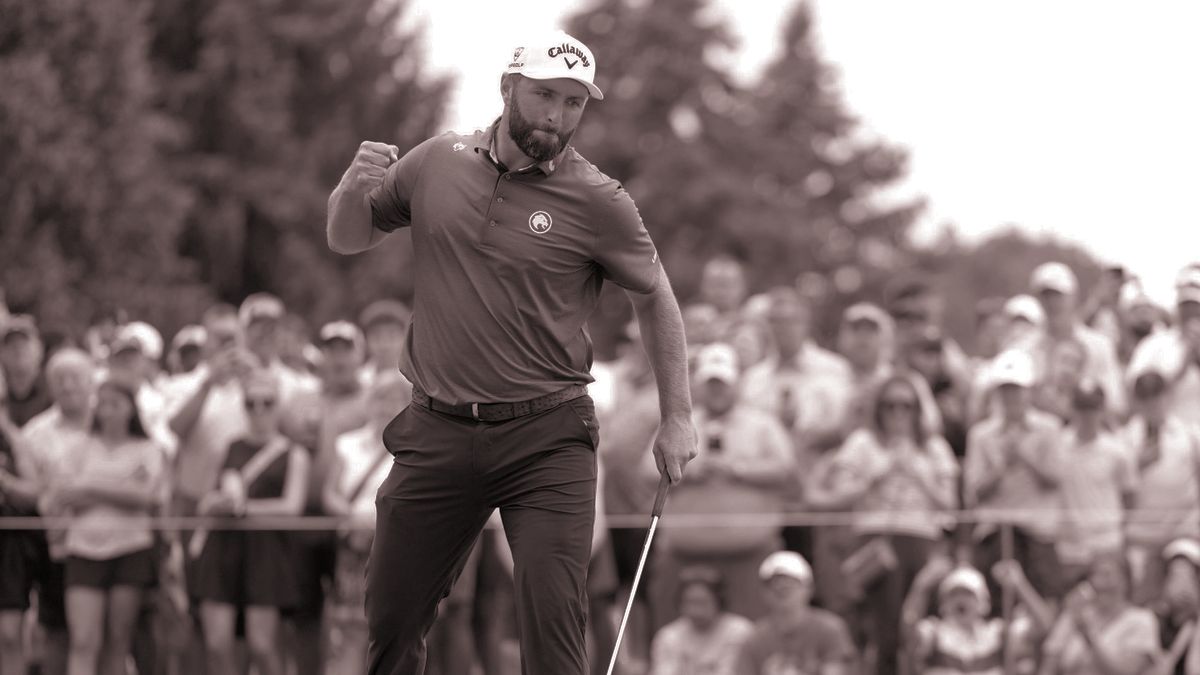
How much longer is Saudi Arabia’s Public Investment Fund willing to
continue pumping billions into its quixotic bet on LIV Golf, as the Iran war dislocates sporting events like Formula One and Fanatics flag football? |
|
|
|

| John Ourand
|
|
|
|
The atmosphere at Mexico City’s Chapultepec Golf Club was tense yesterday morning as LIV Golf
prepared to tee off. Hours earlier, both the Financial Times and Wall Street Journal had reported that Saudi Arabia’s Public Investment Fund was “on the verge” of pulling funding for the controversial money-losing
golf tour it launched four years ago with Greg Norman as C.E.O. To several sports executives doing business with LIV, it seemed entirely possible that the upstart tour would be forced to close up shop right there in Mexico City.
Inside LIV, executives spent the morning calling media companies and sponsors, trying to project a calm they didn’t entirely feel. The tour’s partners already had reason to be pessimistic. The Iran war, which broke out in late February, had
disrupted the region’s major sporting events. Formula One canceled races in Bahrain and Saudi Arabia. Fanatics Studios relocated a flag football event from Riyadh to Los Angeles. To learn that LIV was also pulling back would have surprised no one. However, on Wednesday afternoon, C.E.O. Scott O’Neil emailed colleagues declaring that “the season continues exactly as planned, uninterrupted and at full throttle.”
But the whiplash wasn’t over. That evening, Bret
Baier reported that the PIF would indeed pull funding after this season. Even then, sources with direct knowledge of LIV’s business cautioned against drawing firm conclusions. “They have a lot of pride and don’t want to be embarrassed,” one executive told me. “I wouldn’t put it past them, even after this interim decision, to still move forward with it. I don’t think it’s a done deal.”
The broader context is worth touching on. Over the past decade, Middle Eastern
capital—especially from Saudi Arabia—has become a defining force in global sports, underwriting everything from Formula One to mixed martial arts to tennis as part of a wider tourism push. Now, that strategy appears to be under review. With sports pulling out of the Middle East because of regional hostilities, the tourism market obviously has taken a hit. As such, the Saudis are less likely to put up with properties that lose tons of money, like LIV. It is notable that the Saudis don’t
necessarily view LIV as a U.S. property—it’s much less popular in the U.S. than in, say, South Africa or Australia. So any decision to pull funding—in their eyes—should hardly be considered a middle finger to the U.S.
If LIV Golf does collapse, the ripple effects in the U.S. market are likely to be minimal. Fox Sports, which holds LIV’s media rights, pays what has been described as a nominal fee, and viewership has been equally nominal. Last year, LIV never topped 500,000 viewers on Fox’s
broadcast network, and all but three events averaged under 400,000 viewers—exceptionally low numbers for live sports on broadcast television.
The PGA Tour, meanwhile, is unlikely to feel much impact. Since taking over last summer, former NFL executive Brian Rolapp has enjoyed a relatively smooth honeymoon, forcing through changes including a “Returning Member Program” that allows defectors like Brooks Koepka to rejoin. Attention will soon turn to whether
stars such as Bryson DeChambeau, Jon Rahm, and Cam Smith will return—and whether it matters. “There was a time, a few years ago, when I was worried that so many star players were defecting,” a media executive said. “But the reality is that those golfers essentially disappeared, and plenty of good golfers emerged on the Tour. In essence, it didn’t matter in the big scheme of things.”
Rolapp has already told his network partners at CBS,
ESPN, and NBC that he’s willing to discuss reopening the Tour’s media deals ahead of their 2030 expiration. The potential disappearance of LIV from the marketplace, sources say, is unlikely to meaningfully influence those negotiations. |
On NFL media deal heat: “Let’s say that the NFL opts out of the current deal. Wouldn’t
Comcast still have Sunday Night Football for four more seasons? That’s a long time in media years for Brian Roberts to figure out whether to sell NBCU to Skydance or Netflix or whatever.” —A media executive
More on NFL media deal heat: “One thing to keep in mind when forecasting what will take place between the NFL and Comcast: Since Augusta National’s membership profile has shifted from top amateur players to predominantly business titans
(which explains how Roger Goodell and Brian Roberts both got in—it’s not their handicaps!), member-on-member ‘commerce crimes’ are not looked upon favorably by the club leadership.” —A media executive
Still more on NFL media: “There is a growing non-zero chance that Big Tech might be forced to break up its businesses in the next 10ish years, given the rise of antitrust sentiment and now the specific skepticism aimed at streamers. Amazon Prime Video and
Apple TV+ do not make financial sense as stand-alone businesses and would likely be shuttered. YouTube would survive, but the economics would change (especially without that built-in Google traffic). How would that far-off possibility, small as it may be at the moment, reorient the sports media world?” —A Varsity subscriber
On the Cablefax name change: “Cablefax went daily three years before email (or America Online, for that matter!). It served the cable business daily
by using recipients’ fax machines.” —The guy who founded Cablefax |
Have a great weekend. See you Monday,
John |
|
|
|
Finally, a media podcast about what’s actually happening in the media—not the oversanitized,
legal-and-standards-approved version you read online. Join Dylan Byers, Puck’s veteran media reporter, and Julia Alexander, a longtime media analyst, as they sit down with TV personalities, moguls, pundits, and industry executives for raw, honest, sometimes salacious conversations about the business of media and its biggest egos. New episodes publish every Tuesday and Friday. |
|
|
|
An essential, insider-friendly Hollywood tip sheet from Matthew Belloni, who spent 14 years in the trenches at
The Hollywood Reporter and five before that practicing entertainment law. What I’m Hearing also features veteran Hollywood journalist Kim Masters, as well as a special companion email from Eriq Gardner, focused on entertainment law, and weekly box office analysis from Scott Mendelson. |
|
|
|
Need help? Review our
FAQ page or contact us for assistance. For brand partnerships, email ads@puck.news.
You received this email because you signed up to receive emails from Puck, or as part of your Puck account associated with {{customer.email}}. To stop receiving this newsletter and/or manage all your email preferences, click here. |
Puck is published by Heat Media LLC. 107 Greenwich St., New York, NY 10006 |
|
|
|
|