{{ 'now' | timezone: 'America/New_York' | date: '%b %d, %Y' }} |
|
|
Greetings from Montecito, where I’m soaking in one last long summer weekend before the
kids head back to school, and welcome back to In the Room. Apropos of nothing, someone just paid $768 for two pairs of suspenders that Donald Trump gifted to Larry King. Somehow, this absolutely bitchin’ Dodgers
sweatshirt that Larry owned only went for $50.
In tonight’s issue, news, notes, and deep thoughts on David Ellison’s grand ambitions for Paramount-Skydance on the heels of his media goodwill tour—and some final observations on the fate of CBS News in this burgeoning era.
🍸 Plus, on the
latest edition of The Grill Room, Julia Alexander and I dug into the recent slew of Fox-Portnoy/ESPN-McAfee–style licensing deals and what they portend for the industry at large—as well as the challenges and opportunities for legacy media companies adapting to the creator economy. We also debated how to best manage
your fantasy football league. Follow The Grill Room on Apple, Spotify, or wherever you prefer to listen.
Mentioned in this
issue: David Ellison, Jeff Shell, George Cheeks, Gerry Cardinale, Tom Cruise, David Zaslav, Larry Ellison, Stephen Colbert, Brian Roberts, Jimmy Pitaro, Bob Iger, and many more…
But first, here’s Julia Alexander on Peacock… |
|
|

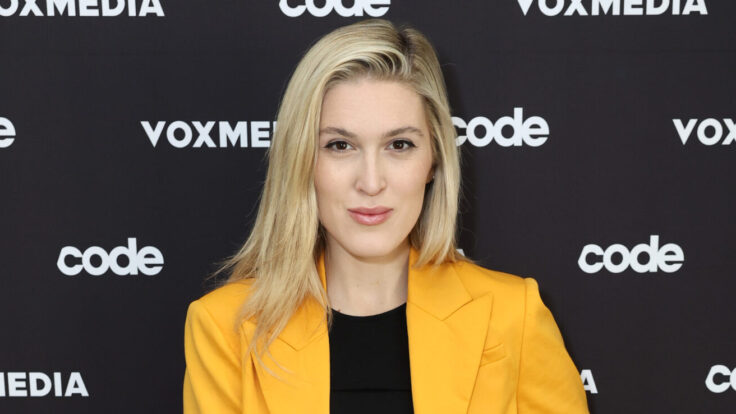
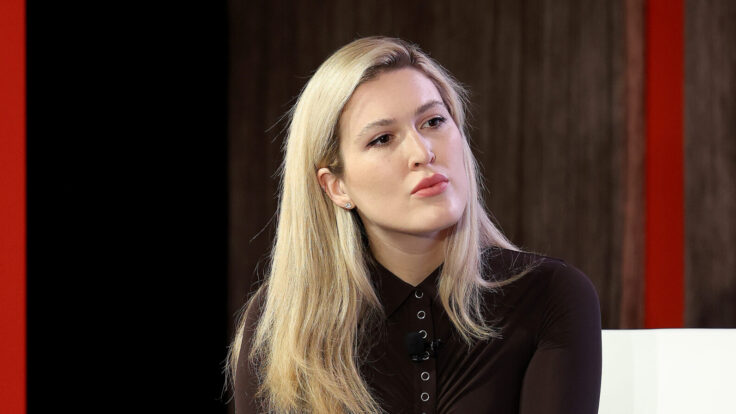
| Julia Alexander
|
|
- Peacock’s ruffled
feathers: Surely, something has to change at Peacock, the last of the major streaming services to still be unprofitable. Yes, Paramount+ just barely crossed that milestone, and will probably start losing money again once that $7.7 billion UFC deal hits the P&L. But at least David Ellison appears to have a vision for where the newly merged Paramount-Skydance
Corporation is headed in streaming. Over at Disney, ESPN chief Jimmy Pitaro is striking deals with the NFL, and C.E.O. Bob Iger is folding Hulu into a Disney+ super app. Warner Bros. Discovery C.E.O. David Zaslav, who’s in the midst of spatchcocking his company, appears open to M&A.
Comcast boss Brian Roberts is also charting a new course by spinning out the company’s linear assets (minus NBC and Bravo) as Versant. And
yes, Peacock is seeing some momentum, doubling its share of subscriber additions between May and June, per Antenna. There’s no question as to why: A big part of those June additions likely came from one show. Love Island is a massive hit—it was Nielsen’s most streamed show last week, and is Peacock’s most watched original title. Not to mention there are positive signs on the advertising front, with Peacock driving more than a third of NBCUniversal’s ad volume this year, according to
Roberts, up 20 percent from the year before.
And yet, it’s not clear what’s next for Peacock after the Versant separation. Nothing—not the Olympics, not the NFL, not even Love Island—has been able to increase Peacock’s share of total TV viewing time beyond 2 percent in the U.S., which is well behind Disney’s combined near 5 percent, Netflix’s 8.3 percent, and YouTube’s 12.8 percent, according to Nielsen. Earlier this year, NBCU signed a $2.45 billion-a-year deal with the NBA to
broadcast games for the next 11 years, after data suggested that people who signed up for Peacock to watch January’s NFL playoff game stuck around to watch other content afterward. But it’s a big and otherwise unproven bet. Peacock’s churn rate currently runs 2 percentage points above the national average.
If there’s a path to profitability for Peacock, it probably starts with extracting more revenue from its existing sports-watching audience (and finding more Love
Island–adjacent hits, without overspending). [Read more…]
|
|
|
Ellison has embarked on a marathon charm offensive to convey optimism toward his
self-appointed quixotic task of scaling Paramount, taking on Netflix, and saving Hollywood. But, yes, there will be cuts—especially at CBS News, the least glamorous and most challenged corner of his new entertainment empire. |
|
|
On Wednesday afternoon, I drove from the Hollywood Hills down to the Paramount lot on Melrose to
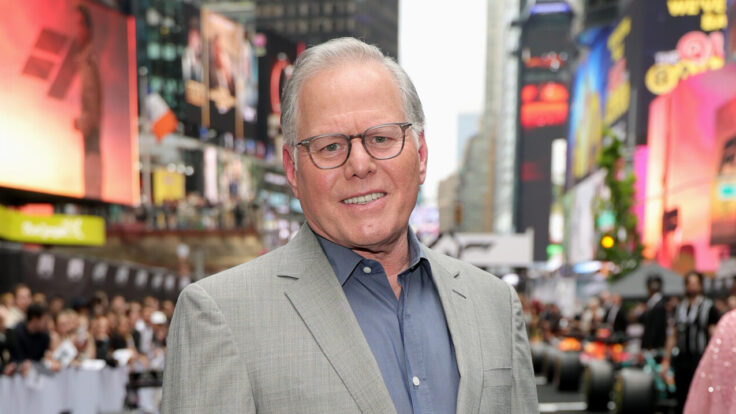
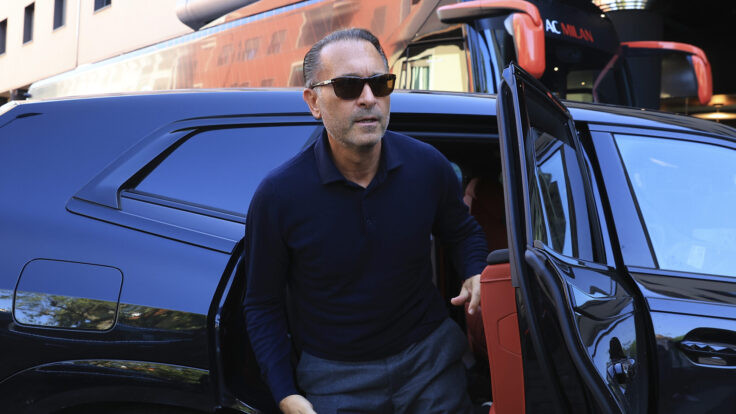
spend a couple hours in the company of Paramount Skydance chief and current media “It” boy David Ellison, his charismatic and self-assured investment partner Gerry Cardinale, his new entourage of direct reports—Jeff Shell, George Cheeks, Cindy Holland, etcetera—as well as a few dozen Hollywood journalists who’d been invited to ask on-the-record questions of the top brass and then dine with them over La Scala
salads. (A tip of the hat to my partner Matt Belloni, who held Ellison’s ear for quite some time over lunch, for identifying the provenance of this culinary olive branch).
The L.A. press event followed Ellison’s inaugural company-wide town hall that morning, and came just a week after a similar media meet-and-greet in New York on the day the deal closed, which itself followed David & Co.’s
visit to CBS News for the 9 a.m. editorial call. This marathon good will tour seemed designed to convey optimism and stamina, as well as a certain degree of radical transparency, which worked only up to a point. Reporters have been especially preoccupied with Ellison’s lack of clarity around whether he had, in fact, offered $20 million worth of free advertising time to
Trump to help shepherd the deal across the finish line. Ellison declined to comment in both cities, stating that he did not want to “politicize” the company—a comment that hardly answered the question.
Naturally, he preferred to discuss the opportunities ahead: building a best-in-class streaming service on the back of Oracle tech, “restoring Paramount as the number one destination for the most talented artists and filmmakers in the world,” keeping Tom Cruise
and Taylor Sheridan happy, and expanding the live sports offering, starting with his ballsy $7.7 billion deal to secure the complete package of UFC rights. Like the last David to acquire a once-illustrious entertainment empire, Ellison is in his honeymoon phase: here to scale the company, save Hollywood, take on Netflix, play the hero…
before the bitching about layoffs starts, mistakes are made, and it all becomes clear that this is harder than it looks.
Of course, this David is embarking on a very different mission. In retrospect, Warner Bros. Discovery’s fate under David Zaslav was preordained both by its extraordinary debt burden and Zaz’s own pedigree: a basic-cable guy from the Welch school who cashed fat checks for cutting costs but just couldn’t seem to increase revenue.
Despite the rhetoric about restoring the company and the town to its glory days—reinstalling Jack Warner’s desk and refurbishing Robert Evans’s Beverly Hills estate—the real point was getting WBD to the next deal, even if it had to happen in parts.
Ellison starts his own hero’s journey from a decidedly different position: born exponentially wealthier than everyone else in the game and reared in his father Larry’s tech entrepreneurialism
and win-at-all-costs ethos. He didn’t have to buy this company and, after sitting with him and his new charges for a couple hours, I’m not really sure I can tell you why he did. But what is certainly clear is that his vow to make this $8.8 billion company competitive with the likes of Netflix and Amazon is more than mere pablum—and, indeed, betrays future strategic moves that traditional Hollywood executives might never countenance, including his family’s potential acquisition of
TikTok.
The road from here to there will be hard, obviously. On the tech side, as I have noted before, David is effectively trying to reverse-engineer the process that Netflix, YouTube, and other tech companies used to become creative businesses—and, as you may have noticed, there are precisely zero examples of creative firms transforming into tech giants. Will
Ellison’s kitchen cabinet of media people be able to execute his quixotic technological vision, whatever it may be? Or will they get distracted by synergies, ad sales, sports rights renewals, talent hassles, and whatever shit comes a cropper next at CBS News? History, unfortunately, points to the latter, even if we are in uncharted territory.
Nevertheless, that’s the play: to reimagine the media portfolio through nontraditional channels and integrate it into a new, state-of-the-art
streaming service on the back of Oracle’s cloud technology. You can mock it, or admire it, but when Gerry pipes up from the back and tells reporters, “I’m betting my firm and my career on this deal,” it’s hard to dismiss the sincerity of the conviction. (Although, yes, Gerry will be fine regardless…)
To underpin this transformation, there will be cuts—and lots of them. In L.A., David was asked how he intended to make Paramount the premier destination for creatives while also
promising financial discipline. Obviously, he saw those as two different buckets, he said: the areas where Paramount needed to invest; and the investments that needed to be scaled back or undone—starting with the promised $2 billion in cost savings. Of course, one need only listen to his words and look at his actions to understand which is which: Stephen Colbert was losing $40 million a year. A third sequel to Top Gun, which grossed $1.5 billion last time around, “is a
massive priority.” Maybe at some level, if you take out the sentimentality, this isn’t rocket science. |
Unsurprisingly, every question David fields about CBS News these days is tied to his commitment to
its editorial independence—and he has a very well-rehearsed answer for that, replete with strained paeans to the legacy of Walter Cronkite. But the more pressing question is about his commitment to the business, itself.
Despite the rhetoric, David obviously didn’t buy Paramount for CBS News and, frankly, I think he and Shell would have been happier if they weren’t forced to inherit it. (Alas, that’s the nature of this sort of as is, where is deal…) As
you may have noticed, his would-be competitors at Netflix and Amazon aren’t in the news business because they have no interest in tethering themselves to declining business models and preposterously outmoded formats. To look at Colbert’s cancellation and question David’s commitment to journalistic independence is to miss the point. As newly minted billionaires Trey Parker and Matt Stone know, you can make all the tiny-dick jokes you want about the
president if you can turn a profit. Losing tens of millions is definitionally not funny.
David isn’t really going to invest in CBS News. He’s going to right-size it, Cheddarize it, bring down talent salaries, and require smaller teams to work on smaller budgets. CBS News will endure—indeed, journalists there may be surprised to learn how much journalism can still be done without hair and makeup, without teams of producers, researchers, and camera operators,
without multimillionaire morning anchors—and, eventually, without them. In time, new workarounds will be found—perhaps a licensing deal with CNN, so CBS doesn’t have to employ its own foreign correspondents (that network could use some new revenue lines, too).
The real tragedy for CBS News will come later, when this transformative technological moment is a little further along, and the news division wakes up to find out that it hadn’t even been asked to make the
transformations necessary to keep pace. At one point on Wednesday afternoon, David began expressing his enthusiasm over how, in three years, real-time A.I. would open up vast new frontiers in storytelling and allow his children to have extended conversations with the Paw Patrol puppies (he likened this revolution to the creation of Pixar, but I think he’s underselling it).
If that is indeed the future David envisions, the grown-ups certainly won’t be reading the news on
CBSNews.com or sticking around ’til 6:30 p.m. to hear from Maurice DuBois and John Dickerson. One of the notable ironies of this past week, in fact, was Ellison and Cardinale’s enthusiasm that their unprecedented UFC deal would land the league airtime on CBS—a network that they presumably imagine as a hub for the NFL, the Sheridan-verse, and now the octagon. But for a company so infatuated by its past, it’s kinda healthy that the new leadership
is leaning headlong into the future rather than paying any more lip service to the ghost of Cronkite, who last signed off nearly 45 years ago. |
|
|
Puck sports correspondent John Ourand and a rotating cast of industry insiders take you inside the executive suites
and owners boxes where the decisions that shape the entire sports business are made. You’ll hear interviews with players, network execs, and everyone in between. The Varsity is an extension of John’s private email for Puck by the same name. New episodes publish every Wednesday and Sunday. |
|
|
The ultimate fashion industry bible, offering incisive reportage on all aspects of the business and its biggest
players. Anchored by preeminent fashion journalist Lauren Sherman, Line Sheet also features veteran reporter Rachel Strugatz, who delivers unparalleled intel on what’s happening in the beauty industry, and Sarah Shapiro, a longtime retail strategist who writes about e-commerce, brick-and-mortar, D.T.C., and more. |
|
|
Need help? Review our FAQ page or contact us for assistance. For brand partnerships, email ads@puck.news. You received this email because you signed up to receive emails from Puck, or as part of your Puck account associated with {{customer.email}}. To stop receiving this newsletter and/or manage all your email preferences, click here. |
Puck is published by Heat Media LLC. 107 Greenwich St, New York, NY 10006 |
|
|
|