{{ 'now' | timezone: 'America/New_York' | date: '%b %d, %Y' }} |
|
|
Greetings from Los Angeles, and welcome back to In the Room. In tonight’s issue, news
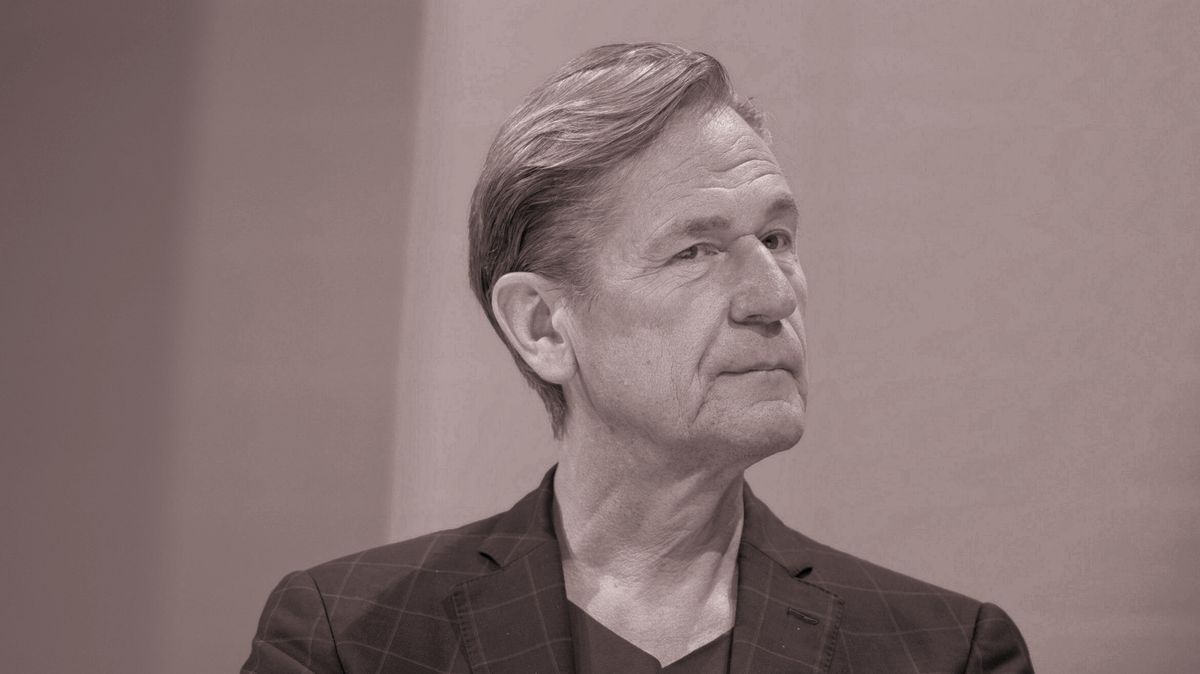
and notes on a changing of the guard at Politico, where Mathias Döpfner must now decide what he wants from Axel Springer’s flagship U.S. asset—and who he wants to run it. The Washington in-crowd is predictably handicapping internal candidates, but Mathias may have bigger ambitions.
🍸 Plus, on the latest episode of The Grill Room, Julia and I dug into Bari Weiss’s latest trials at CBS News, the challenge of turning
Tony Dokoupil into an influencer, and the network’s foray into “Whiskey Fridays”—a potential sponcon play that highlights the challenges of finding viable lifelines for a news industry in perpetual decline. Follow The Grill Room on Apple, Spotify, or wherever you prefer to listen.
Also mentioned in this issue: Will Lewis, Alex Burns, Ali Zelenko, Clare Malone, Carrie Budoff Brown, Matthew Hiltzik, Heather Riley, Hannah Natanson, Matt Murray, Cameron
Barr, Jeff Bezos, John Harris, Jim VandeHei, Jake Sherman, Jonathan Chait, Goli Sheikholeslami, Dasha Burns, Jan Bayer, Carolyn Ryan, Joe Kahn, Jamie Heller, and many, many more…
But first… |
-
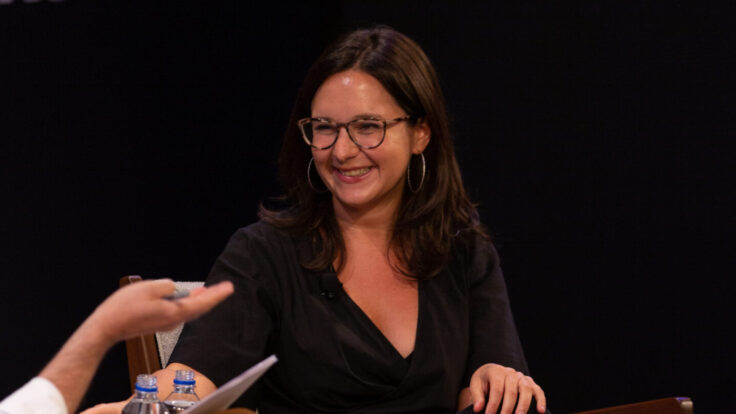
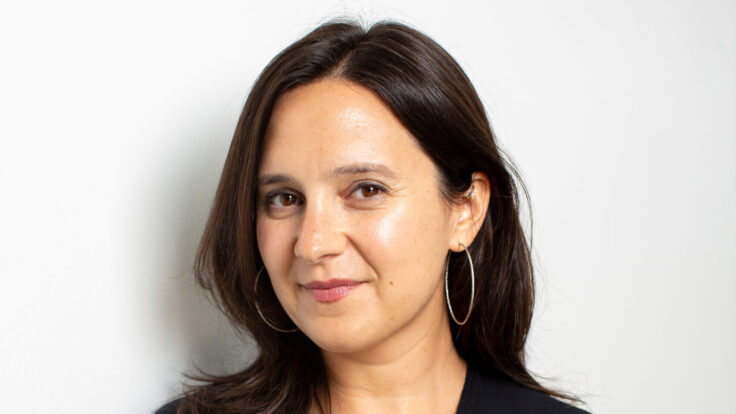
The Bari protectors: You may have heard that Bari Weiss is off to a bit of a rocky start at CBS News—the preempted 60 Minutes segment, the Trump genuflecting, the chaotic Evening News rollout, and, of course, the metastasizing tensions between her and much of her own staff, many of whom seem increasingly eager to leak the details of
her every misstep to the press. As I’ve often noted, this can be chalked up to Bari’s managerial shortcomings, as well as her inexperience in television news—and, yes, the fact that these organizations aren’t exactly littered with saints. (A recurring theme in these pages, as you may have noticed.) All that said, it might also be relevant to note that Bari is trying to surmount these challenges without a CBS News comms chief, a role that has been vacant since before her
arrival.
In lieu of an official CBS News P.R. lead, Bari has instead been outsourcing reputational upkeep to at least three different comms experts, none of whom actually work for CBS News. Heather Riley, an ABC News P.R. veteran who now has her own comms firm and had been enlisted to help former CBS News C.E.O. Wendy McMahon, is still managing day-to-day P.R. for the network between her obligations to other clients (including Politico and The Daily
Beast, among others). Paramount chief communications officer Mel Zukerman also recently tasked her deputy Ali Zelenko, an NBC News P.R. vet, with helping to manage Bari’s comms until they fill the role. Finally, in anticipation of a forthcoming New Yorker profile by Clare Malone that seems to have everyone in the front office in hysterics, Bari has enlisted crisis comms guru Matthew Hiltzik to run point on the
profile.
Meanwhile, I’m told Paramount is still searching for a permanent, full time CBS News comms lead. Beyond the usual requisite qualifications, they’re looking for someone who is “like-minded” with Bari. - Anonymous anchor inbox: On a related note, earlier this week I wrote about Bari’s decision to entertain the idea of corporate underwriting for the Evening News, a revelation that came to light after a reporter at
Zeteo obtained photos of the set mocked up as a dimly lit bar with overt Jack Daniel’s sponsorship. In response, an anonymous anchor from another news network texted: “If you work for CBS News and you stumble on something like that and your first reaction is to take a picture and send it to Zeteo? It’s quite possible that you don’t have CBS News’ best interests at heart and maybe don’t belong at a major news organization.”
- Post drama, Bezos hysterics:
The Washington Post’s front office has responded forcefully to the FBI’s search of reporter Hannah Natanson’s home. Will Lewis, the now rarely heard-from publisher, called it “outrageous.” Executive editor Matt Murray said the “extraordinary, aggressive action” was
“deeply concerning and raises profound questions and concern around the constitutional protections for our work.” The Post editorial board similarly condemned what it called “an aggressive attack on the press freedom of all journalists.”
Despite that robust institutional response, Post owner Jeff Bezos is facing scrutiny from a familiar chorus of critics who won’t be satisfied until he himself speaks out publicly. Former Post managing editor
Cameron Barr suggested Bezos was enabling the administration in his silence, The Atlantic’s Jonathan Chait wrote a whole column on it, and several outlets have aggregated a
report from Status’s Natalie Korach quoting disgruntled anonymous staffers.
I’m not convinced Bezos’s silence is the story here, nor am I certain that a
public statement from him would really help the situation. Indeed, the salient detail is that—for all the unfounded anxieties about the Post going MAGA—the institution itself is doing the right thing. - Shipley returns to port: Speaking of the Post, its former Opinion editor David Shipley is returning to The New York Times as editor-at-large. As you’ll recall, Shipley left the Post after Bezos decided
to scuttle the paper’s Kamala Harris endorsement and reinvent the section as a champion of free markets and free peoples. At the time, Bezos memorably noted Shipley’s lack of enthusiasm about that mission, writing, “If the answer wasn’t ‘hell yes,’ then it had to be ‘no.’” In the memo announcing his return, the Times referred to Shipley as “a principled, brilliant journalist,” which sure seems like commentary.
- And finally,
a correction…: In an item about layoffs at Politico this week, I listed enterprise managing editor Peter Canellos among the names of those affected. Peter is on book leave and is negotiating a new deal with Axel Springer in a different part of the organization, a move that he says is unrelated to the recent cuts. I regret the error.
|
And now to the main event… |
|
|
An era at Politico has been ending for the last decade—at least since the
departures of Mike and Jim, then Jake and Anna, and, of course, the sale to Axel Springer. But with John Harris ascending to the chairmanship, again, it’s finally Axel’s baby. And Mathias Döpfner may be looking outside the mothership for Harris’s successor. |
|
|
On Thursday, John Harris, Politico’s ruminative co-founder and
paterfamilias, informed staff that he was taking on a chairmanship role and would relinquish the editor-in-chief title upon determining an heir. “At some point in 2026, I’ll be passing on the editor in chief role to the best possible successor,” Harris wrote in a memo, noting that Springer C.E.O. Mathias Döpfner and Politico C.E.O. Goli Sheikholeslami had invited him to take part in the search. “When we find the best
leader, we will act swiftly.”
The change marks the end of many eras at Politico. It may seem like only yesterday in Washington, but it’s been a decade since Harris’s cofounders Jim VandeHei and Mike Allen defected to start Axios, and half a decade since the founding owner, Robert Allbritton, sold the company to Döpfner for $1 billion. Harris has remained with Politico throughout, serving mostly as editor-in-chief—a role he
reassumed in 2023, after a previous stint as chairman—and also as the site’s elder statesman and high priest.
In the intervening years, Politico has endured a prolonged period of soul searching, as Rosslyn kremlinologists well know. Once revered for its high-metabolism scoopage and highly influential flagship Playbook newsletter, it long ago morphed into a more durable but tepid transatlantic business built around a very expensive, policy-focused enterprise subscription business. This has
made Politico quite profitable, of course, but the dearth of groundbreaking or even exciting journalism has also put it at a far remove from the political zeitgeist it once defined.
The strength of the business aside, this has nagged at Harris over the years, particularly as his former colleagues—first Jim and Mike, then former Playbook co-authors Jake Sherman and Anna Palmer—left to launch Punchbowl and became formidable and outspoken
competitors. The histories and resentments have been recounted here and elsewhere far too often, as has the delta between, say, Mike’s agenda-setting tipsheet of yore and Jack Blanchard’s awestruck Tocquevillian diary of today. In any event, Harris’s myriad attempts to re-create the old magic—putting Playbook in the care of Ryan Lizza & Co. (remember
this?), luring Jonathan Martin back from the Times as a floating ambassador to Middle America, trying to fashion Dasha Burns as the second coming of Maggie—never quite worked out.
Harris’s passing of the torch has thus raised a
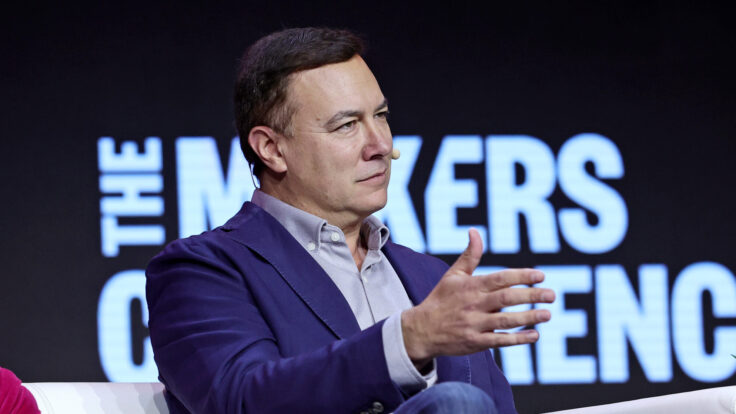
few obvious questions: First, what does Mathias Döpfner want Politico to be, and who does he want to run it? For Mathias, there’s quite a bit riding on those answers. A year and a half ago, he ceded control of Axel Springer’s core classified advertising business to KKR in order to assume full control of the smaller, $4 billion media enterprise, of which Politico is the flagship asset. And he appears to have big ambitions for it. Over the years, he has waxed poetic about turning Springer
into the leading digital media company of the democratic world, with Politico at the tip of the spear. If that is indeed the vision, is it enough for Politico to sell services to policy wonks and K Street insiders, or does it need to be something more? |
As Harris’s note made clear, Mathias has not selected a successor yet—and he is likely to
take his time. Sources with insight into his thinking noted that he and Jan Bayer, his acerbic deputy, will almost certainly canvass the field of potential hires from across the industry, rather than defaulting to an insider among Harris’s direct reports. “This isn’t The New York Times,” one source said, referring to the highly anticipated (but probably already decided) bakeoff that will ensue between managing editors Carolyn Ryan and
Marc Lacey when executive editor Joe Kahn announces that he wants to return to the sedentary life. Several sources noted Mathias’s decision to tap longtime Wall Street Journal veteran Jamie Heller as editor-in-chief of Business Insider as evidence that he might look to the outside.
Still, unsurprisingly, Harris’s move has inspired the Washington in-crowd to start handicapping potential internal candidates. Most of these
conversations very naively assume pole position will go to Carrie Budoff Brown, the former top Politico editor who returned to the organization last year after a sojourn at NBC’s Meet the Press. She has spent the last five months serving as executive editor and senior vice president of Politico Europe.
In their endless myopia, Washington journalists tend to plot their careers years, if not decades, in advance, as if they were truly candidates for public
office. And in this spirit, many have rightly noted that Budoff Brown, who wasn’t entirely a raging success in her previous editorship of Politico, was clever to moor herself in Europe while Harris II played out. And yet, this facile handicapping may also reflect the narcissism inside the mothership in Arlington that only an insider could succeed Harris. Also, as you’ll recall, Budoff Brown’s tenure at Meet the Press
wasn’t exactly a raging success, either.
For a time, Politico insiders anticipated a bakeoff between her and Harris’s favored son Alex Burns, a divisive early Politico reporter who now serves as North American editor. Fairly or unfairly, however, Burns has established a reputation for a truculent and prickly leadership style that has
almost certainly put him at a disadvantage in Berlin. At the same time, some insiders noted that Burns maintains the support of both Harris and Sheikholeslami, which may or may not prove meaningful. (At the end of the day, this is Mathias’s decision.) Deputy editor-in-chief Joe Schatz is also said to be in the mix. Some have suggested that Mathias will consider Jonathan Greenberger, the executive vice president who joined Politico after
a career at ABC News, though he can reasonably be seen as a more logical successor for the chief executive office.
Anyway, the preoccupation with internal candidates probably fails to appreciate the true scope of Mathias’s ambition. He is, after all, a guy who once tried to acquire the Financial Times, settled for Business Insider, and is now shopping for other properties—while
lamenting that there aren’t enough compelling U.S. media assets on the market. Presumably, he didn’t expand this
burgeoning media empire just to manage for margin. And, while the policy verticals may buoy the P&L, chances are he feels the ennui emanating out of Rosslyn, and may look beyond the newsroom to treat it. |
|
|
The industry’s go-to source for unflinching reporting on the trillion-dollar business of artificial intelligence -
perhaps the single most important technology of our time. Ian Krietzberg, the powerhouse journalist behind The Deep View, delivers twice-weekly insights into the latest dealmaking and breakthroughs in A.I., and how the intersecting worlds of finance, entertainment, media, and politics are being transformed in its wake. |
|
|
Puck sports correspondent John Ourand and a rotating cast of industry insiders take you inside the executive suites
and owners boxes where the decisions that shape the entire sports business are made. You’ll hear interviews with players, network execs, and everyone in between. The Varsity is an extension of John’s private email for Puck by the same name. New episodes publish every Wednesday and Sunday. |
|
|
Need help? Review our FAQ page or contact us for assistance. For brand partnerships, email ads@puck.news. You received this email because you
signed up to receive emails from Puck, or as part of your Puck account associated with {{customer.email}}. To stop receiving this newsletter and/or manage all your email preferences, click here. |
Puck is published by Heat Media LLC. 107 Greenwich St., New York, NY 10006 |
|
|
|