Welcome back to The Varsity, our thrice-weekly private email on the sports business. Happy Juneteenth to all. I spent this morning reflecting on the holiday and then spending time with my family. I teed it up with my son for a quick nine at Rock Creek in D.C. It’s not Congressional, but at least I broke 50. Marchand has the day off from writing jokes about himself.
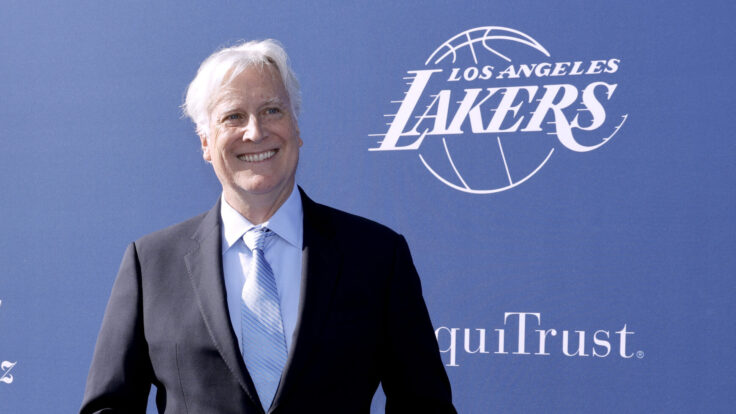
Before we get started, a quick note on Mark Walter buying the Los Angeles Lakers for $10 billion. When I saw the news, my first thought went to A-Rod. After all, Alex Rodriguez and Marc Lore agreed to buy the Minnesota Timberwolves and Lynx for $1.5 billion in 2021, though the fraught deal lingered for years. Nevertheless, it is a bargain basement price compared to the gilded Lakers, Celtics ($6.1 billion), and Mavericks (valued at $4.7 billion after Mark Cuban sold his majority stake). These sales prices show that good timing combined with top franchises bring once-unthinkable price tags.
My second thought went to Jody Allen, the executor of Paul Allen’s estate, who is in the process of selling the Portland Trail Blazers. This sale will be a litmus test of whether these bonkers prices apply to smaller markets. Will the Blazers’ sales price be inflated due to the Lakers or will it settle near the T-Wolves? That’s the biggest NBA storyline to watch over the next few months.
Pod alert: We’re in the Summer of Soccer now, which is why I asked former U.S. team star and current commentator Alexi Lalas to join the Varsity podcast this weekend for a conversation about what’s working and what needs help. Also, make sure you listen to yesterday’s show—CNBC’s Alex Sherman and I opened our notebooks and chatted about the issues facing the biggest media companies in this ever-evolving sports landscape.
Reminder: We’re doing a live podcast taping of The Varsity at the NASCAR race in Sonoma the weekend of July 12, with president Steve Phelps. We’ll cover everything impacting the sport right now—and we may still have some availability if you’re interested in experiencing NASCAR in wine country. (Trust me, NASCAR is one of those sports you can’t truly appreciate until seeing it live.) Just email Fritz@puck.news.
|
Player of the Week: Brian Rolapp
|
|
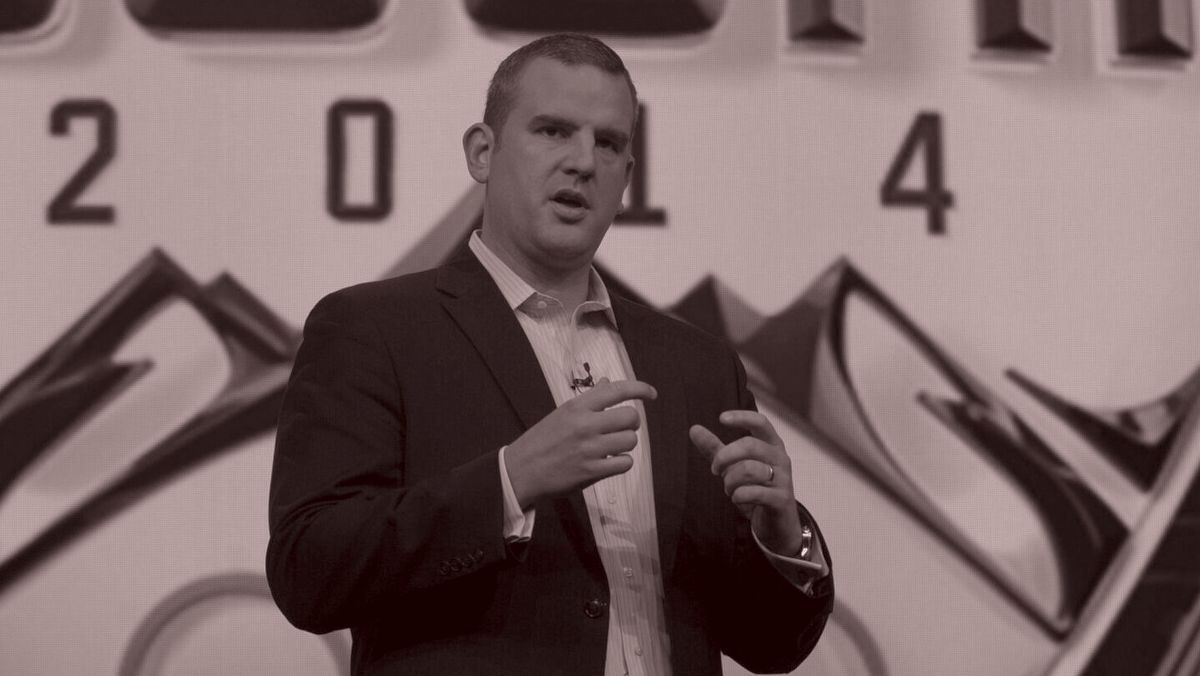
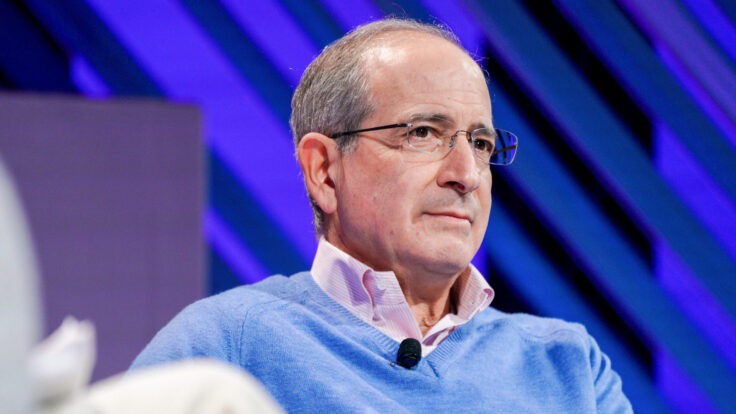
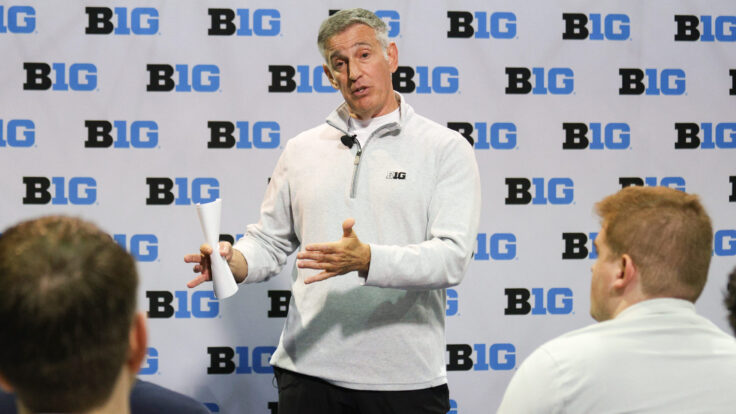
Brian Rolapp, the NFL’s top business executive, has been treated like a conquering hero as he prepares to take over the PGA Tour. Reaction from the rank and file has been overwhelmingly positive, and Tiger Woods praised the search committee’s unanimous choice for his ability to think outside the box. Rolapp hit all the right notes as he addressed the media a few days ago, drawing on two decades of experience with the Shield. Expect him to enjoy an extended honeymoon period as he takes the reins at the Tour.
|
Down to the J.V.: Gianni Infantino
|
|
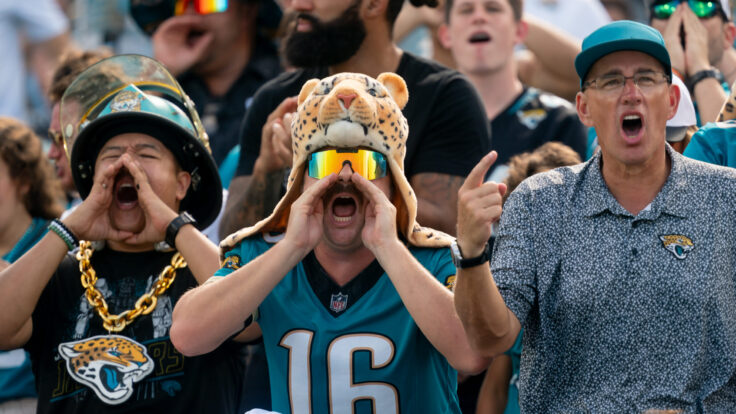
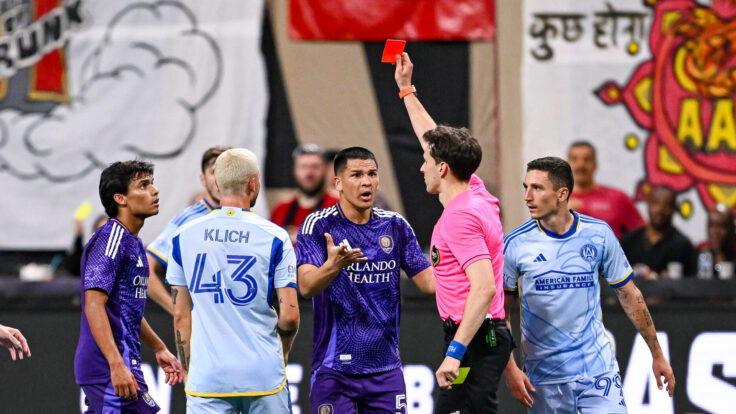
Not only is the FIFA Club World Cup being played in so many half-empty stadiums, but its games are largely stuck on DAZN, which doesn’t have much of a foothold in the States. While a few of the games are simulcast on TBS and TruTV, the tournament has failed to break through in the U.S. sporting landscape, and that’s on FIFA president Gianni Infantino.
|
|
|
|
A MESSAGE FROM OUR SPONSOR
|
PERFORMANCE UNLEASHED
Agile, powerful, iconic. The Range Rover Sport is a dynamic SUV with a distinct take on sporting luxury.
EXPLORE
|
|
|
- YouTube and sports: YouTube’s growing infatuation with live sports has become the infatuation of the entire industry. That’s why I was so interested to listen to YouTube C.E.O. Neal Mohan’s conversation with The Ankler’s Janice Min on Tuesday in Cannes. Among other things, Mohan explained how his Sunday Ticket deal led him to cut a deal for his platform’s first exclusive NFL game. “My son is a 17-year-old sports nut, but everything that he watches is through the lens of his favorite YouTubers and sports creators,” Mohan said—both talking his own book and noting an inexorable trend in the industry. “The NFL recognized that, and when it came onto YouTube, despite them being the king of the hill, we aged down their audience, because we could actually allow that content to live alongside all of this other amazing creator-first sports content that was happening on YouTube. That was the flywheel that I was betting on, and that we’ve seen happen in Sunday Ticket, that gave me conviction to double down and do this live game as well.”
Mohan was obviously noncommittal about future engagement in the space, but he singled out YouTube’s experience with a Brazilian soccer league, in which users watch the games alongside their favorite creator, Manningcast-style, as a harbinger of things to come. “We actually took that idea and did a pilot of that with NFL Sunday Ticket last season,” he said. “So expect to see more of that type of creator innovation as well.”
- More with YouTube and sports: Perhaps YouTube’s intentions in the sports market are best demonstrated by its smuggling of Justin Connolly from Disney as global head of media and sports. Indeed, the high-profile poaching forced Disney’s lawyers to attempt to block the move—a virtually unprecedented measure in this chummy industry. Earlier this month, as readers of The Varsity already know, a Los Angeles judge denied Disney’s bid to block Connolly from starting his new YouTube role. Now, an appeal is underway.In Tuesday’s edition of Puck’s great What I’m Hearing private email, my partner Eriq Gardner updated readers on the ongoing legal battle.
“The ruling from L.A. Superior Court Judge James Chalfant was certainly head-turning,” Eriq wrote. “Connolly, who spent two decades negotiating deals for ESPN, rising to president of platform distribution, re-upped with Disney just last year and was earning more than $6 million annually before Google lured him away with an even bigger title. While California strongly favors employee mobility, Disney believed it had the legal advantage, thanks to recent precedent validating so-called ‘fixed-term’ employment contracts for a specified period. Connolly and Google pushed back, pointing to a clause that allowed Disney to terminate the contract at will. That, they argued, made it a one-sided agreement and rendered the noncompete unlawful.”Eriq continued: “Judge Chalfant appeared to agree, finding that Disney hadn’t shown a likelihood of success on the merits and denying the injunction. But the fight isn’t over. The appeal now not only puts Connolly’s future at YouTube in question—just as the platform renegotiates its ESPN distribution on YouTube TV—but could also shape how freely media executives can jump to rivals in the streaming era. Disney will likely push for an expedited review.”
- Sports media Pangaea: Sports leagues are more than a little bullish about the growing involvement of streaming companies in rights negotiations. But CNBC media reporter Alex Sherman identified the coming media reshuffling as the industry’s most important narrative over the next 12 months, with NBCU and WBD breaking off their cable assets and Paramount set to be a very different company in a year.“
All of those media assets are not going to last on their own,” Sherman predicted on this week’s Varsity podcast. “They’re going to find partners. They’re going to consolidate somehow. Nobody knows how yet. The media landscape over the next 12 months feels like the scene in a movie where you put all the pieces together on the battlefield, but nobody has yet raised their sword and yelled, ‘Charge!’ These things will come together somehow.”
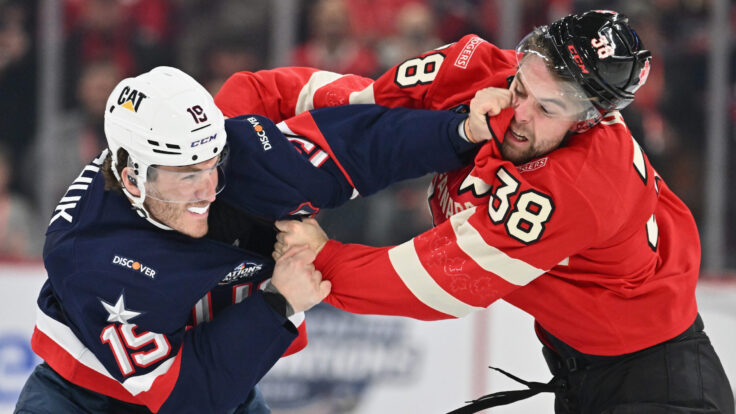
- Stanley Cup viewership woes: It doesn’t take a genius to figure out why TNT Sports’ viewership for the Stanley Cup Finals was so underwhelming this year (a 2.5 million viewer average, making it the least-watched non-Covid Finals in almost 20 years). Yes, the six-game series, won by the Florida Panthers over the Edmonton Oilers on Tuesday, was exciting, with three of the first four games going to overtime. But the presence of a Canadian team obviously depressed TNT’s U.S. numbers, keeping the channel from counting viewers from two home markets. Plus, it hurt that the games were relegated to cable. Back in April, TNT was in 61.5 million homes—a number that is presumably smaller today.
Before the series began, NHL commissioner Gary Bettman claimed he was unconcerned about its TV numbers, and I believe him. But he also knew TNT would suffer. (In fact, the numbers probably came in lower than he expected.) At least the numbers are up slightly in Canada on Sportsnet and CBC.
- Odds and ends: At least a half-dozen friends—none of whom work in the business—forwarded this Joon Lee story to me about how sports is becoming too expensive for fans. Lee’s story clearly touched a nerve: Fans complained that more games are behind paywalls, and the cost of attendance has become prohibitively expensive. As one sports-biz type texted me, “The golden goose is being squeezed pretty hard. I think we’re either living in the peak era of sports as entertainment right now, or we’re already a little bit past it.”
Also: Kevin Draper, the former Deadspin scribe who joined The New York Times in 2017, is getting out of the sports business altogether to become the paper’s agricultural correspondent. Draper had covered sports until the Times disbanded its department in 2023. At that point, Draper joined the business desk.Lastly, in Tuesday’s issue, I wrote about May’s Nielsen Gauge index, which found that streaming services had eclipsed broadcast and cable TV in viewing share. Fox exec Mike Mulvihill offered this analysis via X: “The paradox of the business is that streaming has surpassed broadcast and cable combined, while marquee sports also keep hitting multiyear or record highs on broadcast. Only makes sense if you think of live and on-demand as distinct businesses, as we’ve been saying for years.”
|
|
And now, on to the main event…
|
|
|
|
NBC Sports president Rick Cordella chats candidly about Peacock’s streaming journey, leveraging premium sports to drive subs, the prophetic decision to carry the Big Ten, why they got into the NBA, and what linear and streaming still have in common.
|
|
|
|
Peacock, in many ways, has become a fascinating totem of legacy media’s journey into the streaming age. Launched in the summer of 2020, NBCU appeared keen to make a Goldilocks gamble in the streaming wars. Perhaps befitting its heritage as a cable company and cable systems provider, Peacock defied the pure-play logic of the day and entered the world as an AVOD system, leaning into the parentco’s strength in the advertising industry. And unlike Netflix et al., it made measured bets on new general entertainment options. All in all, then-C.E.O. Jeff Shell seemed to prophesize that the companies’ journey would be temperate and gradual. NBCU wasn’t going to disrupt itself, but rather build out streaming in concert with its linear assets.
Anyway, that all seems like a lifetime ago, and in a different industry—before the advent and siphoning of WBD, before Versant, before the tortured sale of Paramount, before Venu temporarily entered our lives. Peacock, too, has evolved during that era: Its president, Kelly Campbell, has come and gone. It spent nine figures on a couple NFL games, and tested the theory that leaning into the Olympics would drive engagement. Meanwhile, Peacock has minimized cash burn and stabilized churn by establishing itself as an extension of its sister business, NBC, which is embracing a post-Versant future of eventized sports and rightsized general entertainment. It’s essentially all in on a Patrick Mahomes and Bethenny Frankel gambit.
This strategy was the brainchild, in part, of Rick Cordella, a senior executive at Peacock in its infancy and now the president of NBC Sports. In those early days, Peacock was programmed like many of its peers—heavy on library content and general entertainment, and operating under the fallacy that live sports were the province of linear. But when Cordella noticed that Liverpool and Arsenal had a game scheduled on the streamer’s launch day, he made an arrangement to stream it. “It wasn’t part of any big strategy,” Cordella told me this week. “I just wanted to make sure we had a good day.”
|
|
|
|
A MESSAGE FROM OUR SPONSOR
|
PERFORMANCE UNLEASHED
Agile, powerful, iconic. The Range Rover Sport is a dynamic SUV with a distinct take on sporting luxury.
EXPLORE
|
|
|
The move proved to be prophetic, as Peacock executives saw almost immediately that the Premier League soccer game drove the most subscribers that first day— by far. Still, Cordella and the rest of Peacock’s management team remained somewhat skeptical about sports streaming; after all, they only had data from one game. But they scheduled at least one Premier League game a week for the rest of the season, and continued to see big numbers. That’s when, Cordella said, “a light bulb went off.”
These days, Peacock now boasts a larger sports portfolio than any other general entertainment streaming service. In 2025-26, Peacock will carry more than 7,500 hours of live sports—more than Netflix, Amazon Prime, Paramount+, Hulu, Max, and Apple TV+ combined. The streamer has big-time rights including the NFL, Olympics, NBA, Big Ten, and Spanish-language World Cup. They also have rights to more niche sports with devoted fan bases, like the Tour de France and Six Nations rugby championship, many of which will be exclusive to the service.
As my partner Julia Alexander noted this week, WBD C.E.O. David Zaslav learned the hard way that some sports strategies don’t work for all streamers. Zaz found that sports simulcasts, without meaningful stakes, failed to move the needle for his streaming service.
Cordella, instead, has doubled down on major events, and leveraged Peacock as a value-add in NBC Sports’ deals with various leagues. Whether it was the Wild Card game, Olympics overtime coverage, WWE, or Big Ten football, Cordella saw that sports brought in new subscribers more quickly and efficiently than entertainment programming. Perhaps more importantly, those sports-minded subscribers largely stuck around. “There’s a general sense that sports fans are monolithic—that they represent only one demographic and only watch sports,” Cordella said. “That couldn’t be further from the truth.”
|
Peacock’s decision to carry Big Ten games would prove to be its most consequential sports move. Until then, Peacock’s sports strategy had largely focused on simulcasts and smaller sports; with the Big Ten deal, it was investing in exclusive games with premier teams. “The Big Ten moment was the first time we invested significant money in exclusive sports for Peacock,” Cordella said. “If you’re a big-time college basketball fan—men’s or women’s—Peacock’s probably a pretty big part of your diet.”
As it turned out, those exclusive games yielded even higher levels of retention, and the viewers who subscribed just to watch a game tended to stick around and watch other content. “It’s like a door-buster sale,” Cordella said. “On Black Friday, people got in the door because you had this piece of content, but they stuck around and bought other things on the shopping list.” (As Julia recently pointed out, the LTV-CAC journey hasn’t been entirely seamless. While the service has grown to 41 million subscribers, it still lost $215 million in the first quarter this year.)
The Peacock sports strategy will evolve even further this fall, when it picks up 50 exclusive NBA games, including playoff games. For Cordella, the NBA fills a hole in Peacock’s spring sports schedule. “One of the things that drew us to the NBA was the fact that it’s premium content in the spring, when there aren’t a lot of other sports happening. The fall landscape is dominated by college football and NFL. In the spring, we have events like the Derby, the U.S. Open, and Preakness, but those are one-day events. To have the NBA regular season and playoffs all the way through May will hopefully keep people engaged and keep those sub numbers up. When you run a streaming service, there’s always a hole in the bucket. You have to add more water to the top of the bucket to keep it filling up. The NBA, hopefully, is that water.”
If Cordella sounds like he’s talking about linear strategy, it’s because Peacock really has become integrated into the NBCU programming strategy. And in this regard, it’s a novel bet that linear and streaming may have more in common than many originally considered.
|
|
On Amazon’s NASCAR ratings: “Imagine if a broadcaster highlighted demo viewership numbers after a major event the way Amazon has—reporters would immediately ask, ‘How bad was the viewership?’ It’s a double standard. Traditional broadcast networks are scrutinized if they don’t lead with total audience numbers, yet streamers are routinely given a pass, with media often defaulting to demos or vague metrics in their coverage.” —A media executive
On the Summer of Soccer: “Between the FIFA Club World Cup and CONCACAF Gold Cup, it’s pretty clear that the soccer world is drawing way too much money out of the U.S. market. It feels like a bunch of racketeers. I can’t imagine that either MLS or U.S. soccer is really thrilled at how much the rest of the world is trying to extract as much money as possible from the U.S. market.” —A journalist
On recommended pod topics: “I’d love to hear a discussion on the future streaming home for TNT Sports content once it separates from Max. Could there be one bidder seeking all of its streams—an ESPN or DAZN—or could it be looking into selling rights to separate streamers (Paramount for March Madness, ESPN for the CFP)?” —A Varsity subscriber
On Dale Jr.’s podcast appearance: “What a treat that was to hear Dale Earnhardt Jr. I’m amazed at the growth of his emotional intelligence and his ability to speak plainly. His answer to your last question about what we should look for in the documentary brought a whole new dimension to the story: ‘He never should have made it.’ I’m probably within a very small group that listens to Dale/Dirty Mo Media pods and is a Puck Inner Circle sub.” —A happy Puck subscriber
On Marchand: “I was so happy to see you skip your Marchand joke on Monday. Please stop. They’re not funny.” —A retired journalist
More on Marchand: “Your Marchand joke on Tuesday was great. One of your best yet.” —A Varsity subscriber
|
|
Have a great weekend,
John
|
|
|
|
Finally, a media podcast about what’s actually happening in the media—not the oversanitized, legal-and-standards-approved version you read online. Join Dylan Byers, Puck’s veteran media reporter, as he sits down with TV personalities, moguls, pundits, and industry executives for raw, honest, sometimes salacious conversations about the business of media and its biggest egos. New episodes publish every Tuesday and Friday.
|
|
|
|
An essential, insider-friendly Hollywood tip sheet from Matthew Belloni, who spent 14 years in the trenches at The Hollywood Reporter and five before that practicing entertainment law. What I’m Hearing also features veteran Hollywood journalist Kim Masters, as well as a special companion email from Eriq Gardner, focused on entertainment law, and weekly box office analysis from Scott Mendelson.
|
|
|
Need help? Review our FAQ page or contact us for assistance. For brand partnerships, email ads@puck.news.
You received this email because you signed up to receive emails from Puck, or as part of your Puck account associated with . To stop receiving this newsletter and/or manage all your email preferences, click here.
|
|
Puck is published by Heat Media LLC. 107 Greenwich St, New York, NY 10006
|
|
|
|