|
Greetings from Washington, where Puck is hosting its second-annual First Amendment soirée at French Ambassador Laurent Bili’s residence in Kalorama tonight. I look forward to seeing many of you there; fêting the incomparable Andrea Mitchell, our guest of honor; and swapping notes over French 75s and boulevardiers—the latter of which, quite fittingly, was invented a century ago by an American journalist in Paris.
In tonight’s email, news and notes from One World Trade, where the Condé Nast union’s forever war with C.E.O. Roger Lynch and Grande Dame Anna Wintour has—once again—gone nuclear. The whole drama is indicative of just how sad things have become at the once-illustrious publishing giant, and also raises a question: Is Roger just receiving bad advice, or is he ignoring the advice altogether?
But first….
⚖️ Harry and Hugh vs. Rupert and Will: Prince Harry, Hugh Grant, and the other public figures leading a years-long effort to sue Rupert Murdoch’s News Group over the phone-hacking scandal amended their lawsuit this week to name Murdoch and other former executives in the suit. Among those named is Will Lewis, the Washington Post publisher and C.E.O. who, in a previous life, had been tasked by Murdoch to mop up the scandal. Lewis told me he would not comment on the matter, maintaining his posture since day one. Ditto a rep for Rupert. To be fair, it’s hard to see what advantage either one would gain from engaging here—though both men may now be forced to, if and when the case goes to trial in January of next year.
☄️ A P.R. firm for the Elon age: Lulu Meservey, the former Activision Blizzard P.R. chief, has launched her own communications firm with a fiery manifesto that plays right to the hearts and minds of the anti-media Silicon Valley set (you know, the Elon and Peter Thiel types and the All In crowd, who just detest the press). In essence, according to Lulu: The media is irrelevant, “traditional P.R. is dead,” and tech founders must passionately tell their own stories on social. It’s all quite dramatic and, as one P.R. veteran noted, “very Lulu.” It also feels pitch-perfect for the moment. (Elon liked it.) Just one thing I’m hung up on: In the very same breath in which she announced this new firm, Meservey also told Axios that it would not be taking on any new clients. Okay, then…
|
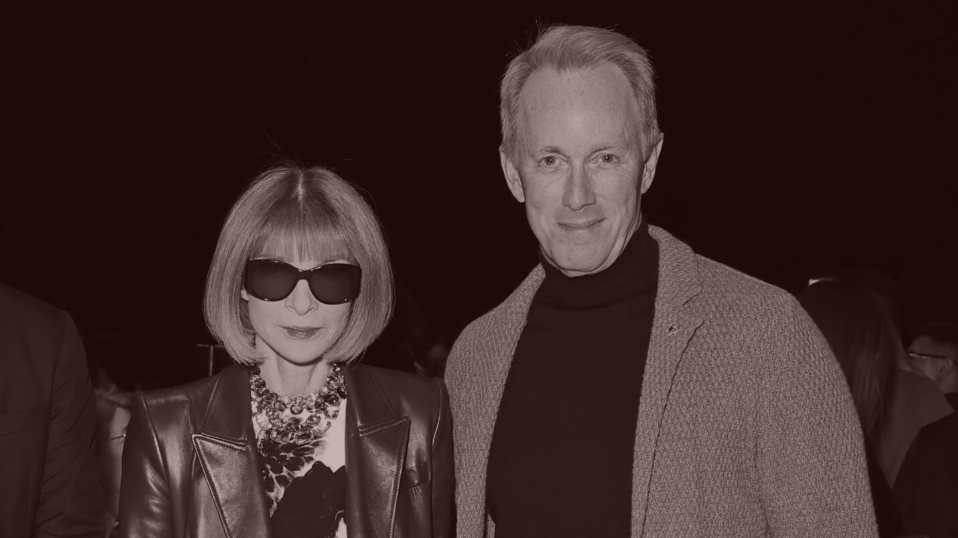
| This week, Roger Lynch, the Condé Nast C.E.O., and Anna Wintour, the chief content officer, artistic director, and company grande dame, were forced to momentarily set aside the customary duties of running a global mass media company and once again contend with that incessant, tick-in-the-ass distraction that is the Condé Nast Union. For years, of course, the union—which represents Vanity Fair, Vogue, Bon Appétit, etcetera—has been trying to negotiate a contract with management, to no avail. And in recent months, amid the specter of inevitable layoffs, the union has become increasingly confrontational: marching up to Lynch’s oft-vacant office in protest and staging an Oscars-themed walkout, among other tactics. None of this has brought the two sides any closer to détente, of course: The union’s demands are ambitious—or “ridiculous,” as not one but two Condé Nast journalists put it to me. Meanwhile, it goes without saying that the leadership has demonstrably struggled to finesse the issue.
In any event, on Tuesday, the screw took another turn. In the wake of a particularly disastrous bargaining session, the union’s lead representative, Mark Alan Burger, informed his comrades of an unexpected setback: Not only had management refused to put forward any new proposals, they had also shared their intention to cut five additional positions on top of the 94 staffers who had already been targeted for layoffs—that is, once a bargaining agreement is finally reached, because the company can’t lay them off until then—and abruptly concluded the meeting an hour ahead of schedule. And this was just days after Lynch had told Axios that he had no further plans for staff reductions. To add insult to injury, Lynch appeared to blame the need for five additional scalps on the union’s failure to reach an agreement. And sure, the extra five heads may have been a technically de minimis addition to the overall carnage, but it was the latest micro-disaster in a series of P.R. nightmares for Lynch, who appears to either be receiving bad advice or ignoring all advice altogether. “There was a massive blow-up, and now the whole war has gone nuclear,” one Condé Nast journalist told me.
Burger’s strategic response to this affront was a performative digital dissent, YIP tactics for the W.F.H. era. Burger sent an email to Lynch, Wintour, and Stan Duncan, the unpopular chief people officer, protesting the additional layoffs and the broader attempts to intimidate and retaliate against the union—and cc’d all union members while simultaneously encouraging them to “reply all now!” In the minutes that followed, Lynch, Wintour, Duncan, and the entire Condé Nast staff were inundated with several dozen emails, many tinged with what one amused onlooker described as “Gen Z sass.” A sampling of the subject headings: “Layoffs are out of vogue, so last season,” “ULPs, I Did It Again!” and “What’s disgusting? Union busting!” Many of the emails were quite disparaging of management, likening the Condé corporate suite to immature children and circus clowns, or worse.
In retaliation to that retaliation, Condé management announced that it had taken the extraordinary step of filing its own unfair labor practice charge against the union for its refusal to negotiate in good faith. Chief among its complaints was the union’s demand for no less than seven months of severance, as well as its demand that Condé reduce the number of layoffs from 94 to 28—a rather significant adjustment to the P&L. In light of the union’s stubbornness, management confirmed it would indeed have to pursue additional “cost-saving measures to offset the cost of continued salary carrying costs that are not in our 2024 budget.” This last note only highlighted the utterly preposterous circumstances in which Condé Nast now finds itself: Because it can’t lay off these 94 people yet, it is continuing to pay talented journalists like Vanity Fair’s Emily Jane Fox and Joe Pompeo full-time salaries to do little to no work—a rather costly subsidy for the rubber room. (Fox’s last article was published in October.)
Presumably, Lynch and Wintour tried to keep their distance from the day’s drama. One imagines the union missives landing in the inboxes of Wintour’s assistants, who then summarily deleted them to spare their boss the indignity of such impolitesse. And yet, buried beneath the harsh rhetoric was, in at least a few instances, a rather astute analysis of Condé’s current predicament: “Your lawyers are wasting your money, your workers are harboring more and more distrust in you as leaders, and … your readers are beginning to turn on you for the way you are beginning to devalue some of your biggest legacy titles for chump change while demeaning your workers and engaging in blatant union busting,” Carrie Courogen, an associate director for creative development at Pitchfork, wrote. “Condé Nast currently looks like the Titanic after it snapped in half, and leadership looks like those playing violins on the deck while the whole thing sinks. How is that not embarrassing for you?”
Indeed, the whole affair is embarrassing, and, no matter what you think of the leadership or the union, it’s a very sad, dismal turn of events for a storied publisher that, not so long ago—in the Tina-Graydon heyday, when it employed the best writers, threw the best parties, and set the cultural zeitgeist—wouldn’t have been caught dead in a situation like this. (The CN of those days never had to worry about unions because they paid so decadently and viewed trips on the Concorde as table stakes…) Of course, the union fight is just one of the many indignities that Condé Nast is enduring on the long road to perdition, or, perhaps, to its eventual reinvention as a glorified ad agency, wherein the journalism services the advertising, rather than the other way around. Indeed, even in the old Florio and Da Silvano era, the salespeople set the agenda and the culture, but the money was good enough and the work was great enough that none of the creative people gave a shit.
Outside of The New Yorker, where David Remnick has built a sustainable, subscription-based recurring revenue model, the trend lines at Condé Nast all seem to be pointing down. Vogue maintains its halo in the fashion market, but is still subject to the print industry’s attrition, and surely Wintour is now just one or so more Met Galas away from retirement. Vanity Fair is, it goes without saying, a thinner and flimsier version of its former self, and Radhika Jones a shadow of her predecessors—no matter how hard she tries to perpetuate, via her Instagram feed, an image of herself as a Hollywood insider.
One of the great riddles and charms of Condé Nast was that it was both the brain child of Si Newhouse and a true reflection of his inimitable personality (no garlic in the cafeteria, the sweatshirt, etcetera). An avid and rarefied collector, Si selected editors and publishers as if they were prized artists. And he delighted in their growth and success as only a true patron could. He also had the inscrutable ability to tolerate their whims, manage their vanities, and harness their talents. Nearly a decade after his passing, his heirloom will obviously live on in perpetuity, but it was never going to be the same without him. |