Welcome back to The Varsity. I’m John Ourand, preparing for a
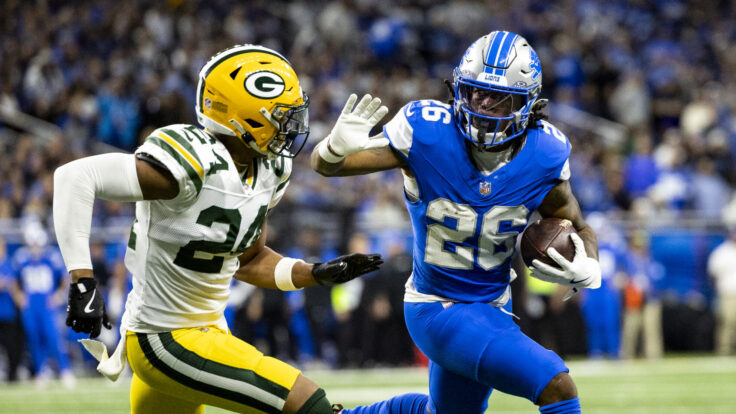
Monday Night Football matchup that has a couple of major local angles as the Commanders take on Gonzaga High alum Caleb Williams. Then I’m catching the Acela up to New York for our inaugural In the Arena sports media conference with our pals from MoffettNathanson. It has been sold out for a week—we’re at full capacity for a lineup that includes Michael
Rubin, Adam Silver, Eric Shanks, Gerry Cardinale, Josh Harris, and many more. Our only ask of attendees: If you see Marchand busking on the sidewalk outside our event, please be nice. He means well.
🚨🚨 Pod alert: New York Times reporter Ken Belson, whose tome on the NFL drops tomorrow, joins the
Varsity podcast on Wednesday. We’ll talk about Every Day Is Sunday and some of its biggest characters—Roger Goodell, Jerry Jones, and Robert Kraft, among them. We’ll also discuss some of the biggest business issues facing the NFL over the next few years: the next rights deal, the forthcoming NFLPA negotiation, etcetera.
Also, make sure to listen to yesterday’s episode in which NBC Sports’s Frank DiGraci and Noah Eagle offered a preview of the NBA season. Tune in here and
here.
Okay, let’s get started… |
|
|
A MESSAGE FROM OUR SPONSOR |
Greatness isn't achieved in an instant. It's tested until there is no question — only performance. |
|
|
- The Champions League rights skirmish: The biggest sports rights deal outside of the U.S. officially commenced this afternoon. UC3—the joint venture between UEFA and the European Football Clubs—and Relevent Football Partners, their commercial partner, launched a tender process that should lead to a deal for Champions League rights by the end of next month. Traditional media companies and streamers have been told to submit bids by November 19. A winner is expected to be
announced shortly afterward.
This bidding process will, in many ways, serve as an inflection point for this moment in both the sports rights marketplace and the final stages of the streaming wars. For starters, the Champions League features clubs from France, Germany, Italy, Spain, and the U.K. Second, past auctions have resulted in five separate deals for each territory. Now, UC3 and Relevent have an opportunity to sell universal deals to a global streamer like Netflix, Amazon, or
YouTube.
Relevent and UC3 also seem to comprehend their hand at the table. Whereas past deals had a three-year term, they are now accepting bids for four-year lockups. This process could also presage the future of NFL, college football, and NBA auctions—the next wave of negotiations that will cleave the haves of the business from the have-nots. The groups have another inducement for these hyper-streamers, too: The Champions League plans to hold the first match of the 2027 season,
featuring the 2026 champion, as a stand-alone eventized game. - A final note on the UFC deal: I know, I know, you’re sick and tired of reading about Paramount’s seven-year, $7.7 billion deal for UFC rights. But here’s a worthwhile coda: My partner Matt Belloni recently discussed the deal with TKO honchos Ari Emanuel and Mark Shapiro in a two-part conversation on his great podcast, The Town. As they explained to Matt, both Emanuel and Shapiro wanted UFC rights to go to one media company. But in the heat of the negotiations, they expected the package to be split between Netflix and another media company. “Netflix didn’t want the volume at the end of the day,” Shapiro said. “They
wanted just the premium events. … At first we were hoping Paramount would take the [other events], and we would just do the premium ones with Netflix.” Then, in the second part of Matt’s interview, Emanuel noted that Paramount paterfamilias Larry Ellison was involved in Paramount’s decision to make a bid for UFC rights.
- NBC on the bench: Nearly two decades ago, NBC Sports executive producer Sam Flood earned a lot of praise for sandwiching a reporter between the two hockey benches during the network’s NHL productions. This year, as NBC prepares for the NBA to return to its airwaves, Flood will put its analysts next to each bench in what the league calls its courtside “Hollywood seats.” NBC tested the concept with analysts Robbie
Hummel and Austin Rivers during a Summer League game in San Francisco between the Heat and Warriors. The bit was successful enough that they plan to use it once a week during Peacock’s exclusive Monday night games.
When NBC first brought up the concept, coordinating producer Frank DiGraci told me that 10 coaches supported the idea right away. After the test run over the summer, more came on board. And now, with the season
about the start, even more coaches are supportive. “As we’re getting closer and picking the seats, teams are actually buying into our vision,” DiGraci said on the Varsity podcast. “They’re really getting into it.” - Berman’s NWSL extension: It’s easy to see why the National Women’s Soccer League extended commissioner Jessica Berman’s contract for another three years. The league hired Berman in 2022 to professionalize an
organization that seemed besieged by scandal. Over the ensuing three years, Berman has signed media deals with CBS, ESPN, Amazon, and Scripps, and quietly extended a collective bargaining agreement with the players union—a notable contrast from the sitch currently bedeviling the WNBA. Congrats, Jessica.
- College football’s ICE ads: Have you noticed the ICE recruiting commercials that have run during college football games over the past couple of weeks?
I’ve seen them during SEC games on ABC and ESPN, but they’ve appeared on other networks, too. Per PBS, U.S. Immigration and Customs Enforcement had spent $6.5 million on these ads as of last week. I’m told that a 30-second ad during the big primetime college football games generally goes for around
$300,000.
Because these are one-off ad buys and obviously not part of a general election, networks are charging top dollar for these spots, sources told me. (By law, networks have to give candidates for public office the lowest rate that was sold in a particular game—a rule that doesn’t apply here.) Once sold, network ad sales execs send the commercials to their legal departments to make sure they pass all the standards-and-practices checks they have in place. I guess these
did.
|
Speaking of controversial ad buys… |
|
|
The billionaire oilman, former jock, and Texas Tech trustee has been on a mission
to allow conference executives to pool their college football rights and sell them off like Powerball tickets to the streamers. Herewith, the blowback to the blowback. |
|
|
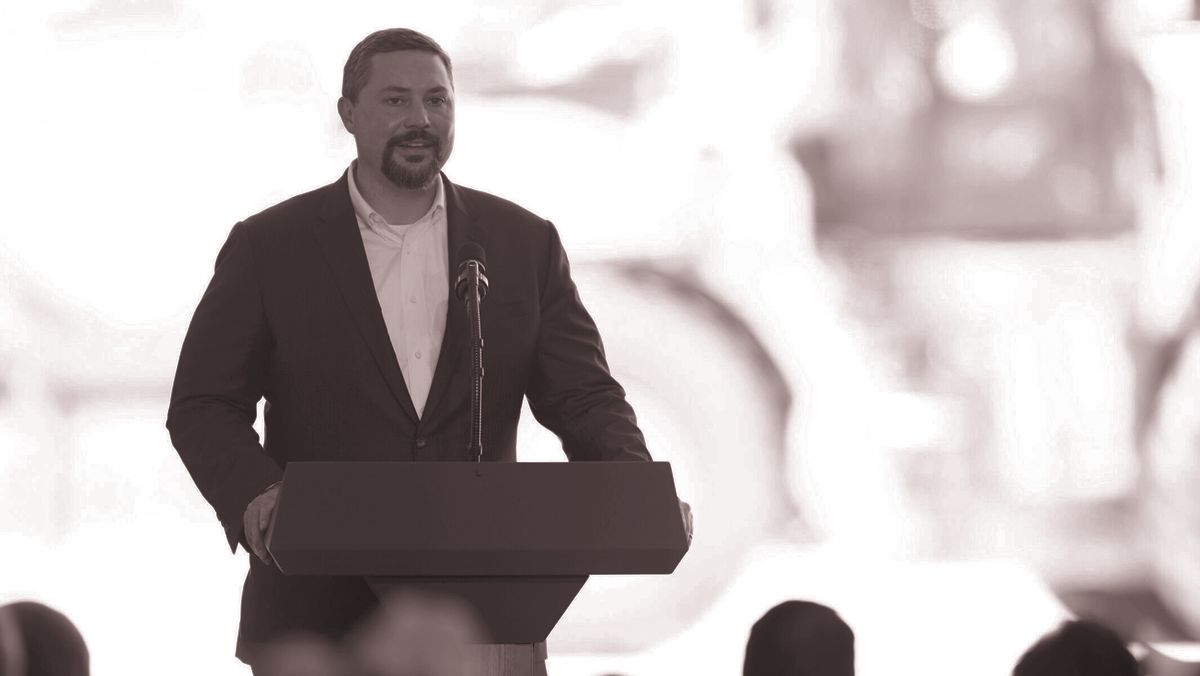
In many ways, Cody Campbell has become the embodiment, for better or worse, of
this ungovernable era of college sports—a highly disrupted, frontier-pushing economic environment dominated by oodles of money, N.I.L. deals, Jordon Hudson, Dave Portnoy, constant conference realignment, the demise of the Pac-12, and Arch Manning Warby Parker ads. It’s a world in which the Oregon football head coach takes off his shirt with Pat McAfee in a predawn Eugene rally, and Penn State vows to buy out defenestrated coach
James Franklin for $45 million.
Campbell, of course, is the Texas Tech trustee, energy billionaire, and former Red Raider player who thinks he has the latest solution to this Wild West, in which a college quarterback can easily pull a few million bucks while schools cull non-revenue-producing sports. Campbell’s quixotic plan, as I noted
last week, coalesces around a formula of (and I’m simplifying here) nuking the Sports Broadcasting Act of 1961, persuading conference executives to pool their rights, and eventually negotiating media deals worth an extra $7 billion or more. During the past several weeks, Campbell has been on a warpath to disseminate his vision: buying a ton of ads on college football Saturdays, rolling through speaking opportunities at the Knight Commission and business conferences, and
even appearing on the Varsity podcast—an episode that resulted in dozens of emails and texts from media executives poking holes in his plan. |
|
|
A MESSAGE FROM OUR SPONSOR |
Greatness isn't achieved in an instant. It's tested until there is no question — only performance. |
|
|
The main targets of Campbell’s ire, unsurprisingly, have been the conference commissioners.
Campbell took several shots at them on The Varsity. “The conference commissioners never miss a paycheck. They never see the problem,” he told me. “They just expect their institutions to come up with the money to fund these sports however they come up with it.”
So it wasn’t a surprise to see a slew of conference commissioners start lampooning Campbell’s plan. To wit: The SEC’s Greg Sankey told the Associated Press that Campbell’s “comments reflect a fundamental
misunderstanding of the realities of college athletics.” The Big 12’s Brett Yormark also recently knocked Campbell’s claims. “Hope isn’t a strategy,” he said. Media executives have also reacted negatively. In their view, his
revenue goals are a fantasy; Campbell likes to point out that college football outrates the NBA at a fraction of the cost, but perhaps it’s possible that Fortune 500 businesses aren’t going to pay premiums to play their ads to audiences in Lubbock or other tertiary (and then some) markets. They also contend that the free-spending days of the 2010s have been replaced by a more fiscally conservative, cash-starved era. Yes, University of Miami quarterback Carson Beck may
be pocketing $4.7 million this year in N.I.L. deals, but the industry is quickly shifting business models in real time. Even so, these executives contend, boosters are dumb money; mediacos are not. (Interested to hear your thoughts here…) |
Regardless, we have unequivocally reached an era of fiscal prudence of some sort.
Jimmy Pitaro opened Disney’s checkbook for the NFL, NBA, college football, and dozens of other sports. But while he liked having Formula 1, he wouldn’t engage in a bidding war. It was the same story with UFC this year—ESPN would have liked to keep the property, but only at the right price. So when Campbell suggests that these media companies have an extra $7 billion lying around to pay for rights, media executives say the market is telling a different story. And they
scoff when Campbell suggests that smaller sports, like volleyball, baseball, and softball, would command discernably higher rights fees.
Last year, ESPN bought a package of rights to 40 NCAA championships, including women’s basketball, baseball, softball, lacrosse, etcetera, for $920 million over eight years. Some of the more popular sports in this package, like women’s basketball, could probably command a higher rights fee on their own. But that would devalue the rest of the
package and orphan some of the smaller sports, like swimming and diving or track and field.
Campbell insists that he’s in this for the long haul. But media executives and college administrators see his ideas as nonstarters. I was reminded of this current dialectic while listening to my partner Matt Belloni interview TKO top executives Ari Emanuel and Mark Shapiro on his podcast, The Town. A mere two months ago, Shapiro
doubled the UFC’s rights fees via a seven-year, $7.7 billion deal with Paramount. You might think he’d be optimistic, especially when the NBA is about a week away from starting its $76 billion deals with ESPN, NBC, and Amazon, and the NFL is about to open up its deals early—a move that will take even more money out of the market. Instead, he was cautious and sober. “It’s the middle that’s going to get cut out,” Shapiro
told Matt, though he might have offered the same advice to Campbell. |
On NBC’s first exclusive MLB game: “I predict NBC will choose the World Series winner’s
first game, mirroring their Thursday night NFL season kickoff matchup. Unfortunately, that means my Cubs will not participate.” —A Varsity subscriber
On NHL’s intermissions: “I really enjoyed your recent podcast with Greg Wyshynski. However, I wish you’d asked him about whether the NHL has any plans to reduce intermission time. NFL
halftime is at 13 minutes, yet the NHL has two 18-minute stoppages. Even as a die-hard fan, I find it hard to make it to the third period, especially for a West Coast game. I would be extremely interested to learn what the viewer drop-off rate between the second and third periods looks like.” —A sports business type
On the NHL’s puck drop: “Did you really write that the NHL was kicking off the season last week? Somebody needs to teach you that the NHL does not,
and never will, kick off anything. That’s reserved for football.” —A sports business reporter
[Ed. note: Fine. But no dumb Puck double entendres, please…] |
|
|
Finally, a media podcast about what’s actually happening in the media—not the oversanitized,
legal-and-standards-approved version you read online. Join Dylan Byers, Puck’s veteran media reporter, as he sits down with TV personalities, moguls, pundits, and industry executives for raw, honest, sometimes salacious conversations about the business of media and its biggest egos. New episodes publish every Tuesday and Friday. |
|
|
An essential, insider-friendly Hollywood tip sheet from Matthew Belloni, who spent 14 years in the trenches at
The Hollywood Reporter and five before that practicing entertainment law. What I’m Hearing also features veteran Hollywood journalist Kim Masters, as well as a special companion email from Eriq Gardner, focused on entertainment law, and weekly box office analysis from Scott Mendelson. |
|
|
Need help? Review our FAQ page or contact us for assistance. For brand partnerships, email ads@puck.news. You received this email because you signed up to receive emails from Puck, or as part of your Puck account associated with {{customer.email}}. To stop receiving this newsletter and/or manage all your email preferences, click here. |
Puck is published by Heat Media LLC. 107 Greenwich St, New York, NY 10006
|
|
|
|