 |
|
Greetings from Los Angeles, and welcome back to In the Room, my twice-weekly private email on the media. Three very quick shout-outs related to last night’s election coverage: 1. Fox News, which not only bested its broadcast and cable competitors, but also led every call and served as a forum for some of the more riveting contributor exchanges (see: Karl Rove and Juan Williams debating identity politics). 2. Whichever New York Times staffers managed to get the needle up and running despite the Tech Guild strike. 3. Brian Williams & Co., who, despite not being able to deliver real-time projections, provided charmingly informal and well-informed second-screen commentary. I’m still waiting on Amazon to provide numbers, but on the merits I think it’s fair to call the experiment a modest success.
In tonight’s email, I dwell on some of the immediate theories percolating through the industry as Trump’s ascendance triggers both fear and curiosities regarding whether the #resistance gravy train will return to town. As you’ll see below, Trump may be returning to the White House, but he’ll countenance a very different D.C. media scene.
Mentioned in this email: Jeff Bezos, Joe Rogan, John Malone, A.G. Sulzberger, Nicolle Wallace, Les Moonves, Elon Musk, Mike Cavanagh, Maggie Haberman, Marty Baron, Rachel Maddow, Chris Licht, Will Lewis, Jonathan Swan, Jim Acosta, Keith Olbermann, and many more…
But first…
- 🎙️🍸 The Grill Room: On Tuesday, in the final hours before the election results poured in, former CNN anchor Don Lemon took a break from his marathon man-on-the-street YouTube interviews to stop by The Grill Room and reflect on the American electorate in 2024. His observations about the breakdown of identity politics now seem remarkably prescient, and worth revisiting.
On a more titillating note, he also dished on Chris Licht’s failed leadership, the CNN This Morning co-host tensions, and the real reasons for his dramatic defenestration from the network. Plus, we discussed his attempt to stand up an independent media shingle in the post-cable era. Listen on Apple or Spotify, and follow The Grill Room wherever you get your podcasts.
- Needling the Times: The New York Times Tech Guild’s decision to go on strike during the election has angered many of their newsroom colleagues and vaporized whatever goodwill they had with Times leadership, according to several sources inside the building. Most notably, the guild’s decision threatened the paper’s ability to post its popular and infamous election needle, a live projection gauge that essentially served as a stress barometer for never-Trump nation last night. As Business Insider first reported, roughly 100 members of the 600-member guild crossed the picket line on Tuesday in order to ensure that the site would perform as the results were coming in. (What’s the guild’s leverage now, one wonders.)
The Tech Guild, which is separate from the Newsroom Guild, is seeking salary increases, greater remote-work flexibility, and “just cause” provisions that would make it harder to lay off employees. Several Times sources I spoke to chafed at those demands, noting that most guild employees already make nearly $200,000 a year (more than the average journalist) and that the “just cause” argument would make it nearly impossible to fire someone who was underperforming. But above all else, they took issue with their tactics—including a decision over the weekend to post fliers near publisher A.G. Sulzberger’s home in Park Slope that labeled him a “trust fund union buster.”
“These are highly compensated white-collar workers who make an average of $190,000 and have good benefits and a generous remote-work policy,” one Times source texted. “They act like they are 19th century coal miners working for a man who employs children in a factory.”
- Daily Beast: In the most amusing media story of the week, Daily Beast chiefs Ben Sherwood and Joanna Coles took the Times’s Katie Robertson out to their favorite diner the other day to talk shit about their staff, kvetch about the site’s tech problems, and provide scant details on their vision for the product. As you may remember, Beast staffers hardly welcomed the new leaders with open arms. Many chafed at Coles’ unconventional story ideas and leaked them to the press, along with anonymous criticisms of her “warped vision” for the site.
Sherwood and Coles seem to view the staff’s reluctance to change as the very reason their business is in such bad shape. “This thing came within a day of being sold to the private equity knacker’s yard, where it would have been stripped,” Coles told Robertson. “In what way is it helpful to tape our conversations and to proudly boast that you are not going to even attempt to look at the stories that your new bosses are asking you to look at?”
Anyway, seems like everything’s going great. Of course, this might all just be stage-setting for further layoffs as the Beast seeks to cut $1.5 million in costs before implementing that still-murky new strategy—presumably without all the naysayers.
|
|
And now, on to the main event…
|
 |
| The #Resistance Is Futile |
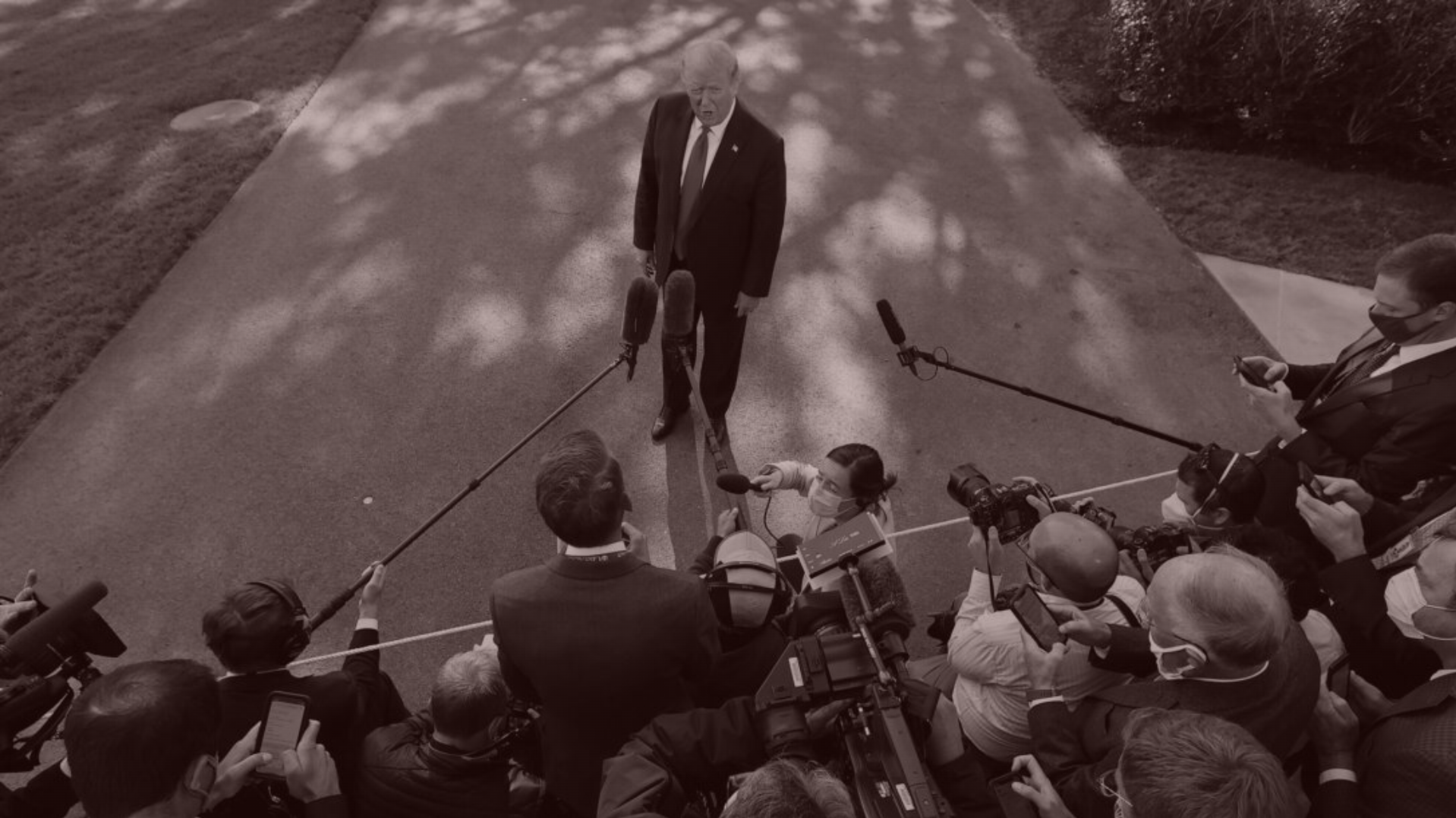
| With Trump 2.0 upon us, a number of D.C. media people are cautiously wondering if the highly lucrative, gung-ho cri de coeur, green-room-and-book-deal #resistance marketplace of his last term will return to town with the 47th president. Alas, Trump may not have changed, but the industry sure has. |
|
|
|
| On a recent Friday evening, I was at a dinner party with a small group of TV news personalities, talent agents, and other media people, chewing over the inexorable decline of linear television (what else?) when the conversation inevitably turned to the impending 2024 election, then just 11 days away. Among this crowd, at least, the conventional wisdom had already coalesced around a likely Trump victory—though, to be sure, no one seemed to anticipate the full scope of his decisive triumph, nor the broader realignment of the electorate and its spurning of Obama coalition politics. In any event, one of the guests proffered a curious upside: A Trump victory was the only thing that might potentially save the news business.
It’s reasonable enough to assume that the former president’s return might usher in a second “Trump bump” for news organizations and mediacos. His 2016 candidacy—which Les Moonves memorably noted “may not be good for America, but it’s damn good for CBS”—and subsequent presidency were an antidote for legacy news outlets, especially those that positioned themselves as pillars of the resistance: CNN and MSNBC reached all-time ratings zeniths; The New York Times and The Washington Post grew subscriptions 50 percent year over year; and networks doled out six-figure contributor contracts to the nation’s top political reporters, who further subsidized their income with lucrative book deals. The Trump era burnished legit crossover stars, like Maggie Haberman and Jonathan Swan and Jim Acosta. As I’ve noted before, then-CNN president Jeff Zucker warned his staff that this bump was only a temporary oasis on the long trek of structural decline, but no one seemed terribly bothered at the time.
In the immediate aftermath of this year’s election, many media people are anticipating, or at least wondering about a return to the boon days. Indeed, Trump’s threats to prosecute his enemies and deport illegal immigrants, to say nothing of his stated attempts to undo certain founding principles of the republic, would seem to portend increased audience demand for a return to the resistance-style journalism of the democracy-dies-in-darkness, grandstanding-Acosta, soliloquizing-Maddow variety. “Depressing,” one talent agent texted me as Trump inched closer to 270 electoral votes in the wee hours of Wednesday morning. “I guess I can make more money.”
Alas, that analysis seems both shortsighted and facile. Obviously, the news media finds itself in a very different position than eight years ago. Back then, large institutions were only recently coming to terms with their diminished resources, business prospects, and clout—and the Trump surprise, in many ways, forced them to look inward and channel a defiant and underdog spirit to pursue their best work. Now, they live this reality on a daily basis, surprised only that the worst is still yet to come.
Furthermore, history rhymes but it hardly repeats. The Trump soap opera is not only no longer a shock to the system, but it’s quite literally the establishment. Back in the yesteryear of 2016, Maggie seemed like some sort of Jane Goodall, who could contextualize and interpret this unprecedented political animal. Now everyone is a Trump expert, Twitter is a diminished news service, and the media industry is in such shambles that its proprietors are more risk-averse than ever. Sorry, I’m just the messenger… |
|
|
| I’m sure The Atlantic is preparing its next instantly viral cover art now, but most of the legacy media businesses that thrived during the first Trump administration are now significantly diminished and may no longer have the heft or relevance to mount another surge. When Trump launched his campaign, in 2015, CNN was already growing its audience, which it has since hemorrhaged in the years after Trump left office. The network’s average television viewership has declined from a height of 1.8 million in 2020 to around just 500,000 on any given night. On Election Night, the network lost in the ratings to MSNBC for the first time in history, with its smallest audience for an Election Night since 1996. And while CNN is embarking on a new strategy that prioritizes digital and streaming engagement, it has yet to provide meaningful evidence that it is succeeding on that front in a sustained way.
Meanwhile, The Washington Post has shed more than half the audience it had under Marty Baron in 2020 and lost $77 million last year. As Post publisher and C.E.O. Will Lewis infamously told his staff, “People are not reading your stuff.” And the miniscule growth that the company has achieved so far under Lewis—about 4,000-some new subscribers so far this year—has almost certainly been offset by the 250,000-some subscribers who reportedly elected to cancel their subscriptions after Jeff Bezos decided to stop his paper from endorsing Kamala Harris.
It’s not even clear that an avowedly anti-Trump institution like MSNBC has the muscle or momentum to return to its old, occasionally shrill form. Historically, the network has shined during Republican administrations: From the days of pre-batshit Keith Olbermann taking on George W. Bush, to Maddow sparring with Trump, the network has served as a liberal group therapy session and safe haven for lapsed Republicans now eager to speak out against their old party. (See: Joe Scarborough, Nicolle Wallace, Michael Steele, etcetera).
But Maddow now works just one night a week—a chunk of which she spends promoting her books and podcasts—and most of her colleagues increasingly seem to be influencing no one other than themselves and about a million or so liberals with AARP cards. Meanwhile, despite the network benefitting from CNN’s decline, Comcast president Mike Cavanagh revealed that the telecom giant might even spin off MSNBC, along with its other cable networks, raising questions about the future of the asset if and when it becomes disconnected from the NBC News infrastructure. It was the latest reminder that several of the media institutions that played starring roles in Trump’s first term might not be up for it this time around. |
|
|
| When Bezos decided against having the Post endorse a presidential candidate, he touched off a Cat-5 freak-out among liberal institutionalists who feared that he was pivoting the paper away from its Baron-era posture and preemptively capitulating to a former and future president who will have the power to block or approve Amazon’s federal contracts. As I noted the other day, his true motivation for the decision may have had more to do with his longstanding desire to turn the Post into an at least semi-nonpartisan news organization that services all Americans, rather than a regional edition of the Times political report satisfying the intellectual erogenous zones of anxious liberals. (On Wednesday, Bezos congratulated Trump on his “extraordinary political comeback and decisive victory.”).
Of course, that was the same calculation John Malone and David Zaslav made when they tried to reposition CNN, post-Zucker, as a down-the-middle forum offering equal treatment to both the Hakeem Jeffries and the Mike Johnsons of the world. Republicans read and watch the news too, after all, and orthodoxy of any variety can be ostracizing.
People can debate whether or not that is the right strategy at a time when Trump is poised to break with certain fundamental American norms, but it is certainly one that some news organizations are likely to pursue—especially now that Trump’s decisive victory has highlighted the limits of the media’s influence on the electorate at large. As one anonymous television executive recently told New York, “If half the country has decided that Trump is qualified to be president, that means they’re not reading any of this media, and we’ve lost this audience completely. A Trump victory means mainstream media is dead in its current form.”
The Democrats’ own post-election autopsy has focused heavily on realignment and the need to reach all voters with a message that goes beyond identity politics and preconceived notions about what matters to certain demographic groups. The news media might similarly see this election as a referendum on its own understanding of the electorate—what readers care about, what inspires their outrage, and what might actually incentivize them to buy a subscription—as well as its own egocentric parochialism.
This is an increasingly formidable challenge. To state the obvious, the media landscape is vastly more fragmented in 2024 than it was in 2016. The media stars of this election cycle were not anchors and correspondents, but Elon Musk, who radically transformed journalists’ preferred distribution vehicle; podcast stars like Joe Rogan and Charlamagne; and the myriad social media influencers (for lack of a better word) who helped shape the political narrative for audiences that almost never engage with traditional journalism.
Indeed, CNN, the Post, and other institutions looking to reach these audiences will need greater innovations than simply repurposing their existing content for TikTok and Instagram. In many cases, the entire editorial product, format, user experience—in effect, everything—may need to be rethought. In the process, many people are certain to lose their jobs, whether those new innovations are conceived and realized or not.
It’s also quite possible, given Trump’s threats against the media, that many of these news organizations will be forced to attempt these transformations while also being blacklisted from the White House, which might only further diminish their relevance and complicate their ability to do their jobs. “The fracturing is so much worse than people realize and mainstream media will be just very, very diminished,” one top executive predicted. “There will no longer really be news, there will be information. And then lots of manipulation and argument around said information.” |
|
|
|
| FOUR STORIES WE’RE TALKING ABOUT |
|
|
|

|
 |
|
|
|
Need help? Review our FAQs
page or contact
us for assistance. For brand partnerships, email ads@puck.news.
|
|
You received this email because you signed up to receive emails from Puck, or as part of your Puck account associated with . To stop receiving this newsletter and/or manage all your email preferences, click here.
|
|
Puck is published by Heat Media LLC. 227 W 17th St New York, NY 10011.
|
|
|
|