Greetings from Los Angeles, and welcome back to In the Room. It’s been a week on the media front, and it’s only Wednesday. Meanwhile, the Sun Valley invite list is out, and includes the usual suspects—a very familiar cast at this point—albeit with the notable exceptions of Elon Musk, Oprah, and Shari Redstone. I will be at my usual table at Konditorei, of course, and look forward to seeing many of you there. (Yes, all off the record.)
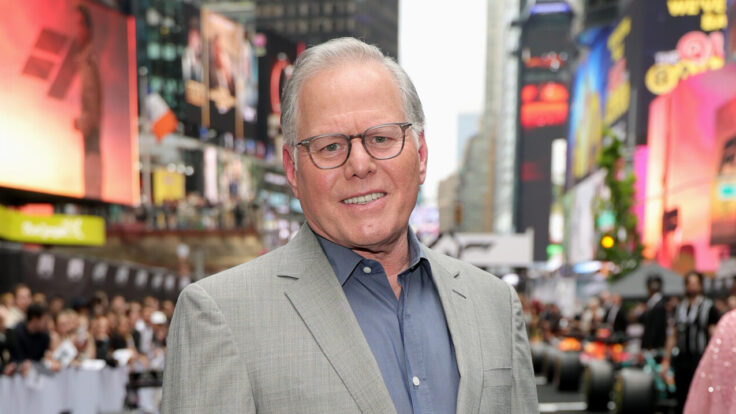
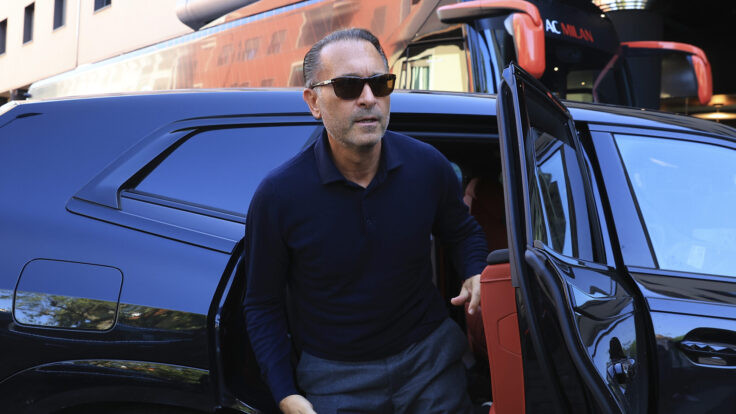
In tonight’s issue, news and notes on the end of CNN, which must now brace for a smaller, cheaper, and frankly shittier future now that David Zaslav has decided to split Warner Bros. Discovery and pass the cable assets off to his cost-cutter in chief, Gunnar Wiedenfels. Yes, even after a deeply depressing few years, things are about to get worse. Don’t shoot the messenger.
🍸 Plus, on the latest edition of The Grill Room, Axios’s Alex Thompson joined me for a deep dive into Original Sin, the Biden exposé he co-authored with CNN’s Jake Tapper, and the role and responsibility of journalists in today’s media climate. We also addressed Karine Jean-Pierre’s pivot to independence, the broader issues within the Democratic Party, and more. Follow The Grill Room on Apple, Spotify, or wherever you prefer to listen.
Also mentioned in this issue: Barry Diller, Mark Guiducci, James Bennet, Chris Licht, Mark Thompson, Sam Altman, Alex MacCallum, Anna Wintour, Anderson Cooper, Kaitlan Collins, Terry Moran, Barbara Peng, and many more…
Let’s get started…
|
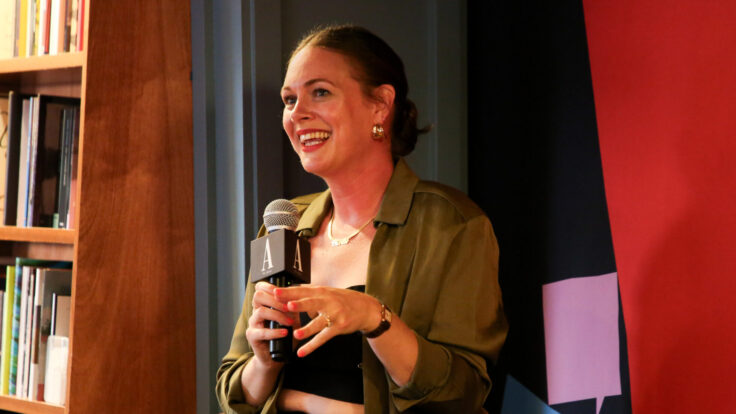
- House of Guiducci: Anna Wintour has tapped her Vogue creative editorial director, Mark Guiducci, to serve as the next editor—er, global editorial director—of Vanity Fair. As you know, my partner Lauren Sherman has been anticipating Guiducci’s ascension since Radhika Jones vacated the
chair, and as she notes in the latest edition of her indispensable Line Sheet email, “Guiducci was the only choice. As a former assistant at Vanity Fair, and one who has long harbored ambitions to run the magazine (since college), he’s a logical steward as it shrinks to become an appendage of Anna’s fading empire.”Lauren continued: “Besides dogged ambition, Guiducci has sharp editorial instincts, and is educated (if slightly Princetonian: check him out mashing together Proust and Michael Bay in the Times), good-looking, an orchestrator, and connected enough in both Hollywood and Europe to throw parties and sell advertising. Guiducci doesn’t have much management experience, nor is he a story editor. But he has big ideas, and he’s loyal to Wintour, for whom he’s worked most of his career—perhaps the most important qualification. … Also this was obviously—obviously!—a cost-saving measure.”
🍸 Bonus: Lauren will join Julia Alexander and me on this Friday’s edition of The Grill Room to unpack all this news, and to assess Vanity Fair’s future prospects amid Condé Nast’s decline.
- An ABC News defenestration: ABC News has dropped senior national correspondent Terry Moran after that late-night X post in which he called Trump and his top aide Stephen Miller “world-class” haters, and described Miller as someone “richly endowed with the capacity for hatred.” Moran was approaching the end of his contract, and the network said in a statement that it decided not to renew “based on his recent post, which was a clear violation of ABC News policies.”This one’s pretty straightforward—no, ABC couldn’t have defended that—but it’s also true that the network was probably more vulnerable to this sort of micro-drama in light of its own internal challenges. As one industry insider observed, “If you don’t have a talent head for a few years, you turn over news presidents several times, and can’t keep any front office consistency, you’re gonna have shitstorms.” Add in Bob Iger’s recent $16 million settlement over the Stephanopoulos affair and this seems like a simple decision for ABC.
- Bennet there, done that: Five years after Senator Tom Cotton’s infamous #BLM-era “Send In the Troops” op-ed created a massive uproar at The New York Times and led to the forced resignation of Times Opinion editor James Bennet, Cotton has published an updated version of the column for WSJ Opinion pegged to the anti-ICE protests in Los Angeles. Cotton even found a way to work in a dig at the Times, noting that liberals might react to his latest column by returning “to their fainting couches,” and linking back to his original Times piece.
I asked Bennet, now a senior editor at The Economist, via text how it felt to see the Cotton piece in the Journal’s pages: “Well, all this is a bit triggering, as the kids say. I give the man points (as after January 6!) for consistency, and I think the failure of key standard-bearers in the press to promote open, searching debate is one reason we find ourselves here,” he wrote. “It makes me crazy, actually. And pretty sad. I really think the press let the country down. This is a genuinely scary time. Anyway. Thanks for asking.”
- And finally…: Speaking of opinion, Jeff Bezos and Washington Post C.E.O. Will Lewis have selected the next editor for Post Opinion: Adam O’Neal, a Wall Street Journal alum who most recently served as The Economist’s Washington correspondent. He will be tasked with leading the Post’s post–David Shipley pivot toward the “personal liberties and free markets” ethos that Bezos mandated. “Our new direction is not a short-term shift, nor is it aligned to any political party,” Will wrote in a memo announcing Adam’s hire. “Rather, it is an opportunity for our Opinion section to share the best of American values.”Adam certainly isn’t a bold-faced name—a fact he himself acknowledged in a somewhat awkward selfie video announcing the news—but a few sources who have worked with him praised him as a serious journalist and a strong editor. In any event, good luck!
|
|
|
|
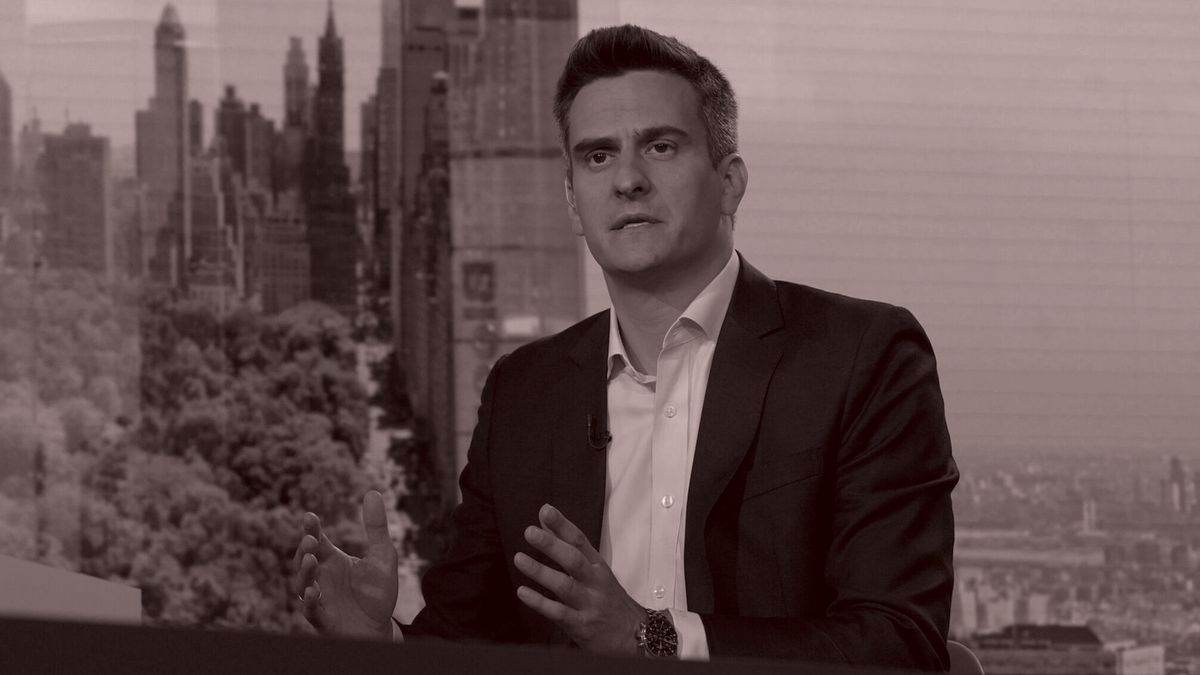
With the industry in inexorable decline, ratings at a nadir, and younger audiences turning to YouTube and TikTok, Gunnar Wiedenfels will inevitably look at CNN and decide he can maintain relatively similar profits at a mere fraction of the cost. This is the beginning of the end.
|
|
|
|
On Monday, minutes after David Zaslav announced his long-awaited and well-telegraphed plan to split Warner Bros. Discovery into two companies—an allegedly growth-hungry streaming and studios business that he will run, and a debt-saddled, Versant-style cable channel spinco-shitco that he’s handing off to his C.F.O., Gunnar Wiedenfels—I received a deluge of text messages from addled employees at CNN, the asset that has arguably suffered the most during Zaz’s three-year leveraged buyout experiment. The question from many, whether in verbatim or in spiritu, was: What does this mean for us? Or, as one high-ranking CNN insider put it: Thoughts?! Reader, I have a few.
Three years ago, Zaslav sold investors on the idea that a combined Warner and Discovery would be “the best media company in the world,” with “40 percent of the world’s greatest I.P.,” all bolstered by robust news and sports offerings. His true north star, of course, was his stamina for debt reduction—which, when paired with solid EBITDA growth, would purportedly enhance the company’s market cap. He and Gunnar slashed costs, bringing the debt load down from $55 billion to a mere $34 billion. For their achievements, Zaz took home around $50+ million a year.
|
|
|
|
A MESSAGE FROM OUR SPONSOR
|
Puck sponsors include Paramount+
YELLOWJACKETS
The Wilderness Never Lets Go
The critically acclaimed Showtime Original series is back, starring an ensemble cast led by Melanie Lynskey and Christina Ricci. Hailed as “dangerous and intoxicating” by USA Today, season three highlights the escalating tension of the stranded team in the past, while their long-buried secrets begin to surface in the present, with each revelation more explosive than the last. These women continue to ask - who are they really, and what dark truths are they hiding from each other and themselves?
Emmys eligible in all categories including Outstanding Drama Series. Now streaming.
EXPLORE MORE
|
|
|
And yet the EBITDA stubbornly flatlined, squelching the promise of his publicly traded leveraged buyout. While Zaz deserves some credit for resisting various media industry dogmas—he made streaming investment far more efficient, and annexed relationship-based projects—the lifelong basic-cable operator took it as a given that his premium assets would grow themselves. And unfortunately, starved of proper investment, they did not.
As my partner Bill Cohan noted the other week, S&P Global’s recent debt downgrade of WBD was predicated on its belief that company EBITDA would be mired at $9 billion for the next three years. Meanwhile, during the course of the WBD experiment, shareholders saw their shares depreciate by nearly two-thirds. There was plenty of other turmoil, too: Thousands of jobs were lost, HBO endured multiple ill-advised rebrands, TNT forfeited its NBA rights, and CNN was left devastated by Chris Licht’s incompetent leadership, before becoming disillusioned with Mark Thompson’s ever-unrealized digital transformation.
It’s tempting to gaze upon all this as an unmitigated failure—“He was the worst media C.E.O. of the past decade,” one veteran media exec said—but, for Zaz, at least, it’s a net success. When he engineered this merger, he was an overcompensated second-tier cable guy helming 90 Day Fiancé and Dr. Pimple Popper, and Discovery, a company headed for the ash heap. The deal gave him the stature that money alone cannot buy: instant mogul status, corner tables at all the familiar haunts, New York–L.A. ubiquity, and courtside seats at Roland-Garros and the Garden.
Now, after netting hundreds of millions for himself, he gets to take off with the far better, if smaller, portfolio—HBO Max, Warner Bros. Studios, and WBTV—despite having no real experience running such businesses. Presumably he’ll milk this gig before architecting one more deal that inevitably custom-fits himself with an extraordinary golden parachute. He’s already saddling Gunnar and the cable assets with much of his remaining debt. Indeed, it’s hard to think of a media executive who has done a better job of failing forward across sinking lily pads.
As for Gunnar, well, he’s a notorious cost-cutter who now finds himself in charge of a collection of nearly obsolete assets—an NBA-less TNT, TBS, Food Network, HGTV, etcetera—primed for even more value extraction. And yes, obviously, Zaslav’s decision to appoint his chief financial officer as C.E.O. of the networks company is the greatest tell of his true intentions.
|
|
So, what then for CNN? As you may have surmised, running a 24/7 global news network with foreign bureaus is expensive, and the underlying unit economics only make sense to the people inside the building. With the industry in inexorable decline, CNN’s ratings at a nadir, and younger audiences turning to user-generated schlock on YouTube and TikTok for news, those costs are increasingly hard to justify. The high-seven-figure salaries (or eight-figure, in a couple of cases) once seemed only slightly ridiculous. Now they seem appalling—especially since there’s no longer a market for this talent, or many of the producers that stand them up, at comparable rates.
Meanwhile, Fox News, which is built around relatively inexpensive studio programs, not newsgathering, has demonstrated an ability to effectively quadruple CNN’s audience—not just on any given weeknight, but increasingly during major national and international breaking news events where CNN once dominated. Inevitably, Gunnar will look at CNN and decide he can maintain relatively similar profits at a mere fraction of the cost.
|
|
|
|
A MESSAGE FROM OUR SPONSOR
|
Puck sponsors include Paramount+
YELLOWJACKETS
The Wilderness Never Lets Go
The critically acclaimed Showtime Original series is back, starring an ensemble cast led by Melanie Lynskey and Christina Ricci. Hailed as “dangerous and intoxicating” by USA Today, season three highlights the escalating tension of the stranded team in the past, while their long-buried secrets begin to surface in the present, with each revelation more explosive than the last. These women continue to ask - who are they really, and what dark truths are they hiding from each other and themselves?
Emmys eligible in all categories including Outstanding Drama Series. Now streaming.
EXPLORE MORE
|
|
|
|
This will have perceptible ramifications on the talent side. Why, for instance, would Gunnar pay Anderson Cooper $18 million a year when Kaitlan Collins draws the same ratings at roughly a fifth of the salary? (Of course, by the time Gunnar gets around to it, Anderson will likely have determined that he no longer wants to read the day’s news to less than a million people every night, either.) Does the network need more than a handful of marquee names hosting a few key hours, or can it pay younger, reasonably attractive talent mere hundreds of thousands to read the same transcripts off the teleprompter? Jake Tapper is locked into his own low-eight-figure multiyear deal, so will be the face of the network for a while longer—but is surely the last CNN talent who will ever come close to netting that kind of income.
|
|
When CNN anchors, executives, and producers ask me to help them envision their futures, I try to remind them that it’s already been written—they merely need to recall the post-disruption trajectories of other parts of the media business. After the advent of Napster and Amazon, respectively, the music and publishing industries consolidated and focused on profitability. After Time Warner spun off Time Inc., it shed assets and merged with Meredith before being subsumed by Barry Diller to become Dotdash Meredith—a profoundly unglamorous but very profitable operation that still actually publishes magazines. TPG made a mint by profitably managing the decline of DirecTV. Soon enough, they’ll likely get their merger with Dish, I presume. (Disclosure: TPG is an investor in Puck.) The worst-case scenario—Diamond Sports’ three-year journey from a $2 billion business under Fox to bankruptcy protection—seems unlikely.
So what exactly does this mean for CNN? In the simplest of terms, market forces will reshape the business into what consumers want it to be rather than its own grandiose vision of itself. It will become a hallmark of the GunnarCo bundle, which will likely be merged one day with either Versant or other orphaned cable assets, perhaps after they are lopped off from Paramount (thoughts and prayers) or Disney, or a company like Tegna.
Given this industrial clarity, some initiatives make sense, while others don’t. It’s hard to imagine how Mark Thompson and Alex MacCallum’s pivot to digital subscription moves the needle in a cable pure play. It’s also difficult to envision why Thompson, who once led a public company, would want to stick around long-term in the Gunnar administration—and, from a purely financial perspective, I assume Gunnar might prefer a lower-priced programmer in that seat. Do CNN’s bureaus and infrastructure make economic sense in this brave new world? Increasingly less, of course. Over time, it will look more and more like HLN, which is one reason HLN no longer exists.
There will also be significant layoffs, diminished resources, and persnickety indignities: shittier offices, fewer perks, and more scrutiny of the T&E. Along the way, there will be fond reveries about the old days, jokes about CNN+, and various reality checks. Earlier this week, Condé Nast hired a very nice 36-year-old to be the editor of Vanity Fair, for a fraction of Graydon’s old salary. That future is coming for CNN, too.
Amid these sorts of transformations, the insiders are usually the last to get the joke. More than a year ago, I hosted a dinner in Washington that was attended by a group of C.E.O.s and media types. The dinner was off the record, but I wouldn’t be speaking out of school by relaying that its most fascinating and disorienting moment coalesced around the commentary of one private equity mogul, who laid out a very stark analysis of CNN’s descent. When he called it a clearly declining asset, I looked around the table and saw the vexed and horrified faces of a few of the network’s most well-known talent and executives. Ironically, they were the last to get the news.
|
Elon vs. the broadcasters: Eriq Gardner previews a high-stakes auction between Elon Musk and broadband providers over the “upper C-band” for 6G wireless, which “has put Disney, Warner Bros. Discovery, NBCUniversal, Fox, Paramount, and A+E in a state of unanimous distress.” The companies are warning that losing that spectrum—potentially to Starlink—would hurt their ability to carry live programming, specifically sports and news. Obviously, the tensions between Trump and Elon have become a complexifier in that battle. [ Puck]
A.I. killed the S.E.O. star: The Journal has a nice primer on how Google’s A.I. Overview feature is decimating referral traffic for news publishers. (Organic search traffic to Business Insider more than halved over the past three years, which explains C.E.O. Barbara Peng’s recent move to lay off a fifth of her staff.) As Atlantic C.E.O. Nick Thompson says, “Google is shifting from being a search engine to an answer engine,” and news companies “have to develop new strategies.” Not to be too simplistic, but the only real, viable solution for publishers starts with creating and maintaining ecosystems that people feel the need to go to directly. [ WSJ]
Altman’s singularity: “We are past the event horizon; the takeoff has started,” OpenAI’s Sam Altman writes in a new post. “Humanity is close to building digital superintelligence. … It’s hard to even imagine today what we will have discovered by 2035; maybe we will go from solving high-energy physics one year to beginning space colonization the next year; or from a major materials science breakthrough one year to true high-bandwidth brain-computer interfaces the next year.” (It seems like “maybe” is the operative word, so let’s check back here in 10 years.) Not to worry, Altman concludes that “living through it will feel impressive but manageable.” [ Sam Altman’s blog]
|
|
On that note, see you Friday.
Dylan
|
|
|
|
Join Emmy Award-winning journalist Peter Hamby, along with the team of expert journalists at Puck, as they let you in on the conversations insiders are having across the four corners of power in America: Wall Street, Washington, Silicon Valley, and Hollywood. Presented in partnership with Audacy, new episodes publish daily, Monday through Friday.
|
|
|
|
A professional-grade rundown on the business of sports from John Ourand, the industry’s preeminent journalist, covering the leagues, players, agencies, media deals, and the egos fueling it all.
|
|
|
Need help? Review our FAQ page or contact us for assistance. For brand partnerships, email ads@puck.news.
You received this email because you signed up to receive emails from Puck, or as part of your Puck account associated with . To stop receiving this newsletter and/or manage all your email preferences, click here.
|
|
Puck is published by Heat Media LLC. 107 Greenwich St, New York, NY 10006
|
|
|
|