 |
|
Welcome back to The Varsity, my twice-weekly private email about the people and personalities who run the sports media business. I am coming to you, as usual, from my hometown of Washington, D.C., where the local NBA team is so bad that fans are already rooting for them to tank in order to improve their odds of drafting Duke’s Cooper Flagg. Around these parts, the hashtag #PoopForCoop is becoming ubiquitous.
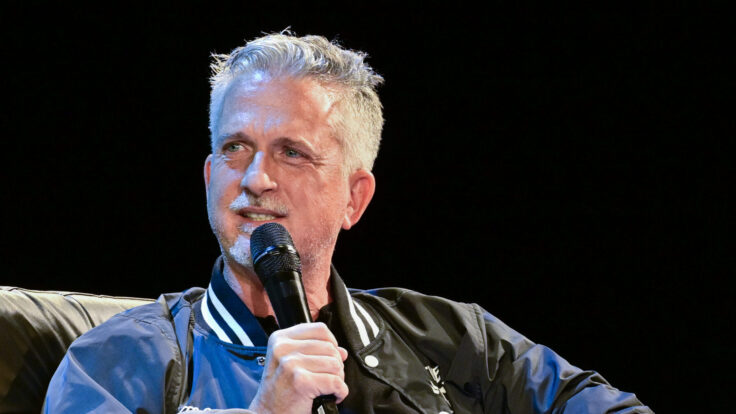
Since Puck and Audacy launched my podcast, The Varsity, back in August, we’ve had an inimitable lineup: superstar former athletes (Peyton Manning), elite media executives (Jimmy Pitaro), league commissioners (Rob Manfred, Cathy Engelbert, Gary Bettman), talent (Chris Berman, Greeny) and their agents (CAA’s Matt Kramer), etcetera. David Levy, the former president of Turner and current advisor to Raine, joined me this week to share his insights on the current sports media market and life after SpinCo. (To his credit, he refused to comment on Marchand’s Thanksgiving menu of turkey-seasoned tofu and fava beans…)
Levy is a mensch of historic proportions, and I’m sure you’ll enjoy this episode. And tune in on Wednesday to listen to my conversation with Bill Cohan, my partner here at Puck, whose candescent recounting of the Celtics’ 2002 sale is the main course in tonight’s pre-Thanksgiving letter. Bill’s understanding of the cable business and the broader financial pressures on media companies are second to none, and entirely consistent with his pedigree as a former investment banker.
🤖 P.S.: In case you missed it, I spoke to my colleague Baratunde Thurston this week about how A.I. is invading the world of sports media, broadcasting, betting, and more. Baratunde is doing a whole series of these conversations, presented by Meta, and I was happy to be the first guest. Could Tom Brady get even more robotic in the booth? Just wait until Fox Sports is using generative A.I. to translate his commentary into German in real time.
Speaking of, let’s check in on America’s favorite rookie broadcaster…
|
The Brady Meter: Week 12
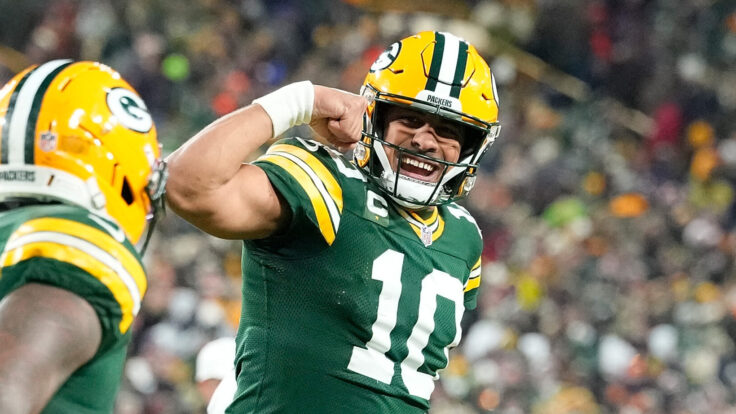
Packers 38-49ers 10
Grade: B- |
|
| Seasoned producers acknowledge that blowout games are tough for any analyst, especially a newbie. Alas, during his first season in the Fox booth, Brady has waded through more than his fair share of one-sided games—including yesterday’s ostensibly exciting contest, which was done and dusted before halftime. Exacerbating matters was the fact that the 49ers were playing without a number of injured stars, including QB Brock Purdy.
Brady is still eerily silent during long moments of the broadcast—even jejune post-play sequences when viewers would love to hear him channel the subliminal elements of the game. On the bright side, however, Brady is showing a lot more animation in the booth, despite obstinately and painstakingly referring to the red zone as the red area. Even with the game out of hand, he offered the sort of insights about Jordan Love’s mechanics and technique that have proved elusive in previous weeks. (I have some more on Brady’s booth progression below.) |
| The Starting Five: Turkey Edition |
|
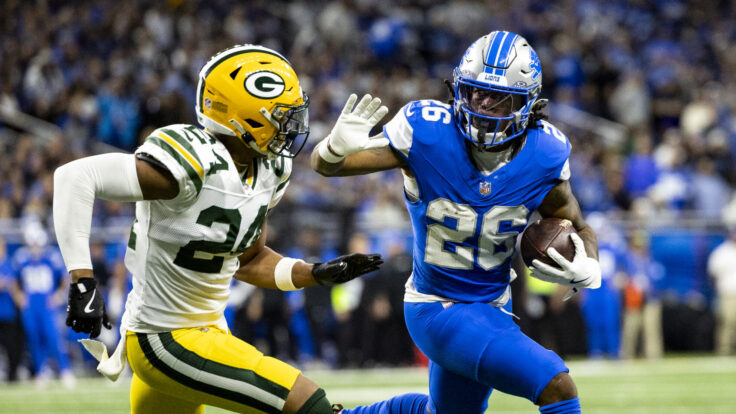
- NFL sales bonanza: Back in August, when the NFL started allowing private equity companies to take up to a 10 percent stake in teams, everyone expected a mad rush of deal activity. Well, in the ensuing three months, we have seen an uptick in team sales—owners are expected to approve at least four minority position transactions at their meeting next month. SBJ’s Ben Fischer broke the story this morning about two equity sales that value the Eagles at $8.1 billion: The family trust of Ed Peskowitz, the Universal Communications Group founder and former Hawks owner, will take a 4.75 percent stake; and Susan Kim, the philanthropist and semiconductors heiress, will acquire a 3.25 percent stake. The Raiders have agreed to sell 7.5 percent stakes to both Silver Lake founder Egon Durban and Discovery Land Co. founder Michael Meldman. Ben also broke the news that the Bills have a pending deal to sell 10.6 percent of the team to a group of rich dudes that would value the franchise at $5.4 billion. The Bills are selling another 10 percent stake to Arctos, and the Dolphins want to sell a 10 percent stake to Ares Management.
So, yes, the deals have been largely driven by limited partners, but they’ve also been catalyzed by the specter of P.E. If the individual buyers drag their feet for too long, team owners now have the option to walk across the street. Also, the new slew of L.P.s offer all kinds of optionality down the line for P.E. firms, who can offer them liquidity.
- Brady’s progression: When most players leave the NFL for the broadcast booth, they immediately lean on X’s and O’s as their crutch. Seemingly every play, they dissect gaps and blocking schemes. In his first 10 games as Fox Sports’ top analyst, Tom Brady has instead focused on things you don’t find in a playbook: pointing out the leadership of stars, focusing on the development of young players, and looking for accountability among veterans.
Fox producers have been pushing Brady to incorporate more of what he’s seeing on the field—duh—into his commentary. And these sorts of observations—why a play worked or fell apart—are starting to pop up more frequently on the broadcast. For example, when the Packers’ Jordan Love threw a red zone (sorry, red area) interception against the Bears last week, Brady explained how the errant pass stemmed from the young QB’s poor technique of throwing off his back foot. At last, here was the sort of film-room insight that viewers crave. Brady offered a similarly lucid commentary on a successful play-action pass on Sunday that resulted in Love stretching the secondary and hitting his receiver in stride between the hash marks. Indeed, Brady has gotten better during the past couple of games, and Fox insiders are confident that he’ll continue to improve.
- The cable conundrum: Before the pandemic, Fox sold its entertainment assets to Disney for $71.3 billion. Last week, Comcast announced plans to spin off its cable channels into a separate company. On the most recent Varsity podcast, I asked former Turner C.E.O. David Levy how he sees this trend affecting his old company, now controlled by Warner Bros. Discovery. “When I was at Turner, these were cash cows for the company and funded a lot of other things that the company needed to do,” Levy said. “They’re still profitable businesses. We would have to take a look at a spin-out, for sure. We’d have to recognize that you can’t feed all your children. So I’m sure at one point you’d have to shut down a few of the cable businesses and support the ones that you think have growth opportunities.”
Levy, who is clear-eyed about the struggles affecting the linear TV business, recognizes that sports programming will help keep some of WBD’s stronger brands—TNT, TBS, maybe TruTV—from the brink. “Nobody ever really records live sports and watches the next day,” he said. “That’s what’s keeping some of these bundles together, and why a TBS and a TNT are still sought-after cable networks—because they do have properties that are valuable to the consumer and valuable to the cable operator.”
- Madden Thanksgiving remembrance: Three years after John Madden’s passing, the NFL is using its Thanksgiving games to remember the former coach/TV analyst/video game purveyor. (Each of the NFL’s Thanksgiving networks has a connection to Madden, who started his broadcasting career with CBS before moving over to Fox. He ended his career in 2009 with NBC.) Players will have Madden logos on their jerseys, and the NFL will use a Madden coin for the opening flip at the three Thanksgiving Day games. “Heads” will feature the image of Madden that Fox used for its 2022 documentary, All Madden. Tails will be emblazoned with Madden’s famous six-legged turkey that he used to dole out postgame awards. (The winners, usually linemen, each would get one of the six turkey legs.) His “Madden Cruiser” will be parked outside Lambeau Field, where NBC is carrying the Dolphins-Packers game.
- R.I..P., Rudy: The legend of Rudy Martzke is so widespread in the sports TV community that he’s still a household name among P.R. pros and on-air announcers, even though he hadn’t written a column since retiring from USA Today 20 years ago. Rudy died last week at the age of 82, prompting a bunch of industry types to take to social media to offer their memories.
I interviewed Rudy in 2013 after USA Today killed the Sports TV column that made him famous. He was funny and engaging. When I asked about Fox Sports’ complaint that he took “Dick-tation”—meaning he wrote whatever Dick Ebersol told him to write—Rudy laughed and said, “Within a year of Ebersol coming into NBC, he was acquiring properties. So what was I writing about? Nothing but Dick Ebersol.”
|
| And now here’s Bill on the Celtics deal… |
 |
| The Legend of the Celtics L.B.O. |
| The true story of how Wyc Grousbeck, perhaps the least well-capitalized owner in sports, had the chutzpah to buy the Celtics in one of the greatest deals in modern sports history. |
|
|
|
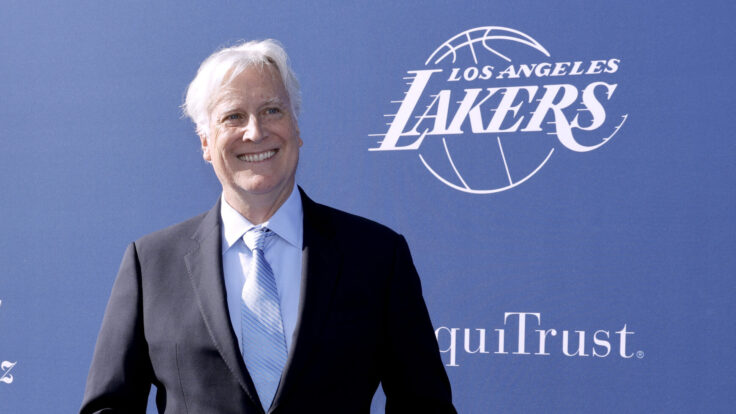
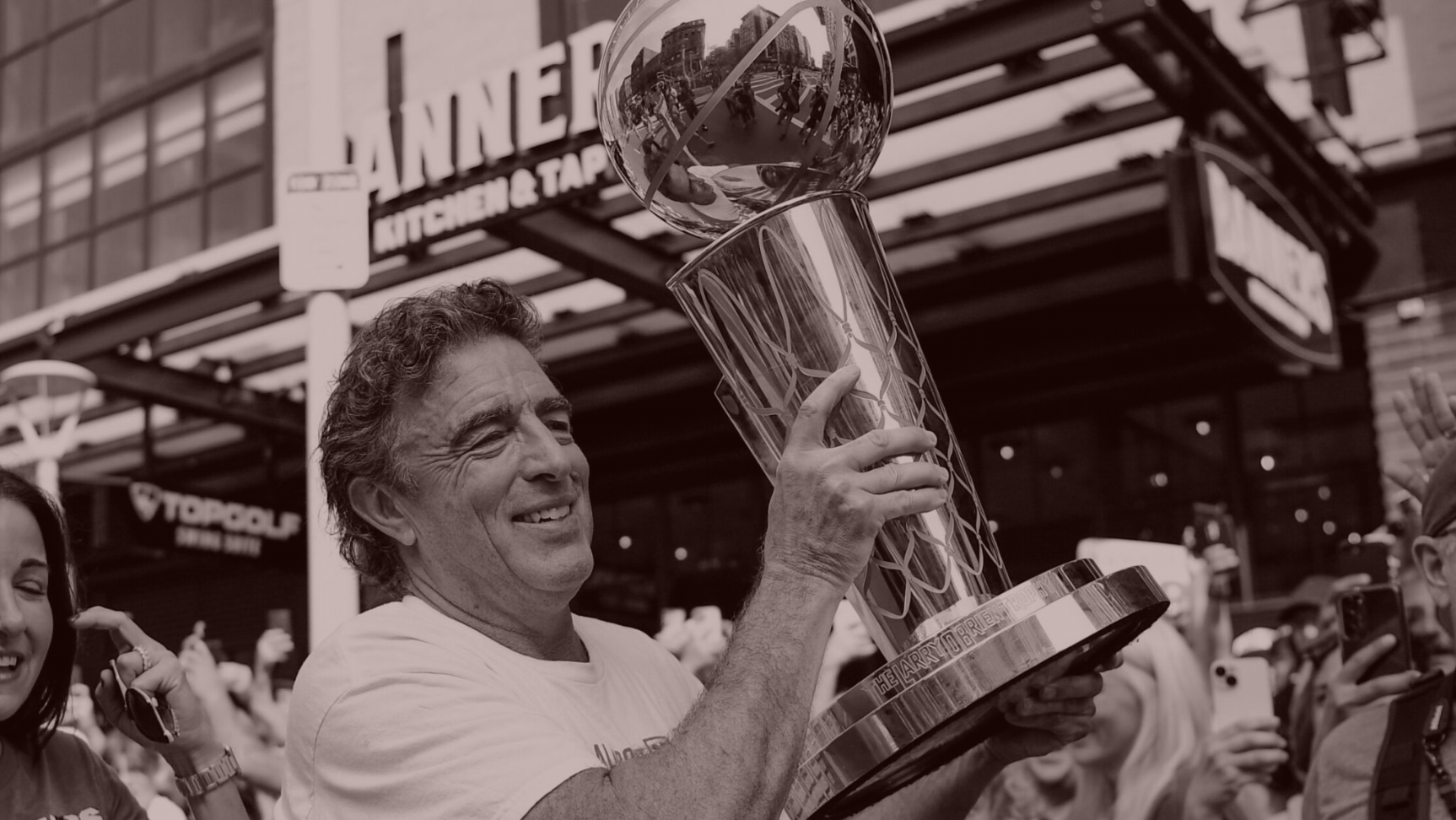
| Maybe because he’s from my hometown of Worcester, or maybe because we’re about the same age, or maybe because I grew up around the corner from Bob Cousy and have been a lifelong Celtics fan, I was absolutely entranced by Wycliffe “Wyc” Grousbeck’s recent Zoom appearance, alongside hedge fund manager Lee Ainslie, at the Economic Club of New York the other week. Grousbeck, of course, is the principal owner and governor of the Celtics, the reigning NBA championship franchise that he purchased, along with a group of his rich friends—including his billionaire father, Irv, a co-founder of Continental Cablevision—for $360 million in 2002. During his 22 years of ownership, the Celtics have won two NBA rings, adding to the record 18 NBA championships the franchise has won over the years.
After winning the title this past spring, Grousbeck and his partners put the team up for sale, hiring Gregg Lemkau, at BDT & MSD Partners, and Mary Erdoes, at JPMorgan Chase, to run the process. It’s expected to fetch a boffo price of around $6 billion, one-third more than the $4 billion that Mat Ishbia, the billionaire mortgage maven, paid for the Phoenix Suns in 2022. I can’t do the I.R.R. calculation anymore, but I can figure out that he and his partners will likely make close to 30 times their equity investment in the deal. That’s pretty damn impressive, and might be more than what Josh Harris and his posse will make on their roughly $260 million purchase of the Philadelphia 76ers—$135 million of equity and $125 million of debt from the NBA—in 2011, should they decide to sell.
Grousbeck said he was selling the team for estate-planning reasons, leaving many fans and observers quietly stunned. Why would a billionaire sell a team right on the heels of a championship, especially with a nucleus of young talent and coaches in place? Yes, 22 years is a long time for a bunch of L.B.O. guys to own anything. But perhaps the better reason is because Grousbeck isn’t a typical owner—he came about the Celtics in an unusual way, and has an innate sense of both how to run a team and when to trade one.
The Grousbeck story is, well, engrossing. After prep school, he was off to Princeton, where he was a history major and a member of the 1983 lightweight crew team that won the Ivy League and national titles. After Princeton, and a law degree from the University of Michigan and an MBA from Stanford, he joined the Cambridge-based V.C. firm Highland Capital Partners. But at 41, after seven years of sitting at a desk, writing one venture-capital check after another, Wyc had a midlife crisis of sorts and made a cold call that turned into perhaps the greatest leveraged buyout in sports history. |
|
|
| It was the early 2000s, and Wyc was starting to think about what he really wanted to do with his life. One day, he looked up at the wall of his office and saw a picture of himself and his Princeton lightweight crew teammates who’d won that 1983 national title, and it dawned on him. “I liked being that person,” he said, “being in a boat and being accountable for how much work I put in and how we did as a boat. I loved the team concept. I suddenly realized that was, in a way of saying it, the me I wanted to be. I wanted to be that person again, competing on a team, not solely. I don’t have the talent to be by myself anyway, but [I loved] being on a team and going for the whole thing.”
He decided he needed to buy a Boston sports team and to try to win a championship. At the time, he wasn’t thinking it would be a great investment. He didn’t even have much money—just the chutzpah to think he could get the money he needed. “I just wanted to do it for the love of it,” he said. He had recently been to a Celtics game and noticed that the stands were half-empty, which he didn’t think was right for such a storied franchise. On a whim, he called up Paul Gaston, the principal owner of the Celtics—which at the time was a rare publicly traded partnership, listed on the N.Y.S.E.—and made an appointment to see him at his office in New York.
At their meeting, Wyc asked Gaston what he wanted for the team, for which the Gaston family had paid around $20 million (not a typo) in 1983. After a little back and forth, he asked Gaston to name his fantasy price. Gaston spit out a big, wild number: $360 million, some 18 times what the family had paid nearly two decades before. “I’m very clear,” he recalled at the Economic Club of New York. “I didn’t have the money myself, not even close. But there was cash flow there. I thought maybe I could do an L.B.O. I’d never done one of those before, but I thought I could get up to a certain number, maybe make the numbers all work. … And he named that number.”
Wyc told Gaston he had a deal. He didn’t negotiate, even though it would mean paying the highest price ever for an NBA franchise to that point. He explained to Gaston that he didn’t have the money, but that he would get it by the end of the year, three and a half months later. He also promised to immediately wire Gaston a nonrefundable down payment on the $360 million purchase price. “I'll give you the rest December 31, but either way, you keep the deposit,” he told Gaston. He mortgaged his house, pulled together some other money he had around, and wired the deposit to Gaston. |
|
|
| Wyc started rolling calls. He got three noes in a row from three Boston billionaires, and started to second-guess himself. But then he began to generate some interest. There was Steve Pagliuca, from Bain Capital, along with a few of his Bain partners, as well as the likes of Glenn Hutchins and David Roux, two of the co-founders of Silver Lake Partners, and David Bonderman, the co-founder of TPG. (Usual disclosure: TPG is an investor in Puck).
By the end, he’d gathered 25 partners in a deal comprising $200 million of equity and $160 million of borrowed money. “I lost 17 pounds raising this money,” he said. “It was like lightweight crew all over again; I was cutting weight. But I was nervous. I was excited. I couldn’t eat or sleep, I couldn’t do anything but get the deal done.” (Pagliuca is rumored to be a leading candidate to buy the Celtics from Grousbeck and seems to have a pole position, given that he’s already one of the team’s biggest owners, with a roughly 20 percent stake. He’s hired both Allen & Co. and The Raine Group to advise him.)
Even though his partnership group contained several I.R.R.-hungry masters of the universe, Grousbeck said they were willing to think differently about owning the Celtics. And there was never a second capital call. “Every single person came in and thought about it as the emotional satisfaction of being part of something bigger than ourselves,” he said. “We made that clear to everybody. I said, ‘We’re probably overpaying. We’re going to be paid in enjoyment,’ was my phrase at the time. ‘This is the last Boston team I think that’s going to sell in our lifetimes. And imagine if we win? I think we can be competitive and not go totally broke. If there’s ever any extra money lying around, we’re going to put it into the team and try to make the team better. Having said that, if there’s ever really extra money around, we’ll all share it out equally.’”
There were no puts. There were no hurdle rates. There was no preferred stock. “We’re all in it, really together,” he told his new partners. “Everybody came in for love. They’re all great business people, but they came in for love and passion, and then it has worked out better than we even thought.”
Grousbeck and his partners completed the purchase on New Year’s Eve, 2002. They retained the legendary Red Auerbach—who had been reappointed team president in late 2001—as a link to the once-great Celtics teams of past eras; hired Danny Ainge as G.M. and Doc Rivers as coach; and masterminded the trades that landed Kevin Garnett and Ray Allen to play beside Paul Pierce in his prime—the first real Big Three concept of the modern era. In 2008, of course, that team brought the Larry O’Brien Trophy back to Boston for the first time since 1986. Then in June, behind a talented young core led by Jason Tatum and Jaylen Brown, Joe Mazzulla won the NBA title in his only second season, one of the youngest coaches to ever win a championship. “We’ve had great people running the basketball side and great players and great fans,” Grousbeck said. “It’s all been a really amazing ride.”
Ainslie wanted to know what advice Grousbeck had for other current or aspiring team owners. Grousbeck is also a part owner of Cincoro Tequila, along with his wife and several other NBA team owners, including Michael Jordan, Jeanie Buss, and Wes Edens. “They’re not asking me for advice, but we all share insights,” he said. “Let’s put it this way: Wes would rather die than ask me for advice. That’s how good he is.” First, he said, you can’t run a team to maximize profits. “The fans will figure it out,” he said. “Players will figure it out. You shouldn’t do it. You should be lucky enough to be able to run these for love, and then you probably will not go broke.”
Grousbeck said he was probably the “least well-capitalized owner” in the NBA, “but we’ve been successful because we put the money into the team. We’re not better than anybody else.” So long as the owners have a passion for the team, “everything will work out fine, but not the other way around.” If you are trying to decide between owning a sports team or owning Nvidia, he joked, “stick to the stock market,” he said.
Finally, he showed off to the Zoom audience the massive 2024 championship ring that the team’s owners and players received. The top of the ring comes off to display a miniature championship banner and piece of the Celtics parquet floor.
Now, Grousbeck et al. are all just waiting for the team to be sold. And, no, he said, he doesn’t have a number in mind, assuming there’s someone out there who has the guts to ask him. |
|
|
| On ESPN’s trade of Big 12 games for ‘Inside the NBA’: “The reader comments about the ESPN deal strike me as both stupid and jealous. How many live games does ESPN have?! A few Big 12 games in exchange for Inside the NBA? Are you kidding me?! And does the person who commented on Charles’ commentary being a potential problem not know McAfee is on ESPN every damn day?” —A former ESPNer
On my contribution to Puck’s gift guide: “The Last Manager isn’t out until March, so you may get some confused readers wondering why they can’t get it for Christmas! I got an early copy, too, and it’s excellent. But for any readers looking for a Christmas read, I’d recommend Kingdom on Fire by Scott Howard-Cooper, about Kareem’s time at UCLA, or The Racket by Conor Niland, about life on the pro tennis circuit for those outside the top 100. Both are incredible books any sports fan will enjoy.” —A professional book reviewer
On New York neighborhoods: “Love the newsletter, but Puck’s headquarters is right near the Stock Exchange. You’re in FiDi (which is fine!) not ‘South Tribeca,’ as you often write.” —Magellan, himself
On my reporting on Netflix’s internal Tyson-Paul numbers: “I like that you’re free to use the word bullshit when you write now. Feels more authentic.” —A straight-talking sports media P.R. executive |
|
|
| I will be watching the Giants-Cowboys and gorging on turkey this Thursday, so don’t look for my email on Thanksgiving. I’ll be back in your inboxes next week.
Have a great one,
John |
|
|
|
| FOUR STORIES WE’RE TALKING ABOUT |
 |
|
 |
| SALT Wars |
| Revealing a looming intraparty G.O.P. battle. |
| ABBY LIVINGSTON |
|
 |
| A $121M Magritte |
| A promising week for New York’s auction circuit. |
| MARION MANEKER |
|
 |
|
|
|
|
|
 |
|
|
|
Need help? Review our FAQs
page or contact
us for assistance. For brand partnerships, email ads@puck.news.
|
|
You received this email because you signed up to receive emails from Puck, or as part of your Puck account associated with . To stop receiving this newsletter and/or manage all your email preferences, click here.
|
|
Puck is published by Heat Media LLC. 227 W 17th St New York, NY 10011.
|
|
|
|