Welcome back to The Varsity. I’m John Ourand, back in D.C. after a
whirlwind couple of days in New York. I spent Tuesday afternoon in the Times Square offices of Paramount, and the relief and optimistic vibes were unmistakable. More on that below.
But first: I keep getting texts and calls from people hoping to secure tickets to In the Arena, the event we’re hosting alongside our MoffettNathanson buddies on October 16 in New York. We’re almost at
capacity, and the first batch of Inner Circle tickets is already sold out. Next week, we’ll release some extra Inner Circle tickets at preferred pricing. Click here (or contact me directly) if you want a ticket—or box seats behind the dugout.
🚨 Pod alert: With MLB careening toward a work stoppage at the end of next season, I couldn’t think of a better time to have ESPN’s
Jeff Passan on the Varsity podcast. That episode will be posted this weekend. Also, make sure to listen to yesterday’s pod: Axios’s Sara Fischer helped elucidate the sports media deals that have been raining down on us these past few weeks. Finally, this morning I had a blast
dishing about those deals with Peter Hamby on The Powers That Be.
Okay, let’s get to it… |
Player of
the Week: Mark Shapiro
|
All the talk about a weakening sports rights market went right out the window this month
after TKO president Mark Shapiro and his team convinced ESPN to pay $1.6 billion over five years for WWE’s Premium Live Events, then persuaded Paramount to hand over $7.7 billion for seven years of UFC. Timing plays a huge role in deals like these, of course, and nobody knows the sports rights marketplace better than Shapiro: ESPN is about to launch its direct-to-consumer service, David Ellison wanted to make a big splash to mark his Skydance-Paramount
deal, and Shapiro capitalized on all of it. |
Down to
the J.V.: Roger Goodell
|
Earlier this week, the Nevada Supreme Court
ruled that Jon Gruden can move ahead with his lawsuit against Roger Goodell and the NFL, where he alleges the commissioner and others leaked damaging emails that caused him to lose his job as head coach of the Raiders. The NFL will appeal the
decision.
In any case, a newly emboldened, post-cancellation Gruden does not sound like someone who wants to settle. Any eventual discovery process would likely include thousands of emails, which could be embarrassing to the league’s senior executives—who, at the very least, would rather this all take place behind closed doors. |
|
|
A MESSAGE FROM OUR SPONSOR |
Forever at the top of its game, the trailblazing BMW 7 Series. Engineered to win. Learn more at BMWUSA.com |
|
|
- MLB
salary cap blues: If you want to know why MLB owners are so fixated on a salary cap as part of the next collective bargaining agreement, look no further than some of the NBA team sales that have made headlines recently. This week, Tom Dundon paid more than $4 billion for the Trail Blazers, despite Portland not being a top 20 TV market. Yesterday, the NBA finally approved the $6.1 billion Celtics sale to a group led by another P.E. guy, Bill Chisholm.
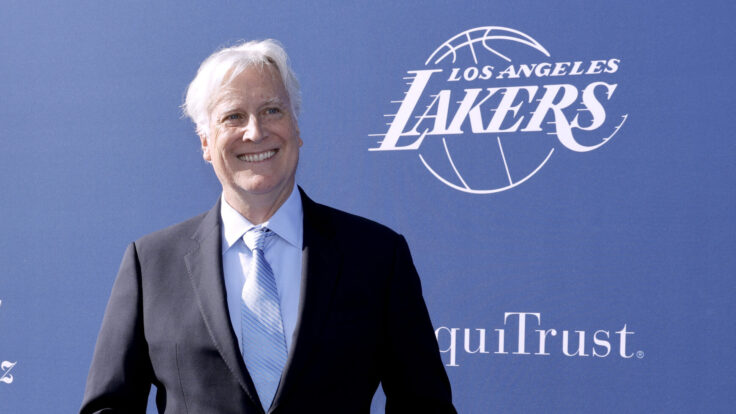
And of course, there’s Mark Walter’s $10 billion purchase of the Los Angeles Lakers.
Meanwhile, the Pohlad family just took the Minnesota Twins off the market, taking on minority investors rather than selling off the team, after failing to get anywhere close to NBA-sized offers for the ball club they’ve owned for 40 years. They couldn’t even find a bid for $1.7 billion, their magic number, which the stadium-less Rays recently fetched.
The last
baseball team to trade was the Baltimore Orioles, which went for a similarly modest $1.725 billion to the Carlyle Group’s David Rubenstein back in March 2024. The talk in MLB ownership circles is that the relatively depressed franchise values confirm fears of baseball’s enterprise value. Will a salary cap fix this trend? MLB, which feasted off the R.S.N. business for years, may also require more of a business model evolution than anything else. -
It’s the NFL’s world: As network ad sales execs fan out into the sports market, they aren’t hearing any grumbling about Trump tariffs, nor are they detecting any market jitters. In fact, CBS Sports described their upcoming NFL slate as “very well sold”—corporate speak for I’m not going to tell you the actual numbers. At their press event on Tuesday, I harassed the network’s NFL ad sales veteran, Tony Taranto, about not giving me a number. He
launched into what his boss, Ryan Briganti, called the “restaurant analogy.”
Here’s Tony: “Look, my job is to get everybody a table, right? If we have a packed restaurant, we’re going to have people wait at the bar. We’re never telling someone that we don’t have space. So right now? We have people waiting at the bar.”
The streamers, however, seem to have a different policy at their restaurant. Netflix
trumpeted the fact that it has “sold out of all available in-game inventory” and “closed sponsorships with multiple partners like Accenture, FanDuel, Google, and Verizon on in-game and broadcast features.” It’s a notable benchmark for Netflix, which is trying to build out its advertising tier. But it says more about the NFL’s
popularity than anything else. - Hard-ball negotiations: Rob Manfred is continuing to negotiate with a bunch of different media companies that are looking to pick up ESPN’s package of rights: Sunday Night Baseball, the Home Run Derby, and wild card playoff games. We shouldn’t expect a deal announcement anytime soon… but judging by the tenor of the discussions, MLB seems likely to split ESPN’s package among two or three
companies.
Here’s what we know: Apple and NBC have expressed interest in Sunday Night Baseball and the playoff games, leaving MLB with a quandary similar to Formula 1’s: Should the league take the bigger check to live behind Apple TV+’s paywall, or prioritize NBC’s broadcast reach? Netflix, meanwhile, has shown interest in the Home Run Derby, just the type of thing that it can eventize—our new favorite term of art after cliff path and grinfuck. (Drink!)
And ESPN is negotiating to make MLB.TV’s out-of-market package part of its direct-to-consumer app, which launches in a week. Marchand published a good write-up on the situation, reporting that ESPN is also considering a midweek package of games. - A wild fortnight: A
common theme among the recent spate of tectonic rights deals is that none was streaming-only. UFC and Paramount, NFL and ESPN, USGA and NBC, WWE and ESPN—all of these sports will be available on streaming services operated by traditional media companies. (The speculative F1–Apple TV+ deal might be a marginal outlier.) It’s clear that broadcast television’s reach still matters quite a bit. In discussing the UFC deal, TKO president Mark Shapiro sounded more excited about the availability of
broadcast TV windows than anything else.
Axios’s Sara Fischer helped break it down on yesterday’s Varsity podcast. “We’re learning a little bit about these strategies,” Sara told me. “The traditional media companies are starting to see a bundle opportunity in their streaming efforts. … Look at what Amazon is doing with Amazon Channels. YouTube TV
is starting to get into this as well. You’re not just providing a platform for your own programming, you also want to become a platform for other networks. This becomes critical ahead of 2028, when MLB rights hit the open market. I can see a world where either ESPN or Fox offers MLB.TV’s local package as a streaming service within their bundle. … That platform idea is what makes them actually competitive with something like Netflix.” - How big is Prime Video,
really?: In last night’s What I’m Hearing+ email, Julia Alexander put some numbers to Amazon’s streaming audience that I found particularly interesting. Here’s Julia: “It’s hard to quantify Amazon Prime Video’s true audience—Prime doesn’t break out a number separately from its broader membership, so it’s impossible to
discern who’s there for the latest John Cena action-comedy and who’s shopping for cheap toilet paper. But Kagan, S&P Global’s intelligence firm, estimates in a new report that Prime Video has roughly 90 million subs in the U.S.—which likely puts it slightly ahead of Netflix, which had 90 million subs in the U.S. and Canada, before it stopped reporting those numbers earlier this year. Most interestingly, about 4.3 million of these subscribers are not Prime
customers. Some people are just there for Heads of State.”
Julia continued: “Another fun finding from Kagan: There are roughly 85.1 million subs on Prime Video’s ad tier in the U.S., which means that 95 percent of its domestic users are seeing ads. This makes sense, since Prime Video charges an extra $3 to opt out of ads. For context, Netflix has 94 million monthly active users on its ad tier globally, out of about 300 million total subscribers; the worldwide
ad-viewing proportion of its audience is only about 30 percent.”
|
|
|
After a quiet decade of bidding activity—passing on the NBA, NHL, NASCAR,
etcetera—CBS Sports president David Berson is ready to spend his Ellisonbucks. UFC was just the opening statement. |
|
|
Earlier this week, I caught up over the phone with TKO president and C.O.O. Mark
Shapiro, who’s been making the rounds in the afterglow of his landmark seven-year, $7.7 billion UFC deal with Paramount, which will platform the league on both its streaming service, Par+, and, in a twist, on CBS. Naturally, our conversation segued to Shapiro’s affection for CBS Sports chief David Berson. The two have history, after all. Back when Shapiro was a rake in his progress at ESPN, in 2001, he hired Berson into the business. “There’s nobody who’s happier about
this deal than David Berson,” Shapiro told me. “He’s been waiting. He wants to be on offense.”
By the time Berson joined CBS Sports, in 2011, the division and its executives had earned a reputation in the business as good partners on account of long relationships with the Masters, NFL, and NCAA. But the CBS Sports team always seemed somewhat risk-averse, content with their long-term, weather-tested portfolio—a position that ossified as Shari Redstone mismanaged the parent
company in recent years. It was hardly a surprise that the network stayed out of the bidding for the NBA, the NHL, and NASCAR. |
|
|
A MESSAGE FROM OUR SPONSOR |
Forever at the top of its game, the trailblazing BMW 7 Series. Engineered to win. Learn more at BMWUSA.com |
|
|
But the UFC deal, which came days after David Ellison’s long-delayed purchase of
Paramount closed, appears to have ushered in a new era. Indeed, Paramount’s bid blew away all the others: It was the most aggressive for the entire package by far. Sources said that the bids from Amazon and Netflix stayed under $400 million per year for only part of the package—the streamers were most interested in the numbered fights. As my partner Matt Belloni reported,
Netflix bowed out of the bidding a few weeks ago. Talks with YouTube, Warner Bros. Discovery, DAZN, and Apple continued to the end. In fact, NBCUniversal was the only media company that didn’t engage.
Those positive vibes were evident on Tuesday, when the network hosted the media at Paramount’s Times Square headquarters, ostensibly to hype the coming NFL season. But just about every conversation began and ended with the UFC deal, which Berson called “a huge statement to underscore the
commitment to live events and sports and what sports means to the company moving forward.” |
It’s a fallow time for sports media rights—the biggest ones aren’t available until 2028, when the
MLB, NHL, and possibly NFL all come to market. (The NBA, as you know, is all set for a decade.) It would make sense for Paramount to be at the table for baseball, in particular. Paramount will also presumably be aggressive when the NFL’s rights come up since the league now has an ownership stake in Paramount—said to be significantly less than the league’s 10 percent stake in ESPN—resulting from the Skydance Sports joint venture.
Berson brushed aside the idea that the NFL’s ownership
position will alter the league’s relationship with CBS, particularly when it comes to rights negotiations. “[The NFL ownership stake] doesn’t change much at all,” Berson said. “Their best interest has always been for everybody to do very well. They made that very clear. Having stakes in different companies is not new to the league. They have Fanatics, SportsLine, NFL Network—they proved that they can do deals at arm’s length, and I anticipate that it continues that way.”
But Berson also
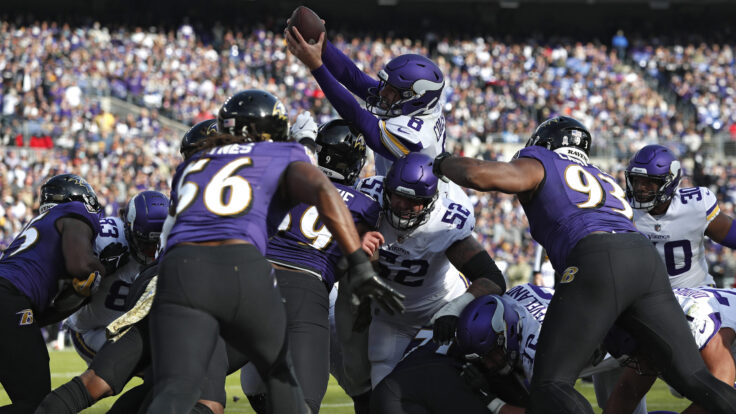
touted CBS Sports’s current close relationship with the NFL, pointing out that Goodell had visited Paramount’s offices earlier that day to participate in a Q&A with J.J. Watt, which covered a lot of the hot-button topics, including player safety, the potential for an 18th game, further international expansion, and the new first-down visual measurements. Berson noted that Goodell had said the league’s top priority is reach, which still resides with broadcast channels today. “It
underscores the depth of the relationship we have,” Berson said. |
On ESPN’s math: “The UFC’s $1.1 billion annual deal with Paramount is just north of the
sum of ESPN’s current MLB ($550 million) and UFC ($500 million) media rights. This doesn’t include F1, which they have also relinquished. While their NBA bill increases next season, it would appear ESPN may have some dry powder to deploy beyond a possible MLB reconciliation. SEC ninth conference game, perhaps?” —A sports business executive
On the UFC-Paramount deal: “The part that was eyebrow-raising to me was the reveal that select, top-tier fights will essentially be
simulcast on CBS, in addition to streaming on Paramount+. The broadcast element to this deal is fascinating on a few levels. The broadened exposure to a greater, mainstream audience; receiving a potential lead-in from college football and NFL games; and the crossover between UFC fans and those who consume Taylor Sheridan programming in the Paramount+ ecosystem. Fascinated to see how it’s brought to market.” —A brand strategist
On ESPN’s podcast strategy:
“Pablo Torre is right. Despite being in the podcast game for years, it’s clear that the medium is not a priority for ESPN. It doesn’t really have a college basketball pod of note, and despite having multiple CFB writers with podcast experience, they don’t really have a foothold in that space compared to shows like the Fullcast, the Solid Verbal, Split Zone Duo, and others. If not for The Hoop Collective, I’d never listen to an ESPN pod on a
regular basis.” —A Varsity subscriber |
Have a great weekend. See you Monday.
John |
|
|
Ace media reporter Dylan Byers brings readers into the C-suite as he chronicles the biggest stories in the industry:
the future of cable news in the streaming era, the transformation of legacy publishers, the tech giants remaking the market, and all the egos involved. |
|
|
Join Emmy Award-winning journalist Peter Hamby, along with the team of expert journalists at Puck, as they let you
in on the conversations insiders are having across the four corners of power in America: Wall Street, Washington, Silicon Valley, and Hollywood. Presented in partnership with Audacy, new episodes publish daily, Monday through Friday. |
|
|
Need help? Review our FAQ page or contact us for assistance. For brand partnerships, email ads@puck.news. You received this email because you signed up to receive emails from Puck, or as part of your Puck account associated with {{customer.email}}. To stop receiving this newsletter and/or manage all your email preferences, click here. |
Puck is published by Heat Media LLC. 107 Greenwich St, New York, NY 10006
|
|
|
|