Greetings from Los Angeles, welcome back to In the Room, and…
man, where to begin? The past 24 hours have delivered a whirlwind of media news: Paramount’s Stephen Colbert cancellation, Trump’s lawsuit against Rupert Murdoch and the Journal, and the Senate’s vote to yank NPR and PBS funding. Before all that, we had news of Substack’s latest raise, and last night, my partner Matt Belloni broke the news that former CBS News president David Rhodes
was in talks to return to the role under Skydance rule. So, in tonight’s issue, an overfilled candy bowl of news and notes on all these stories.
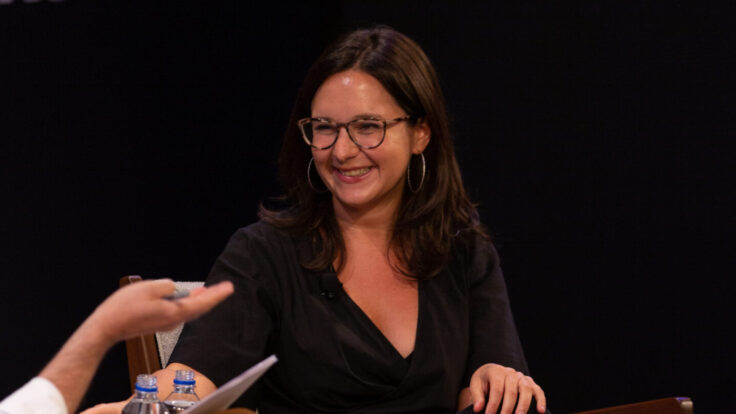
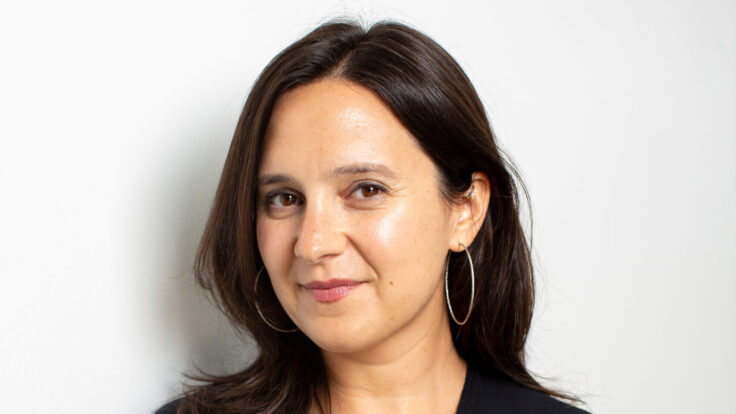
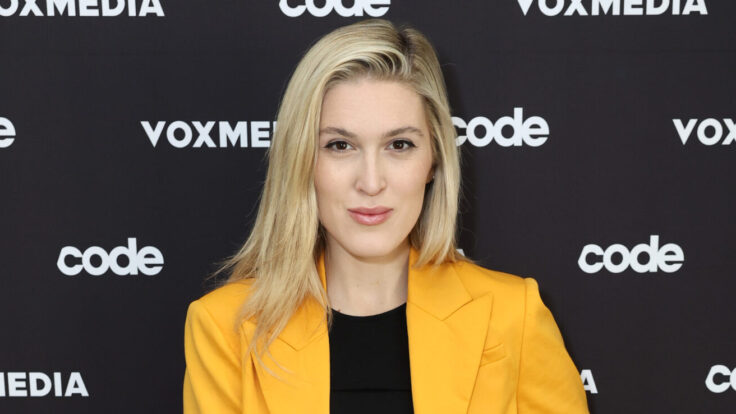
🍸 Plus, on the latest edition of The Grill Room, Julia Alexander and I assessed some of the other plotlines consuming the media industry: what Substack’s recent $1.1 billion valuation portends for the creator
economy, David Ellison’s courtship of Bari Weiss, and much more. Follow The Grill Room on Apple, Spotify, or wherever
you prefer to listen.
And another shameless plug while I have you… Julia and I also chewed over Apple’s $150 million offer for F1 and the company’s broader sports ambitions. The conversation reminded me of my partner John Ourand’s excellent conversation with
NASCAR commissioner Steve Phelps, which they taped during a Puck event with the league last weekend before the big race in Sonoma. Lost in all the F1 mania is the fact that NASCAR now operates a $1.1 billion annual set of media rights packages with a panoply of partners bridging streaming and linear. This is where it’s headed for all the leagues.
Mentioned in this issue: Rupert Murdoch, Emma Tucker, The Wall Street
Journal, Donald Trump, David Ellison, Brendan Carr, David Rhodes, George Cheeks, Bari Weiss, The Late Show, Stephen Colbert, Substack, Hamish McKenzie, Chris Best, and many more…
Let’s get started…
|
-
Trump v. Murdoch: President Trump has sued Rupert Murdoch, News Corp, Dow Jones, The Wall Street Journal, and two Journal journalists for libel after they published the “bawdy” birthday letter he wrote to Jeffrey Epstein. The suit opens up a dramatic new chapter in Trump’s pressure campaign against the news media. After watching both Bob Iger and Shari Redstone capitulate to Trump via their respective
$16 million settlements, it will indeed be fascinating to see whether the 94-year-old, self-made Murdoch becomes the unlikely champion to stand up in defense of journalism speaking truth to power.As I wrote months ago, the Journal has been among the most compelling publications of the Trump 2.0 era—from its agenda-setting coverage of the administration to its unsparing editorials on Trump’s policies—and this would escalate that position rather significantly. Anyway, our thoughts
go out to Emma Tucker. We sincerely hope Rupert has your back.
- The NPR-PBS panic: In the final hours leading up to the passage of the bill to cut $1.1 billion in federal funding for NPR and PBS, a source from the Corporation for Public Broadcasting called me to relay the panic that had set in among smaller member stations as their leaders frantically called bigger stations to petition them for support. Of course, these cuts will have
profound ramifications across those 1,500-plus stations, likely forcing many to consolidate or simply close down. As the Times’s Jim Rutenberg noted, this was the result of a decades-long effort by Republicans, made possible by Trump’s grip on the G.O.P., yes—but also by the broader lack of support for legacy media and
evolving business models.
|
|
|
News and notes on the latest media industry talking points: The timing, optics,
and insider drama following CBS’s abrupt decision to cancel ‘The Late Show’ as the Paramount deal approaches the finish line; and what to make of Substack’s $1.1 billion valuation in a round led by The Chernin Group.
|
|
|
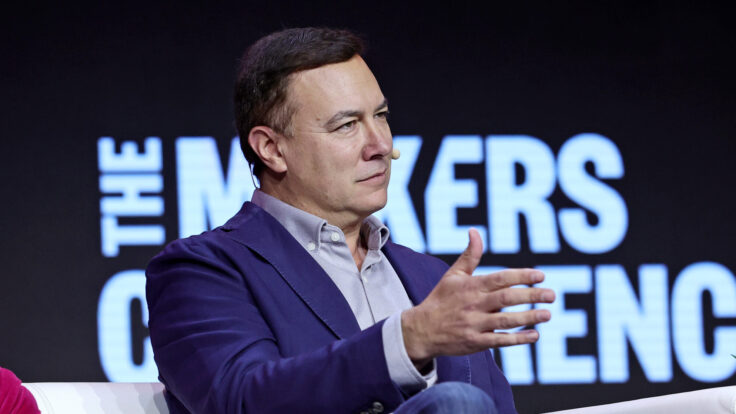
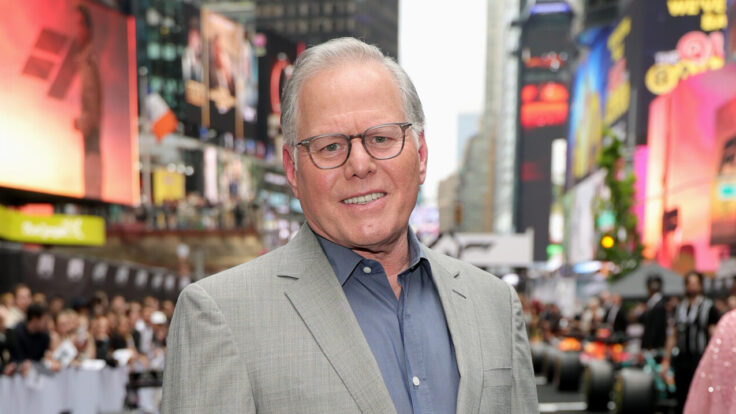
On Tuesday, Skydance C.E.O. David Ellison and his legal counsel
met with F.C.C. chairman Brendan Carr and his deputies to discuss Skydance’s proposed acquisition of Paramount, which finally appears set for approval, on the heels of Paramount’s $16 million settlement with Trump over his 60 Minutes lawsuit. Among other things, Ellison and Carr discussed Skydance’s “commitment to unbiased journalism and its embrace of diverse viewpoints,” according to a summary of the meeting written by Ellison’s lawyer,
Matthew Brill, and obtained by my partner Eriq Gardner, who slipped it to me on deadline. These principles, Brill wrote, “will ensure CBS’s editorial decision-making reflects the varied ideological perspectives of American viewers.”
In the context of Trump and Carr’s longstanding pressure campaign against CBS, a commitment to “varied ideological
perspectives” is, of course, an assurance that the network’s programming will strive to be less overtly liberal and more tolerant of conservative viewpoints. And as a slate of recent developments suggests, the editorial agenda across Skydance is indeed set for an overhaul—from CBS News to The Late Show, where the company has now decided to drop Stephen Colbert and the entire late-night enterprise.
As my partner Matt Belloni reported just yesterday, Ellison is talking to former CBS News president David Rhodes—an undeniably smart but not universally beloved manager—about returning to the helm of the news network. (Indeed, Paramount co-chief George Cheeks recently met for coffee with Rhodes while
in London, per sources familiar.) Ellison is also in talks to acquire Bari Weiss’s The Free Press, a move that would inject a hefty dose of center-right, pro-Israel, anti-woke editorial sensibility into the network. The effective acqui-hire would be expensive—The Free Press recently closed a round at a reported $100 million valuation—but it sure
would put his stamp on the joint.
If both David and Bari come over, Matt wrote, “the plan would call for Rhodes to manage and operate CBS News day-to-day alongside Weiss as an ideological guide of sorts.” Whether you see that as a welcome broadening of the discourse or an affront to CBS’s longstanding journalistic traditions probably depends on your politics. But even the hypothetical possibility of this
duo would sure make a nice talking point for Carr. Rhodes, of course, cut his teeth at Fox News.
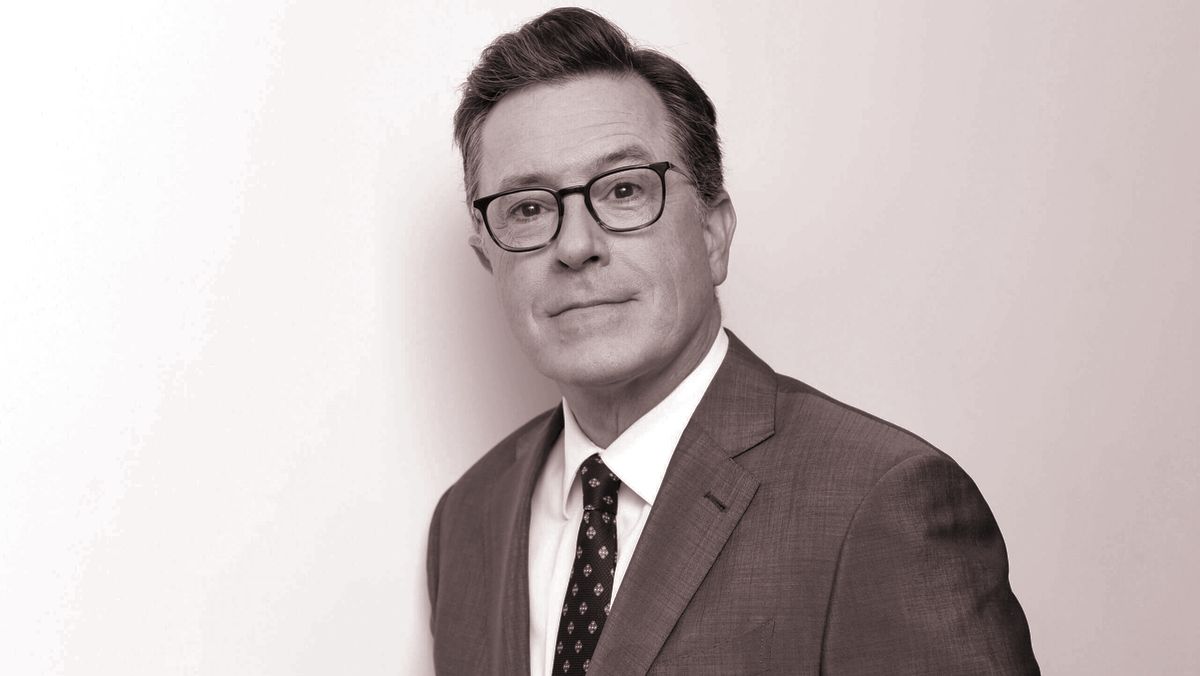
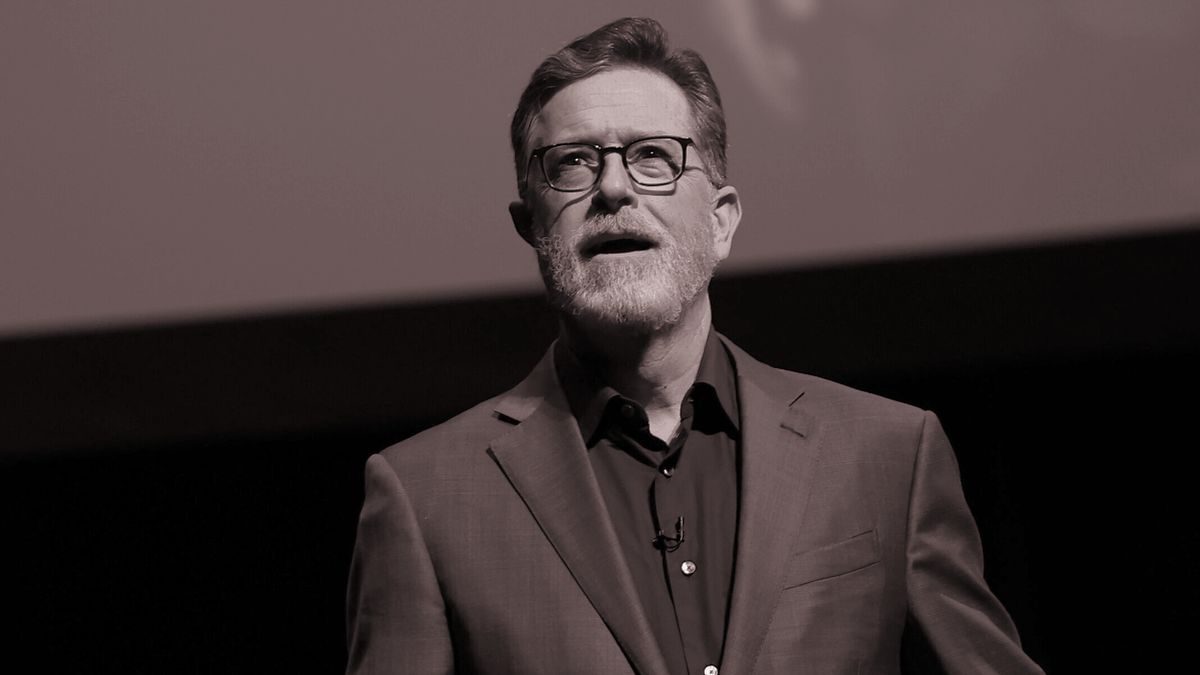
Finally, on Thursday, CBS announced that The Late Show would be shuttered after the 2025-26 season. The gesture has invited a lot of reasonable scrutiny. Was Colbert, a frequent Trump critic, a blood sacrifice for F.C.C. approval? “This was part of the deal with Trump,” one well-connected media
executive assured me shortly after the news hit, albeit without any evidence to prove what many believe to be true, aping the paranoia of the moment. Paramount insists that it was “purely a financial decision,” and Colbert himself has offered similar assurances to staff and skeptical friends, I’m told, all aligned with Matt’s reporting last night. (Sign up
for What I’m Hearing here, although I assume you already are…)
Indeed, The Late Show loses CBS $40 million a year, and, as I wrote three years ago, the entire genre has
been contracting at a breathtaking clip. Indeed, one second-order effect of CBS’s decision is that Fallon and Kimmel are now on a death watch. Nevertheless, the timing of the decision has raised some rather obvious questions. Among them: If this really was “a financial decision,” why didn’t CBS announce it at the upfront in May and jack up ad rates for the final season? And yet, sometimes these things come together less elegantly behind closed doors.
In any event, the net effect of all these developments is the same: CBS News’s editorial bent will likely change to better reflect the views of David and his father, Larry; there will be no more satirical skewering of the president in late night; and, if Trump’s P.S.A. claims are real, there will be $16 million in advertisements for conservative causes peppered across the network’s air. Presumably, that’s a vision for CBS that Trump and Carr can get behind,
and it should be enough to move this deal across the finish line so David can finally have his movie franchises and his NFL rights—and, sure, the House of Cronkite, too.
|
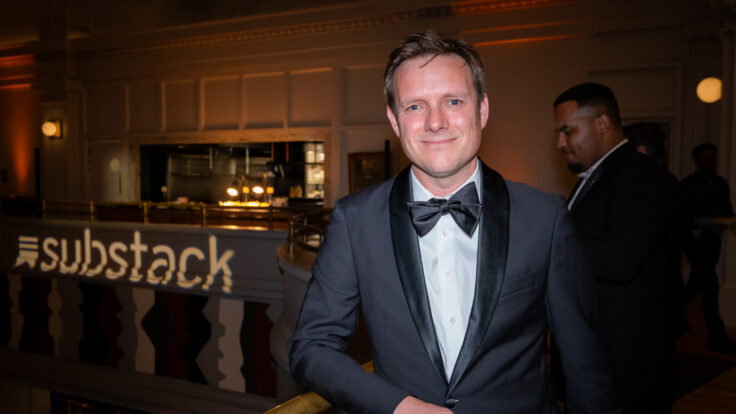
Elsewhere this week, Substack founders Hamish McKenzie and
Chris Best revealed, via The New York Times, that they had closed a $100 million funding round that now values the company at $1.1 billion on a mere $45 million in annual recurring revenue. The real news, however, was that the round was led by The Chernin Group, a glossed-over detail that foreshadows Substack’s transformation into a true media company—advertising (finally), better tech, better creator tools, etcetera—as well as a leadership change.
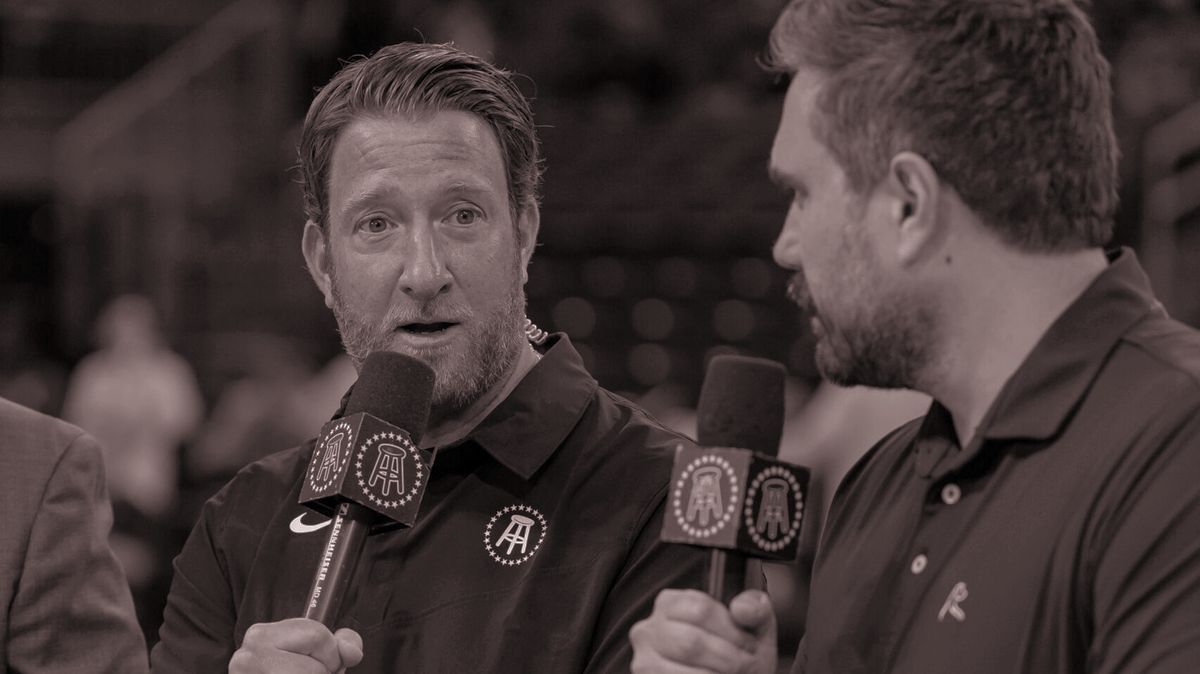
Indeed, Chernin has a history of taking popular brands and installing skilled operators that can professionalize the culture, initiate new revenue streams, and flip the business for a sweet exit. Erika Ayers Badan perfected this formula in partnership with Dave Portnoy at Barstool, and is now trying once again for Chernin at the helm of Food52 without the founders, who
have exited the brand. One suspects that a similar strategy may be an option here.
And while many in the media industry were buoyed by the very V.C.-like 20x+ multiple for a company, most saw other clues, too. Indeed, that $100 million was likely a mix of fresh capital and buying out shares on the secondary market. Also, Chernin doesn’t write large checks in order to follow them with enormous
checks, and one suspects that early investor a16z followed along in this round for optics as much as the ability to protect their position in the waterfall. Anyway, this may be the last significant funding round that determines whether Substack becomes a true platform company—the investment thesis here, clearly—or ends up more like Medium. At the end of the day, the company might be a fascinating downstream-of-A.I. vehicle for investors who aren’t quite writing those sorts of gaudy
checks.
Sure, some investors were mystified by the fact that the founders floated their latest round in Eric Newcomer’s Substack, and that McKenzie decided to start contributing to a media newsletter hosted on rival platform Beehiiv. (These guys may just like attention: Their flacks just sat down for a dual
profile in Air Mail, for heaven’s sake…) But the real open question in the industry is whether Substack can stand up an advertising business as quickly and effectively as its new investors are likely anticipating.
Running an ad network requires not only a new sales force, but also an ideology around brand safety—especially for a platform
that doesn’t quite have platform scale. And what happens, pray tell, when Emily Sundberg or Newcomer decide they want to reserve their inventory for their own direct-sold advertising? Either way, the company may be the latest to learn a lesson that has humbled so many predecessors: Selling ads ain’t as easy as it looks.
|
|
|
Puck sports correspondent John Ourand and a rotating cast of industry insiders take you inside the executive suites
and owners boxes where the decisions that shape the entire sports business are made. You’ll hear interviews with players, network execs, and everyone in between. The Varsity is an extension of John’s private email for Puck by the same name. New episodes publish every Wednesday and Sunday.
|
|
|
The industry's go-to source for unflinching reporting on the trillion-dollar business of artificial intelligence -
perhaps the single most important technology of our time. Ian Krietzberg, the powerhouse journalist behind The Deep View, delivers twice-weekly insights into the latest dealmaking and breakthroughs in A.I., and how the intersecting worlds of finance, entertainment, media, and politics are being transformed in its wake.
|
|
|
Need help? Review our FAQ page or contact us for assistance. For brand partnerships, email ads@puck.news.
You received this email because you signed up to receive emails from Puck, or as part of your Puck account associated with {{customer.email}}. To stop receiving this newsletter and/or manage all your email preferences, click here.
|
Puck is published by Heat Media LLC. 107 Greenwich St, New York, NY 10006
|
|
|
|