Welcome to The Varsity. I’m John Ourand, still helming Puck’s Hamptons bureau for the next couple of days, along with Matt Belloni, at BofA’s excellent media conference.
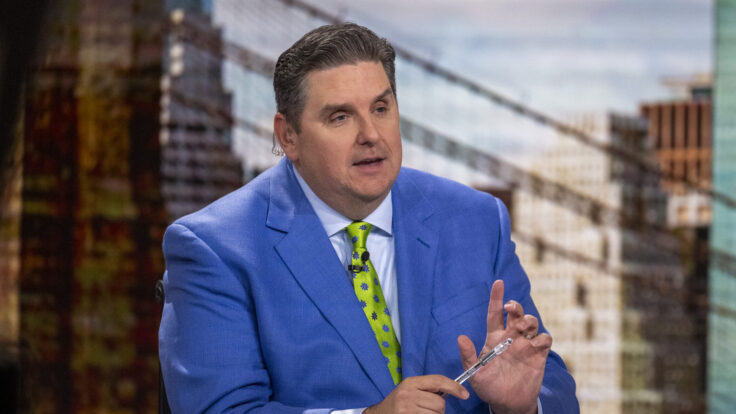
I was sipping coffee this morning alongside a senior media executive when Inside the NBA came up. This executive scoffed when I suggested that ESPN would enact changes, either in the halftime or postgame shows, to turn off its fans. Jimmy Pitaro is not dumb, this executive said. He understands why Inside is so popular. And, with Pat McAfee and Stephen A. Smith, he’s already proven that he doesn’t meddle with network stars that produce—the needle-movers, as it were. If Jimmy continues to follow that playbook, next season’s Inside will feel a lot like this past season’s.
In tonight’s Inner Circle edition of The Varsity, Julia Alexander digs into one of the animating issues au courant in the sports media business: how advertisers evaluate streamers’ lower overall viewership in concert with their more desirable, younger audiences. You can only read Julia’s stories if you are an Inner Circle member, so make sure you click here to upgrade. You won’t regret it.
Take it away, Julia…
|
Stat of the Week: 224,000
|
|
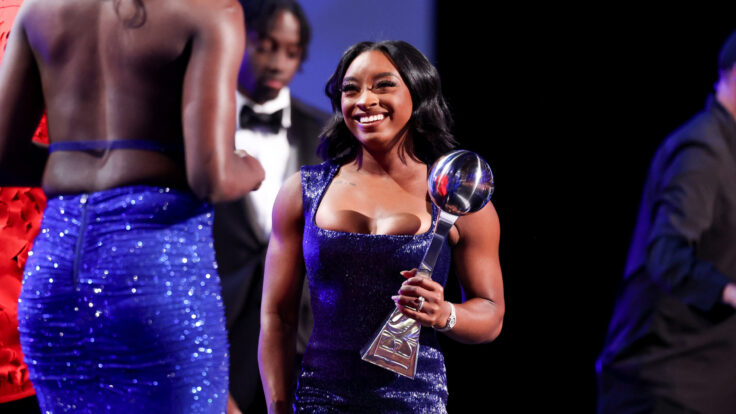
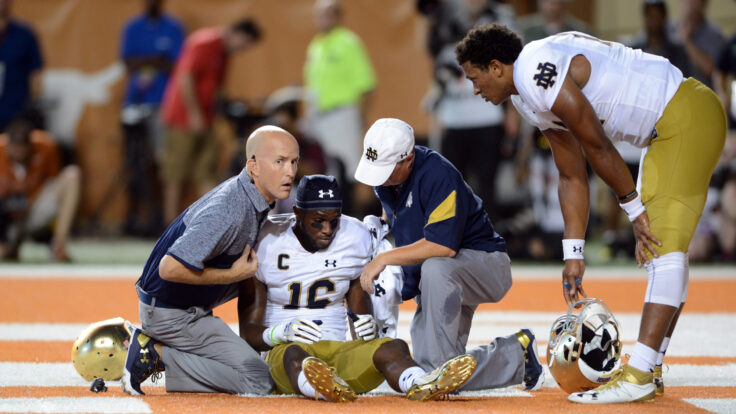
That’s the number of viewers that the Indiana Fever lost on NBA TV after Caitlin Clark went out with a quad injury. The team’s previous NBA TV game against the Atlanta Dream, two weeks ago, drew 581,000 viewers, while their subsequent matchup against the Mystics pulled in around 357,000. Caitlinsanity is real! This dip is a testament to Clark’s generational ability to draw huge crowds to WNBA games—and it will continue as she misses her first meaningful stretch of games as a pro.
|
|
|
|
A MESSAGE FROM OUR SPONSOR
|
Forever at the top of its game, the trailblazing BMW 7 Series. Engineered to win. Learn more at
BMWUSA.com
|
|
|
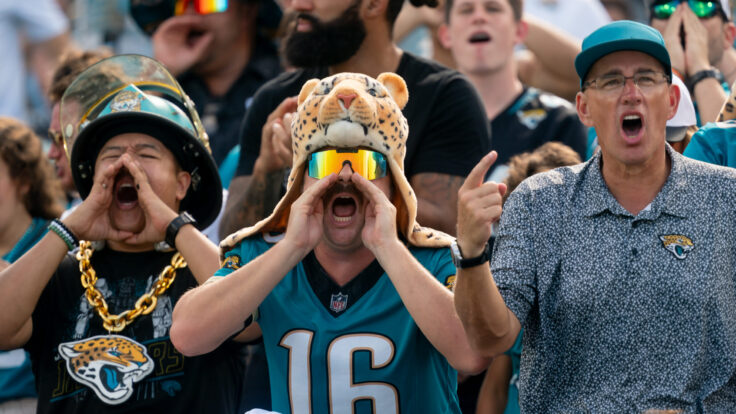
- The YouTube advantage: YouTube’s incursion into the sports space is profound for reasons obvious, subtle, and even subliminal. Yes, the platform is making deals with leagues, like the NFL, and distributing thousands of media networks, many of which have their own deals. But YouTube channels are also media entities unto themselves, and with their own live sports ambitions. Dude Perfect, the sports-adjacent YouTube stunt channel, has raised as much as $300 million and is presumably valued at quite a bit more.As YouTube channels become networks in their own right, executives and analysts shouldn’t be surprised when YouTubers start to bid for—and win—sports rights of their own. In fact, the trend is upon us: Tim Cocker, the former rugby broadcaster and host of the Eggchasers Rugby YouTube channel, just secured the rights to French D2 rugby for the Britain and Ireland regions. It’s hardly an NFL (or even UFL) caliber partnership, but as Cocker said in a video announcing the deal, “You don’t have to be a former international [competitor] to find a community of people that share your love of rugby, and that’s what I found here on the channel.”This deal underscores YouTube’s unique advantage in sports. Since many of its independent creators are focused on relatively niche sports and leagues—and because it’s the only truly free video platform with targeted content—it will organically extend into sports without having to spend a dollar.
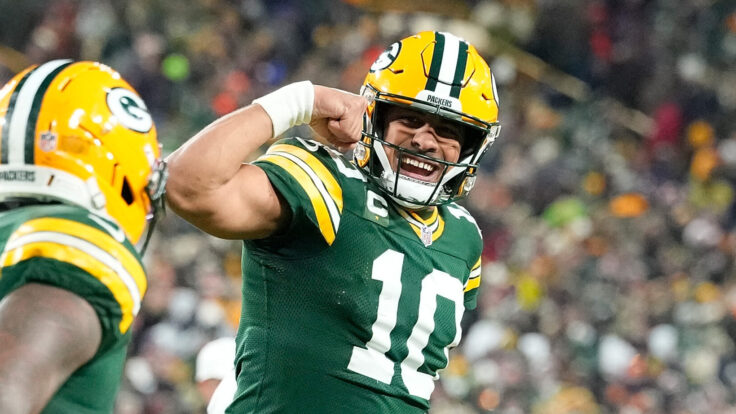
- MLB is up, up, up: Perhaps unsurprisingly, given MLB commissioner Rob Manfred’s ongoing talks with Apple, Amazon, and Netflix over the $550 million package of games up for grabs, the league would like people to know just how much its various rule changes—like the pitch clock, the ghost runner, etcetera—are increasing viewership. To wit: MLB is up 10 percent on Fox year over year, with ESPN up 22 percent and TBS up 16 percent. MLB.TV streaming viewership is up 27 percent compared to 2024.
The good news for the league: People are watching. The bad news: It still probably isn’t enough to persuade any of the deep-pocketed tech players to pony up half a billion dollars for league rights they don’t really need. Manfred will get a deal, but these numbers aren’t going to sweeten it. Baseball became America’s pastime because it perfectly aligned with the emerging medium of radio. It will become a tier two sports asset because it doesn’t fit as neatly into the streaming paradigm.
- NBA Finals media moping: I’m not raising this simply because I’m salty about the Knicks (I love you, Jalen Brunson), but this NBA Finals matchup probably has commissioner Adam Silver breathing into a paper bag. Sure, the Tyrese Haliburton–Shai Gilgeous-Alexander showdown might be a dream for hardcore basketball fans—but it could be a nightmare for ad sales.
In terms of market size, Thunder vs. Pacers pits the 47th-ranked market against the 25th-ranked market—the smallest-market Finals since the 1980s. The last comparable example was in 2012, when the Thunder took on the Miami Heat. But the Miami market was at least ranked 18th at the time, and the Heat were a modern super-team, thanks to LeBron James, Dwyane Wade, and Chris Bosh. With the NBA Finals still struggling to get back to pre-Covid viewership numbers, I’m sure Silver wasn’t the only one hoping the Knicks would pull off the comeback.
|
|
And now on to the main event…
|
|
|
|
Yesterday’s fine-tuned sports streaming-versus-broadcast math is rapidly becoming obsolete, with Amazon poised to take in billions more in ad revenue this year, Netflix targeting more than $3 billion, and streamers leaning into younger—albeit much smaller—audiences.
|
|
|
Measuring sports viewership in the post-TV era has become, in the words of Media Rating Council’s George Ivie, “more chaotic than it’s ever been.” Amid this chaos, and the fact that some audience segments are more valuable than others, league executives are being forced to rethink how they cut media deals, and advertisers are trying to figure out how to deploy their budgets while the ground is shifting beneath them. One thing’s for sure: Traditional television ratings have never mattered as little as they do today.
Just a few years ago, audiences’ drift toward streaming services wasn’t seen as especially concerning. Younger audiences were obviously spending more time on those platforms, but streamers were competing for subscriber growth, not advertiser dollars. That all changed beginning in 2022, when the industry made its great pivot away from pure-play dynamics. Amazon secured nearly $2 billion in upfront video advertising commitments last year, thanks largely to Thursday Night Football and Prime Video’s January shift from a default ad-free plan to a default ad-supported plan. Netflix, the largest paid streaming service in the United States, could surpass $3 billion in advertising revenue this year, per Omdia.
|
|
|
|
A MESSAGE FROM OUR SPONSOR
|
Forever at the top of its game, the trailblazing BMW 7 Series. Engineered to win. Learn more at
BMWUSA.com
|
|
|
|
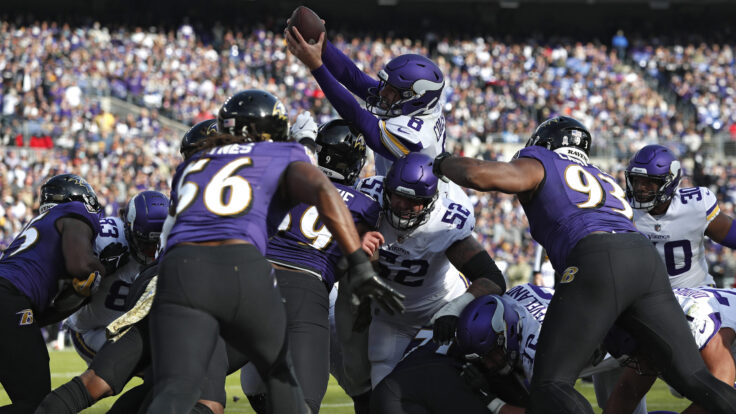
Trying to deploy ad dollars amid this new reality isn’t for the faint of heart. Comparisons between streaming and broadcast numbers fall apart fast and leave room for disagreement. When Thursday Night Football moved from Fox and the NFL Network to Prime Video, average season viewership plunged 40 percent. While Prime Video has steadily increased that number, jumping 23.5 percent in 2023, and another 11 percent in 2024, the audience size is still about 18 percent smaller than when games were available on broadcast. Amazon’s average per-game audience of 13.2 million viewers in the 2024 season is also a far cry from NBC, CBS, and Fox—all of which averaged more than 18 million viewers—and below ESPN’s 15 million. There’s more: Amazon’s average 2.7 million viewership for the recent Coca-Cola 600 NASCAR race drew scorn from Michael Mulvihill, Fox’s data and strategy guru, whose network clocked 3.2 million viewers for the same race last year.
So why isn’t Amazon distraught? Prime’s median age for NFL viewership (49) and racing (56) is six years younger than their corollaries on linear. Last week, the ratio of older NASCAR viewers lost in the move to Amazon was 5:1—in other words, for every five viewers aged 55 and older that Amazon lost, it gained one viewer between 18 and 54. Amazon’s pitch to advertisers is youth and intentionality over size.
Herein, however, lies the core problem for broadcasters, leagues, advertisers, and streamers: Trying to make any equal conversion from linear to streaming is a bad idea. Even as streaming continues to become more prevalent in households, and even as leagues continue to sign with streamers over cable partners, trying to recapture past glories is wasted effort.
|
|
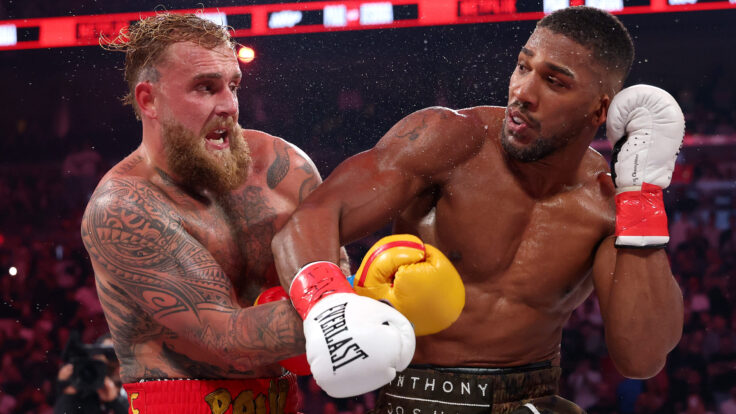
Streaming audiences, although smaller, can actually be more valuable to leagues and advertisers based on what the audience looks like and why they’re there. Netflix’s Christmas Day NFL games last year each drew around 30 million global (26.5 million U.S.) viewers at their peak—an unusually large audience for a streamer, and not comparable to a random Thursday night game on Amazon between two teams, neither of which are vying for a playoff spot, or a random, early-afternoon college football game that may miss most of the West Coast. It’s an important distinction: While most streamers attract smaller but more targeted audiences, Netflix is interested in games that their executives can sell as events—hired-gun programming for captive audiences who made the decision to stream that given content at the appointed time. This means absurdly strong ratings almost every time, which tells a better narrative for advertisers already interested in the younger-skewing platform.
Last season’s Monday Night Football opener performed much stronger on ESPN for men between 25 and 54, a key demographic, than on ABC—a gap of about 41 percent, per Nielsen. ESPN’s audience also represents a group of viewers whose average incomes are 15 percent higher than ABC viewers’. They’re also about 13 percent younger.
Granted, many audiences have ESPN and ABC because of cable bundling, meaning they can choose where to watch. But that’s also streaming’s proposition: It’s an intentional audience, which advertisers love. Of course, this is ESPN C.E.O. Jimmy Pitaro’s whole pitch on his new streaming service: According to his plan, he’ll have the most intentional and captive audience of all. And he might be right. If the story for advertisers isn’t the number of viewers, but the reason for those viewers, then ratings truths will continue to change. It’s the reason that Mulvihill’s boss, Fox Corporation C.E.O. Lachlan Murdoch, will soon be touting the same age demographic statistics for his streaming service—even if the audience size is much, much smaller.
|
|
Great stuff, Julia. Thanks. I’ll see you all on Thursday.
John
|
|
|
|
Puck sports correspondent John Ourand and a rotating cast of industry insiders take you inside the executive suites and owners boxes where the decisions that shape the entire sports business are made. You’ll hear interviews with players, network execs, and everyone in between. The Varsity is an extension of John’s private email for Puck by the same name. New episodes publish every Wednesday and Sunday.
|
|
|
|
Ace media reporter Dylan Byers brings readers into the C-suite as he chronicles the biggest stories in the industry: the future of cable news in the streaming era, the transformation of legacy publishers, the tech giants remaking the market, and all the egos involved.
|
|
|
Need help? Review our FAQ page or contact us for assistance. For brand partnerships, email ads@puck.news.
You received this email because you signed up to receive emails from Puck, or as part of your Puck account associated with . To stop receiving this newsletter and/or manage all your email preferences, click here.
|
|
Puck is published by Heat Media LLC. 107 Greenwich St, New York, NY 10006
|
|
|
|