 |
 |
|
Welcome back to The Varsity, my twice-weekly private email on the egos, corporations, and bold ideas that comprise the high-stakes business of sports. I’m writing to you from the West Coast, where I’m on a panel this afternoon about “The Next Generation of Sports Media” at the Los Angeles Sports Innovation Conference, being held inside the new Intuit Dome, alongside DirecTV’s Rob Thun, Spectrum Networks’ Dan Finnerty, and Play Anywhere’s Peter Scott.
In case you missed it, check out my conversation on yesterday’s Varsity podcast with CAA Sports co-head Matt Kramer. Matt offered an inside look at Woj’s decision to retire from ESPN, but I was more interested in his observations about how changes in the media business have impacted his representation business. More on that below.
Many of you reached out over the weekend to ask whether I broke 100 at Riviera. Alas, I did not, but you will at least be relieved to hear that we refused Marchand the opportunity to be our caddy. (I hear Rancho Park plays great this time of year, Andrew!) But since I spent so much looking for balls in the Kikuyu grass, I didn’t get to see Tom Brady call the Lions-Cowboys blowout. We’ll hold The Brady Meter for this week, but one executive reached out to express surprise that the GOAT refuses to utter the phrase “red zone.” Brady instead prefers nomenclature like “red area” or “scoring zone.” Weird. Anyway, The Brady Meter will return full blast next Monday.
Now let’s get to it…
|
|
A MESSAGE FROM OUR SPONSOR
|

|
|
Unlock A Long-Term Treasury Ladder Strategy
U.S. interest rates have lowered after climbing near their highest level in decades. Investors seeking to manage long-term credit risk while diversifying their treasury holdings may consider LLDR. LLDR uses a Treasury ladder strategy, holding Treasuries with remaining maturities ranging from 10-30 years.
Explore the Investment Case Behind LLDR
|
|
|
|
|
- The next big rights deal: We’re in a bit of a lull amid the endless media deal negotiation cycle. The NBA got its bag and then some, obviously, and UFC appears poised to cash in. Meanwhile, the diminished Pac-12 and generally somnolent Mountain West conferences are in the market, trying to drum up interest in their games. But most of the big-time sports rights in the U.S. are tied up for the next four or five years. There is, however, one batch of rights up for grabs that has largely flown under the radar: soccer (sorry, football). U.S. media executives expect FIFA to start accepting bids for the 2027 Women’s World Cup early next year. And given the growth in women’s sports, the popularity of the U.S. Women’s National Team, and the lack of significant rights on the market, it’s a good bet that FIFA will generate a ton of interest.
Fox has carried the quadrennial tournament since 2015 and is sure to be a bidder, but the network will almost certainly face competition from ESPN and NBC. After all, sports media executives have consistently pointed to soccer programming as an effective customer-acquisition tool for their streaming services—the rights aren’t backbreakingly expensive, the market is global, etcetera—and so the Women’s World Cup should be especially valuable to ESPN, which is launching a direct-to-consumer service next year, and NBC, which is trying to build out Peacock around live content. If Skydance’s acquisition of Paramount makes its way over the regulatory hurdles in time, it wouldn’t be surprising to see Jeff Shell at the negotiating table, either—though the fate of P+ is highly uncertain either way. All that said, Fox is embarking on a full-blown linear strategy that requires a heavy diet of live sports for sustenance.
- The international road to 18 games: The NFL’s yearning for an 18th game has been an open secret for ages. (In fact, it was the basis for one of my first stories here at Puck.) Unfortunately, Roger Goodell and the league’s owners—the membership, as it were—can’t just manifest such a change via fiat. Goodell needs buy-in from the players and, just as importantly, the NFL Players Association, which will want to ensure that the economic rewards are commensurate with the physical risks. The league will also have to work out new media deals—those 18th games are valuable, of course. In any event, most observers expect something to happen in the next five or six years, before the current collective bargaining agreement expires in 2031. (The league can exercise an out in its media deals in 2030.)
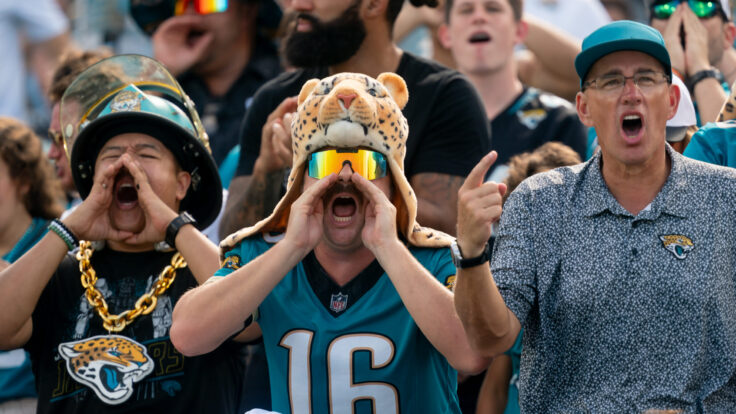
While in London for the Bears-Jags game, Goodell offered some more expansive insight regarding how an 18th contest might be integrated into the schedule. Speaking at a fan event, Goodell said that the league could increase the number of international contests from eight to 16, which would allow for each team to play an extra game. If that happens, the league’s season would run from Labor Day weekend to Presidents’ Day weekend. “Our goal is to be a global sport,” he explained. “We want to have our game played on a global basis, and we want to bring our game to a global audience.”
Goodell also made headlines when he said that he wouldn’t be surprised if the NFL one day held a Super Bowl in an international market. But don’t hold your breath for that to happen anytime soon…
- The Brady stakes: NFL owners are meeting tomorrow in Atlanta, where they will vote on a bid from an investment group that includes Tom Brady to purchase a 10 percent stake in the Las Vegas Raiders. The bid, led by Knighthead Capital co-founder Tom Wagner, only needs 24 owners to vote yea. And the history of the NFL suggests that the league would not hold this vote unless it was certain to sail through. In fact, over the weekend, Adam Schefter reported that the bid would be approved.
It’s not clear how Brady’s role as an NFL minority shareholder would affect his gig as a $37.5 million-per-year NFL analyst on Fox. As I’ve previously noted, under current rules, Brady the Team Owner would be barred from attending broadcast production meetings and practices, which is how many TV analysts prepare for games. But how will other owners feel about a peer, albeit a small stakeholder, criticizing other players or coaches or even officials? Perhaps Brady has already considered this possibility. Less than two months into his new on-air role, he’s already been criticized for being too nice.
- Ballmer on 60 Minutes: If you didn’t catch Steve Ballmer on 60 Minutes last night, this 13-minute segment is worth your time. My favorite part was when Jon Wertheim asked Ballmer why he paid $2 billion for the Clippers a decade ago. At the time, it felt like an absurd sum for a team that has always played second fiddle to the Lakers in Los Angeles and whose former owner was being forced to sell amid a racism scandal.
Viewed from 10 years on, of course, the investment was prescient. Mat and Justin Ishbia bought a majority stake in the Phoenix Suns last year that values the team at a record-high $4 billion. “It really wasn’t a distressed asset,” Ballmer said. “It’s an NBA team. There’s 30 of them. It’s in one of the couple best markets. You could say that it was distressed, but you can’t find them anywhere else.”
- A Dish-DirecTV red flag?: Most of my best sources believe that the DirecTV-Dish merger will sail through the regulatory process since both companies—distributed via cable and satellite, respectively—are losing subscribers in droves. Dish, in particular, badly needs scale to compete with cable and deep-pocketed streamers. A merger, these people argue, is about survival more than market share. But my colleague Eriq Gardner has a different take. And Eriq, you may recall, was the lone genius who correctly predicted Venu’s demise in court. So I pay close attention to his opinions on these matters, and you should, too.
As Eriq points out, around 7 percent of the population lacks access to high-speed internet. Many of these people live in rural areas, which means the merger would effectively create a monopoly in those markets. But it’s Eriq’s other point that really hit home: “Dish chairman Charlie Ergen also hasn’t made many friends in the industry with his history of pulling legal and regulatory levers to foster more competitive pricing. Broadcasters may take this opportunity to exact some revenge by pushing for a stringent review.” That, my friends, is how the business runs. Eriq and I will talk about this and more on Wednesday’s episode of the Varsity podcast. (Disclaimer: TPG, the owner of DirecTV, is also an investor in Puck.)
|
| And now, on to the main event… |
 |
| CAA’s International Sports Bet & The Talent Murky Middle |
| Sports media agent Matt Kramer extemporizes about the agency’s shifting strategy and the overall evolution of the industry, in which the on-air talent market increasingly resembles the sports media rights economy writ large, with huge salaries for premium pundits and insiders (Stephen A., McAfee, Woj) and belt-tightening everywhere else. |
|
|
|
| When sports agent Matt Kramer first got into the representation business, back around 2010, the market for on-air talent was primed to explode. Fox was on the cusp of launching FS1, NBC was about to gain control of Comcast’s national sports channel that would be rendered NBCSN, and CBS Sports had just taken control of an entity that was to become CBS Sports Network. Media executives clamored for people who could help them stand out, creating wild bidding wars that pushed salaries to unfathomable heights. Cable was still growing, new channels were launching, and genuine competition was setting in—all of which helped to line the pockets of sports TV talent and, of course, their agents.
Now, of course, the market has right-sized. Indeed, the utopia in which every major mediaco had its own streamer and sports network never materialized—the R.S.N. business is now face-down in a pool of blood, and even the mightiest incumbents have been humbled by O.T.T. economics. NBC shuttered NBCSN three years ago, CBS Sports Network has remained a niche player, and FS1 never became a true ESPN competitor.
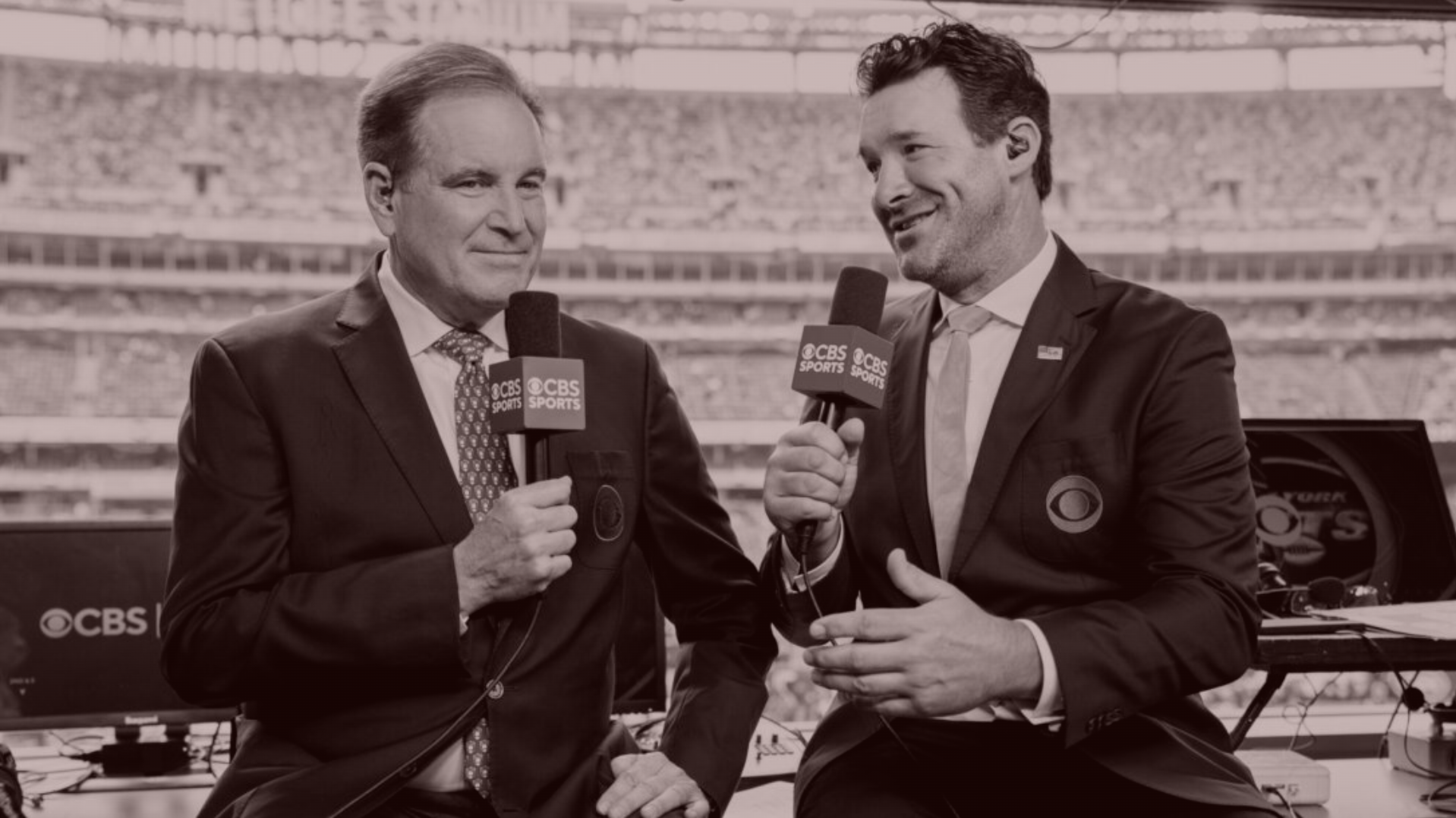
Meanwhile, the cable business has eroded at a pace that everyone but its own executives anticipated, which is why these networks are now pinching pennies. Sure, the top TV stars—Stephen A., Brady, McAfee, Troy & Buck—still command huge salaries. But much of the money for mid-tier announcers has dried up. (My partner Dylan Byers has brilliantly covered a parallel phenomenon in the adjacent world of cable news.) |
|
|
| Kramer, who is now the co-head of CAA’s sports media group, discussed this contraction on this week’s edition of The Varsity, the podcast. He explained that the on-air talent market now mirrors the overall rights marketplace—an economy populated by haves, have-nots, and a simultaneously oversaturated but underserved middle. It was a breathtakingly candid observation, especially for an agent. “For the premium sports, all of the networks and streaming services will pay top dollar. That’s very similar to talent,” he said. “We’re talking about NFL, the NBA, college football—the really super-premium sports that are attaining the high sports media rights. We’re absolutely seeing tremendous salaries for those types of talent, too.”
Kramer pointed to the lucrative market for single-sport insiders, such as the recently retired Adrian Wojnarowski (NBA), Adam Schefter (NFL), Jeff Passan (MLB), and Pete Thamel (college football). “Look at the amount of money that networks are paying for specific property rights,” Kramer said. “If they’re going to pay billions of dollars for a league’s rights, they want the very best personalities of that league attached to that product.”
Indeed, part of the negotiation between the leagues and networks is predicated on ensuring that top talent truly enhances the product. CBS needs Romo and Nantz to placate the NFL. But ESPN doesn’t quite need RG3 to assuage major college football conferences. Similarly, ESPN didn’t feel like it quite needed Jeff Van Gundy or Mark Jackson to satisfy the NBA. (Retrospectively, of course, the network should have kept them. But that’s a story for another time.)
In the middle tier, anyway, networks are taking a tougher stance on paying personalities who aren’t attached to a premium sport or aren’t quite stars, themselves. However, Kramer suggested that there are still roles for these people—but only if they can provide what networks and streamers want. And these days, media companies are hoping to attract younger and more international audiences. Any talent who can satisfy those objectives will find work, albeit not at 2010s rates. “These networks are looking to reach different demographics while putting on the same telecast,” he said.
Look, it’s a cutthroat game, and one that mirrors the on-field competition in some ways. And to make up for the long-departed gravy train, CAA is now trying to expand its business by identifying an emerging generation of broadcast talent. During our podcast recording, Kramer mentioned the 27-year-old Noah Eagle, Ian’s kid, who is repped by his CAA colleague Kevin Belbey. Wunderkind Malika Andrews, who is still not even 30, is also a CAA client.
The agency is also trying to grow its business internationally. CAA hired a talent agent in the U.K. and is actively trying to recruit talent in that market. “One of the conversations that we’ve had internally with the heads of CAA Sports, Mike Levine and Howie Nuchow, was that CAA is growing internationally on the property-sales side, on the sports-media-rights side, on the brand-consulting side,” he said. “We think it’s time for us as sports media agents to grow internationally. We see the international growth in sports media.” |
|
|
| On Disney’s decision to simulcast six more Monday Night Football games on ABC: “The MNF news [to forgo cable exclusivity] feels like a major nail in the cable coffin. It amounts to an admission that premium events can’t compete on cable. Why would any league allow their best events to be on cable in the future?” —A broadcast TV executive
On the problems with Nielsen: “You knock the SEC Network for not providing Nielsen ratings for the Bama-Vandy game, but anyone who has worked in media knows that Nielsen’s methodology for measuring niche networks, like SEC, is deeply flawed. I’ve dealt with Nielsen directly on this issue, and their ability to provide accurate audience data for these networks is largely for shit. Nielsen knows this, by the way. If you question them, they will give you a host of reasons why, while at the same time charging full freight for the privilege of providing crappy numbers that do nothing but undermine a network’s business. It’s probably the most egregious grinfuck in the industry.” —A sports media veteran
On the Padres icing out Ken Rosenthal: “That Rosenthal story is great. I love Kenny. The fact that the Padres are not bothered by the Dodgers play-by-play guy interviewing them is also sort of funny.” —A producer
On Thursday Night Football: “Is there any chance Amazon swoops in and signs Greg Olsen to replace Kirk Herbstreit? If not that, does Amazon make a move at some point? Also, how much longer do they keep Al Michaels? I’m not looking for him to be gone, because I love hearing him call a game, but I’m sure this comes up in discussions you have.” —A Varsity subscriber
In defense of the Dodgers and Yankees: “You’re missing the point on ‘obscene payrolls.’ Obscene payrolls do not equate to winning in the postseason. You could map that out pretty easily. If Jeff Bezos bought the Orioles and followed other rich guys blowing up payrolls to obscene levels, what would you do? I don’t think you would walk away from your Orioles fandom. Blame the league and a commissioner who works for the owners who want their team values to go up. Some pay obscene amounts, some don’t, but all boats rise with the tide.” —A longtime sports media exec
[Ed. note: The Yankees have missed the playoffs only four times since 1995. The Dodgers have made the playoffs for 12 consecutive years.] |
|
|
Back on Thursday,
John |
|
|
|
| FOUR STORIES WE’RE TALKING ABOUT |
 |
| CBS News Blues |
| Charting a pair of micro-scandals plaguing Wendy McMahon. |
| DYLAN BYERS |
|
 |
| London Calling |
| Rounding up the essential art market chatter from Frieze. |
| MARION MANEKER |
|
 |
| Harris Hysteria |
| On the election anxieties rippling through the Democratic Party. |
| JOHN HEILEMANN |
|
 |
|
|
|

|
 |
|
|
|
Need help? Review our FAQs
page or contact
us for assistance. For brand partnerships, email ads@puck.news.
|
|
You received this email because you signed up to receive emails from Puck, or as part of your Puck account associated with . To stop receiving this newsletter and/or manage all your email preferences, click here.
|
|
Puck is published by Heat Media LLC. 227 W 17th St New York, NY 10011.
|
|
|
|