{{ 'now' | timezone: 'America/New_York' | date: '%b %d, %Y' }} |
|
|
|
Greetings from New York, where the weather has been just one degree shy of sublime, and
welcome back to In the Room. It’s been great to see so many friends and sources in the past 48 hours. I only wish my trip had aligned with the NBA Conference Finals and a night at the Garden… Yes, now that the Lakers are out, I’m fully on the Knicks bandwagon. Zaz, let me know if you’re not using your tickets.
As a reminder, In the Room is expanding! Starting next week, I’ll be in your inbox three days a week: Mondays, Wednesdays, and Fridays. And the best
news is that my brilliant partner and Grill Room co-host Julia Alexander will be contributing her indispensable insights to the email every Friday. So, if you’re still not subscribing, now’s the time! Stay tuned for this exciting expansion…
In
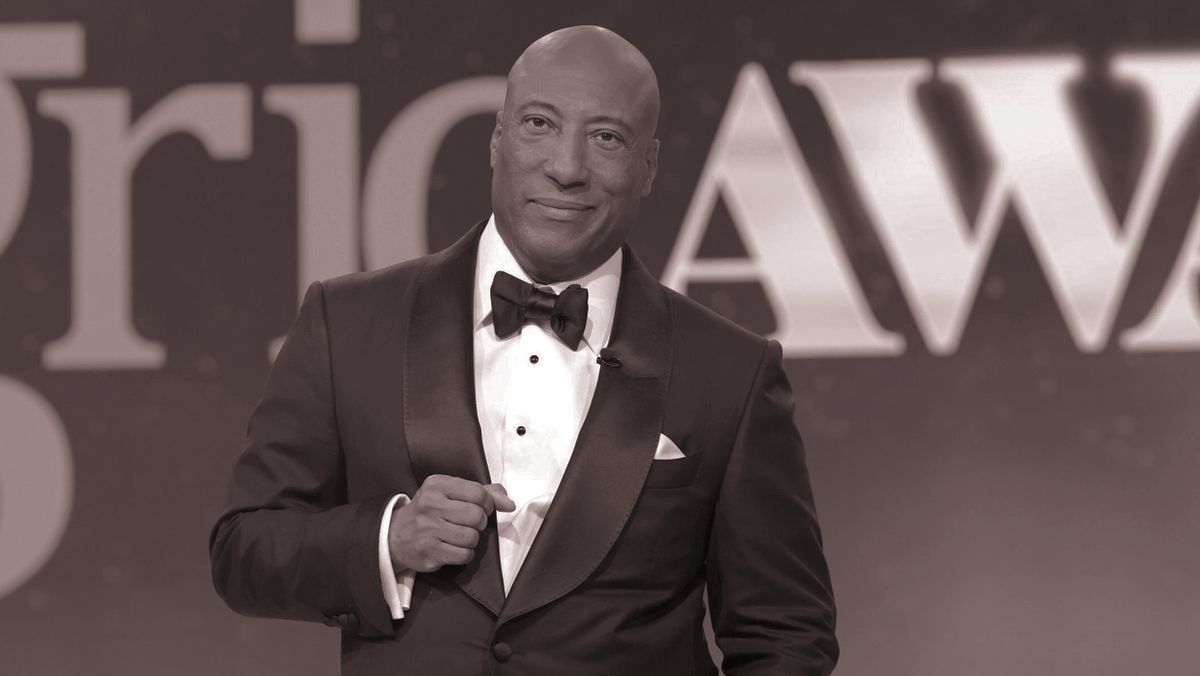
tonight’s issue, news, notes, and lingering questions about Byron Allen’s surprise takeover of BuzzFeed—a $20 million-upfront bid that effectively rescues the dilapidated media company from bankruptcy. Byron claims that BuzzFeed is now competing with YouTube, but it’s not clear whether the former comedian is in on the joke. In any event, with Jim Bankoff off-loading Vox and Shane Smith doing Adobe sponcon, it seems the old new-media giants have
finally reached the end.
🎙️ Plus, on the latest episode of The Grill Room, Puck’s John Ourand and CNBC’s Alex Sherman joined me to assess the tensions around NFL broadcast rights at this year’s upfronts. We discussed how Roger Goodell is navigating these talks, where Rupert Murdoch fits in, and what’s at stake as NFL rights become the ultimate prize. Follow The Grill Room on
Apple, Spotify, or wherever you prefer to listen.
Also mentioned in this issue: Roger Lynch, Nick
Kristof, Savannah Guthrie, Mark Thompson, Anna Wintour, David Remnick, Nick Thompson, Tony Dokoupil, David Muir, Tom Llamas, Claire Day, Bari Weiss, David Ellison, Major Garrett, Lesley Stahl, Jonah Peretti, Andrew Morse, Paul
Curran, and many more… |
-
Wordle unlimited: NBC has announced that Savannah Guthrie will helm a new game show based on The New York Times’s Wordle—yet another diversification of the Times’s revenue lines and vindication of its ballpark $1 million acquisition of the word game. For NBC, it’s as good a play as any to expand the game-show slate with established I.P. and a beloved host who already anchors their flagship morning show.
The big question is how much NBC paid the
Times to license the rights. Sources at both NBC and the Times either can’t or won’t answer that question, but my sense is that this was priced comparably to other deals for well-established I.P., which means the Times extracted a meaningful upfront licensing fee plus back-end participation tied to domestic production, international formats, sponsorships, etcetera. Not a ton of money, sure, but helpful marketing that moves the Times beyond the liberal
reputation of its Opinion section. Good for you, Meredith—you’re the envy of the industry. - CNN weathered: In less exciting news, Mark Thompson has unveiled CNN’s new weather app—one small step on his long, protracted journey to manifest a more robust digital business. I know the CNN folks will think I’m just player-hating here, but, truly, I can’t for the life of me see how this advances CNN’s ambitions. The
launch came with a lot of pablum about a “generational shift in media consumption” that is “creating a void in the weather ecosystem that’s currently being filled by YouTube, TikTok, and A.I.”
In fact, weather geeks and casual consumers alike have never had more sources for weather news at their disposal, including the one already baked into their smartphone. And while the design of CNN Weather is sleek (kudos to the team), it doesn’t provide any real product
differentiation to encourage loyalty.
As Julia has pointed out to me, the best apps provide a one-stop utility for necessity—in this case, weather—then layer in something valuable and habit-forming. CNN has “stories” about the weather, but doesn’t leverage its reporting muscle to contextualize local climate patterns or surface alerts about how weather will affect readers’ daily lives—outdoor dining, school drop-off, flights, sporting events, etcetera. To be fair, it’s early days, but
what’s the point of launching without those features? Right now, the app doesn’t offer anything meaningfully different from AccuWeather, Weather Channel, or any of the myriad other apps—or even Apple Weather, which is automatic, frictionless, and already sitting on our home screens.
|
|
|
|
A MESSAGE FROM OUR SPONSOR |
FOX Advertising unites real-time reach, streaming at scale, premium content and high-value audiences to drive
impact. Connect your brand with invested and passionate viewers who lean in, share, and act—turning culture defining moments into brand momentum. Learn more at
FOXAdvertising.com |
|
|
|
- Condé’s Anna plan: Condé Nast C.E.O. Roger Lynch this week divulged his very responsible succession planning scheme for the various titles in his
portfolio. In a podcast appearance with Peter Kafka, Roger revealed that he runs “a disciplined process every single year” in which he presents his board with potential successors to Anna Wintour, David Remnick, and the rest of the editorial leaders, including “an emergency successor, … a list of people who could be ready now or in the next year or two, … a list that could be three to five years, and … a list that could be five-plus
years.”
Of course, this is the type of rational and professional management that the Newhouses lusted for when they recruited Roger to run the company—and it’s notably different from the sort of harebrained, Grill Room table-ranking culture that preceded him. (Congrats to everyone involved…) Roger said he revises the lists every year, with input from the editors themselves. One imagines Nick Thompson’s possible inclusion on these lists
prompted his renewal last year at The Atlantic. -
Kristof’s dog: If you’ve been anywhere near X in the past 48 hours, you’ve no doubt seen that Nick Kristof touched a third rail with his new exposé on the alleged systematic sexual abuse of Palestinians by Israeli prison guards. In short, a very vocal contingent of the pro-Israel crowd is incensed and accusing Nick of carrying water for uncredible sources, while also litigating the finer points of canines’ anatomical capabilities. The Times is standing by
Nick’s reporting, even as scrutiny over the article stretches beyond X to the pages of The Wall Street Journal and the now-CBS-adjacent Free Press.
Setting aside the merits of either side’s
argument, what’s notable to this media chronicler is the reputational effect this confers on the Times. Yes, Nick is one columnist, but anyone who has followed the Times’s journey through the culture wars knows that, fairly or not, controversies like these become data points in a broader narrative about its credibility, Wordle: The Game Show notwithstanding. Which leads me to wonder whether the paper even considered putting additional reporters on this
Opinion piece and reframing it as a straight news story—and whether they’ve tasked reporters with fact-checking those claims now. The Times P.R. department declined to comment, but I’m sure this saga is far from over. - And finally…: Speaking of CBS News, the network failed to secure a travel visa for Tony Dokoupil ahead of President Trump’s trip to China, which will force the anchor to cover the president’s historic summit from Taiwan while David Muir and Tom Llamas go live from Beijing. You’ll probably hear a lot of spin out of CBS about how they’re strategically zagging here because Taiwan is the crucible of U.S.-China relations—that was the rationale given to me
when I first inquired about Tony’s omission from the manifest on Monday—but, in truth, they’re trying to make lemonade out of lemons.
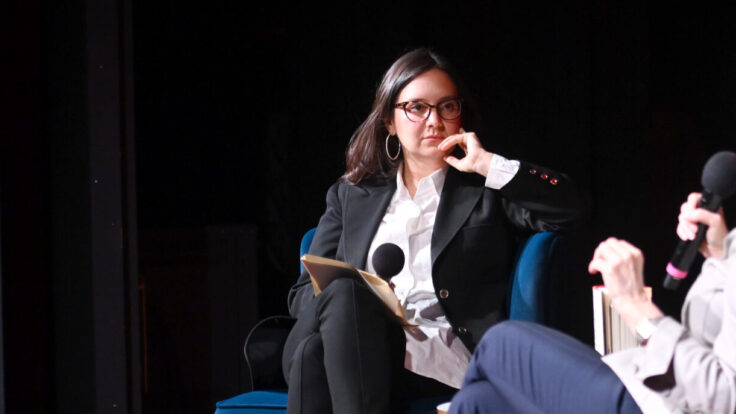
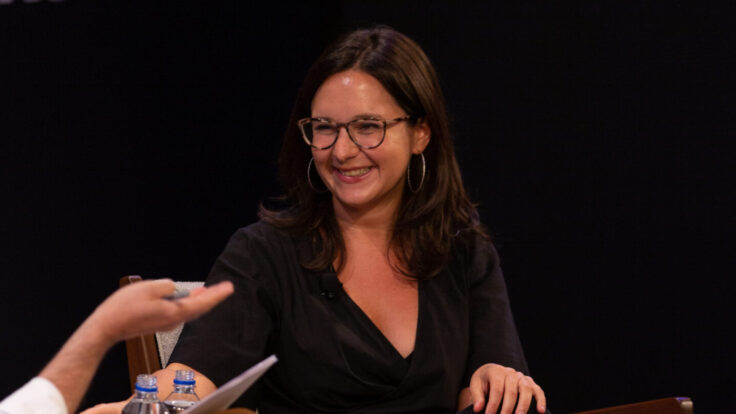
There’s plenty of blame to go around here, but you can probably draw a straight line to the recent ouster of London bureau chief Claire Day, who would’ve been tasked with managing this and could’ve seen around the corners. In any case, the flub underscores how overstretched and under-resourced Bari Weiss is, which is
not great for a newsroom leader who already suffers from managerial shortcomings and a dearth of television news experience. Indeed, it’s hard to fathom how David Ellison intends to hand Bari similar reins at CNN—a truly global news network—if she can’t even ensure that her evening news anchor can get on the plane for a landmark presidential trip.
Meanwhile, there have been other stories about CBS this week—yes, it’s fertile ground—that suggest the “beat
up on Bari” subgenre has reached peak seasonality. The first, from our friend Oliver Darcy at Status, revealed that Bari had “prompted backlash” by assigning 60 Minutes’s recent Bibi Netanyahu interview to Major Garrett, who is not a 60 Minutes correspondent, rather than Lesley Stahl. The second, from the New York Post, revealed that Bari had actually let Bibi choose which of the two
reporters he wanted to interview him.
I have no doubt that Lesley and the 60 veterans are miffed—frankly, it doesn’t take much these days—but as a veteran of television news and longtime chronicler of the industry, I can assure you that this sort of thing happens all the time, and has for decades. If you think political leaders, or any major figure, merely agree to sit for an interview with a network without backchannel negotiations over who will conduct the interview and what
topics will be discussed, I regret to inform you that we’re not in Kansas anymore, and never were. And if you think Bari is beyond her jurisdiction by assigning these interviews, I’d like to take this opportunity to remind you that—at least for now—she runs the news division and has carte blanche to do what she wants.
|
7: The number of brands—Vogue, The New Yorker, GQ,
Vanity Fair, Architectural Digest, Condé Nast Traveler, and Wired—that account for 85 percent of Condé Nast’s revenue, per the aforementioned Roger Lynch. That’s hardly surprising, and pretty healthy, but it does underscore how Condé is backing into the “house of brands” strategy that the Times and others are running toward.
And… correction!: In the last issue, I mistakenly credited The Wall Street Journal with a
419,000 increase in digital-only subs last quarter. The Journal added 419,000 subscribers in the last year. This is still a healthy business—Dow Jones quarterly revenue and EBITDA are up 8 percent and 11 percent year over year, respectively—but I was wrong to suggest the Journal was outpacing The New York Times in subscriber growth. I regret the error.
And now, the main event… |
|
|
|
Byron Allen is betting $20 million that he can resuscitate the faded
quiz-and-listicle destination with a… wait for it… pivot to video. Is this the most foolhardy investment since Rupert’s bet on Vice, or does Allen know something we don’t? |
|
|
|
On Monday, after news broke that comedian turned media entrepreneur Byron Allen
was buying a majority stake in BuzzFeed and effectively rescuing Jonah Peretti’s erstwhile viral listicle giant from bankruptcy, I began texting bankers, media executives, and even some of Byron’s own Polo Lounge associates to ascertain the rationale behind the acquisition. (I also invited Byron on The Grill Room to explain his investment thesis. We’ll see…) |
|
|
|
A MESSAGE FROM OUR SPONSOR |
FOX Advertising unites real-time reach, streaming at scale, premium content and high-value audiences to drive
impact. Connect your brand with invested and passionate viewers who lean in, share, and act—turning culture defining moments into brand momentum. Learn more at
FOXAdvertising.com |
|
|
|
As you’ve surely read, Byron is buying a 52 percent stake in BuzzFeed for the official price tag of
$120 million, which would be a massive premium on a company with a mere $46 million market capitalization. A closer read of the 8-K reveals that he’s actually paying just $20 million in cash, along with a five-year promissory note for $100 million, which is secured by his own BuzzFeed stock—which means that if the shares aren’t worth $100 million in five years, he walks.
Still, even with the heavily caveated terms, Byron is paying a premium for a near-bankrupt social traffic site
with a hollowed-out ad business and the mere legacy of an editorial ecosystem that dispersed long ago. Notably, BuzzFeed shares barely moved on the news—a predictable signal that investors don’t see Byron as a white knight with a transformational strategy.
Anyway, all of the sources I spoke with were hard-pressed to make sense of Byron’s decision to spend anything on a brand that has lost nearly all its value. One media banker posited that it was “a weird way to
bet $20 million.” Another suggested that Byron may simply not understand what he’s doing. Presumably, he’s seeking relevance—but even then, it’s not clear what residual brand awareness, if any, BuzzFeed still confers.
In an interview with the Times, Byron signaled his intention to expand BuzzFeed’s streaming efforts and user-generated content, drawing an implausible comparison with the major social networks. “As of this moment, BuzzFeed is officially chasing YouTube and the other
Big Tech platforms,” he said somewhat credulously. On Wednesday, he told Bloomberg he plans to turn BuzzFeed into a free-TV super-app that combines news, weather, and entertainment. The instinct toward video may be directionally right at a time when audiences and advertising budgets are moving toward streaming. But given the delta in distribution power between YouTube and BuzzFeed, one hopes the former comedian is in on the joke.
Of course, Byron has spent years cultivating
ambitions far grander than the actual scale of his operations. He flirted with bids for Paramount Global and other major assets, though few insiders ever took them seriously. In that context, BuzzFeed feels less like a transformative strategic acquisition than the kind of deal commensurate with Allen’s place in the media hierarchy: recognizable enough to generate headlines, but small and distressed enough to be attainable. |
In other news, Andrew Morse is stepping down as C.E.O. of The Atlanta
Journal-Constitution amid far slower-than-anticipated digital growth at the regional paper—and, if we’re being candid, a sort of boosterism that befitted a first-time C.E.O. and was asynchronous with performance. A former CNN digital chief and onetime head of Bloomberg TV, Andrew took the helm at AJC three years ago after convincing parentco Cox Enterprises to bankroll a $150 million modernization effort modeled on the New York Times playbook. The plan was to establish
AJC as the leading news organization of the American South by growing the subscriber base to half a million by the end of this year. At present, it’s only cracked 100,000.
On some level, Andrew deserves a nod for attempting something genuinely ambitious at a moment when most local-news owners are merely managing decline. To his credit, he grew subscriptions by 30 percent over the past three years and laid the foundations for a more digitally robust business than the one he
inherited. But his exit also underscores a harder truth: The decade-old digital-transformation model—hire aggressively, spend big, build premium verticals, chase national relevance—has become extraordinarily challenging to execute outside of a handful of elite brands with real scale advantages.
Andrew told me his departure was a personal decision—in fairness, his family is in New York; he commuted every week to Atlanta—and that AJC can still realize its goals over a longer time
horizon. The bear case is that this is the end of the line for those grand ambitions. Regional papers operate in a far less forgiving environment than an internationally recognized brand like the Times or Journal: Customer-acquisition costs are brutal, platform distribution is unreliable, and consumers are less willing to pay for generalized news—challenges that have only grown more difficult as A.I. eviscerates the Google click-through rate.
Andrew will now be replaced
by Paul Curran, a senior advertising executive at Cox Media. The succession itself tells the story: Andrew’s thesis was that local news could be saved by aggressive digital reinvention and newsroom investment. Curran’s appointment signals a recognition that survival depends on operational discipline, advertising efficiency, and accepting the limits of scale, humbling as they may be. |
|
|
|
Puck fashion correspondent Lauren Sherman and a rotating cast of industry insiders take you deep behind the scenes of
this multitrillion-dollar biz, from creative director switcheroos to M&A drama, D.T.C. downfalls, and magazine mishaps. Fashion People is an extension of Line Sheet, Lauren’s private email for Puck, where she tracks what’s happening beyond the press releases in fashion, beauty, and media. New episodes publish every Tuesday and Friday. |
|
|
|
A professional-grade rundown on the business of sports from John Ourand, the industry’s preeminent journalist,
covering the leagues, players, agencies, media deals, and the egos fueling it all. |
|
|
|
Need help? Review our FAQ page or contact us for assistance. For brand partnerships, email ads@puck.news. You received this email because you
signed up to receive emails from Puck, or as part of your Puck account associated with {{customer.email}}. To stop receiving this newsletter and/or manage all your email preferences, click here. |
Puck is published by Heat Media LLC. 107 Greenwich St., New York, NY 10006 |
|
|
|
|