Greetings from Los Angeles, and welcome back to In the Room. I’m thrilled to share that Puck has hired wunderkind A.I. reporter Ian Krietzberg to expand our coverage of this trillion-dollar industry, and its transformative effect on the worlds of finance, media, politics, and beyond. Ian will publish a twice-weekly private email called The Hidden Layer. Be sure to sign up here.
In tonight’s issue, news and notes on the latest A.I.-related developments in the news space, from Amazon’s new deal with The New York Times—why not The Washington Post?!—to the industry-wide angst surrounding some of the generative A.I. initiatives in newsrooms, from NYT to the Post to B.I.
Also mentioned in this issue: Jeff Bezos, Byron Allen, Len Blavatnik, Will Lewis, Tom Llamas, David Zaslav, Meredith Kopit Levien, Kevin Mayer, John Skipper, Alex Marquardt, David Muir, and many more…
Let’s get started…
|
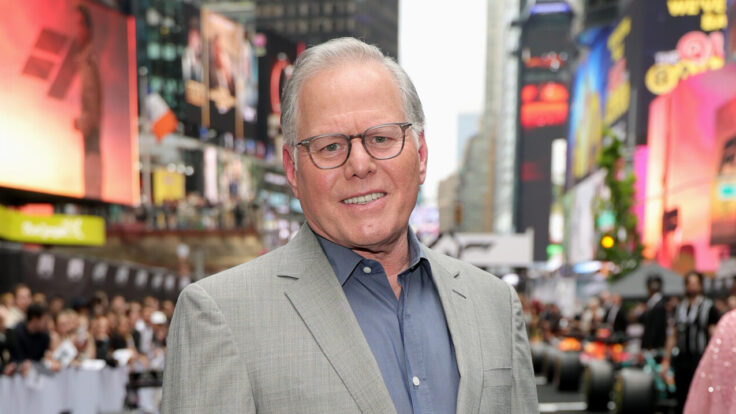
- Zaz’s nay on pay: Nearly two-thirds of Warner Bros. Discovery shareholders voted to reject the compensation packages for David Zaslav and his leadership team—a symbolic slight, since the vote is non-binding, but one that surely stings. Zaz pulled in $51.9 million last year, a 4.5 percent increase on the year prior, despite the fact that Warner Bros. Discovery has lost 60 percent of its market value since the merger three years ago. Of course, the board is rewarding Zaz (and his C.F.O., Gunnar Wiedenfels) for aggressive debt-reduction efforts, irrespective of the stock, but shareholders are obviously growing impatient. And a recent credit downgrade by S&P Global to BB+ surely doesn’t help.🍸 Speaking of downgrades, on the latest edition of The Grill Room, Bill Cohan and I discussed the latest revelations at Warner Bros. Discovery amid the aforementioned credit demotion. Is Zaz about to spin out his cable assets? Can he even afford to at this point? Follow The Grill Room on Apple, Spotify, or wherever you prefer to listen. By the way, be sure to read Bill’s latest masterstroke on Shari Redstone’s epic quagmire and the $550 million tab she’ll face if this Paramount deal goes bust: Another Day in Sharidise.
- Burbank bloodletting, cont’d.: Disney and WBD both implemented layoffs in several divisions this week. At Disney, hundreds were cut across entertainment marketing, publicity, casting, and corporate financial operations, among others. WBD is also laying off slightly fewer than a hundred at its cable networks ahead of the likely spin-off.
|
|
|
|
A MESSAGE FROM OUR SPONSOR
|
Protect the brand you’ve built with Zefr.
Today's social media feeds are exciting—unpredictable, real-time, and where culture takes shape. One misstep or misalignment could hurt your brand.
Zefr keeps your brand safe in the chaos of walled garden social environments, giving you the confidence to take big swings where it matters most.
Proactively protect your brand where and when it matters most, so that you can take bold steps forward. Brands thrive in chaos. Zefr keeps you safe.
Learn More
|
|
|
- Lord Byron’s debt: Byron Allen is putting his local television stations up for sale, part of a longstanding effort to alleviate what appears to be a rather significant debt holding. As CNBC reported last year, several of Allen Media Group’s 28 stations had failed to meet pay deadlines, with late payments to ABC, CBS, and NBC totalling in the tens of millions. Last month, CBS said that it would bring back Allen’s post-midnight, post-Colbert show, Comics Unleashed With Byron Allen—a move widely seen as an effort by Allen to repay these debts. In any event, none of this is pretty. And frankly, it explains why no one ever took Allen seriously when he offered to buy Paramount for $30 billion, or ABC for $10 billion. As one industry insider predicted, “AMG is a house of cards that’s going to eventually collapse.”
- A new ‘Nightly’ anchor: This week, Tom Llamas formally began his run as anchor of NBC Nightly News—a once-illustrious job that has obviously lost a fair amount of its glamour in our heavily fragmented, post-linear, multiplatform era. Indeed, the customary profiles and curtain-raisers in the trades and the Today show rollout all seem like a relic of a distant decade. (Likewise the debate over whether he can make a run at David Muir’s perch atop the ratings race.) Anyway, Llamas looks the part, and is the kind of guy who still thinks of this as the culture’s highest calling. He got what he wanted, or at least what’s left of it. So, good luck to him.
- Alex Marquardt: Earlier this week, CNN abruptly parted ways with Alex Marquardt, the chief national security correspondent who had been at the center of a $5 million defamation suit against the network brought by U.S. Navy veteran Zachary Young. (Young won the suit in January.) CNN has drawn scrutiny for its evasiveness on the cause for Marquardt’s termination, especially given that the network had stood behind him, and even promoted him throughout the duration of the trial. In any event, I’m reliably told that the cause wasn’t the lawsuit itself, but rather what was turned up during and after discovery. In Slack messages, Marquardt wrote that he was “gonna nail this Zachary Young mfucker,” while other producers referred to Young as a “shitbag” with “a punchable face.”
Following the ruling in January, CNN launched its own internal review of the process behind the Young story, and made additional findings that led to their decision. As for what those “additional findings” were, CNN won’t say.
- And finally…: Over the weekend, I attended the FIFA Club World Cup play-in match between LAFC and Club América at BMO Stadium here in Los Angeles. Without hyperbole, it was the most thrilling sporting event I’ve attended in my entire adult life. And this was just a preview of this unparalleled, first-of-its-kind tournament, which starts mid-June in cities across the U.S., and features 32 of the best clubs in the world vying for their share of a $1 billion purse.Among the reasons this historic tournament isn’t garnering World Cup–level attention here in the States is that the rights belong to DAZN. The Len Blavatnik–financed streamer has struggled to gain real penetration in the U.S., despite the best efforts of former ESPN president John Skipper, and then former Disney exec Kevin Mayer. DAZN is streaming the games for free, and TNT will simulcast nearly half of them. But neither is providing the 360-degree, full-saturation marketing push that would have thrust this thing into the zeitgeist for non-enthusiasts and done justice to the import of the tournament and the quality of play we are about to witness.
My partner Julia Alexander and I will unpack all this on this Friday’s edition of The Grill Room. In the meantime, do yourself a favor and sign up for DAZN before June 14.
|
|
|
|
After rebuffing A.I. publicly—including suing OpenAI and Microsoft for copyright infringement—the Times finally announced a content deal with… the company run by the owner of its rival.
|
|
|
|
Last week, The New York Times announced that it had struck a multiyear A.I. licensing deal with Amazon, which will now be able to furnish its platforms and Alexa speakers with Times news content, cooking recipes, Athletic sports analysis, and so on. The deal was notable on several fronts. While rival news organizations like the Journal and the Post have struck licensing deals with OpenAI, the Times has held out—and, indeed, is currently engaged in litigation against the company for copyright infringement.
In making a deal with Amazon, the Times seemed to signal that it actually was open for business, provided it had a partner who wasn’t scraping or cannibalizing its content. As one Times source explained to me, the Amazon deal will only bolster the Times’s litigation against OpenAI, since any use of its content without a licensing deal can now be framed as a violation of fair use. (The deal terms also help set a benchmark for potential damages…) Similarly, this partnership will serve as a top-of-funnel awareness tool for the Times on its long march to fully colonize the English-language, liberal, high-HHI subscription space. As Google search reorients around its A.I. overview tool, Amazon’s network provides ample opportunities for discovery.
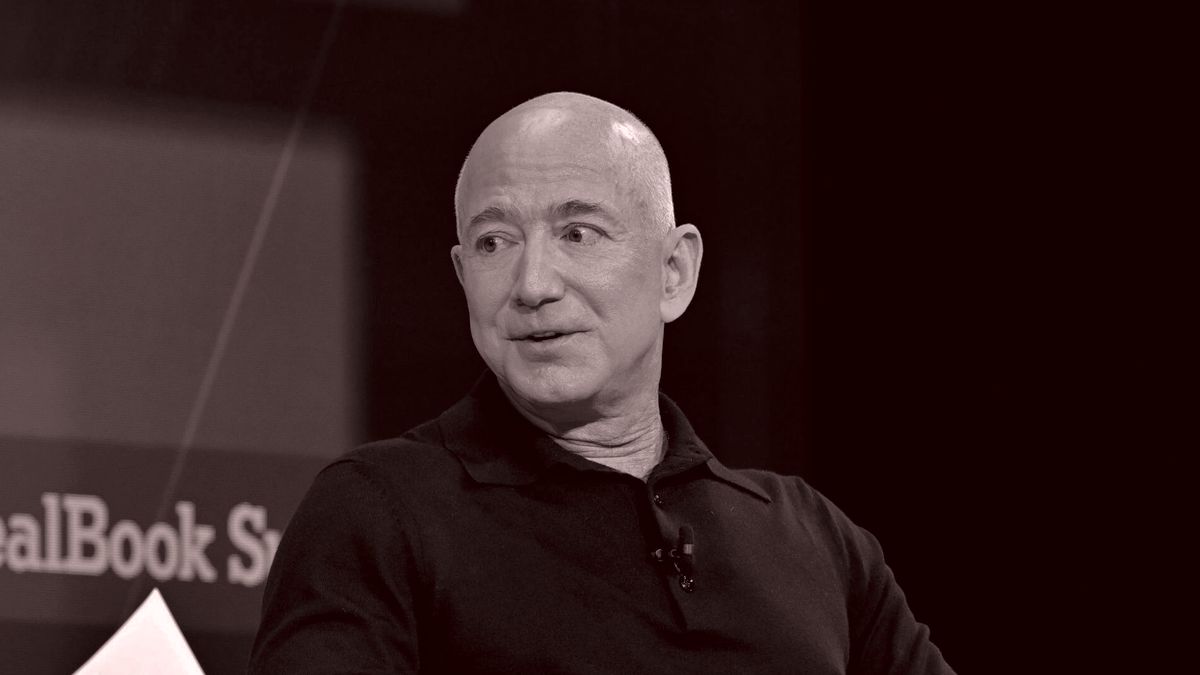
But the more intriguing aspect of the deal, of course, was that it was with the Times—rather than The Washington Post. As representatives for both companies never tire of reminding me, Amazon and the Post are two separately managed businesses. Yes, yes, we know that one is a publicly traded behemoth and the other is a former intellectual plaything and current pain in the ass for the founder of said behemoth. And yet, the opportunity for Jeff Bezos to leverage his ownership of both businesses seems glaringly obvious.
|
|
|
|
A MESSAGE FROM OUR SPONSOR
|
Protect the brand you’ve built with Zefr.
Today's social media feeds are exciting—unpredictable, real-time, and where culture takes shape. One misstep or misalignment could hurt your brand.
Zefr keeps your brand safe in the chaos of walled garden social environments, giving you the confidence to take big swings where it matters most.
Proactively protect your brand where and when it matters most, so that you can take bold steps forward. Brands thrive in chaos. Zefr keeps you safe.
Learn More
|
|
|
|
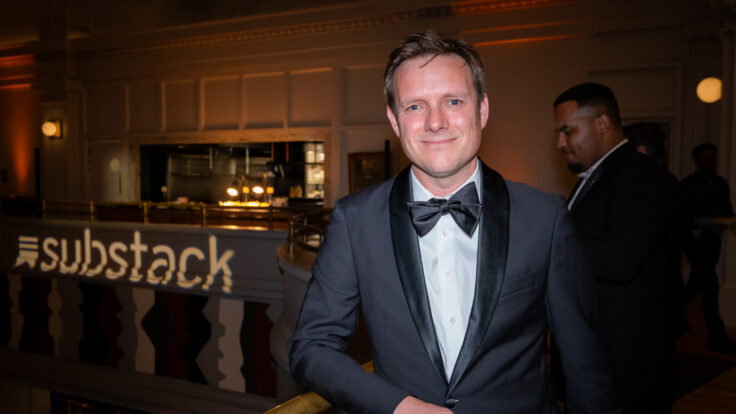
The Post, as everyone knows, has been enduring a years-long identity crisis resulting in subscriber flight and hundred-million-dollar annual revenue losses… and frankly, this would have been precisely the sort of transformative platform deal that perennially embattled C.E.O. and wide boy Will Lewis had gestured at upon his arrival. The Post’s recent announcement that it will use its Opinions section to republish licensed content from other platforms, like Substack, landed with far less weight this week.
|
Meanwhile, newsrooms are themselves pursuing A.I. initiatives that stand to radically transform their businesses. On Wednesday, Business Insider editor-in-chief Jamie Heller took questions from her staff about the company’s new strategic pivot toward diversified revenue streams and a greater reliance on A.I.—which, as I wrote about last week, included laying off more than one-fifth of the company’s employees.
At one point, Heller sought to assure the team that none of their jobs would be replaced by A.I. It was a well-meaning, but inevitably untrue statement, given that the tech’s revolutionary capabilities will soon provide almost every newsroom with the ability to streamline and expedite research, writing, and editing; automate commodity content; improve personalization for subscribers; enhance ad-targeting and paywall optimization, etcetera. And, if we’re being philosophical, even if B.I. doesn’t produce any bot-created content, its competitors will and thereby suck away attention. Of course, the media industry is as vulnerable to the coming white-collar bloodbath as any, and anyone who tells you otherwise is looking at a very limited time horizon.
At The New York Times, A.G. and Meredith have invested heavily in generative A.I. tools and implemented training programs for employees to
use these services to improve their journalism, their ad-serving operations, their subscriber flow, etcetera. At The Washington Post, Lewis and his team have similarly been working on A.I. initiatives designed to aid the newsroom, facilitate backend operations, and improve the user experience. (I’m told Will plans to share more details on these initiatives in the weeks ahead.) The Post also has ChatGPT-like A.I. tools to furnish answers based on its reporting and, as the Times has reported, plans to offer an A.I. writing coach, called Ember, to Opinions contributors.
As I’ve noted before, these initiatives will unlock efficiencies that will dramatically change the economics of these businesses, effectively trimming headcount and improving margins. In the process, one hopes, many of these businesses will become more efficient and more focused—liberated from the schlock that defined an earlier iteration of internet journalism. The value of commodity media production, of the sort practiced by aggregators and click farms in an earlier era, will plunge toward zero. The value of real journalism, of the kind that can only be created by picking up the phone, will accrete to whichever creators and brands find a way to produce something irreplaceable.
But none of this covers over the harshest truths of the matter. The game-changing technology innovations of the past 30 years—the web, social media, and mobile—all served to scale content to unprecedented levels, walloping endless local, national, and even international brands in the process. Some were remade, many went under, and plenty of the survivors remain obsessed with the good ole days that aren’t coming back. The Washington Post, for what it’s worth, served the Graham family not simply via the journalism of Woodward and Bernstein, but through its monopoly of the Mid-Atlantic advertising and classifieds business. And while the paper’s problems in recent years have been endless, A.I. actually offers a powerful chance to reset and align on new goals. It’s unclear if they are Matt Murray’s goals, or if Lewis understands them, but, man, this is definitely the sort of thing the owner should be able to help out on.
|
|
|
|
Join Emmy Award-winning journalist Peter Hamby, along with the team of expert journalists at Puck, as they let you in on the conversations insiders are having across the four corners of power in America: Wall Street, Washington, Silicon Valley, and Hollywood. Presented in partnership with Audacy, new episodes publish daily, Monday through Friday.
|
|
|
|
A professional-grade rundown on the business of sports from John Ourand, the industry’s preeminent journalist, covering the leagues, players, agencies, media deals, and the egos fueling it all.
|
|
|
Need help? Review our FAQ page or contact us for assistance. For brand partnerships, email ads@puck.news.
You received this email because you signed up to receive emails from Puck, or as part of your Puck account associated with . To stop receiving this newsletter and/or manage all your email preferences, click here.
|
|
Puck is published by Heat Media LLC. 107 Greenwich St, New York, NY 10006
|
|
|
|