Welcome back to The Varsity. I’m John Ourand, in D.C. to attend not one
but two Wizards games this week. Forget about last night’s 26-point home loss to the Timberwolves. It’s a new year and a new attitude! (Is it too early to start tanking… again?)
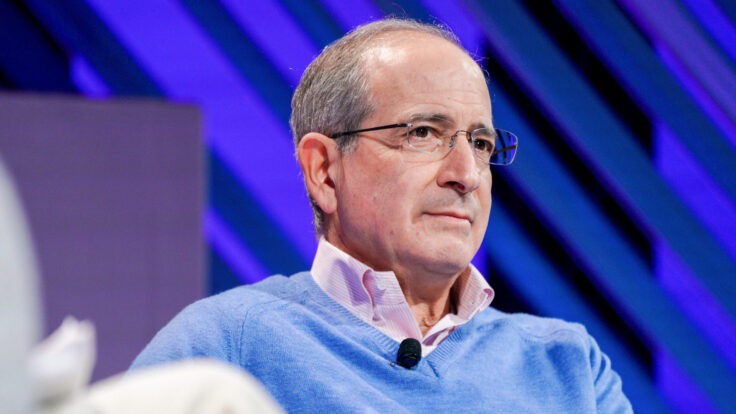
Pod alert: Mark Marshall, the chairman of NBCUniversal’s global advertising and partnerships, is stopping by The Varsity on Wednesday to talk about the state of the ad market. NBC, of course, is carrying the Super Bowl and Winter Olympics, which puts Mark in a great
position to offer an overview. Also, I’ve received a tremendous amount of feedback from Ken Belson’s discussion about the professionalization of youth sports on yesterday’s episode. Much more on that below.
Mentioned in this issue: Tom Brady, John Facenda, Troy Aikman, Mark
Marshall, Pete Carroll, Hans Schroeder, Mike North, Michael Nathanson, Cris Collinsworth, Ken Belson, Rob Manfred, Matt Hong, Pete Alonso, John Spytek, Mark Davis, Mark Lazarus, and many more…
Okay, let’s get to it… |
- Happy Versant Day: Versant ended its first day as a public company with its shares down 13 percent—a drop-off that was not totally unexpected as the new entity officially unwinds from Comcast/NBCUniversal. Of course, the success of the Mark Lazarus–led company—consisting of linear TV channels like Golf Channel, MS Now, USA, and CNBC—will depend on a lot more than the declining health of the cable bundle. “We’re going to play a different game than
other traditional media companies,” USA Sports president Matt Hong told me a couple of weeks ago. For Hong, that means investing in ancillary businesses associated with those brands, like the Versant-owned GolfNow service, which allows consumers to book tee times online. “Everything we do in terms of airing programming on Golf Channel, plus the majors and
the Ryder Cup that we have on USA Network, that's only about 50 percent of the current revenue for our golf vertical at Versant,” Hong told me. “When you take the revenue and the financials of GolfNow and GolfPass and combine those with traditional or linear revenue that we get on Golf Channel and on USA Network, it's about 50-50. We're going to apply that to the rest of sports. That's the goal for the rest of Versant, whether it's news or financial news or entertainment.”
- MASN attack: Sources tell me the hapless Washington Nationals, coming off another sub-.500 season, are about to sell their TV rights back to Major League Baseball. The team, whose games have been carried by MASN since coming to D.C. in 2005, had been trying to negotiate a new deal with the R.S.N. for the past several months. Ted Leonsis’s R.S.N. Monumental Sports Network also kicked the tires on Nats rights, but sources say those talks never got
serious.
MLB already has deals with distributors like Comcast and DirecTV, so the packaging for these Nats games are set on digital tiers. In other words, MLB already has been grinfucked into the cliff path. That’s where the Nats’ games are headed, too. The only open discussion is on price, and that should be settled easily enough.
This is another step toward MLB’s grand unified-media strategy for 2028—the year that the league’s media deals come up for renewal,
and Rob Manfred aims to come to market with a supersize package of local MLB rights that might tempt a streaming service. So far, he’s playing a long game. The Nationals would mark the seventh club to use MLB for their local rights, following the Padres, Diamondbacks, Guardians, Twins, Rockies, and Mariners. - About those “Brady Rules”...: Remember the “Brady Rules,” which the NFL put in place two seasons ago, barring
Tom Brady from watching practices, or even attending production meetings, after Fox’s top NFL analyst took a 5 percent ownership stake in the Las Vegas Raiders? The league relaxed those rules at the beginning of this season—Brady can take part in production meetings—and Fox Sports has never wavered from keeping the former Pats (and Bucs) QB squarely in its NFL booth.
So it wasn’t surprising when the full extent of Brady’s role in the Raiders’ upcoming head coach
search was revealed, earlier today. After announcing the team was firing Pete Carroll, Raiders owner Mark Davis added, “General Manager John Spytek will lead all football operations in close collaboration with Tom Brady.” Following the trend, the Dolphins recently smuggled in ESPN analyst Troy Aikman as an advisor in their GM search. No conflict, no interest… - The year of
YouTube: Last week on The Varsity, sports media analyst Michael Nathanson joined me to survey the fault lines shaping the year ahead—from ESPN’s fight for relevance to the potential downstream effects of a Netflix-WBD merger on TNT Sports. Meanwhile, I asked Michael to name the one company he believes will loom largest this
year. His answer was both predictable and telling. “When we went back and did our work on the NBA deal, we heard through the grapevine … that YouTube was a bidder for the last NBA package, and they didn’t get it,” Nathanson told me. “They had their first NFL game [last] year in front of a paywall. Given how much they’ve grown viewership and connected TV, I just think they’re going to be at the table to get more and more premium sports rights. … They’re truly global. They have the power of Alphabet
behind them. I think they’re the ones people should be paying more attention to going forward.”
- The $40 billion youth sports scramble: Ken Belson recently published a revealing Times story on the rapid monetization of youth sports, highlighting the long-lasting toll, both financial
and psychological, on young athletes and their families. “The professionalization of youth sports is well underway; you’ve got big money and private equity entering a space that was once very fragmented,” Belson told me on yesterday’s episode of The Varsity.
Belson recalled a recent conference where he was taken aback by the sheer number of people intent on
squeezing youth sports for profit and capitalizing on its data. Major media companies are jumping in, as well. “We’re going to start seeing more youth sports on television,” he told me. “We already see some high-school football and flag football championships on ESPN. That’s going to get more mainstream. And then you’ve got merchandise and all sorts of coaching solutions. We had a figure in an earlier story of somewhere in the neighborhood of a $40 billion ecosystem.”
|
And now for the main event… |
|
|
When the streamer landed a potentially classic playoff matchup between
the Bears and Packers this weekend, it looked like the league could be catering to a new favored partner—but executives on all sides of the equation pointed to the thorny decision tree the league stares down this time of year. |
|
|
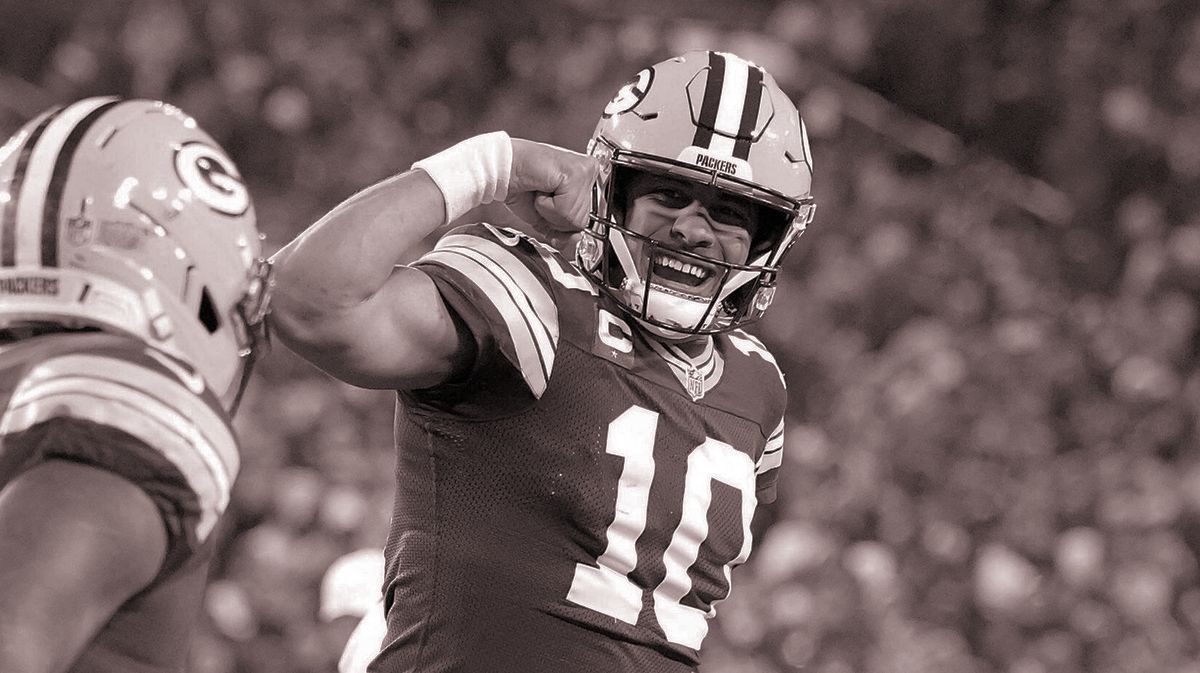
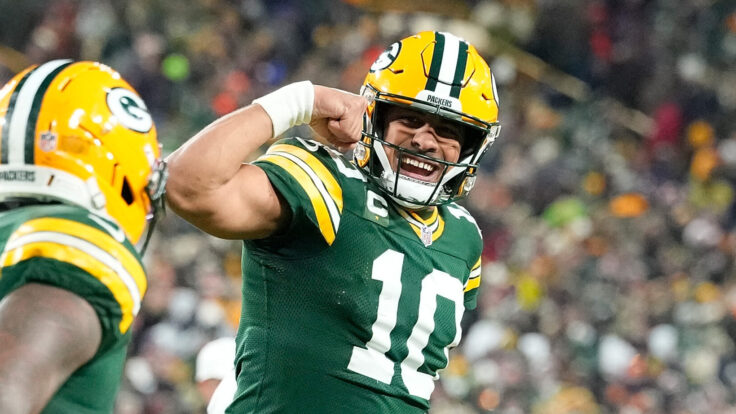
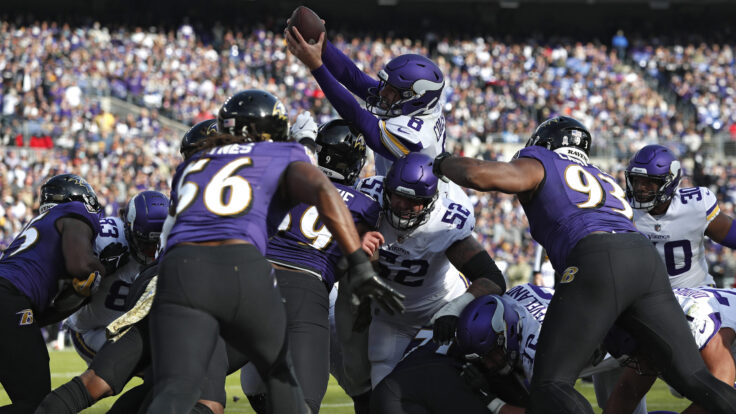
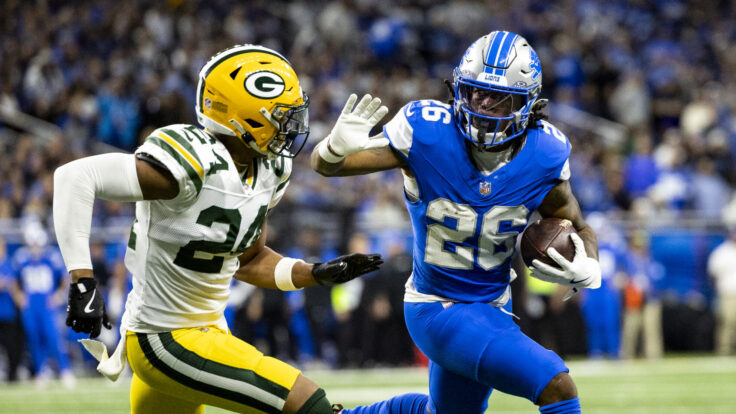
This weekend, the Green Bay Packers will travel south to Soldier Field to play the Chicago Bears in
an intra-division playoff showdown featuring two of the NFL’s oldest franchises and most rabid fan bases. It’s the stuff of John Facenda–narrated fever dreams and TV programmers’ deepest desires. It also just happens to be taking place on a streaming service, Amazon Prime, and in a very non-NFL time slot: Saturday night.
So how did the game that everybody wanted wind up there? It was a surprising move by a league that still technically prioritizes broadcast
television. At first blush, it looked like another example of the NFL catering to Amazon, giving the streamer the best games in the hopes that the $2.5 trillion company continues to invest in live sports rights. After all, Jeff Bezos’s Everything Emporium figures to be a big player in the next round of pro football media rights deals, as my colleague Julia Alexander recently reported. But in my conversations with several league and media executives after the playoff schedule went live, it appears that Amazon benefited from several quirks of this week’s calendar.
As the regular season winds down, each of the league’s media partners submits a wish list to its top media executives, Hans Schroeder and Mike North. This year, two games clearly stood out: the Packers-Bears rivalry game and the
49ers-Eagles matchup. As Schroeder and North decided which games would go to the various partners, they didn’t simply consider the wild-card weekend in isolation: They made their choices based on a three-week stretch, starting with the final weekend of the regular season, when NBC and ABC/ESPN had already carried high-stakes games.
Since expanding the playoffs to 14 teams, in 2020, the NFL has preferred to slot one of the No. 4 vs. No. 5 seed games on Monday night. This season, that left a
choice between the Texans-Steelers in the AFC, and the Rams-Panthers in the NFC. The league viewed Texans-Steelers as the stronger Monday night option. And because the Texans-Steelers game is an AFC contest, the two additional AFC matchups needed to be played on Sunday to avoid a scenario in which the winner of a Monday night game would, on short rest, face the winner of a Saturday wild-card game in the subsequent divisional round.
Meanwhile, Fox was scheduled to carry two wild-card
games, at least one of which had to be an NFC matchup, given its role as the conference’s traditional broadcaster. The NFL opted to place the 49ers-Eagles in Fox’s late-Sunday-afternoon window, which delivers the largest audience—befitting, of course, a matchup between two solid markets and a reprisal of a recent NFC championship game matchup. So with the remaining AFC wild-card games forced to Sunday on CBS and NBC, the remaining two NFC games were pushed to Saturday. Rather than spoil
Fox with another marquee game, the NFL put Packers-Bears on Saturday night on Amazon Prime.
The league also took into account that this would be Amazon’s final game of a season that saw an average of 15.33 million viewers tune in on Thursdays. From the NFL’s perspective, Amazon has demonstrated both audience reach and technical reliability, making the streamer a viable home for a high-profile playoff game.
As for NBC, the NFL put its biggest Week 18 game on the network—Sunday
evening’s win-or-go-home Ravens-Steelers contest. Odds are, NBC will also wind up with one of the best divisional-round games. And it will carry the Super Bowl this year. That’s a privilege still strictly reserved for the league’s broadcast partners—at least for now. |
On NFL media negotiations: “If the NFL wants to move up the negotiating rights next year
for deals that currently go to early 2030s, why don’t their current partners simply say no? A contract is a contract, and they don’t have to do it. Why would their media partners capitulate, other than the NFL holding over the revenge factor down the road?” —A consultant
[Ed note: The networks are actually the ones pushing to open up these deals. They are all interested in locking in deals with the league into the 2030s—especially given the fact that the streamers are
only growing in strength. Allowing the NFL to go early affords them the best chance to keep the packages that they have—albeit for a lot more money.]
On giving the top NFL analyst Varsity award to Cris Collinsworth: “He is technically very good. But if this were a private personal gathering, I would stop at nothing to be in a different room.” —A journalist
On my Pete Alonso Orioles jersey: “I’m jealous about your Christmas gift. Polar Bear should’ve
remained a Met—allowing him to leave may mean a curse upon my team.” —A lawyer |
|
|
Finally, a media podcast about what’s actually happening in the media—not the oversanitized,
legal-and-standards-approved version you read online. Join Dylan Byers, Puck’s veteran media reporter, and Julia Alexander, a longtime media analyst, as they sit down with TV personalities, moguls, pundits, and industry executives for raw, honest, sometimes salacious conversations about the business of media and its biggest egos. New episodes publish every Tuesday and Friday. |
|
|
Unique and privileged insight into the private conversations taking place inside boardrooms and corner offices up and
down Wall Street, relayed by best-selling author, journalist, and former M&A senior banker William D. Cohan. |
|
|
Need help? Review our
FAQ page or contact us for assistance. For brand partnerships, email ads@puck.news.
You received this email because you signed up to receive emails from Puck, or as part of your Puck account associated with {{customer.email}}. To stop receiving this newsletter and/or manage all your email preferences, click here. |
Puck is published by Heat Media LLC. 107 Greenwich St., New York, NY 10006 |
|
|
|