Greetings from Los Angeles, and welcome back to In the Room. Former 60 Minutes
executive producer Bill Owens is speaking tonight at the New York Press Club, where he’ll receive the “Truth to Power” award—a fitting bookend to a day that began with his friend Scott Pelley going berserk on new E.P. Nick Bilton over his “slender qualifications” for the job in an instantly viral piece of well-intentioned grievance theater. I’ve got more on today’s CBS News drama below…
Meanwhile, over at the World News Media
Congress in Marseille, New York Times publisher A.G. Sulzberger warned that A.I.’s systematic appropriation of journalism is undermining the economic foundation that sustains original reporting and democratic accountability. Shortly thereafter, Anthropic filed to go public, joining OpenAI and SpaceX on the path to the public markets and a trillion-dollar-plus market cap.
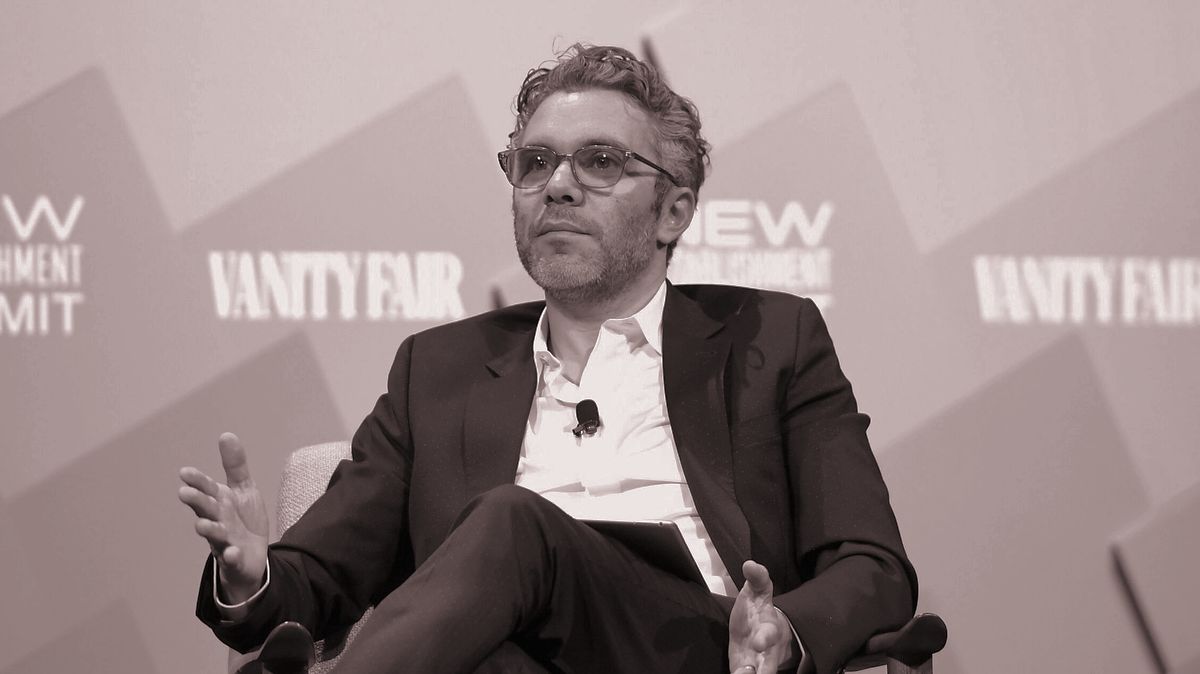
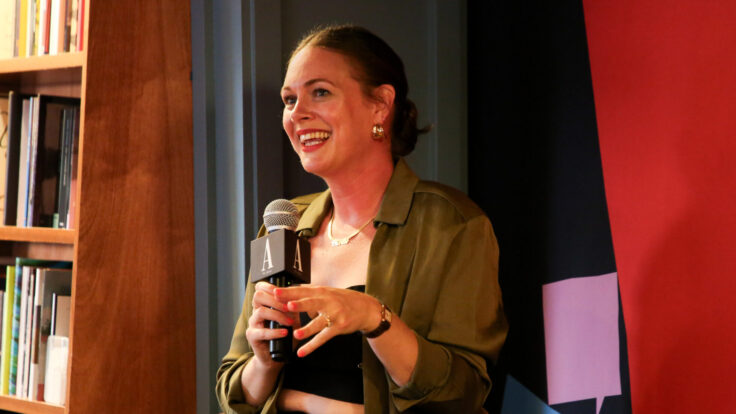
Speaking of SpaceX, in tonight’s main feature, my partner Julia Alexander
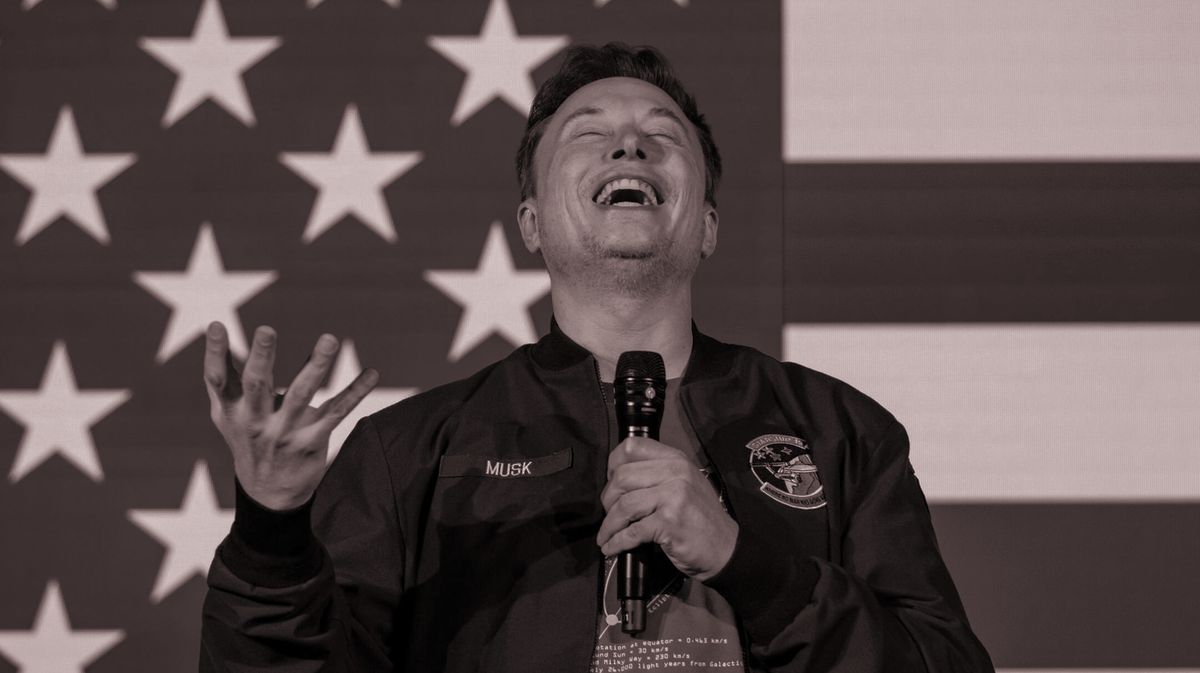
explores Elon Musk’s master plan for a vertically integrated media empire—one that combines on-platform content creation and a walled-garden distribution platform with both satellite internet services (Starlink) and native A.I. tools (Grok). It’s a vision for a complete content flywheel that no single media company, carrier, or A.I. lab has ever attempted at scale.
🎙️ Plus, on tomorrow’s episode of The Grill Room, Joanna Stern explains
the role that ChatGPT played in inspiring her to decamp from The Wall Street Journal to start her own thing. We also assess the state of wearable tech. Follow The Grill Room on Apple, Spotify, or
wherever you prefer to listen.
📣 Reminder: The Wednesday issue of In the Room will soon be exclusive to Puck’s Inner Circle tier. Don’t forget to upgrade your subscription for access to all of Puck’s most exclusive insider reporting, including our sister publication, Air
Mail. It’s wellworth it, and you can afford it. Join here.
Also mentioned in this issue:Josh D’Amaro, Dana Walden, Jimmy “MrBeast” Donaldson, Evan Shapiro, Luke Bradley-Jones, Beyoncé, Bari Weiss, Josh Muncke, Mark “Markiplier”
Fischbach, Tim Pool, Jack Dorsey, Kane Parsons, Neil Vogel, Andrew Ross Sorkin, Jimmy Pitaro, Jason Calacanis, Barry Diller, Dan Koe, Meredith Kopit Levien, Curry Barker, Adam Mosseri, Nikita Bier, Tiffany Matloob, Bill Ackman,
Marc Andreessen, and more. |
-
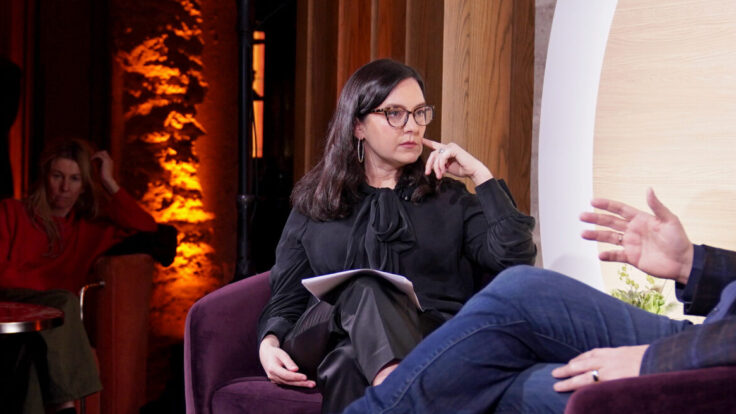
Nick bottom: Nick Bilton’s first week as executive producer of 60 Minutes is off to a great start! In his inaugural all-hands on Monday morning, Scott Pelley questioned his qualifications, pressed him to account for the logic behind last week’s mass firings, and accused Bari Weiss of “murdering” the storied news program. “[Bari] has no qualifications for her job; you have slender qualifications for this job,” he told Nick. “The
changes that she’s made at the Evening News have been catastrophic. So why should we expect that any of this is going to be any better?”
The entire exchange sounded every bit as contentious as it reads. On two occasions, Weiss deputy Charles Forelle told Scott that he was being “rude.” Nick told Scott, “I have no problem taking a job in a place that I am not welcome, okay? … I have been a journalist for 25 years, Scott. I have sat and talked with incredibly
powerful people like you have. None of it intimidates me, okay? So you are not going to intimidate me in front of this group of people.”
Scott is passionate about 60 Minutes and sincere in his convictions, and this was not the first time in recent years that he’s been vocal in the all-hands. Nick, meanwhile, deserves some credit for not ceding the mic. But as I’m sure you’ve figured out, the reactions to this drama still split along party lines: The pro-Bari crowd chafed at
Scott’s theatrics and insubordination, while the anti-Bari crowd saw him as a veritable Mother Teresa for middle-aged millionaires in makeup reading off cue cards. As for Bari herself, she was not in the meeting—a decision that a CBS executive suggested had been intentional.
No matter what you make of this drama, it doesn’t bode well for Nick or Bari (or Scott). In television, wrangling big egos is actually the most important and underappreciated part of the job.
And, as I noted last week, Nick’s real challenge isn’t operational but managerial. He needs to win the goodwill of his charges and impose the creative instincts that fueled his own success onto the entire institution. A more seasoned leader would have taken Scott to dinner and coaxed him into détente before engaging him in front of his colleagues. Yes, Bilton is moving a young family to New York, but a savvier executive would have spent the weekend having deeply uncomfortable
conversations with very famous people in private.
Instead, both Bari and Nick have opted to project confidence and unwavering conviction in their own playbook, then get miffed when the veterans don’t follow suit—a reality exacerbated when things don’t go according to plan. That path is littered with the bodies of defenestrated TV executives who failed to appreciate the finer points of talent relations. Good luck to them!
|
|
|
|

| Julia Alexander
|
|
- EconomistGPT:
The Economist is launching a dedicated ChatGPT app, which will allow ChatGPT users who download the extension to interact with its data. Similar to its recent Substack play, The Economist isn’t necessarily looking to migrate to new platforms; rather, executives are searching for new revenue lines. Josh Muncke, the publication’s A.I. chief, is looking to collect data on what actually drives engagement, he recently told Nieman Lab.
For now,
data queries are limited to U.S. polling, but the hope is to expand to other countries and offer more than just political surveys. It’s a smart move: Thanks to “zero coding” programs, it takes little time and investment to create an app that plugs into a tool like ChatGPT. Apparently, Economist president Luke Bradley-Jones learned the big lesson from the last major digital reshuffle: There’s power in the data. - Barry’s Vegas
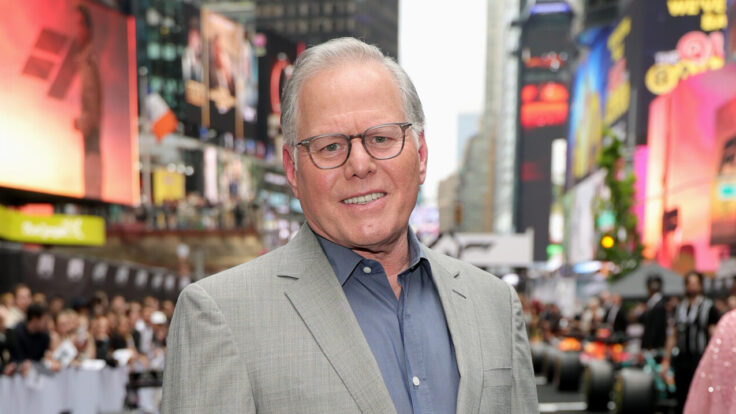
play: Speaking of media pivots, Barry Diller’s holding company, People Inc., reportedly made an $18 billion offer to buy the 74 percent of MGM Resorts that the company doesn’t already own, as first reported by Andrew Ross Sorkin. Of course, MGM controls a significant portion of the Vegas Strip—and, as Sorkin pointed out, Diller has long been “enamored with” the city. While tourist visits are down by about 7 percent in 2025, per CDC Gaming, the Strip
is expected to bounce back this year, and Diller likely sees the opportunity for his growing experiences business. Indeed, People Inc. C.E.O. Neil Vogel has spoken publicly about the white space for their media brands in hospitality and entertainment.
The numbers support that thesis. Last year, consumer spending on travel and experiences reached its highest point since 1960, according to McKinsey, and Millennials and Gen Zers are continuing to lean into experiences and
events. To wit, Live Nation drew nearly 160 million fans to concerts in 2025, and there was a significant growth in “premium” experiences, such as mega-tours from artists like Beyoncé and Oasis. It’s possible that the more reliant we become on A.I. and robot agents for our day-to-day lives, the more we crave lavish little getaways—which is why Josh D’Amaro is now C.E.O. of Disney and Dana Walden is not.
|
|
|
|
753 percent: The return that Mark “Markiplier” Fischbach is
expected to see on his self-produced, widely released movie Iron Lung, per analyst Evan Shapiro. Fischbach was first among the 2026 boomlet of YouTube creators selling Hollywood films by relying on loyal fans who grew up watching their channels. Now, Curry Barker and Kane Parsons are breaking box office records with their own independent horror movies (Obsession and Backrooms, respectively). The era of
YouTube-originated Hollywood blockbusters is indeed upon us. Yes, this will probably extend the “Is YouTube the future?” debate for another decade. —Julia Alexander
And now, the main event… |
|
|
|
In many ways, Elon’s ambitions for X are actually bigger than his terrestrial
competitors could ever fathom. The question is whether he can execute on a plan that sounds crazy for anyone but him. |
|
|
|
Last week, Nikita Bier, X’s head of product, declared that his top priority was
fixing the platform’s creator program. Bier, like Instagram’s Adam Mosseri and YouTube’s Tiffany Matloob, had zeroed in on a growing issue that threatens social media’s value as a whole: the slop-maximizing explosion of so-called aggregator accounts, which upload endless clips and ripped-off videos and repost engagement bait to scam ad revenue payouts. As Bier said, “If we don’t fix this, X will become a media property composed of 50 accounts, instead of a
social network.”
It’s a sentiment echoed by X’s most prominent power users. Earlier this month, All-In co-host Jason Calacanis tweeted that “every monetized account should be audited for original content vs. stolen content, and be bounced from the program.” On the web, he noted, “incentives matter and X should only reward the original creators.”
This is partly a problem of Musk’s own creation. In 2024, he tweaked X’s algorithm to make it a “video-first”
platform—aggressively deprioritizing the external links that had once made Twitter the nerve center of the news industry and a traffic firehose for publishers. Practically overnight, thousands of paid accounts pivoted their strategies for maximizing engagement. And on some level, it worked. Musk and Bier didn’t want X to be Twitter—they wanted to compete with TikTok, Instagram, and even YouTube. In January, X’s executive team declared 2026 “the year of the creator.” A few weeks later,
the company rolled out subscriber-only posts—a direct shot at Substack’s business model, too.
No, Bari Weiss or Meredith Kopit Levien probably don’t need to worry about talent absconding to X. But it does mean that some journalists may want to start thinking differently about the platform. Simply turning on monetization, which allows accounts with large followings to collect monthly payouts based on their views, could encourage publishing more
analysis—and scoops—on X first. Meanwhile, the platform’s revenue-sharing program for shortform video may move some journalists away from YouTube or TikTok, where they’re still building their followings, to X, where those followings already exist.
Musk and Bier’s attempt to morph X from a place where people post for fun to a platform where creators post for profit hasn’t come without controversy. Author and content creator Dan Koe went semi-viral in January after posting
about his meager $4,500 payout for a very lengthy post that allegedly amassed some 100 million impressions. Another creator, Tim Pool, whose political leanings are in line with X’s right-wing shift and who has more than 2.6 million followers, has posted screenshots of payments totaling more than $175,000—or enough to “buy a house,” as he said. Musk has repeatedly said that his goal with X has been to return the platform to a politically neutral town square, but multiple
studies have shown that right-wing content has been amplified since his takeover.
Musk’s platform also benefits from a content era that’s moved away from exclusivity at all costs. It’s why Musk pushed Jimmy “MrBeast” Donaldson to start uploading full videos to X; why Marc Andreessen launched Monitor the Situation directly on X (the home of a large swath of the global A.I. conversation); and why people like Bill Ackman are writing
5,000-word essays on the platform while simultaneously maintaining Substack accounts. In short, the more content that X supports from advertiser-friendly creators, the more it becomes a true media company rather than a tech aggregator. Perhaps most importantly, it creates more ingestion opportunities to train Grok. |
On some level, Elon’s ambitions are bigger than his terrestrial competitors’. Buried in the I.P.O.
prospectus for SpaceX, which owns X and xAI, are the blueprints for a master plan for a vertically integrated media empire—one that combines on-platform content creation and a walled-garden distribution platform with both satellite internet services (Starlink) and native A.I. tools (Grok). It’s a vision for a complete content flywheel that no single media company, carrier, or A.I. lab has attempted at scale.
In a new twist on the term, X and xAI have formed a model training
flywheel, too. According to SpaceX’s S-1 filing, the Grok-powered Imagine (think Sora, but for X) generated about 2 billion A.I. videos per month, and is continuously trained off real-time posts made available through X’s firehose. It’s a critical moment for xAI and Grok: Traffic has plummeted over the last 45 days, per recent data published by SimilarWeb, at the same time that ChatGPT, Claude, and Gemini have seen their share of A.I. usage increase. Between January 1 and April 21, Grok was
recording about 10.3 million visits a day, per SimilarWeb; then, between April 22 and May 21, traffic dropped by nearly 25 percent, largely due to the quiet rollout of Grok 4.3 in mid-April, which experienced various glitches from high demand. Traffic has yet to recover.
The solution is straightforward, even if executing it isn’t. Musk needs to incentivize the right creators to post more substantial content on X through stronger revenue-sharing and direct-to-follower membership
opportunities, while simultaneously purging or demonetizing the spam accounts that rip them off. Better content trains Grok; a better Grok builds better creator tools; and better tools attract bigger names, which draw in the advertisers and subscribers who fund the whole thing. Packaged within the Starlink distribution system, X and Grok could become an entry point for the entire internet, not just another app on your phone.
There are plenty of problems that Bier and Musk will have to
figure out. Random people on X using these tools have already created headaches: For a time, Grok was hijacked into generating lewd reimaginings of women—including young girls—which led foreign governments to demand Musk fix the issue or shut down operations in their countries. (X committed to working with local authorities, enforcing stricter policies, and cracking down on accounts violating the company’s terms of use.)
There’s also a class of X power users, like journalists, who may not
want financial ties to a company owned by a famously partisan gasbag. But Musk’s biggest advantage is that we’ve entered a golden age of free agency for creators. Any platform that pays out is one that every creator, niche or mainstream, wants to prioritize. Elon doesn’t need X to be the biggest creator platform—he just needs people to treat it as a destination rather than an afterthought. |
|
|
|
Puck fashion correspondent Lauren Sherman and a rotating cast of industry insiders take you deep behind the scenes of
this multitrillion-dollar biz, from creative director switcheroos to M&A drama, D.T.C. downfalls, and magazine mishaps. Fashion People is an extension of Line Sheet, Lauren’s private email for Puck, where she tracks what’s happening beyond the press releases in fashion, beauty, and media. New episodes publish every Tuesday and Friday. |
|
|
|
A professional-grade rundown on the business of sports from John Ourand, the industry’s preeminent journalist,
covering the leagues, players, agencies, media deals, and the egos fueling it all. |
|
|
|
Need help? Review our FAQ page or contact us for assistance. For brand partnerships, email ads@puck.news. You received this email because you
signed up to receive emails from Puck, or as part of your Puck account associated with {{customer.email}}. To stop receiving this newsletter and/or manage all your email preferences, click here. |
Puck is published by Heat Media LLC. 107 Greenwich St., New York, NY 10006 |
|
|
|
|